 PEPTIDES & PUMP
Menu
Oxytocin Peptide: What the “Love Hormone” Research Really Shows
Oxytocin is a body-made social brain peptide. What the research shows, why nasal-spray hype outruns the data, oxytocin vs PT-141 vs kisspeptin, and the myths that burn money.

Peptide Insider Free email + the Peptide Playbook PDF.Get it free
Education only. Not medical advice. Unsubscribe anytime.
Research education, not medical advice. Talk with a licensed clinician before you act on anything here.
“Love hormone in a spray.” Yeah, no.
Oxytocin is a real peptide your brain makes. The biology is legit. The nasal-spray hype got way ahead of the data.
Here’s what the research actually shows, and why a vial is not a bonding plan.
Key takeaways
- Verdict: Oxytocin is a serious social brain peptide research map. Body-made biology is real. A research vial or nasal-spray hype cycle is still not a free-site “love hormone” plan.
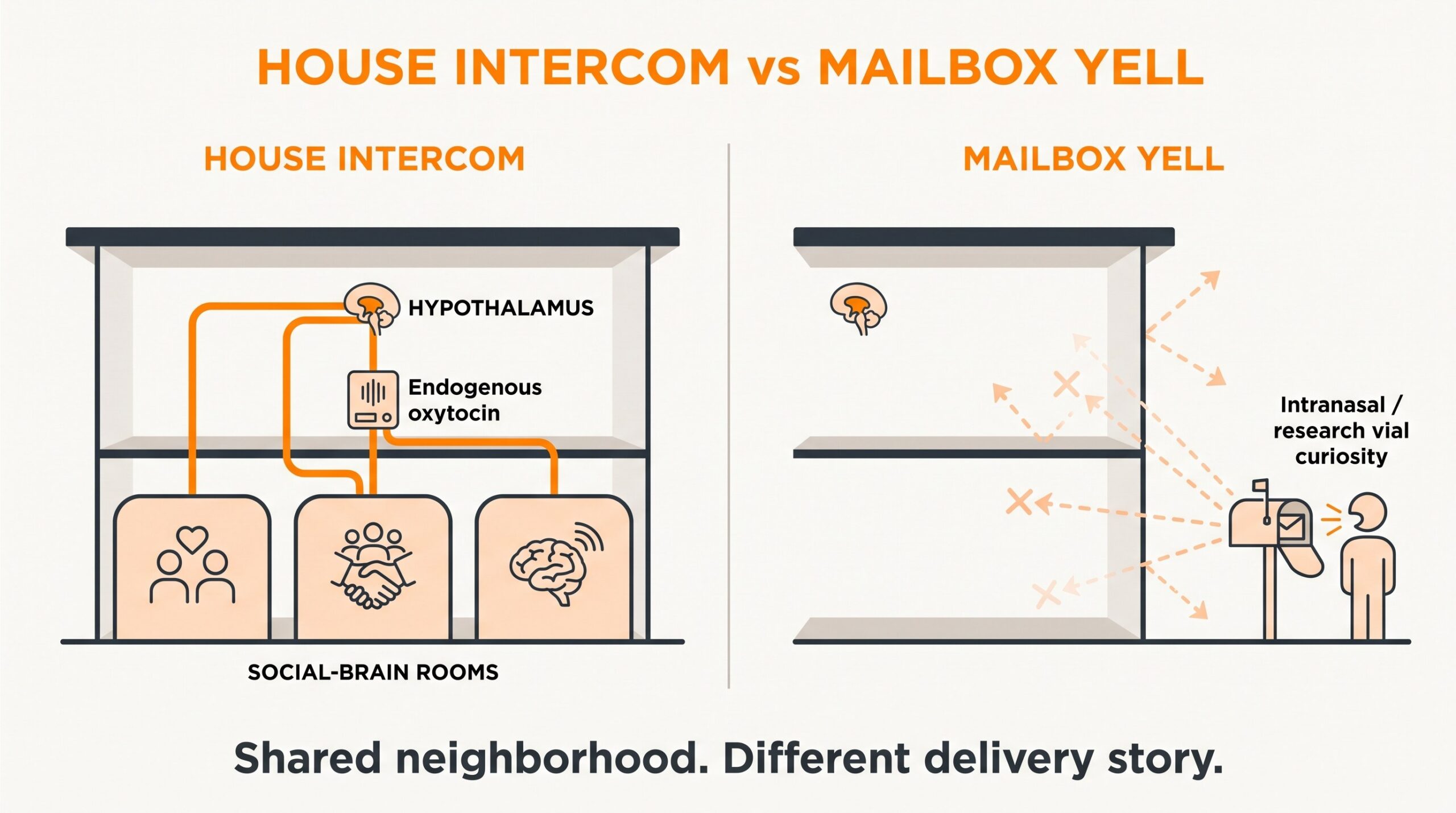
- How it works in one line: Your body’s oxytocin is a wired house intercom from the brain hub. A shelf peptide is mailbox-yell interest in the same lane.
- Your next step: Learn the three doors: research SKU vs clinic/Rx oxytocin vs basics. Never treat them as a forum bonding stack.
What people ask us about oxytocin
Paraphrased from the kinds of questions people bring to our community. These are anecdotes, not data.
- “Does oxytocin spray actually work?”
- “Is it the same as PT-141?”
- “Can it help my relationship?”
Straight answers below. No bro-science, no hype. Every study is linked at the bottom so you can check me.
Verdict up front: Oxytocin is worth knowing if you keep seeing “love hormone” sold like a trust spray in a bottle. It is not worth treating a research vial like body-made brain signaling. This free page will not hand you a social-bonding plan.
Real receptor biology. Real pair-bond animal work. Real big human trials that refused to flatter the hype. Zero honest path from “I bought oxytocin” to “I just fixed attachment in my garage.”.
Keep reading if you searched oxytocin, OT, OXT, “love hormone,” nose-spray oxytocin, Pitocin interest, or “is this the same as PT-141 / kisspeptin” and want the map without forum noise. Skip if you want a dose chart. Skip if you want a black-market “cycle.” Skip if you want a claim that a research vial treats autism, anxiety, couples conflict, infertility, or “low vibes.” Skip if you want a reason to skip sleep, real relationships, and a doctor. Those asks belong in Pro or with a real clinician, not on a free page.
Day-one basics still live on Start Here and what are peptides. Nearby maps when you are done here: PT-141, Kisspeptin, VIP, Selank, Semax, DSIP, how to sleep better, HRV. How to reconstitute peptides.
Teaching only. Not medical advice. A research shelf oxytocin vial is not an FDA-approved lifestyle bonding drug. It is not a Rx labor or milk let-down order by default. It is not a green light to skip context when people oversell “just sniff trust.”.
What is OT?
Start with the plain name. OT is a 9-amino-acid peptide your brain hub makes. It shows up in two famous jobs people actually recognize. It helps the uterus contract in labor. It helps milk let down during breastfeeding.
Researchers also study it as a social brain peptide. That lane covers pair bonds in animals, parental care, trust games in labs. Emotion recognition tasks. It also covers a decade of nose-spray spray experiments that got louder than the repeat-study file.
On partner shelves you will see names like OT, OT, or OXT research peptide. Shared research neighborhood. Different vials, COAs, and jobs.
Clinic OT has a separate door. Lab-made OT used in obstetrics is a doctor tool with labeled indications. A research shelf vial with a coupon code is not that Rx.
Why this matters: Forums mash body-made signaling, obstetric OT, nose-spray psychology experiments. Research SKUs into one “love hormone” bucket. Shared family tree. Different objects.
So what for you: If a sales page never splits body-made biology from a research vial from a clinic order, it is selling vibes.
The house-intercom mechanism (one analogy)
Here is the only picture I want stuck in your head.
Think of body-made OT as the house intercom. The brain hub is upstairs. Social-brain circuits are downstairs. When the system fires, the message travels on wired routes your body already built.
A research vial or an nose-spray spray experiment is mailbox-yell interest in the same neighborhood. People study whether shouting through the slot changes behavior. Sometimes small studies look exciting. Then bigger, cleaner trials remind you the mailbox is not the intercom.
Leng and Ludwig put the delivery skepticism in plain language in 2016: huge nose-spray amounts do not equal huge central delivery. Peripheral levels can jump hard. Martins and colleagues later mapped how route of administration changes brain blood-flow patterns. Delivery story is part of the proof story.
How sure are we? Pretty sure OT dock sites and social-behavior biology are real. Pretty sure context and person matter — Bartz and colleagues said that out loud in 2011. Less sure that a research vial recreates brain-hub signaling. Not sure at all that a vial cap equals a relationship fix.
Why this matters: if you cannot explain “house intercom vs mailbox yell” in one sentence, you are not ready to open a cart.
So what for you: ask for the delivery-and-door story before you ask for a price.
The number people misread (and what it really means)
The cleanest “this hype is not a cartoon” number is not a TikTok couple montage. It is a NEJM trial.
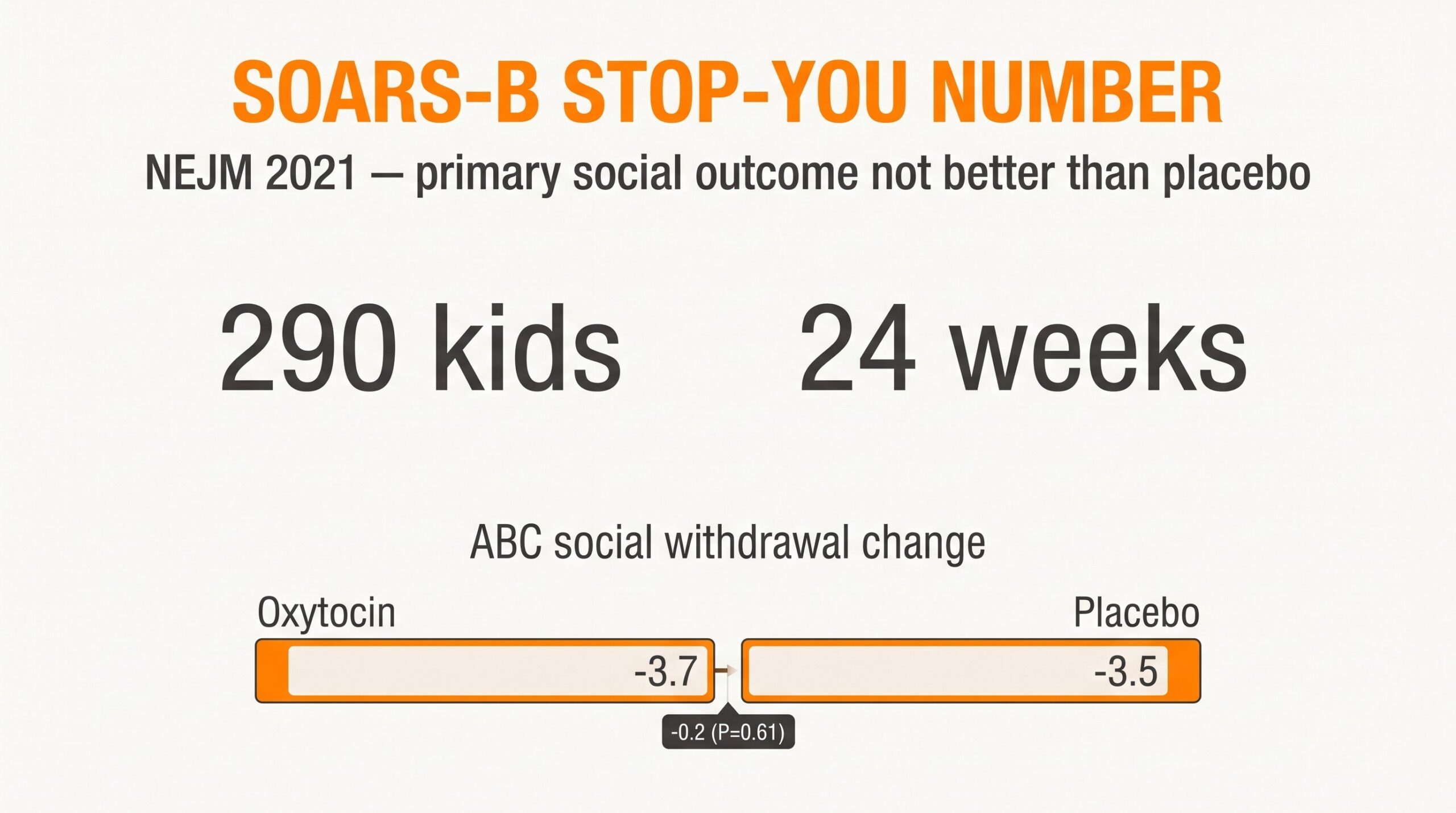
Sikich and colleagues ran SOARS-B: a 24-week, placebo-checked phase 2 trial of nose-spray OT in children and adolescents with autism spectrum disorder. They enrolled 290 participants. Target dose was 48 international units daily.
Primary social-withdrawal score change: −3.7 on OT versus −3.5 on placebo. Difference −0.2. P value 0.61. Secondary social and cognitive measures generally did not separate either.
Bottom line: large, long, published in NEJM, primary outcome not better than placebo. Earlier smaller positive signals did not survive this stress test.
Walum and colleagues separately warned that many nose-spray OT papers were underpowered. Healthy skepticism belongs in the file, not just in the comments section.
Why this matters: The stop-you number is that near-zero gap after 24 weeks in 290 kids. The how-sure level for “my research vial is just DIY love chemistry” is still zero.
So what for you: be impressed by careful null results. Do not confuse a research SKU with a social-function drug.
Research shelf vs clinical OT vs basics
Three doors. Same word online. Different jobs.
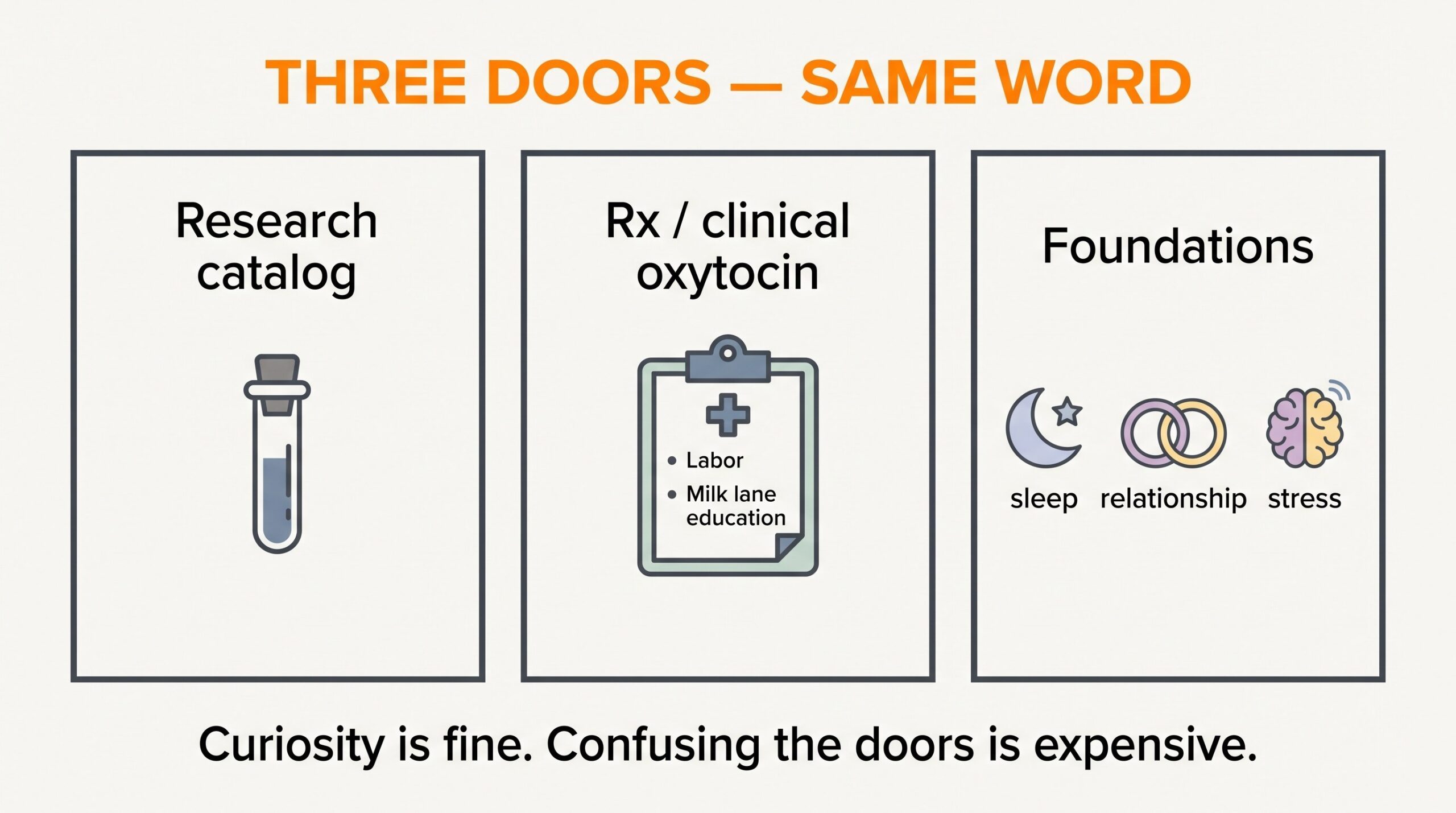
Door 1 — Research shelf. Partner shelves can list OT as a research sequence. That is a SKU and a certificate story. It is not FDA-approved lifestyle bonding medicine. It is not a pharmacy-mixed “trust spray” by default.
Door 2 — Clinical / Rx OT. Obstetric and milk let-down OT belongs in doctor hands with labeled indications, monitoring, and risk talk. That door is medicine. It is not a mail-order vial with a coupon code.
Door 3 — Basics. Sleep that recovers, stress that is not permanently redlined, real relationship skills. A doctor if you have fertility, postpartum, autism, anxiety, or attachment questions that need care. Not a cart. See how to sleep better, HRV, cold plunge, and Zone 2.
Why this matters: most money gets wasted when people buy Door 1. Wanting Door 2 or Door 3 outcomes.
So what for you: pick the door that matches your actual question before you open a cart.
OT vs PT-141 vs kisspeptin vs VIP
Quick lane honesty without turning this into a textbook.
- OT is the social brain peptide / labor-milk let-down neighborhood people nicknamed the love hormone.
- PT-141 is a melanocortin / desire research map. See the PT-141 page. Shared “relationship talk” online. Different receptor job.
- Kisspeptin is a reproductive-axis / GnRH upstream neighbor — see Kisspeptin.
- VIP is vasoactive intestinal peptide. Gut/immune/vascular interest, not a bonding spray. See VIP.
Instagram flattens four different research objects into “relationship peptides.” Shared interest hallway. Different rooms.
Why this matters: if a page never separates OT from PT-141 from kisspeptin, treat the how-sure level as low.
So what for you: match the peptide to the actual research question, not the vibe.
Myths that burn your money
- “Love hormone = safe vial.” Body-made signaling and obstetric OT are not the same as a research shelf peptide with a coupon.
- “Nose-spray spray = brain intercom.” Delivery is contested. Leng/Ludwig skepticism and route-of-administration work belong in the file.
- “Small positive autism studies mean SOARS-B does not matter.” The big 24-week NEJM trial is the stop-you stress test.
- “Kosfeld trust = forever proof.” Famous 2005 Nature finding. Later critical reviews asked harder replication questions. Keep both in the map.
- “Stack it with PT-141 and kisspeptin because all three say intimacy.” Shared hallway. Different mechanisms. Stacking forum screenshots is not a plan.
Why this matters: the expensive mistake is buying a story you cannot falsify.
So what for you: falsify the door first. Then decide whether a research SKU even belongs in the talk.
Research options from partner labs
Codes live in the links. Click them so the discount fires.
OT heroes
 BioLongevity
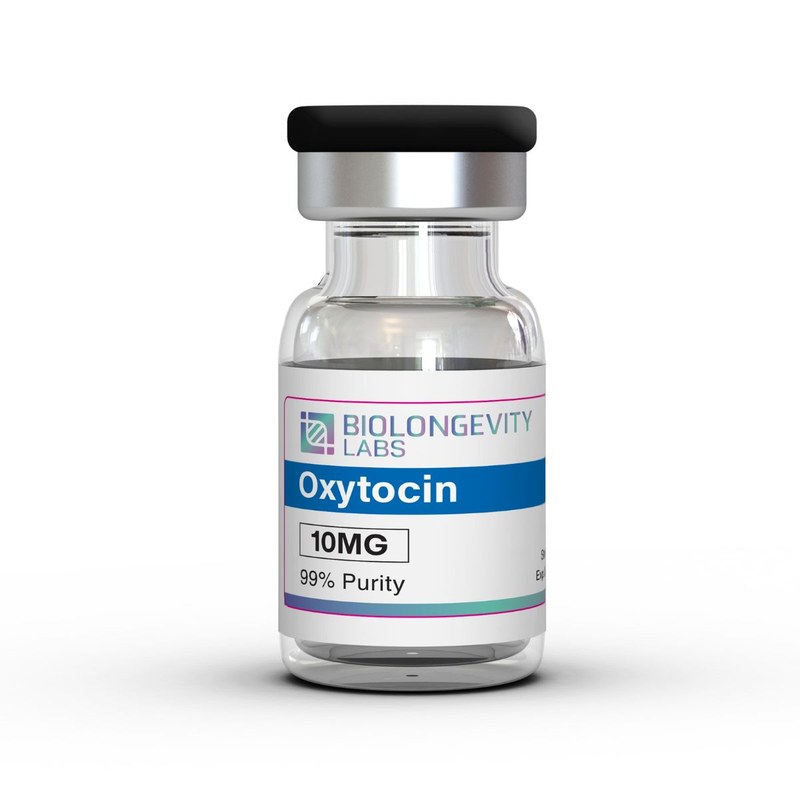
OT 10 mg
LEE15Adjacent research maps (convert)
 BioLongevity
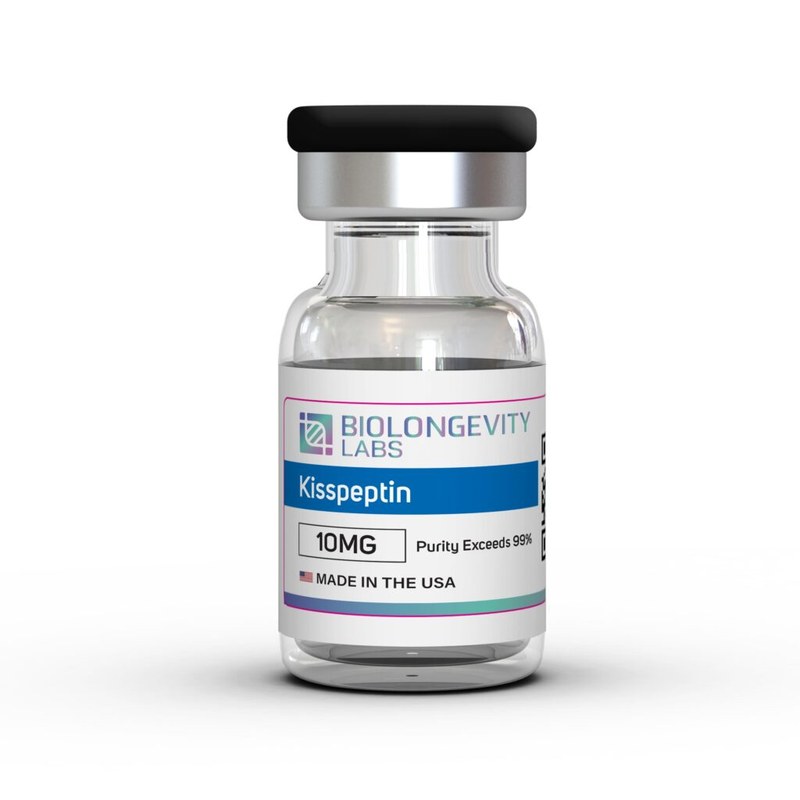
Kisspeptin 10 mg
LEE15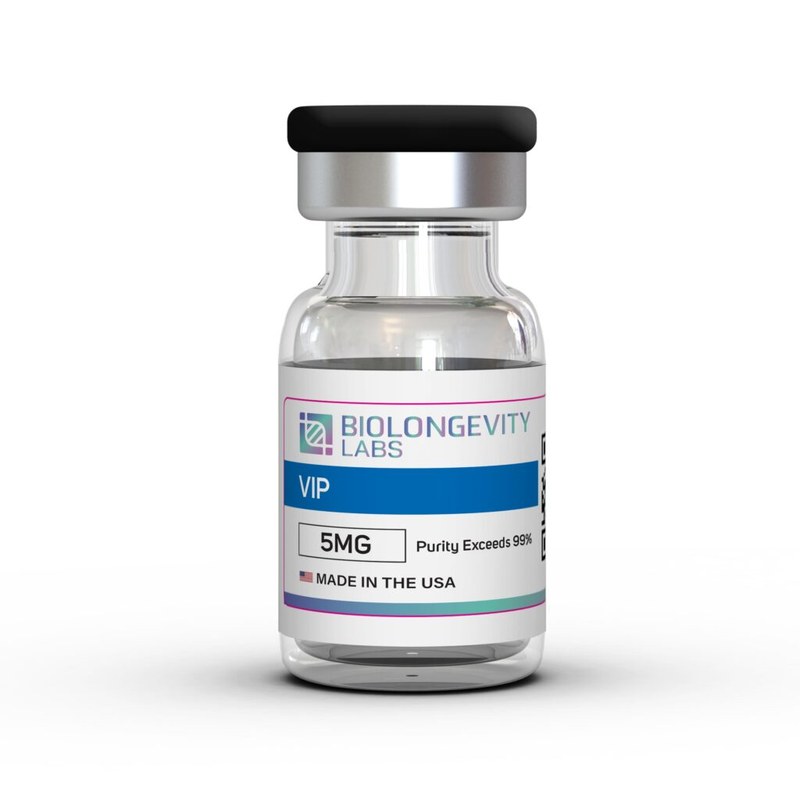 BioLongevity
VIP 5 mg
LEE15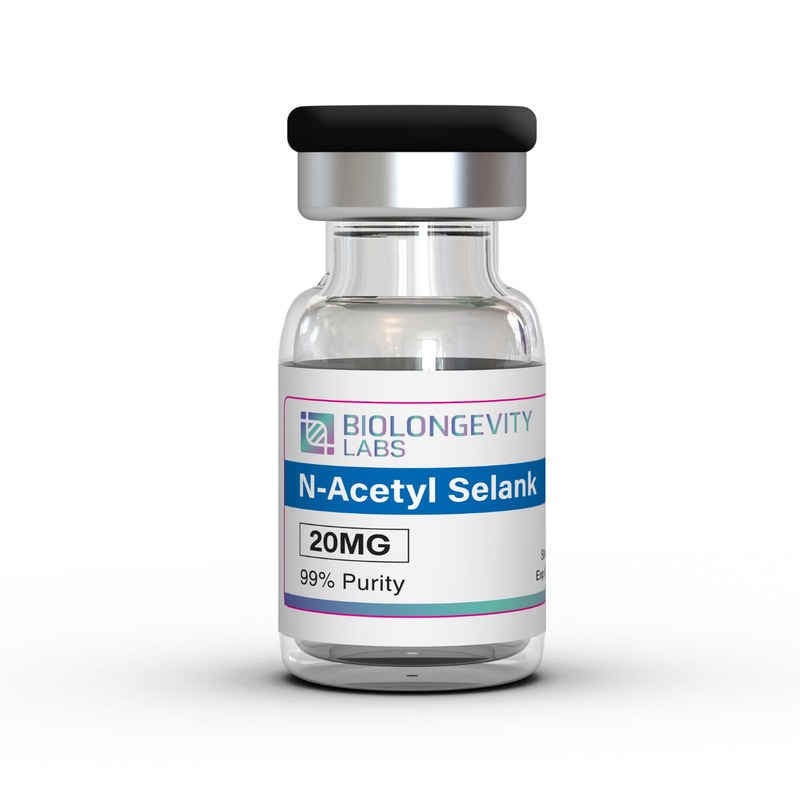 BioLongevity
N-Acetyl Selank Amidate
LEE15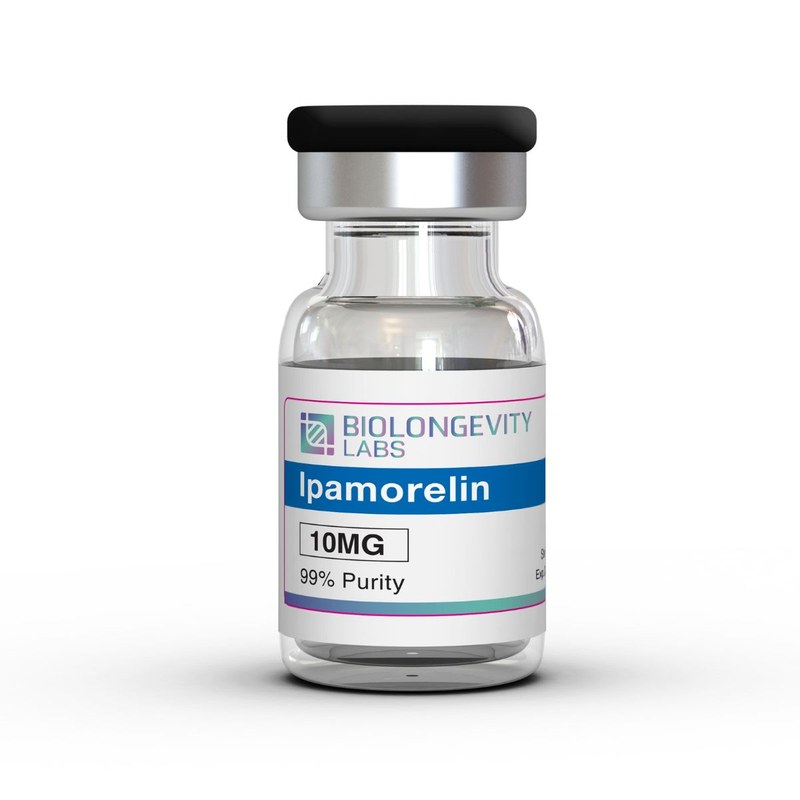 BioLongevity
Ipamorelin 10 mg
LEE15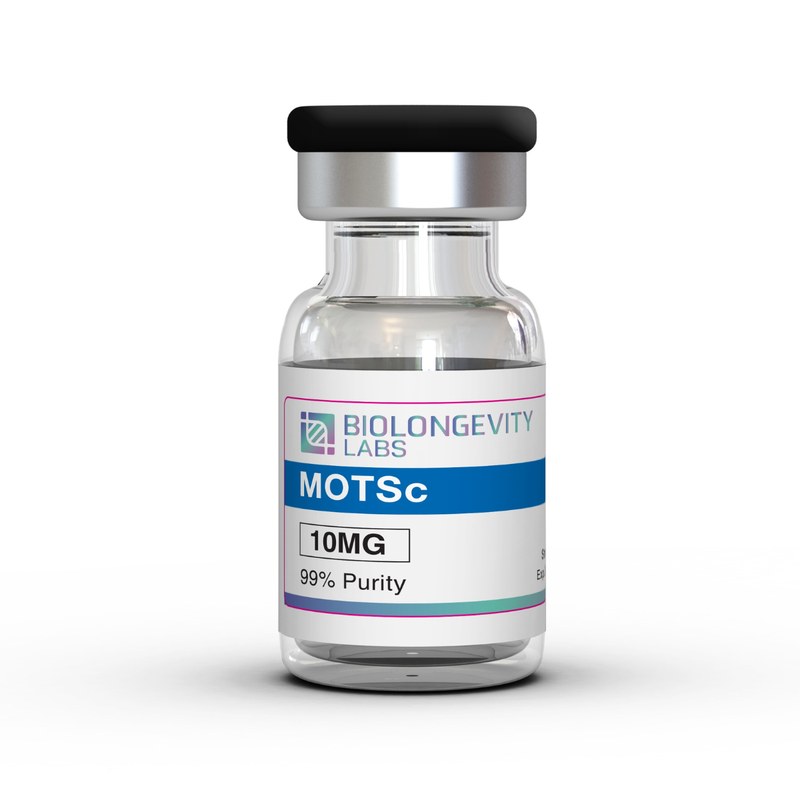 BioLongevity
MOTS-c 10 mg
LEE15Why this matters: conversion without honesty is how domains die. These cards are research maps with tracking that works. Not treatment claims.
So what for you: if you came for a protocol table, stop. If you came to understand the pathway and keep clean partner links, you are in the right place.
Related research guides
- PT-141 — melanocortin / desire neighbor.
- Kisspeptin — reproductive-axis upstream neighbor.
- VIP — vasoactive intestinal peptide neighbor.
- Selank / Semax — nootropic research maps.
- DSIP / sleep / HRV — recovery basics.
- Melanotan-2 / Melanotan-1 — melanocortin catalog neighbors.
- Ipamorelin / MOTS-c — adjacent convert maps.
Evidence limits: what the research can’t tell you
Partner shelves are not selling brain-hub intercoms. OT on a research shelf is not SOARS-B, not obstetric care. Not a DIY attachment drug.
If you have fertility questions, postpartum concerns, autism or social-function care needs, psychiatric medication, pregnancy, or relationship crisis, this is a doctor talk. Not a research-cart talk.
Why this matters: confidence framing protects your wallet and your risk file.
So what for you: use this page to get smarter. Use a doctor to get safer. Use Pro if you want plan depth without random forum screenshots.
Primary sources
We link the original study or document, not a summary.
- PubMedGimpl G, Fahrenholz F. The oxytocin receptor system: structure, function, and regulation. Physiol Rev. 2001. PubMed 11274341.
- PubMedYoung LJ, Wang Z. The neurobiology of pair bonds. Nat Neurosci. 2004. PubMed 15452576.
- PubMedKosfeld M, et al. Oxytocin increases trust in humans. Nature. 2005. PubMed 15931222.
- PubMedDomes G, et al. Oxytocin improves “mind-reading” in humans. Biol Psychiatry. 2007. PubMed 17137561.
- PubMedBartz JA, et al. Social effects of oxytocin in humans: context and person matter. Trends Cogn Sci. 2011. PubMed 21696997.
- PubMedCarter CS. Oxytocin pathways and the evolution of human behavior. Annu Rev Psychol. 2014. PubMed 24050183.
- PubMedNave G, et al. Does oxytocin increase trust in humans? A critical review of research. Perspect Psychol Sci. 2015. PubMed 26581735.
- PubMedLeng G, Ludwig M. Nose-spray oxytocin: myths and delusions. Biol Psychiatry. 2016. PubMed 26049207.
- PubMedWalum H, et al. Statistical and methodological considerations for the interpretation of nose-spray oxytocin studies. Biol Psychiatry. 2016. PubMed 26210057.
- PubMedGuastella AJ, et al. The effect of oxytocin nasal spray on social interaction deficits observed in young children with autism. Mol Psychiatry. 2016. PubMed 26503762.
- PubMedMartins D, et al. Effects of route of administration on oxytocin-induced changes in regional cerebral blood flow in humans. Nat Commun. 2020. PubMed 32127545.
- PubMedSikich L, et al. Nose-spray oxytocin in children and adolescents with autism spectrum disorder. N Engl J Med. 2021. PubMed 34644471.
The bottom line
Oxytocin is one of the loudest social-peptide stories in the research aisle. House intercom. Mailbox yell. Hard NEJM numbers. Partner SKUs exist.
It is still not body-made brain-hub wiring in a bottle and not a DIY bonding drug. Read the three-door warning. Talk to a doctor about real obstetric, fertility, psychiatric, or social-function questions. Build sleep and relationship habits that do not require a crimp cap.
Want the deeper protocol library after that? Pro is the paid door. Want the free research PDF? Grab the Playbook below.
I built Peptides & Pump so you can get this without a guru tax. Free Knowledge Base first if you are not ready to pay. Pro if you want the protocol library.
Disclaimer. This page is for education and research only. It is not medical advice. It does not diagnose, treat, cure or prevent any disease. Oxytocin, OT, OXT, PT-141, kisspeptin, VIP, Selank, Semax. Other related research compounds are not FDA-approved treatments. Do not use them on yourself for autism, anxiety, attachment, couples conflict, infertility, labor, milk let-down or anything else. Research peptides discussed here are research sequences. A research-shelf vial is not a compounded Rx. Clinical oxytocin used in obstetrics is a separate doctor-supervised lane. Evidence discussed here includes receptor biology, animal pair-bond work, psychology experiments, and clinical trials. None of that is a substitute for a doctor. Results vary. Always consult a qualified healthcare provider before starting any peptide, drug, supplement, or protocol, especially if you are pregnant, postpartum, taking psychiatric medication, or have a medical condition. Peptides & Pump does not sell peptides.
Affiliate disclosure. Some links on this page are affiliate links. If you buy through them, I may earn a commission at no extra cost to you. The codes I use are LEE15 (BioLongevity), LEE20 (Limitless) and LEE (Peptira). Paramount works through my link, no code needed. That commission is how I keep publishing free education. I only link suppliers I am willing to put my name on.
Partner labs · research use
Where I’d buy oxytocin
Research vials from the labs I check first. Tap through my link, then use the code at checkout. Codes don’t stack.
BioLongevity Labs
Oxytocin 10mg
Code LEE15
Enter the code at checkout.
Shop BioLongevity →Paramount Peptides
Oxytocin 10 mg
No code: my link
Click my link first. If Paramount shows its own sale code, use that one.
Shop Paramount →Peptira
Oxytocin
Code LEE
Auto-Ship keeps the code on every order.
Shop Peptira →Or browse a whole lab:
Limitless hides prices until you sign up for research access. Get Limitless research access →
Affiliate links: I may earn a commission at no extra cost to you. Research-use products only. I don’t give dosing. Education, not medical advice.
Peptide Insider · free email
Get the research before the hype.
Lee’s Peptide Insider: new studies, FDA moves, and protocols explained in plain English. Join free and get the Peptide Playbook PDF.
Education only. Not medical advice. Unsubscribe anytime.
Keep reading
 Intermittent Fasting: What the Trials Really Show (and How Not to Lose Muscle)
 Thymalin: The Russian Thymus Peptide and What the Research Really Shows
 Semax vs Selank: What 25 Years of Russian Research Actually Shows
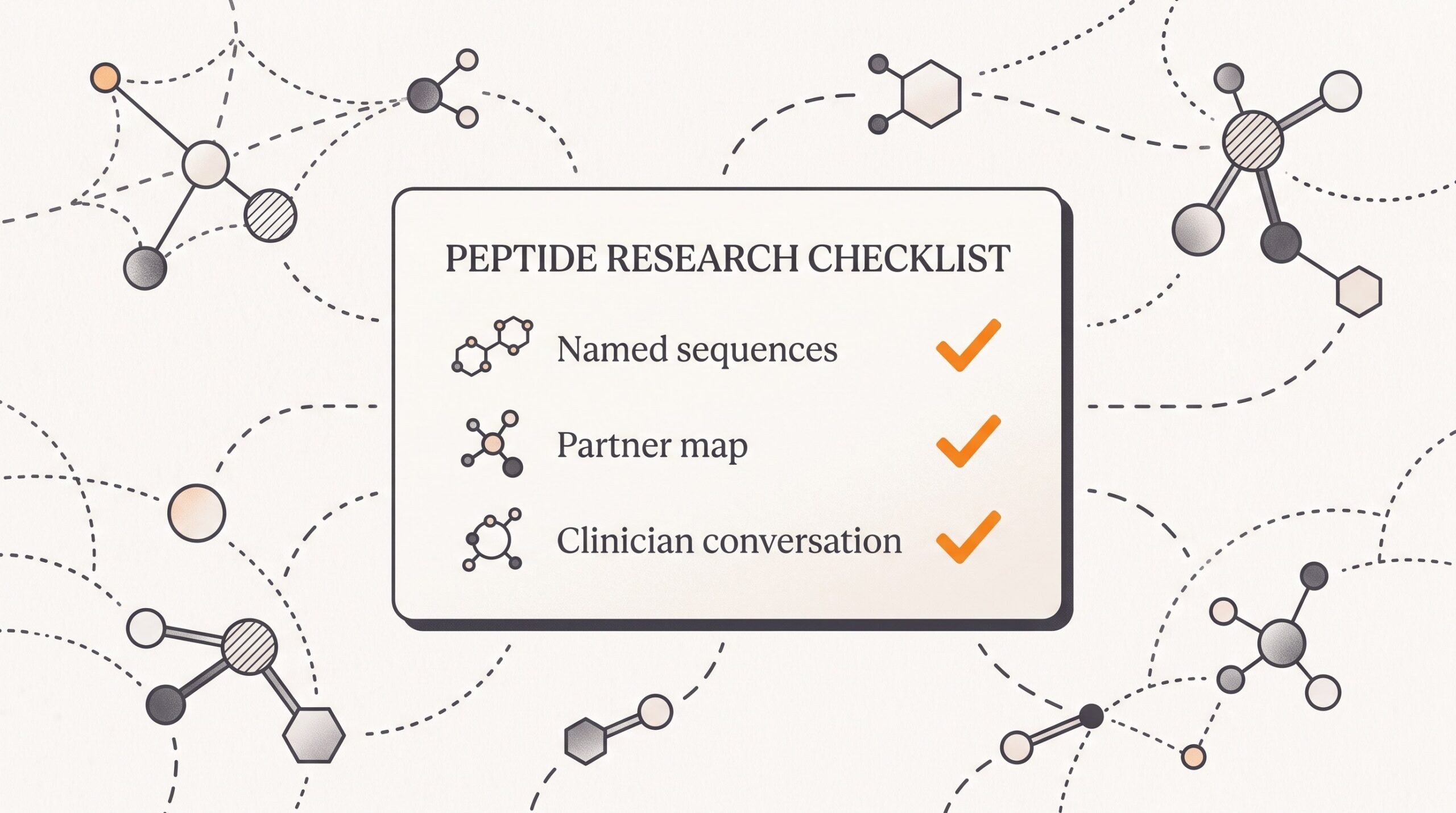
Free PDF
The Peptide Playbook
The research checklist Lee uses: named sequences, how to read a COA, and the questions to bring to your doctor. Free when you join Peptide Insider.
2 Comments
Comments are closed.