Creatine for Women: Dose, Cycle, Menopause & Water-Weight Myths
Key takeaways
- Verdict: Creatine for women works. It is one of the most studied supplements on earth. It is not a “guy supplement.”
- The usual research dose is 3–5 grams a day of plain creatine monohydrate. Loading is optional. Consistency is the whole game.
- The best results show up when you pair it with lifting. That is true in young women and after menopause.
- Early weight gain is mostly water stored inside muscle. It is not fat. It is not puffy bloat.
- Pregnant, trying to get pregnant, or living with kidney disease? Talk to your doctor first. Education only. Not medical advice.
Verdict up front: If you searched creatine for women, here is the short answer. Yes, it works for women, and the safety data in women looks good. No, it will not turn you into a bodybuilder overnight. And most of the “bloat” fear is a myth.
Here is the twist most people miss. Women have been left out of creatine research for decades, not because it fails in women, but because scientists mostly studied young men.
Why this matters: “Not studied much” and “does not work” are two very different things. A lot of women skipped a cheap, safe tool because they mixed those up.
Keep reading if you want the plain-English map: dose, timing, the monthly cycle, menopause, bone, brain, water weight, and who should check with a doctor first. Want the big general guide instead? Start with creatine benefits. This page is the women-only deep dive.
Quick note. This page is education. It is not medical advice. It does not diagnose or treat anything.
The stop-you number: 9%
In 2020, a research team counted every creatine study they could find. They found 656 studies where creatine was the main thing being tested.
Only 58 of them studied women alone. That is about 9%.
Read that again. Creatine is one of the most popular supplements in the world, and fewer than one in ten studies looked only at women.
Then the team pooled the safety data on women. That covered 29 studies and 951 participants. They found no deaths and no serious side effects. They found no real difference in stomach trouble, weight gain, or kidney and liver markers versus placebo.
So what for you: the women-only data is smaller than it should be. But what exists points the same way. Creatine looks safe in healthy women at normal doses.
What creatine actually does (the spare battery)
Creatine is not a drug, a hormone, or a steroid.
It is a small compound your body already makes every day. Your liver and kidneys build it from three amino acids. Amino acids are the building blocks of protein. You also get some creatine from meat and fish.
Most of your creatine sits in your muscles, where it does one big job.
Think of your phone during a long day. The battery runs low, so you plug in a small power bank, and the phone gets a quick top-up and keeps going.
Your muscles work the same way. Your cells run on a fast energy coin called ATP. A hard set burns through ATP in seconds. Stored creatine works like the power bank. It helps refill ATP fast, so you can push the next rep or the next sprint.
More creatine in the tank means a slightly bigger power bank. That is the whole trick: no magic, just a bit more fast energy for hard efforts.
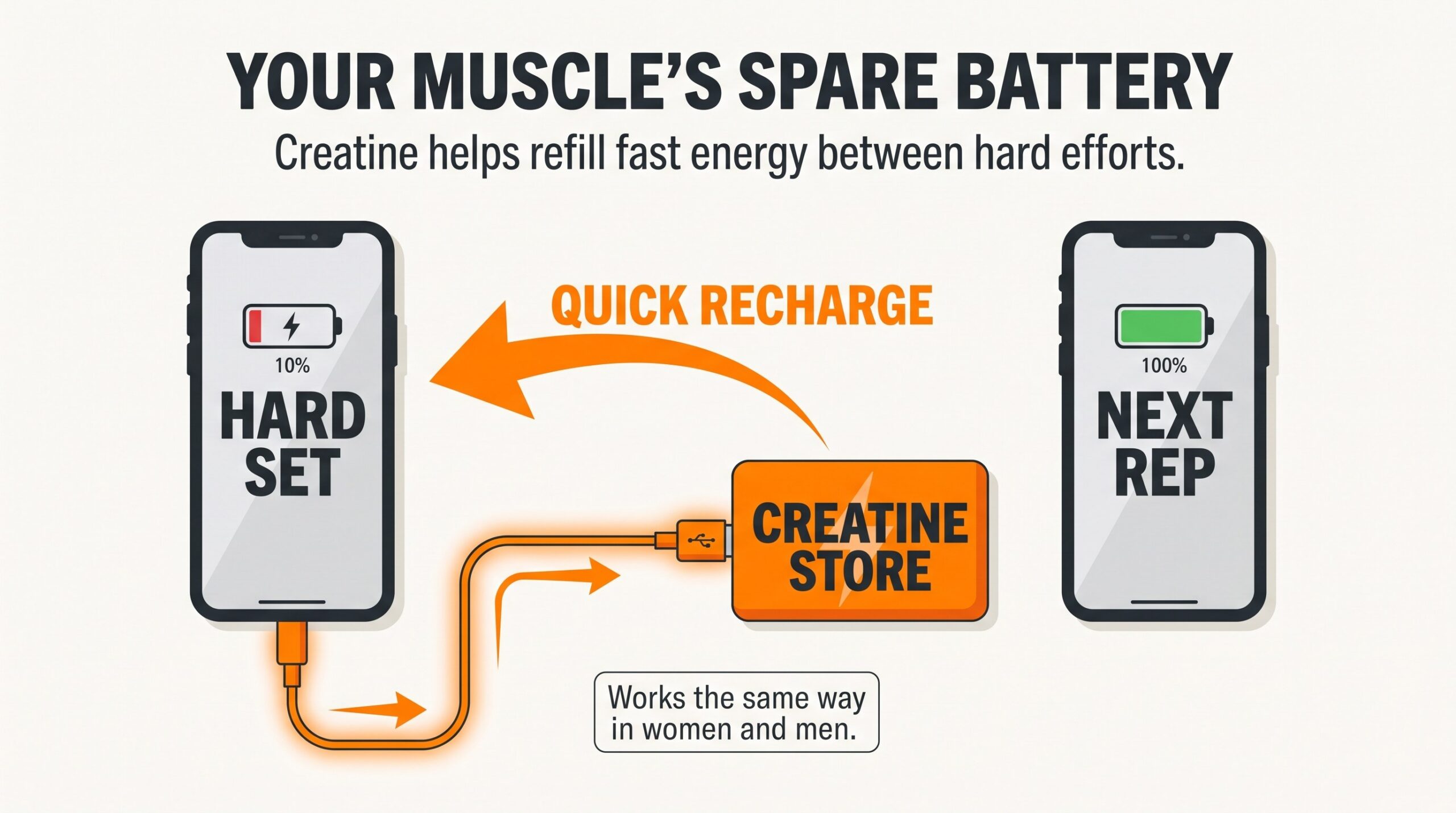
Why this matters: creatine helps you train a little harder. Training harder is what builds muscle and strength. The powder supports the work. It does not replace the work.
Does creatine work for women? What the studies show
Let us start with a classic. Back in 1997, a team in Belgium gave creatine or a placebo to 19 young women who did not lift. Then they put everyone on a 10-week lifting plan.
The creatine group got stronger faster. Their strength gains were about 20–25% bigger than the placebo group. Their gain in lean mass was about 60% bigger. Lean mass means everything that is not fat, mostly muscle and water.
That was a small study. But newer reviews say the same thing. A 2021 review of creatine across a woman’s life found real benefits for strength, exercise performance, and body composition. The effect was clearest when women also lifted weights.
A 2025 update from the same research group went further. It covered the monthly cycle, pregnancy, and menopause. The big theme: promising, but women still need more studies.
How sure should you be? We are pretty sure about strength and muscle when you lift. We are less sure about the newer brain and hormone-stage ideas. We will cover those below.
So what for you: creatine is a training helper. Pair it with a real plan. If you are new to lifting, read how much protein you need next. Protein and lifting are the base. Creatine is the bonus.
How much creatine should a woman take?
Here is the plain map from the research. This is education, not a personal plan.
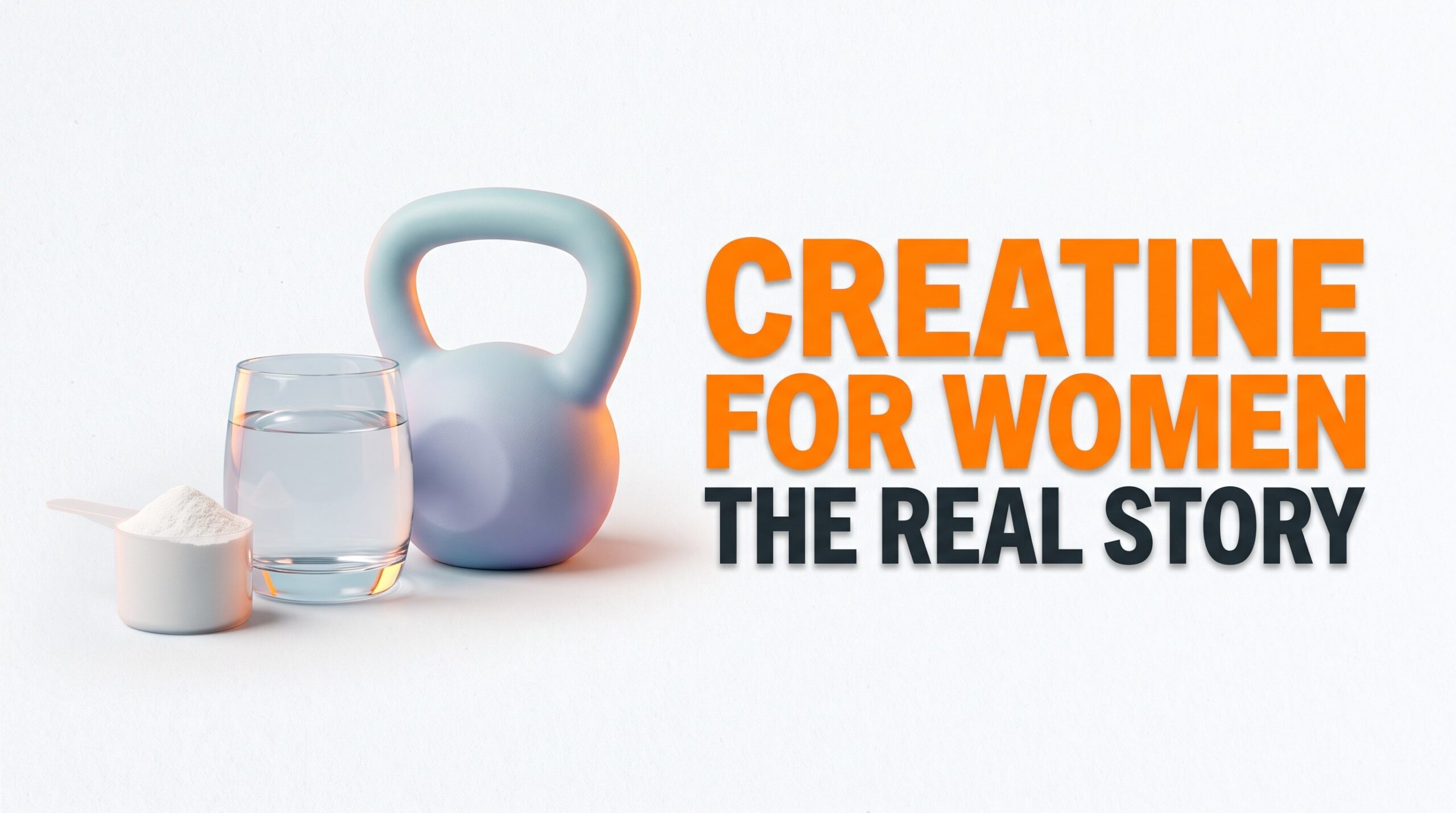
- The everyday dose: most studies and expert groups use 3–5 grams a day. Some studies use about 0.1 grams per kilogram of body weight. For a 140-pound woman, that lands near 6 grams.
- The optional fast start: some people “load” with about 20 grams a day, split into four smaller doses, for 5 to 7 days. Then they drop to 3–5 grams a day.
- The slow start: skip loading. Take 3–5 grams daily. A classic study found a small daily dose fills the muscles in about four weeks. You end up in the same place. It just takes longer.
Write it out: loading is a shortcut, not a requirement. If loading upsets your stomach, skip it.
Timing? Do not stress it. Take it in the morning, after the gym, in a smoothie, or in your coffee. The best time is the time you will remember every day.
Form? Choose plain creatine monohydrate, because it has the most research by a mile. Fancy forms cost more and have less proof. Look for a product with third-party testing on the label.
Why this matters: creatine works by filling up your muscle stores over time. One scoop today does nothing you can feel. Weeks of daily scoops are what count.
The water-weight myth (where the water really goes)
This is the number one reason women skip creatine. “I don’t want to look puffy.”
That is a fair worry, so here is what the science says.
Creatine pulls water into your muscle cells. Picture a sponge soaking up water inside the muscle, not a water balloon under your skin.
A 2003 study tested this in 16 men and 16 women who lifted. They took a loading dose for a week, then 5 grams a day. Body weight and total body water went up in the creatine group. But the water did not shift to the “puffy” spaces outside the cells. Where the water sat in the body stayed balanced.
And in the 2020 women-only safety review? Weight gain was not meaningfully different from placebo.
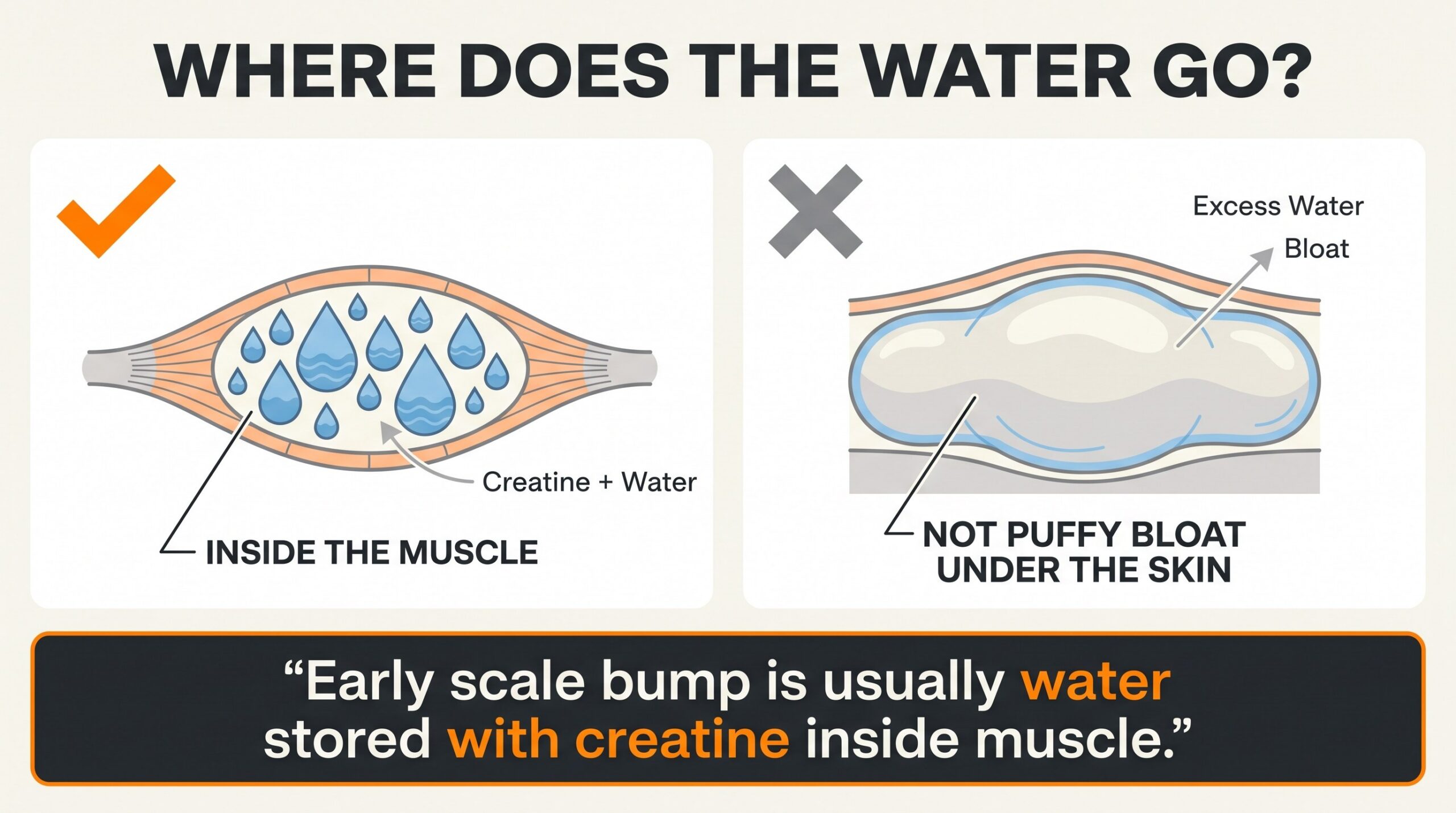
So what might you see? Some people notice a pound or two on the scale in the first week or two, mostly with loading. That is water inside muscle, not fat. Skipping the loading phase usually makes the change smaller and slower.
So what for you: judge creatine by how you train and how your clothes fit over months. Not by one jumpy morning on the scale.
Creatine and your monthly cycle
Your hormones change across the month. Those changes can affect how your body makes, moves, and stores creatine. A 2016 review laid this out. It made the case that women may need their own creatine research, not hand-me-down data from men.
Real studies are just starting to test this. In 2023, a team at the University of North Carolina gave 39 active women either creatine or a placebo. They tested sprint recovery in two parts of the cycle. One was the low-hormone phase early in the cycle. The other was the high-hormone phase in the second half.
Here is what they saw. Sprint recovery dipped in the high-hormone phase for everyone. The creatine group showed the biggest improvement in fatigue during that phase. Creatine did not change heart rate variability, a recovery signal you may know from your watch. If you track it, our HRV guide explains what that number means.
How sure should you be? Not very, yet. This was one small study with an interesting signal, not a rule.
So what for you: if hard workouts feel worse in the second half of your cycle, you are not imagining it. Creatine may help a little. Steady daily use matters more than trying to time it to your cycle.
Creatine after menopause: muscle, strength, and bone
This is where creatine for women gets really interesting.
After menopause, estrogen drops. Muscle and strength tend to slip faster. Bone density tends to drop too. That is a big deal for staying strong, steady, and independent as you age.
A 2026 meta-analysis pooled seven controlled trials with 608 postmenopausal women. A meta-analysis is a study of studies. It adds up many trials to get a clearer answer.
- Lean mass: creatine added a small gain, about a third of a kilogram more than placebo.
- Leg strength: about 7.5 kg more on the leg press.
- The catch: the wins showed up when women took 5 grams a day or more and also lifted. Low doses without lifting did nothing measurable.
- Bone density: no clear change overall.
- Safety: side effects were mild and similar to placebo. Kidney markers did not change.
Bone is the honest gray zone. A 12-month study from Canada found creatine plus lifting slowed bone loss at the hip versus placebo. But it was small. Then the same team ran a bigger 2-year trial with 237 women. Creatine did not change bone density. It did help some measures of hip bone shape linked to bending strength. Women on creatine also walked a bit faster.
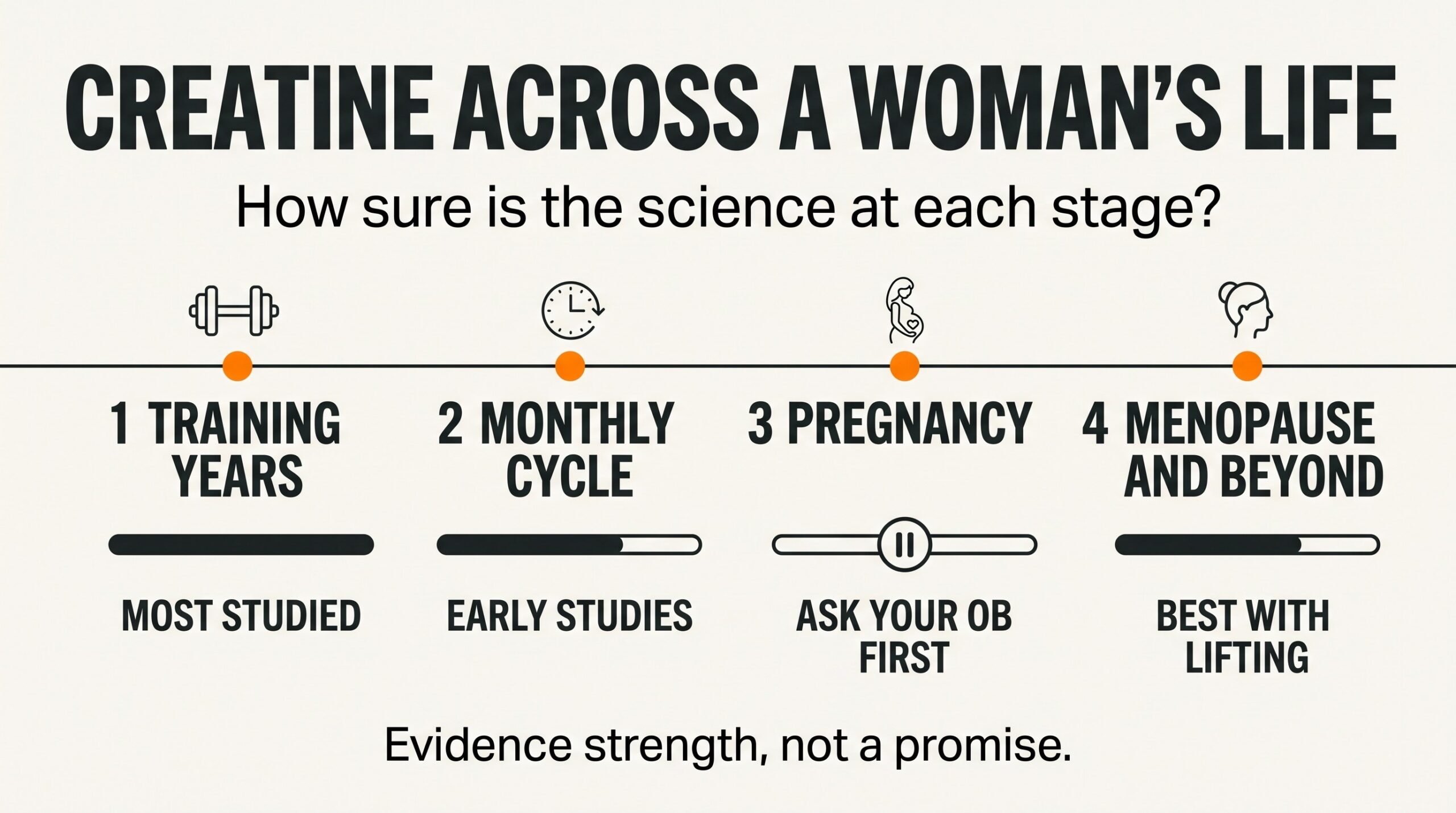
How sure should you be? Fairly sure about small muscle and strength gains when you lift. Not sure about bone density. Creatine is not a bone medicine. If you have osteoporosis or low bone density, that plan belongs with your doctor.
Why this matters: after 50, every bit of muscle and strength you keep pays you back. Lifting is the main tool. Creatine is a cheap sidekick that makes the lifting work a little better.
Creatine, brain, and mood: early but real
Your brain uses creatine too. It is a hungry organ, and it runs on the same fast energy coin as your muscles.
A 2018 review looked at six trials in healthy people. Creatine may help short-term memory and reasoning. Results for other brain skills were mixed. The review noted the effect may be bigger in people who are stressed, older, or eat little meat.
Now for women in midlife. A small 2025 trial tested 36 women in or near menopause. One group took a low dose of a different form, creatine hydrochloride. After 8 weeks, that group had more creatine in the front of the brain and faster reaction time than placebo. It was a small, short study of a different form, but it is still worth watching.
Mood is the most sensitive topic here. In 2012, psychiatrists ran a trial in 52 women with major depression. All of them took a standard antidepressant from their doctor. Half also took 5 grams of creatine a day. The creatine group improved faster on a depression scale.
Please read this part twice. That was a medical trial run by doctors, and it added creatine to real treatment. It does not show creatine treats depression on its own. If you are dealing with low mood, that is a conversation with a doctor or therapist. Do not DIY it.
So what for you: the brain story is promising and early. Take creatine for training. Treat any brain bonus as a maybe, not a promise.
Pregnancy and trying to conceive
Researchers are curious about creatine in pregnancy. The 2025 review covers early ideas and lab work.
But there is not enough human data yet to call it safe or useful in pregnancy. So the honest answer is simple. If you are pregnant, breastfeeding, or trying to conceive, ask your OB before you add creatine or any supplement.
Why this matters: “interesting research” is not the same as “cleared for pregnancy.” Your OB knows your history. Let them make that call with you.
Is creatine safe for women? Kidneys, labs, and side effects
For healthy women at normal doses, the safety picture looks good. The women-only review found no serious side effects. Kidney and liver markers looked the same as placebo. Older work in athletes on long-term creatine also found no harm to kidney function.
One lab quirk trips people up. Creatine breaks down into a waste product called creatinine. Doctors use creatinine on blood tests to check kidney function. When you take creatine, that number can tick up a little. That does not automatically mean kidney damage. It can just mean more creatine is moving through your system.
So tell your doctor you take creatine before bloodwork. It saves you a scary false alarm. Our creatine benefits guide has more on this lab quirk.
Most common side effects are minor. Some people get an upset stomach, usually from big loading doses. Splitting doses or skipping loading often fixes that.
Who should check with a doctor first:
- Anyone with kidney disease or a history of kidney problems.
- Anyone on medicines that affect the kidneys.
- Anyone pregnant, breastfeeding, or trying to conceive.
- Teens, and anyone with a medical condition or a big unexplained lab change.
So what for you: creatine looks safe for most healthy women. Just loop your doctor in, especially before blood tests.
Myths that keep women away from creatine
- Myth: creatine will make me bulky. Truth: muscle grows slowly from training, food, and time. Creatine gives you a little more fuel for that work. It does not add muscle you did not train for.
- Myth: creatine is a steroid. Truth: no. It is a natural compound found in food and made by your own body. No hormones involved. If you want the full steroid story, read are peptides steroids.
- Myth: creatine makes your hair fall out. Truth: this came from one small study in young men. It measured a hormone, not hair loss. It has never been repeated. Expert reviews do not support the claim.
- Myth: creatine dehydrates you and causes cramps. Truth: expert reviews found no good evidence for this. Drink water like you normally would around training.
- Myth: you have to cycle on and off. Truth: expert groups do not call for cycling. Creatine works by keeping your stores full, and long-term daily use has been studied for years.
- Myth: creatine is only for men. Truth: expert reviews say it works in women too. Women may even have extra reasons to use it in midlife and beyond.
Why this matters: most creatine fears came from gym-locker rumors, not science. The research has caught up.
A simple creatine plan for women (5 lines)
- Pick plain creatine monohydrate with third-party testing.
- Take 3–5 grams a day. Same time daily is easiest. Loading is optional.
- Lift two to three times a week. This is where the results come from.
- Eat enough protein and sleep well. See protein intake and how to sleep better.
- Judge it after 8–12 weeks. Look at strength, energy in hard sets, and how clothes fit. Not the scale on day three.
Add easy cardio for heart health. Our Zone 2 training and VO2 max guides keep it simple. Recovery nerd? Try sauna benefits and cold plunge.
So what for you: this is a boring plan. Boring plans done every week beat exciting plans done for two weeks.
Where peptides fit (foundation first)
This is a peptide site, so let us be clear. Creatine is a cheap foundation habit backed by decades of human research. It belongs in the base layer with lifting, protein, and sleep.
Peptides are a different shelf. Most of them are research compounds with much thinner human data. Some women get curious about them after the basics are dialed in. That is fine, as long as you treat them as research maps, not shortcuts.
If you are curious, start with the women’s overview: peptides for women. It covers recovery, skin, and body-composition lanes in plain English. Deeper reads: what are peptides, are peptides safe, how long do peptides take to work, peptides for muscle growth, peptides for skin, GHK-Cu, GLOW, KLOW, BPC-157, TB-500, peptides for healing, and CJC-1295 / Ipamorelin. Research handling basics: bacteriostatic water and how to reconstitute peptides.
No peptide replaces creatine, and no peptide replaces lifting. Foundation first, curiosity second.
New here? Start Here. Want the deeper library and a group of people doing the same work? Join the community.
Why this matters: people who skip the base and jump to fancy stuff usually end up frustrated. Build the base, then explore.
After the foundation — research maps women ask about next (InStock partners)
 BioLongevity
BPC-157
LEE15 BioLongevity
TB-500
LEE15 BioLongevity
GHK-Cu
LEE15 BioLongevity
GLOW
LEE15 BioLongevity
KLOW
LEE15 BioLongevity
CJC / Ipamorelin
LEE15 Paramount
GHK-Cu
LEE10 Paramount
Wolverine Blend
LEE10 Paramount
CJC / Ipamorelin
LEE10 Paramount
Recon Solution
LEE10Partner homes
Limitless home · LEE20 S1 shop · LEE10 Peptira home · LEE Paramount home · LEE10 BioLongevity home · LEE15
Adjacent research maps only — foundation first. Codes live in the links. Education framing, not a treat-anything pitch.
Key takeaways (echo)
- Creatine works for women. Women were under-studied, not left out because it fails.
- 3–5 grams a day of plain monohydrate. Loading is optional. Daily habit wins.
- Pair it with lifting. After menopause, the strength and muscle gains show up with 5 grams or more plus training. Bone density results are mixed.
- Early scale bump is water inside muscle, not fat. Pregnant or kidney concerns? Ask your doctor first.
- General guide: creatine benefits. Peptide curiosity after the basics: peptides for women.
Get the Peptide Playbook
Free email map for building the foundation first, then thinking clearly about peptides without the guru noise.
Related reads: Creatine benefits · Protein intake · Peptides for women · How to sleep better · Zone 2 training · HRV explained · Peptides for muscle growth
Sources & Further Reading
- de Guingand DL, et al. Risk of Adverse Outcomes in Females Taking Oral Creatine Monohydrate: A Systematic Review and Meta-Analysis. Nutrients. 2020. PMID 32549301
- Smith-Ryan AE, et al. Creatine Supplementation in Women's Health: A Lifespan Perspective. Nutrients. 2021. PMID 33800439
- Smith-Ryan AE, et al. Creatine in women's health: bridging the gap from menstruation through pregnancy to menopause. J Int Soc Sports Nutr. 2025. PMID 40371844
- Ellery SJ, et al. Creatine for women: a review of the relationship between creatine and the reproductive cycle and female-specific benefits of creatine therapy. Amino Acids. 2016. PMID 26898548
- Kreider RB, et al. International Society of Sports Nutrition position stand: safety and efficacy of creatine supplementation in exercise, sport, and medicine. J Int Soc Sports Nutr. 2017. PMID 28615996
- Antonio J, et al. Common questions and misconceptions about creatine supplementation: what does the scientific evidence really show?. J Int Soc Sports Nutr. 2021. PMID 33557850
- Vandenberghe K, et al. Long-term creatine intake is beneficial to muscle performance during resistance training. J Appl Physiol (1985). 1997. PMID 9390981
- Harris RC, et al. Elevation of creatine in resting and exercised muscle of normal subjects by creatine supplementation. Clin Sci (Lond). 1992. PMID 1327657
- Hultman E, et al. Muscle creatine loading in men. J Appl Physiol (1985). 1996. PMID 8828669
- Powers ME, et al. Creatine Supplementation Increases Total Body Water Without Altering Fluid Distribution. J Athl Train. 2003. PMID 12937471
- Gordon AN, et al. The Effects of Creatine Monohydrate Loading on Exercise Recovery in Active Women throughout the Menstrual Cycle. Nutrients. 2023. PMID 37630756
- Chilibeck PD, et al. Effects of Creatine and Resistance Training on Bone Health in Postmenopausal Women. Med Sci Sports Exerc. 2015. PMID 25386713
- Chilibeck PD, et al. A 2-yr Randomized Controlled Trial on Creatine Supplementation during Exercise for Postmenopausal Bone Health. Med Sci Sports Exerc. 2023. PMID 37144634
- Naddafha S, et al. Creatine monohydrate for lean mass, strength, and bone density in postmenopausal women: a systematic review and meta-analysis. J Int Soc Sports Nutr. 2026. PMID 42141930
- Korovljev D, et al. The Effects of 8-Week Creatine Hydrochloride and Creatine Ethyl Ester Supplementation on Cognition, Clinical Outcomes, and Brain Creatine Levels in Perimenopausal and Menopausal Women (CONCRET-MENOPA): A Randomized Controlled Trial. J Am Nutr Assoc. 2026. PMID 40854087
- Avgerinos KI, et al. Effects of creatine supplementation on cognitive function of healthy individuals: A systematic review of randomized controlled trials. Exp Gerontol. 2018. PMID 29704637
- Lyoo IK, et al. A randomized, double-blind placebo-controlled trial of oral creatine monohydrate augmentation for enhanced response to a selective serotonin reuptake inhibitor in women with major depressive disorder. Am J Psychiatry. 2012. PMID 22864465
- Brosnan JT, et al. Creatine: endogenous metabolite, dietary, and therapeutic supplement. Annu Rev Nutr. 2007. PMID 17430086
- Poortmans JR, et al. Long-term oral creatine supplementation does not impair renal function in healthy athletes. Med Sci Sports Exerc. 1999. PMID 10449011
- Gutiérrez-Hellín J, et al. Creatine Supplementation Beyond Athletics: Benefits of Different Types of Creatine for Women, Vegans, and Clinical Populations-A Narrative Review. Nutrients. 2024. PMID 39796530