5-Amino-1MQ: NNMT Metabolic Research Map
Key takeaways
- 5-Amino-1MQ (also written 5A1MQ or 5-amino-1-methylquinolinium) is a small-molecule inhibitor of the enzyme NNMT — nicotinamide N-methyltransferase. It is sold in many research catalogs next to peptides. It is not a peptide, not a GLP-1, and not MOTS-c.
- The research story is metabolic: turn down NNMT in fat and liver models, and mouse papers report less weight gain, smaller fat cells, and better glucose handling in diet-induced obesity. Classic NNMT genetics (2014) came first. The selective 5-Amino-1MQ chemistry paper landed in 2018. Newer mouse work followed.
- Evidence limits: the strongest files are preclinical (cells and mice). This page does not invent human trials that are not in PubMed. A research-catalog bottle is not an FDA-approved weight-loss drug.
- Research catalogs, compounding, and labeled drugs are three lanes. Name the lane before you name the SKU.
- Education, not a treatment. Full protocols stay in Peptides & Pump Pro ($10/mo, 7-day trial).
People type 5-Amino-1MQ like they found a fat-burning peptide with a clinical passport.
They found a small-molecule enzyme inhibitor with a research nickname.
5-Amino-1MQ is 5-amino-1-methylquinolinium — also written 5A1MQ in papers. It slows an enzyme called NNMT (nicotinamide N-methyltransferase). Different job from MOTS-c. Different job from SS-31. Different job from a GLP-1 like the molecules mapped on tirzepatide vs semaglutide.
This page is the 5-Amino-1MQ / NNMT research map — the metabolic spoke next to live /peptides-for-weight-loss/ and /aod-9604/. Start with Start Here if peptides (and peptide-adjacent research chemicals) are not day one, or what are peptides if you still need the format map. Stay here if you typed 5-Amino-1MQ, 5A1MQ, NNMT inhibitor, or “fat-loss peptide that is not a GLP-1” and want to know what you are holding.
This is education. It is not medical advice. A research-catalog vial or capsule is not a treatment for obesity, type 2 diabetes, fatty liver, aging, or “slow metabolism.”
What is 5-Amino-1MQ?
A peptide is a short chain of amino acids. Insulin is a peptide. Semaglutide is a peptide. 5-Amino-1MQ is not a peptide. It is a small organic molecule built on a 1-methylquinolinium scaffold with an amino group at the 5-position. Catalogs still shelve it next to lyophilized peptides. Shelving is not chemistry.
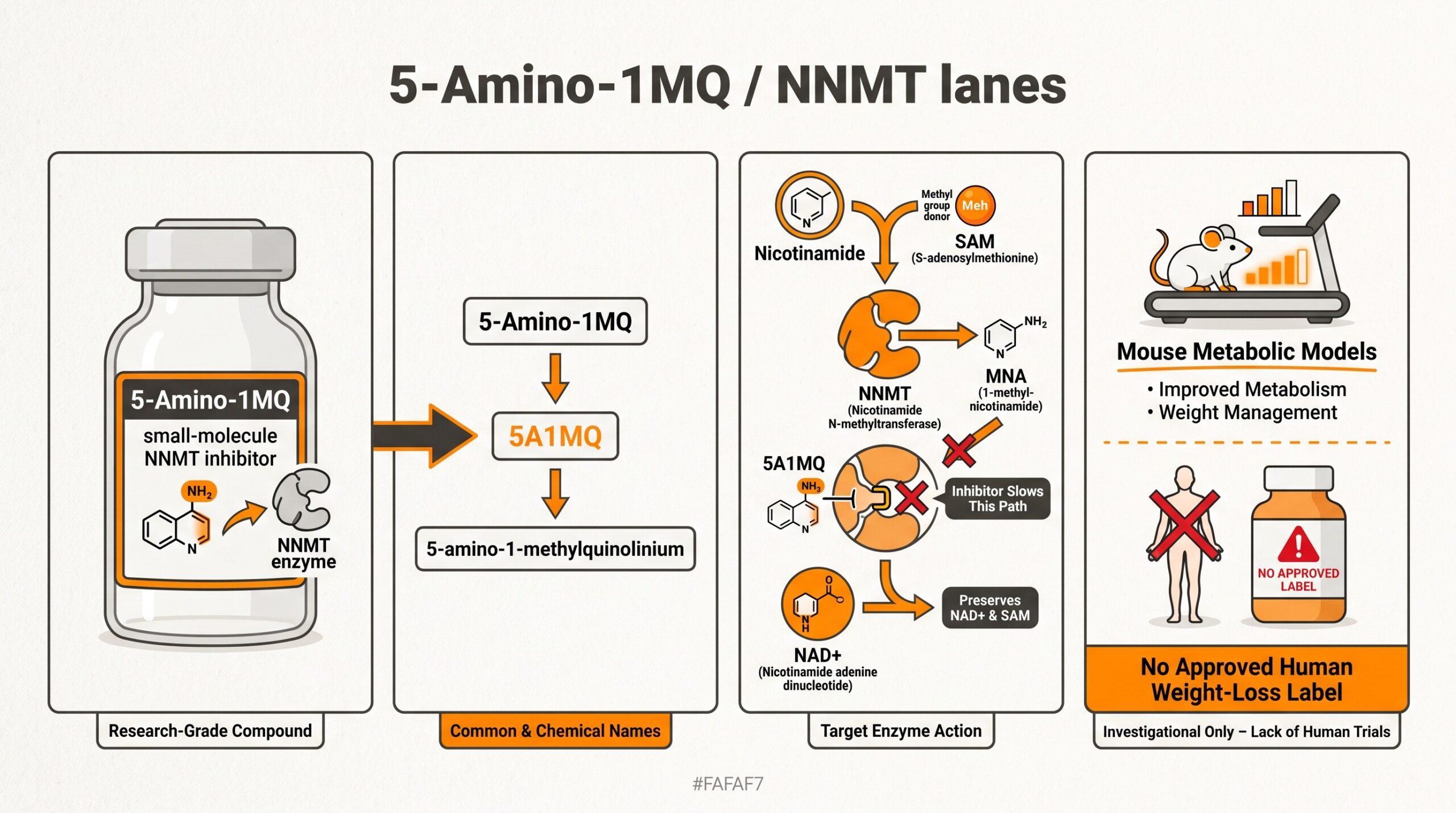
So what is 5-Amino-1MQ, in the way a beginner should hold it? A selective, membrane-permeable small-molecule NNMT inhibitor used in metabolic research. NNMT is the enzyme that transfers a methyl group from S-adenosylmethionine (SAM) onto nicotinamide, making 1-methylnicotinamide (MNA). When NNMT runs hot in fat tissue, that methyl-sink story shows up in obesity research. Inhibit the enzyme in models, and the papers measure body composition and glucose endpoints — not a free gym caption.
5-Amino-1MQ vs MOTS-c vs AOD-9604 vs GLP-1s
You do not need a biochemistry degree. You need four lanes and four jobs.
| Lane | What it actually is | What the evidence conversation is | What it is not |
|---|---|---|---|
| 5-Amino-1MQ / 5A1MQ | Small-molecule NNMT inhibitor (5-amino-1-methylquinolinium). Research-catalog spelling varies. | Mouse diet-induced obesity and metabolic endpoints after NNMT inhibition; classic NNMT genetics first, then selective chemistry. | Not a peptide. Not a GLP-1. Not an approved obesity drug sticker. |
| MOTS-c | 16-amino-acid peptide encoded in mitochondrial DNA. Full map on /mots-c/. | AMPK / metabolic research framing — different origin story from an NNMT small molecule. | Not 5-Amino-1MQ. Same podcast neighborhood. Different molecule. |
| SS-31 / elamipretide | Synthetic mitochondria-targeting tetrapeptide. Map on /ss-31/. | Cardiolipin / inner-membrane framing — not NNMT. | Not 5-Amino-1MQ. “Mito stack” captions do not merge residues and quinoliniums. |
| AOD-9604 | Fragment-style metabolic research compound. Map on /aod-9604/. | Different mechanism conversation from NNMT inhibition. | Not 5-Amino-1MQ. Do not stack bottles because both say “fat.” |
| GLP-1 / dual agonists | Incretin drugs with large human trial files. Compare on tirzepatide vs semaglutide. | Labeled medicines (and compounded copies of those conversations) live in a different regulatory lane. | Not 5-Amino-1MQ. A research NNMT inhibitor does not inherit a Wegovy-style label. |
You can be interested in all of them. You cannot mash 5-Amino-1MQ, MOTS-c, AOD-9604, and a GLP-1 into one Reddit protocol and call a mouse enzyme paper a clinic result.
Mechanism map (high level)
Search volume is not a protocol. Neither is a caption that says “melts fat without eating less.”
Start with the enzyme, not the bottle.
NNMT in one paragraph: Nicotinamide N-methyltransferase methylates nicotinamide using SAM. That reaction sits at a crossroads of NAD+ salvage and methylation capacity. Adipose and liver research asks what happens when NNMT is high in obesity models. A 2014 Nature paper showed that knocking down NNMT protected mice against diet-induced obesity (PubMed 24717514). A 2015 Nature Medicine paper linked hepatic NNMT to nutrient metabolism through Sirt1 stabilization (PubMed 26168293). Those are genetics and biology papers. They are not shopping lists.
Why a small-molecule inhibitor: Knockdown proves a target can matter. A pill-shaped research chemical asks whether you can hit that target with chemistry. Neelakantan and colleagues reported selective, membrane-permeable NNMT inhibitors — including 5-amino-1-methylquinolinium — that reversed high-fat-diet obesity phenotypes in mice without a large food-intake collapse in that study design (PubMed 29155147, 2018, Biochemical Pharmacology). That is the classic primary chemistry paper most honest 5-Amino-1MQ explainers should open with.
Here is the beginner translation of what that literature actually is.
Methyl sink / NAD+ neighborhood: When NNMT runs hard, nicotinamide gets methylated to MNA and SAM is spent. Inhibitors that lower that flux are discussed as preserving NAD+ / methylation capacity in cell and tissue models. A 2021 Molecular Metabolism review puts NNMT at the crossroads of cellular metabolism and epigenetic regulation (PubMed 33453420). A 2021 Biomedical Research International review covers NNMT roles in obesity and type 2 diabetes and cites the 5-amino-1MQ pharmacology story (PubMed 34368359). Mechanism paragraphs in reviews are not marching orders.
Preclinical metabolic breadth (not a shopping list): Follow-on mouse work tested NNMT inhibition with diet context. Dimet-Wiley et al. reported that a reduced-calorie diet combined with NNMT inhibition shaped a distinct microbiome signature in diet-induced obese mice (PubMed 35013352, 2022). Babula et al. (2024) assessed 5A1MQ on body composition, glucose/insulin measures, fatty-liver histology, and pharmacokinetics in diet-induced obese mice (PubMed 39161060). Preclinical breadth is an evidence shape. It is not a guarantee that a research-catalog product will treat human obesity.
What is missing on purpose: This page will not invent a Phase 3 obesity trial for 5-Amino-1MQ that is not sitting in PubMed under that molecule. If your forum says “human proven,” ask for the primary paper — not a screenshot of a catalog.
Evidence limits, stated plainly: Classic NNMT genetics are real (2014–2015). The selective 5-Amino-1MQ / 5A1MQ chemistry paper is real (2018). Newer mouse metabolic and diet-context papers are real. The indexed file remains overwhelmingly preclinical. A research-catalog SKU does not inherit an FDA obesity indication. This page refuses to invent PubMed IDs, refuses to crown a caption, and refuses to call a quinolinium a peptide just because the shop URL lives under “peptides.”
WADA and sport: if you compete, check the current prohibited list yourself. Research chemicals are not a free pass because a catalog said “research use only.”
Research catalog vs compounding vs FDA / labeled drugs
Three lanes. Keep them.
Labeled drugs have an application, a label, an indication, manufacturing the agency inspects for that product. Semaglutide and tirzepatide live in that neighborhood for obesity and diabetes indications. 5-Amino-1MQ, as sold in research catalogs, does not.
Compounding is a pharmacy lane. A 503A pharmacy compounds for a patient with a prescription. That lane has its own FDA bulk-substance fights and state-board rules. A compounded script, if a clinic even offers one, is still not automatic inheritance of a branded obesity-drug label. It is a different object from a research catalog with a coupon code.
Research catalogs sell named chemicals for research use. COA if you are lucky. “Not for human consumption” on the page. Forums treat that disclaimer as a wink. I do not. A research-use 5-Amino-1MQ vial or capsule is a catalog SKU. It is not a compounding script. It is not Wegovy. Pretending otherwise is how people get hurt and how this page would get stupid.
I am not going to tell you to buy a research chemical for human use. I am not going to tell you to skip a doctor. I am going to tell you to name the lane before you name the SKU.
Reconstitution notes (high level only)
Formats differ. Some catalogs sell lyophilized cakes. Some sell capsules or tablets. Some sell powder.
If a lyophilized cake is even on the table, learn the math before you invent a protocol. How to reconstitute peptides is the public page for bacteriostatic water, U-100 insulin-syringe ticks, and not wasting product on foam and dead volume. Read the label on the object you actually hold. A capsule is not a cake. A tablet is not a subcutaneous research schedule you saw on a forum.
I will not dump a 5-Amino-1MQ mg-and-days schedule on a public page. That is Pro on purpose.
Who this page is for (and who it is not)
Start with the question, not the bottle.
This page is for you if you typed 5-Amino-1MQ, 5A1MQ, NNMT inhibitor, or “non-GLP fat-loss research chemical” and want the research map before you spend money. Or if a podcast stacked it next to MOTS-c and you need the molecules separated.
This page is not for you if you want a diagnosis for obesity, diabetes, fatty liver, or “broken metabolism” from a blog. Those are clinician conversations. A research bottle does not replace that visit.
Here is the order I give beginners.
1. Read first. Name the lane before you name the SKU. Research catalog, compound, or labeled drug.
2. Name the chemical. 5-Amino-1MQ is the small-molecule NNMT inhibitor above. If the bottle also says “blend,” “MOTS-c,” or a second sequence, read every name on the label.
3. Do not crown the nickname. “Fat-loss peptide” won the caption. It did not turn a quinolinium into a peptide or a labeled obesity drug.
4. If a lyophilized cake is even on the table, learn the reconstitution math on the public page linked above — then stop. Protocol depth lives in Peptides & Pump Pro. Ten dollars a month. Seven-day trial.
Where I actually look when the job is a 5-Amino-1MQ research compound
Education first. You already got the map. This block is the labs I will put my name on, with the codes that fire. Research-use catalog pages. Not a treatment claim. Not a “buy this to melt fat.”
BioLongevity is my primary stop for the 10 mg research SKU — code LEE15. Peptira lists a 50 mg research presentation with code LEE. Paramount carries tablet presentations with tracking that fires LEE10. Limitless and S1 stay as home / shop chips when you want to browse the wider catalog.
Research-catalog SKUs currently live on partner pages (not a treatment recommendation).
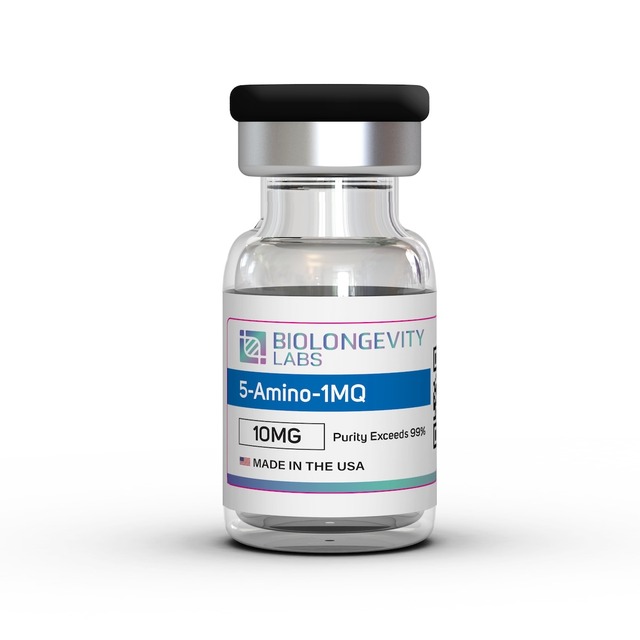
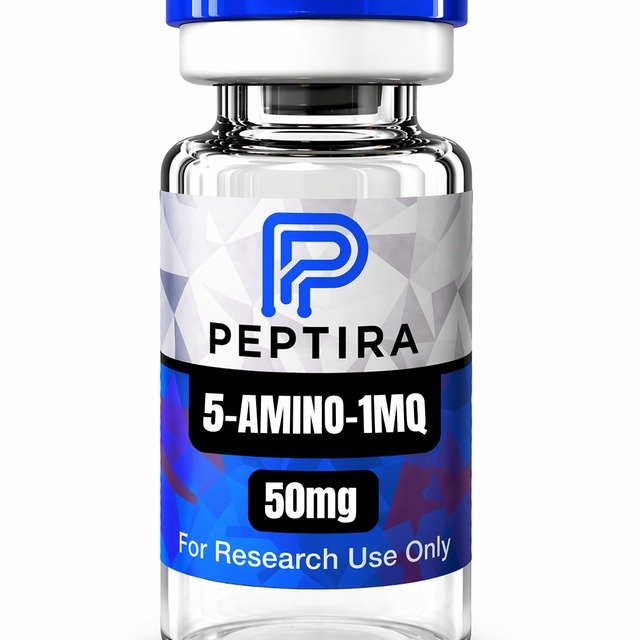
BioLongevity 5-Amino-1MQ 10 mg · LEE15Peptira 5-Amino-1MQ 50 mg · LEEParamount 5-Amino-1MQ tablets · LEE10BioLongevity home · LEE15Limitless home · LEE20S1 shop · LEE10
Match the product to the job. Do not collect bottles. Do not use a research catalog as a back door to a labeled obesity drug.
Frequently asked questions about 5-Amino-1MQ
Is 5-Amino-1MQ a peptide?
No. It is a small-molecule NNMT inhibitor (5-amino-1-methylquinolinium / 5A1MQ). Peptide shops sell it because buyers search for it next to metabolic peptides. Format on the shelf is not format in the molecule.
Is 5-Amino-1MQ the same as MOTS-c?
No. MOTS-c is a 16-amino-acid mtDNA-encoded peptide. 5-Amino-1MQ is a quinolinium NNMT inhibitor. Podcasts stack them. Chemistry does not. Read the MOTS-c research map if that is the molecule you actually typed.
Does 5-Amino-1MQ “burn fat”?
Not as a caption you can cash. Mouse papers after NNMT inhibition report body-composition and metabolic endpoint changes in diet-induced obesity models (PubMed 29155147; PubMed 39161060). That is preclinical evidence shape. It is not a human fat-loss guarantee and not a substitute for labeled obesity medicines when those are medically indicated. Talk to a clinician.
Is 5-Amino-1MQ FDA-approved for weight loss?
No general weight-loss / biohacking indication is what this page is claiming. Research-catalog presentations are not labeled obesity drugs.
Can I just run a 5-Amino-1MQ protocol from a forum?
You can do a lot of unwise things. I would not. Name the chemical. Name whether you are holding a research catalog, a compounded script, or a fantasy about a GLP-1. Protocol depth lives in Pro on purpose. This public page is the map, not the marching orders.
Selected references (research framing)
These are starting points for the published file — classic NNMT biology and newer 5-Amino-1MQ / 5A1MQ pharmacology. Not a protocol, not a drug label, not an endorsement to self-treat. I am not inventing citations; every ID below was verified against PubMed before publish.
- Classic NNMT knockdown protects against diet-induced obesity (Nature, 2014) — PubMed 24717514.
- Hepatic NNMT and nutrient metabolism / Sirt1 (Nature Medicine, 2015) — PubMed 26168293.
- Classic primary chemistry: selective membrane-permeable NNMT inhibitors (including 5-amino-1-methylquinolinium) reverse HFD obesity phenotypes in mice (Biochem Pharmacol, 2018) — PubMed 29155147.
- NNMT at the crossroads of metabolism and epigenetic regulation (Mol Metab, 2021) — PubMed 33453420.
- NNMT roles in obesity and type 2 diabetes review (Biomed Res Int, 2021) — PubMed 34368359.
- Reduced-calorie diet + NNMT inhibition microbiome study in DIO mice (Sci Rep, 2022) — PubMed 35013352.
- Newer 5A1MQ metabolic / liver / PK mouse study (Diabetes Obes Metab, 2024) — PubMed 39161060.
Read primary sources. Do not treat a PubMed ID as a shopping list.
The bottom line
5-Amino-1MQ is a small-molecule NNMT inhibitor — 5A1MQ / 5-amino-1-methylquinolinium in the naming trail — with a metabolic research map that runs from classic mid-2010s NNMT genetics through 2018 selective chemistry and newer mouse work. Real target conversation. Real research intent. A research-catalog bottle is still not a labeled obesity drug.
It is not a peptide. It is not MOTS-c. It is not a GLP-1. Keep the lanes. Read the papers. Do not buy a quinolinium because a caption told you it was a clinic-grade fat burner.
If you need the beginner on-ramp, use Start Here and what are peptides. Reconstitution math, when a lyophilized cake is even on the table, is on how to reconstitute peptides. Adjacent metabolic reading already live: MOTS-c, AOD-9604, peptides for weight loss, and the mitochondrial spoke on SS-31.
Free guide
Get The Peptide PlaybookEnter your email and we’ll send the research PDF. Education only — not medical advice.
I built Peptides & Pump so you can get this without a guru tax. If you want the protocol library, member discussions, and a place to think out loud before you spend money, that is Pro. If you are not ready to pay, use the free Knowledge Base first. Then come back and argue with me when you have read more than a caption.
 Keep going on Peptides & Pump
Free is the peptide community. Pro is where you master it. Codes are the links. Click them so the discount fires.
Free
Knowledge Base
The peptide community · 2,500+
- 2,500+ member peptide community
- Sourcing questions before you buy anything random
- The basics, from people actually using peptides
Pro
Peptides & Pump Pro
$10/mo · 7-day trial
- Science-backed protocol library
- 1-on-1 support from Lee and Matt
- Step-by-step video, plus a monthly $500 drawing
LEE20 Limitless LEE15 BioLongevity LEE10 Paramount LEE Peptira LEE10 S1
Supplier footnote: Research suppliers I mention when people ask about 5-Amino-1MQ compounds: BioLongevity 5-Amino-1MQ 10 mg (code LEE15), Peptira 5-Amino-1MQ 50 mg (code LEE), and Paramount 5-Amino-1MQ tablets (code LEE10). Browse wider catalogs via Limitless home (code LEE20) and S1 shop (code LEE10). Match the product to the job. Do not collect bottles.
Disclaimer. This article is for educational and research purposes only. It is not medical advice. It is not intended to diagnose, treat, cure, or prevent any disease. 5-Amino-1MQ, 5A1MQ, 5-amino-1-methylquinolinium, NNMT inhibitors, and related research-catalog presentations are not presented here as treatments for obesity, type 2 diabetes, fatty liver, aging, metabolic syndrome, or any other condition. A research-catalog product is not a compounded prescription and is not a labeled obesity or diabetes drug. Most of the published evidence discussed here is preclinical; that is not a substitute for a clinician. Individual results vary. Always consult a qualified healthcare provider before starting any peptide, drug, supplement, or protocol, especially if you have a medical condition or take prescription medication. Peptides & Pump does not sell peptides.
Affiliate disclosure. Some links on this page are affiliate links. If you buy through them, I may earn a commission at no extra cost to you. Codes LEE15, LEE20, LEE, and LEE10 are the ones I actually use where a coupon fires. That commission is how I keep publishing free education. I only link suppliers I am willing to put my name on.

One Comment
Comments are closed.