Peptide Calculator: Reconstitution Math Map
Key takeaways
- Verdict: A peptide calculator is math for mix strength. It is not a free public dose chart for treating anything.
- How it works in one line: Think lemonade concentrate. How much water you add sets how strong each sip is.
- Your next step: learn the ruler (mg, mcg, mL, units), then the mix skill on the reconstitute page. No public protocol table here.
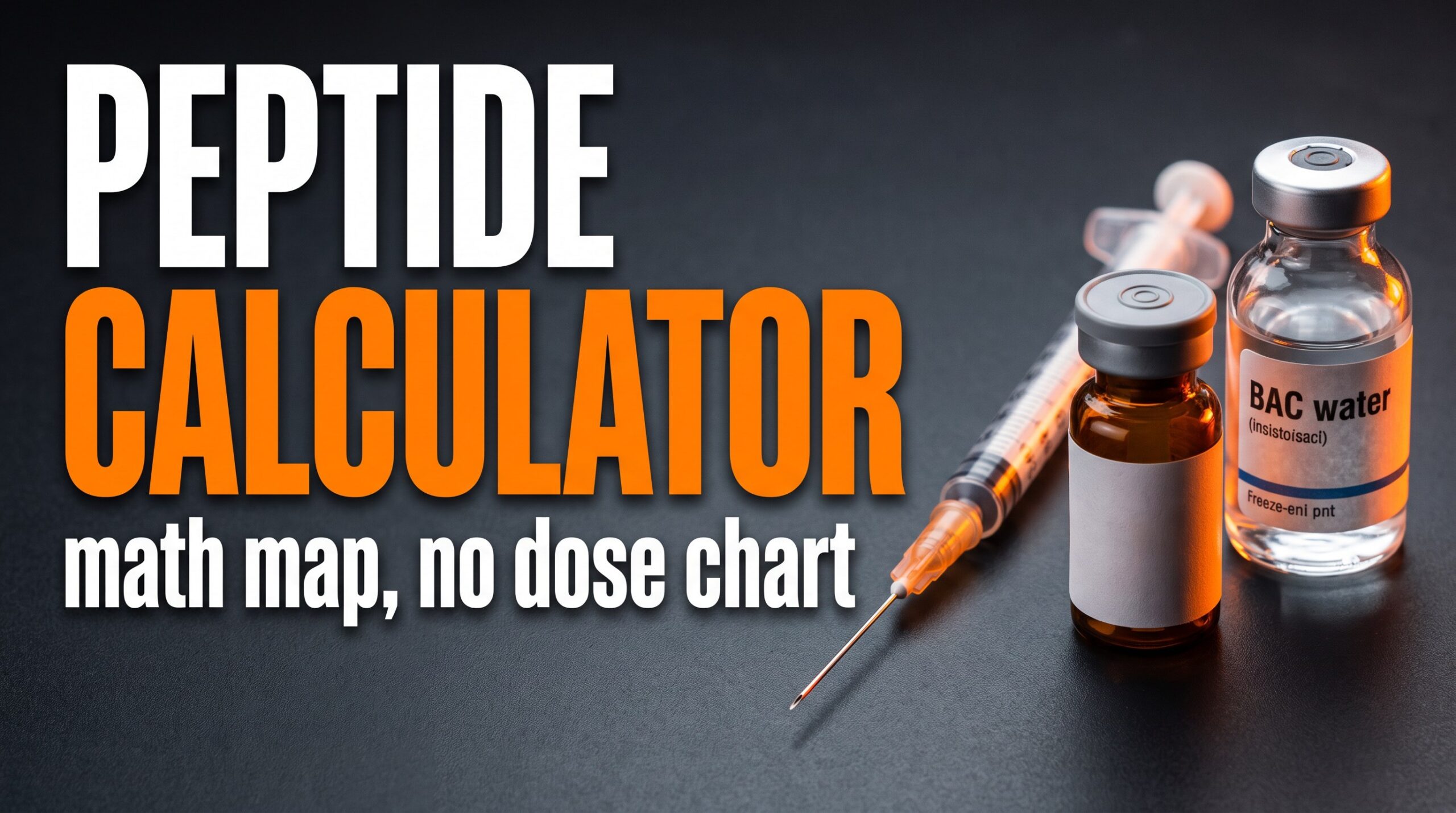
Verdict up front: a peptide calculator is worth learning if you keep seeing syringe “units,” vial milligrams, and BAC water volumes smashed into one confusing screenshot. It is a reconstitution math map. It is not a magic app that makes research vials into FDA-approved therapy.
There is real pharmacy math behind concentration. There is also a lot of forum noise that sells a public dose chart as the same thing. This free page will not do that.
Keep reading if you typed peptide calculator, peptide dosage calculator, peptide reconstitution calculator, or U-100 units and want a clean hub. Skip if you want a public peptide-by-peptide dose table. Skip if you want a claim that a calculator treats disease. Skip if you want a reason to ignore a pharmacist or a clinician. Those asks belong in Pro. Or a real clinic visit.
Day-one basics live on Start Here and what are peptides. Nearby maps: how to reconstitute peptides, bacteriostatic water, BPC-157, TB-500, peptides for healing, and Wolverine blend map.
This page is teaching only, not medical advice. Research-shelf math is not an FDA-approved treatment claim here. Real drug labels belong to clinics. This map will not tell you to skip a doctor.
What a peptide calculator actually is
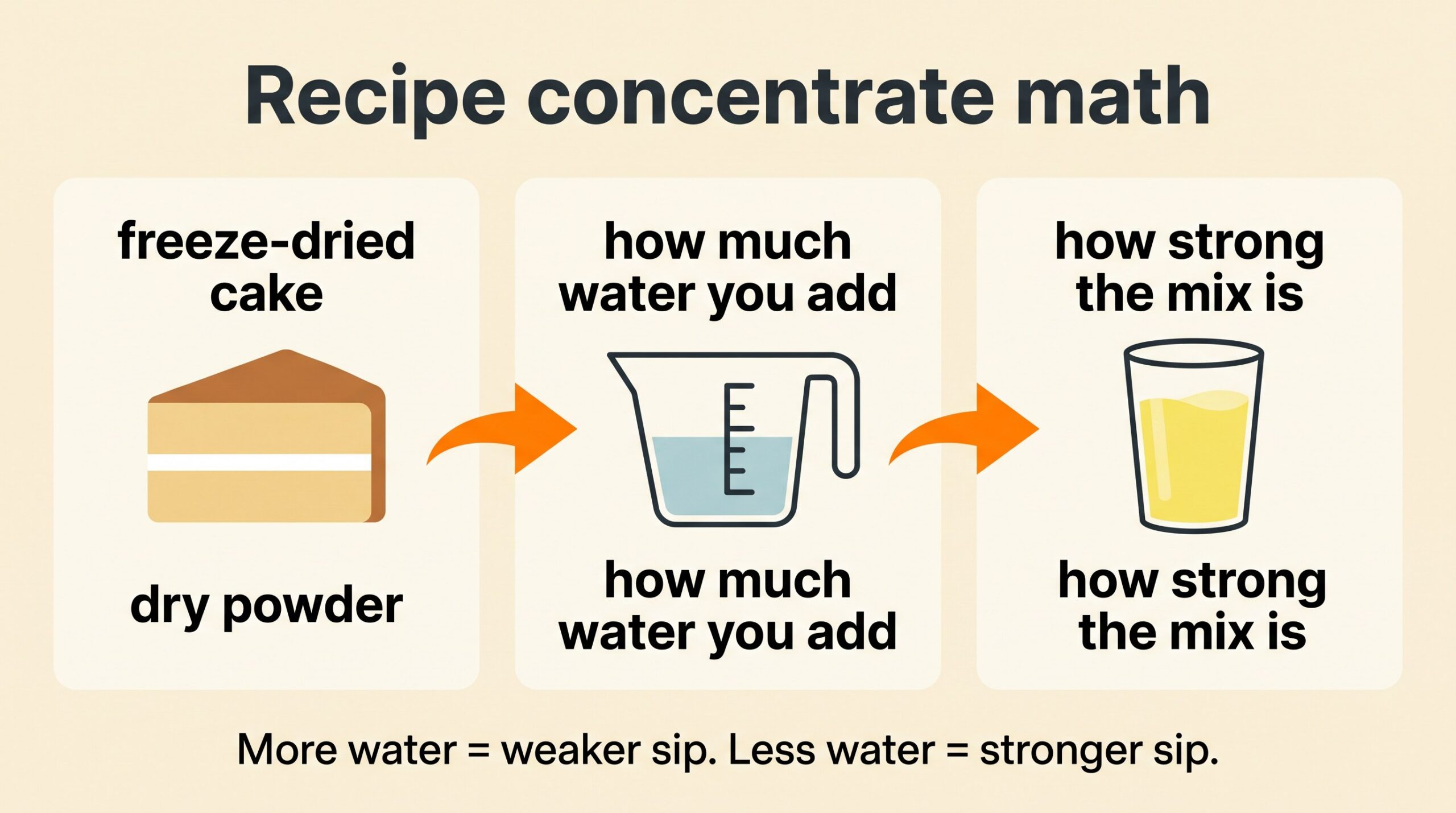
Start with the plain search. A peptide calculator is a tool that turns vial size and diluent volume into concentration. Concentration means how strong each milliliter is after you wet the dry cake.
People also type peptide dosage calculator and peptide reconstitution calculator. Same family of questions. Different marketing titles.
It is not the peptide. It is not BAC water. It is not a clinic prescription pad. It is the arithmetic layer between a freeze-dried label and a syringe marking.
Why this matters: if you confuse “calculator” with “protocol,” you buy the wrong next step.
So what for you: name the math job before you name the app.
The lemonade analogy (one mechanism picture)
Here is the only picture I want stuck in your head.
Think of a freeze-dried vial like lemonade powder in a can. The powder mass is fixed. The water you add is your choice. More water makes a weaker sip. Less water makes a stronger sip.
That sip strength is concentration. Labs write it as mg per mL or mcg per mL. Same idea as “how strong is this glass.”
A calculator just does the division without you dropping a zero. It does not invent a medical plan. It does not know your labs. It does not know a clinician’s order.
How sure are we? Pretty sure pharmacy math has always been mass divided by volume. Pretty sure U-100 insulin syringes mark 100 units as 1 mL. Pretty sure dead-space and mix-error papers show small tools can still miss. Not sure at all that a random website calculator equals a hospital drug plan.
Why this matters: if you cannot explain lemonade strength in one line, wait on the cart.
So what for you: ask what number the tool is solving before you trust the output.
The stop-you number (and what it is not)
The cleanest stop-you line is not a forum tip. It is a syringe ruler.
On a standard U-100 insulin syringe, 100 units = 1 mL. In plain words: one unit is one hundredth of a milliliter. That conversion is why calculators spit out “units” next to mcg.
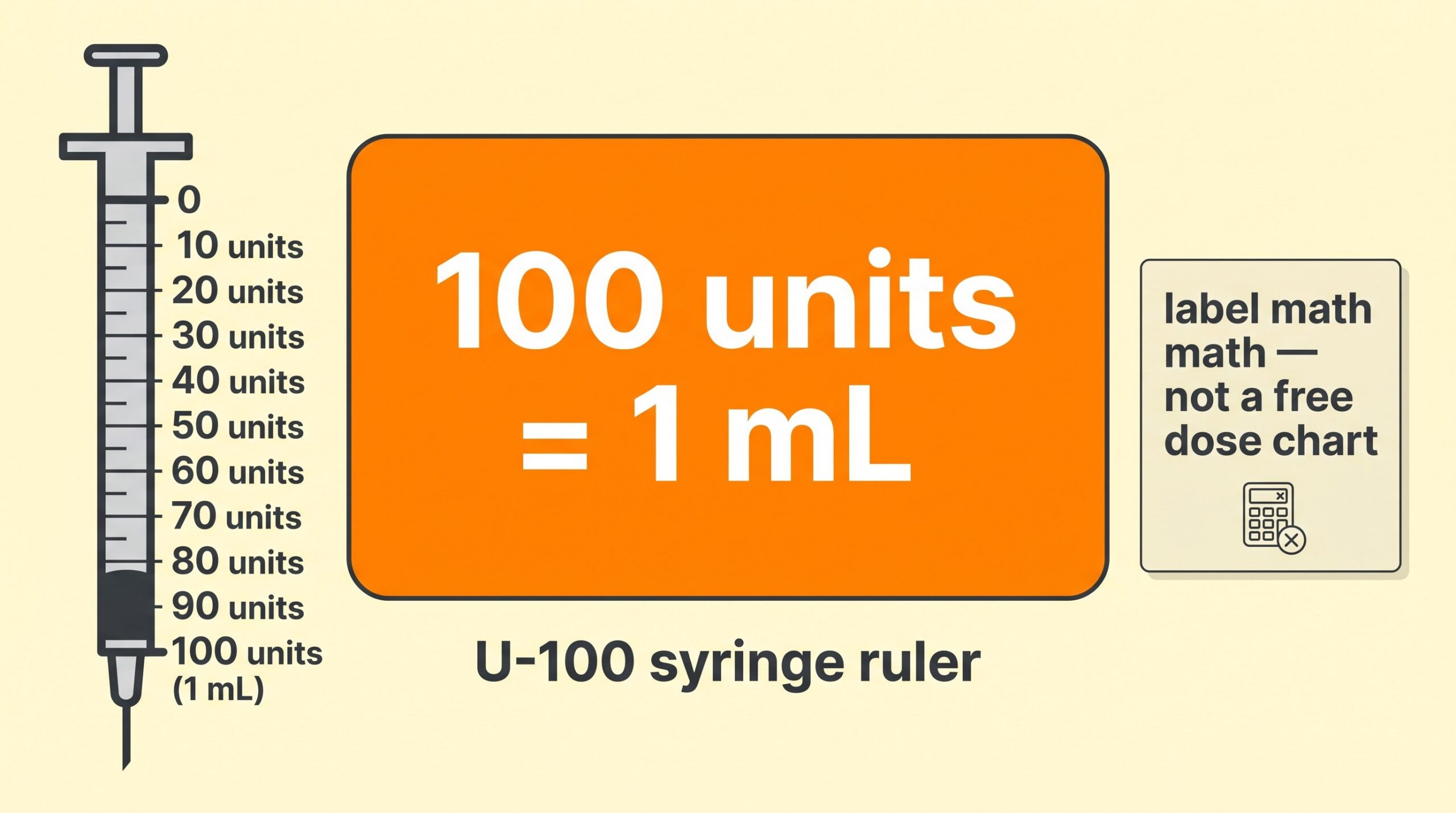
Hold the history next to that ruler. Classic insulin-syringe papers studied dead space and mix accuracy in real hands. Small volume tools can still bias a draw. That is why clinics care about technique and device design. It is not a free public peptide protocol.
Why this matters: the stop-you detail is that units are a volume ruler. Confidence for “any screenshot equals a safe home plan” is still zero here.
So what for you: be impressed by the ruler. Do not confuse a unit mark with a prescription.
Evidence limits (say this out loud)
Honest teaching rests on pharmacy concentration math, insulin-syringe accuracy papers, reconstitution technique basics, and label literacy. Forum “paste this dose for every vial” scripts are not that mountain.
Also hold the mg vs mcg trap. One thousand micrograms make one milligram. Drop a zero and every later draw is wrong. Calculators exist because that trap is common. They still cannot replace a clinician when a real drug is involved.
Also hold the shelf-vs-paper gap. Social media sells “same calculator the clinic uses.” Hospital dosing systems live under policy, labeling, and patient context. Research-shelf curiosity math is another door.
Why this matters: health pages get hurt if they blur “interesting mix math” into “treat yourself from Instagram.”
So what for you: if someone is pregnant, infection signs show up, or a clinician gave a different plan, stop here. Get human help.
Three doors: basics vs clinic vs research map
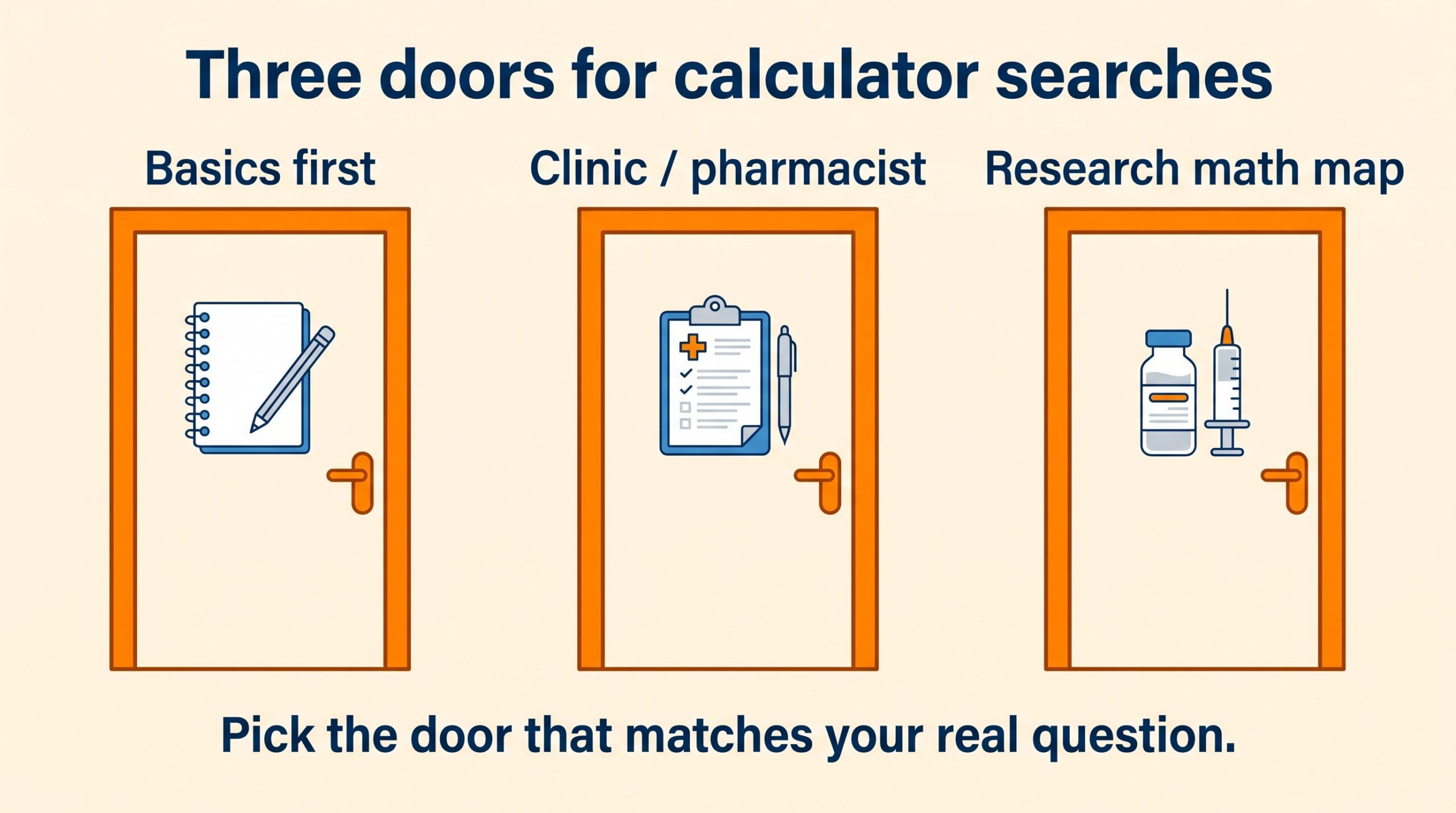
There are three doors for the same keyword online. Each door does a different job.
Door 1 is basics first. Labels. Dates. Clean bench. Fresh swabs. Storage. Know mg vs mcg before you open an app.
Door 2 is clinic and pharmacist. Real drug labels. Ordered concentrations. Device training. Infection-control rules. Clinicians own this door.
Door 3 is research math map. How concentration works. How U-100 units map to mL. How BAC water volume changes strength. Nearby freeze-dried research vials. Education only on this free site. Not a public dose chart.
Why this matters: people lose money when they buy Door 3 while the real problem was Door 1 or Door 2.
So what for you: write your real goal in one sentence, then pick a door.
The four numbers every calculator needs
Vial mass is what the label claims is in the dry cake. Often milligrams.
Diluent volume is how much bacteriostatic water or other mix fluid you add. Measured in milliliters.
Concentration is mass divided by volume after mixing. That is lemonade strength.
Draw volume is how much liquid you pull for one research aliquot. On a U-100 syringe, that draw often gets restated as units.
The hands-on mix skill lives on how to reconstitute peptides. The diluent map lives on bacteriostatic water. This hub is the calculator layer between those pages.
Why this matters: one missing number turns a calculator into a guessing game.
So what for you: fill all four before you trust any output.
Myths that waste money
- “A calculator is a protocol.” No. It is mix math.
- “Units mean insulin dose.” No. On U-100 tools, units are volume marks when you use them as a ruler.
- “mg and mcg are close enough.” No. They differ by a thousand.
- “If the app is free, it is FDA-approved therapy math.” No. Research-shelf curiosity is not a therapy approval here.
- “Any BAC water volume is fine forever.” No. Volume sets strength. Labels and clean habits still matter.
Why this matters: myth stacks hurt people and can punish domains.
So what for you: keep the curiosity. Kill the Marvel script.
Partner research options (codes in the links)
Education first. You already have the map. Limitless mix SKUs that are out of stock are not the hero this pass. Below are public options people park next to calculator work: diluents plus nearby freeze-dried vials. Codes fire in the links. Research-use and education framing only. Not a treatment claim.
Public diluent + nearby vial maps
 Peptira
BAC Water (Hospira)
LEE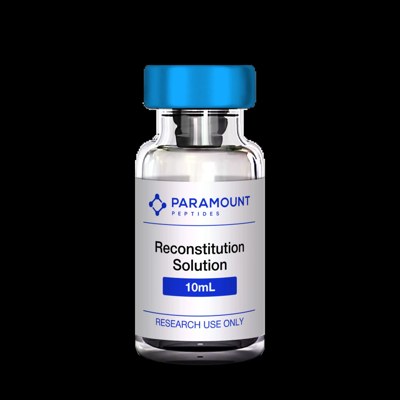 Paramount
Reconstitution Solution
LEE10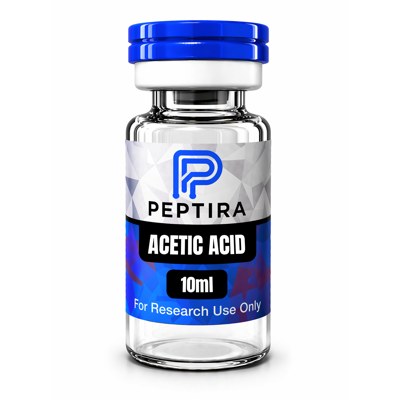 Peptira
Acetic Acid 10mL
LEE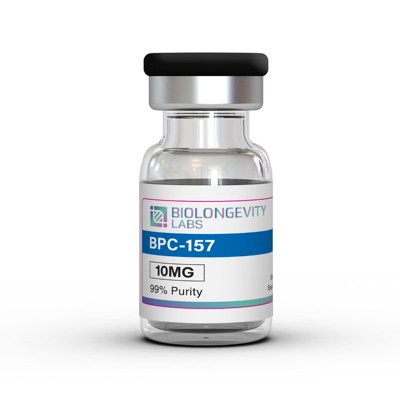 BioLongevity
BPC-157 (10mg)
LEE15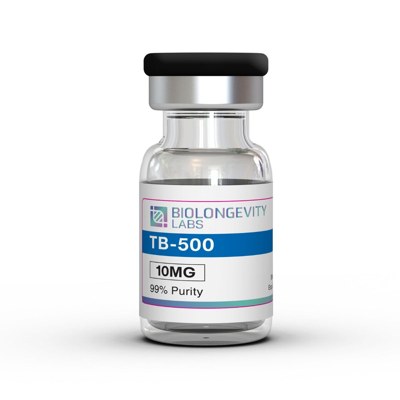 BioLongevity
TB-500 (10mg)
LEE15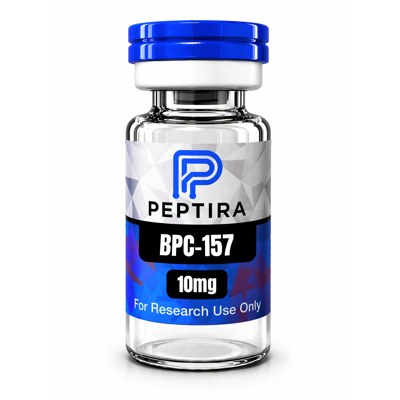 Peptira
BPC-157
LEEPeptira BAC Water · LEE Paramount Recon · LEE10 Peptira Acetic Acid · LEE BPC-157 · LEE15 TB-500 · LEE15 Limitless home · LEE20
No Limitless VIP mix SKU is heroed here while those listings stay out of stock. Keep tracked homes handy too: Limitless LEE20, Paramount LEE10, Peptira LEE, S1 LEE10, and BioLongevity LEE15.
How to think about next steps
If you do not want to waste a freeze-dried vial, start with Door 1, then the reconstitute page. Clean technique beats a fancy calculator every time. If you want the math map of concentration and U-100 units, learn Door 3 after the lemonade story clicks.
Pro goes deeper on mix frameworks, storage windows, and how to read a COA. The free page’s job is still the map.
Why this matters: next steps that match the door save money. They also cut health-page risk.
So what for you: write your real question in one sentence before you click a code.
Key takeaways (echo)
- A peptide calculator is a mix-strength map. Not a free therapy protocol.
- The best one-line picture is lemonade concentrate. Water volume sets strength.
- U-100 units are a volume ruler. Dead-space papers can be real. Forever-safe Instagram charts are thinner than the ads. Basics and clinicians still beat hype apps. Start there.
Get the Peptide Playbook
Free email map for how to think about research peptides without the guru noise. No naked PDF dump — just the Playbook form.
Sources & Further Reading
- Arnott RD, et al. Insulin syringes: dangers of dead space. Med J Aust. 1982. PMID 7050644
- Corcoran JS, Yudkin JS. How inaccurate is insulin mixing? Patient variability and syringe dead space effect. Diabet Med. 1985. PMID 2952398
- Berne C, et al. How accurate are insulin mixtures prepared by the patient? Diabetes Care. 1986. PMID 3512203
- Havuz E, et al. The influence of dead spaces and the designs of injectors on the amount of drug dose in intra-vitreal injection. Eur J Ophthalmol. 2021. PMID 33242996
- Sharma P, Dunham A. Pharmacy Calculations. StatPearls. 2023. PMID 32809759
- Manchikanti L, et al. Assessment of infection control practices for interventional techniques: a best evidence synthesis of safe injection practices and use of multi-dose vials. Pain Physician. 2012. PMID 22996856
Educational research map only. Not medical advice. Not FDA-approved treatment claims. Partner links may earn a commission. Codes live in the links.