Peptides for Fat Loss: AOD, 5-Amino-1MQ, MOTS-c Map
Key takeaways
- Verdict: “Peptides for fat loss” is a map of fat-oxidation and metabolic research tickets — not one miracle vial, and not the same page as appetite GLP-1 drugs.
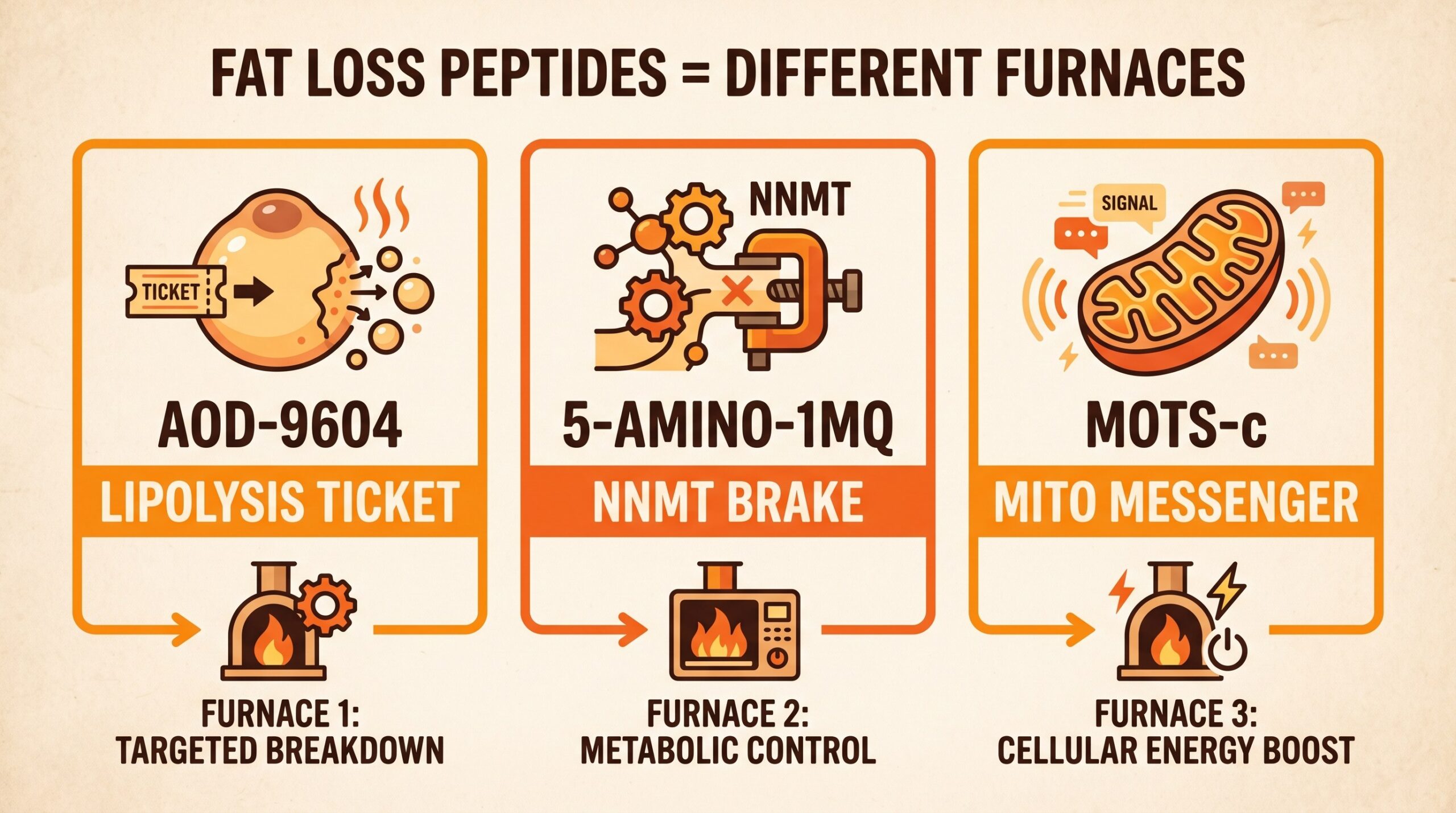
- How it works in one line: Think of these tools as different furnaces. AOD-9604 talks lipolysis. 5-Amino-1MQ talks an NNMT brake. MOTS-c talks mito messaging. Different jobs.
- Your next step: keep food, sleep, steps, and clinician lanes first. Use this page to separate oxidation research from weight-loss drug talk. No public dose chart here.
Verdict up front: peptides for fat loss are worth studying if you keep seeing AOD-9604, 5-Amino-1MQ, MOTS-c, or “shred” blends next to fat-burn search terms. They are not worth treating a research catalog like an FDA obesity clinic with a comic-book label.
There is a real animal and cell file for some of these tools. There is also a lot of forum mash-up with GLP-1 appetite drugs. This free page will not hand you a public fat-loss protocol.
Keep reading if you typed peptides for fat loss, fat loss peptides, AOD-9604, 5-Amino-1MQ, MOTS-c fat loss, or best peptides for fat loss and want the oxidation map without guru noise. Skip if you want a public dose chart. Skip if you want a claim that a research product treats obesity, diabetes, or metabolic disease like a labeled drug. Skip if you want a reason to skip food honesty, sleep, or a clinician. Those asks belong in Pro or a real visit.
Day-one basics live on Start Here and what are peptides. Nearby maps: peptides for weight loss, AOD-9604, 5-Amino-1MQ, MOTS-c, SLU-PP-332, tesofensine, tirzepatide vs semaglutide, protein intake, Zone 2 training, how to sleep better, and how to reconstitute peptides.
This page is teaching only, not medical advice. A research-shelf fat-loss peptide is not an FDA-approved drug claim here. Labeled obesity medicines follow drug rules. This map will not tell you to skip a clinician.
What people mean by peptides for fat loss
Start with the plain search. Peptides for fat loss usually means short chains of amino acids people study for body-fat talk. A peptide is a short protein scrap. Some tissues can read those scraps like tiny messages.
People mash four aisles into one keyword. AOD-9604 as a growth-hormone fragment ticket. 5-Amino-1MQ as an NNMT brake story. MOTS-c as a mitochondrial messenger. Blend bottles sold as shred stacks. Same search box. Different jobs.
It is not the same page as peptides for weight loss. That hub spends more time on appetite and GLP-1 drug maps. This page parks on fat-oxidation and metabolic research honesty. Related. Not twins.
Why this matters: if you buy the wrong aisle, you will judge the wrong tool and then blame “peptides” as a whole.
So what for you: name the furnace before you name the brand.
The furnace analogy (one mechanism picture)
Here is the only picture I want stuck in your head.
Think of body fat like fuel in different tanks. Fat loss talk online often pretends there is one switch. There is not.
AOD-9604 is a modified scrap from the end of human growth hormone. Lab work asks if that scrap can push fat-breakdown talk without the full growth-hormone package. Call it a lipolysis ticket.
5-Amino-1MQ is not a classic peptide chain in the same way. People still park it in the same search because it targets NNMT. NNMT is an enzyme that helps shuffle nicotinamide chemistry. Mouse work asks what happens when you put a brake on that enzyme in diet-induced obesity models.
MOTS-c is a short mitochondrial messenger. Cells make it from mitochondrial DNA. Papers ask how that messenger talks to metabolism under stress.
How sure are we? Pretty sure these tools have real preclinical biology. Pretty sure some human AOD-9604 clinical attempts exist in the older file and did not become a mainstream FDA obesity drug. Less sure that every shred blend matches those papers. Not sure at all that a research vial equals labeled obesity medicine.
Why this matters: if you cannot explain furnace vs appetite drug vs research vial in one line, do not open a cart yet.
So what for you: ask what job the molecule claims before you ask for a discount code.
The stop-you number (and what it is not)
The cleanest stop-you line is not a before-and-after selfie. It is an obese-mouse fat-oxidation result with a confidence label.
In a 2001 International Journal of Obesity paper, chronic treatment with a modified C-terminal growth-hormone fragment increased fat oxidation and weight loss in obese mice. That fragment family is the AOD9604 story. Say that in plain words: an animal furnace model moved fat burn and scale weight.
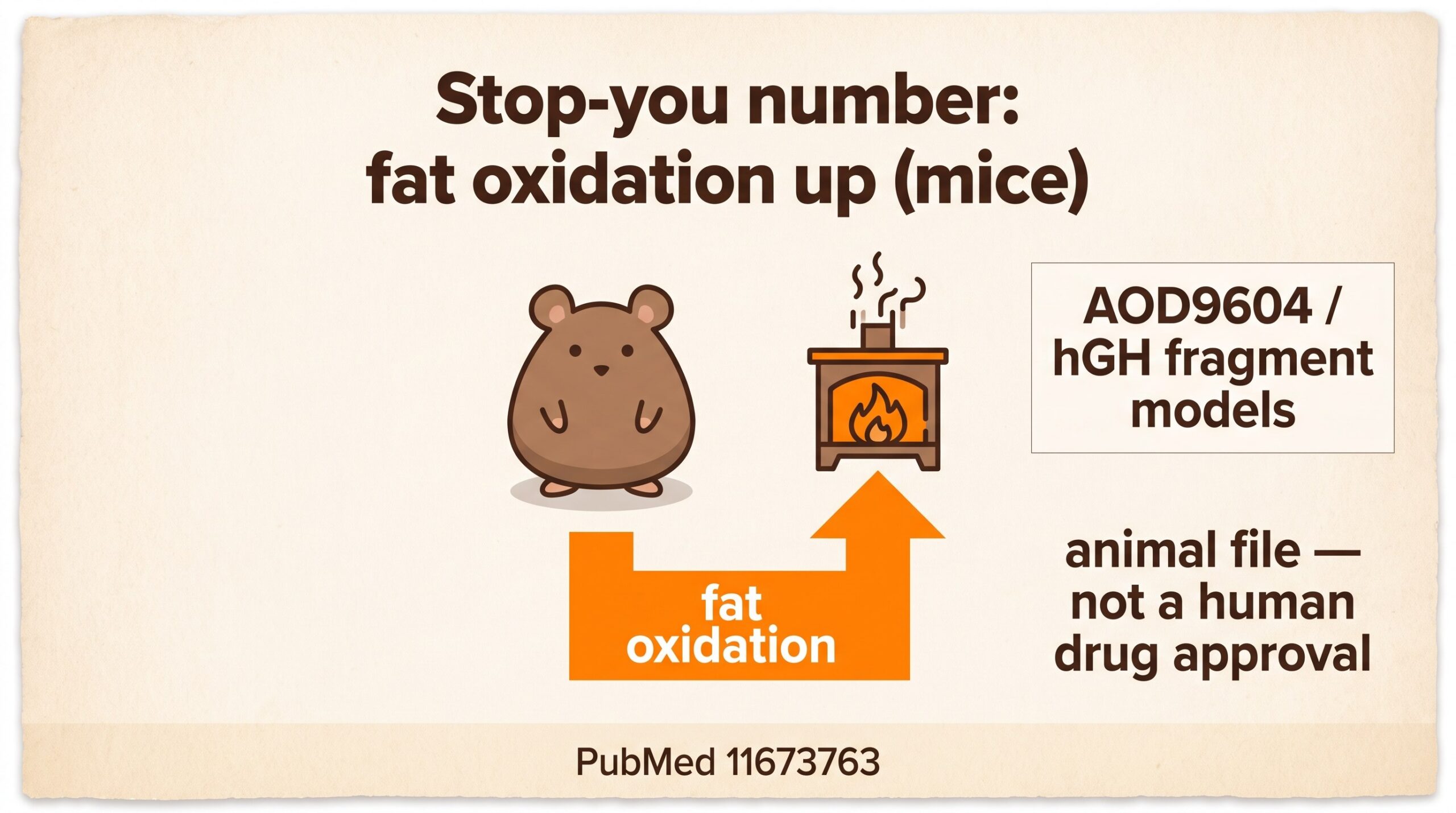
Related mouse and metabolic studies on the same fragment family keep showing lipid-metabolism talk. That animal file is interesting. It is not a green light to treat a catalog vial like Wegovy paperwork.
Hold the clinical floor next to that map. FDA-labeled obesity medicines still live with clinicians when they fit. Appetite GLP-1 maps are a different door. Research oxidation tickets are Door 3 literacy.
Why this matters: the stop-you detail is that fat-oxidation peptide curiosity has a real lab floor. The confidence for “my catalog vial is homemade obesity medicine” is still zero on this free site.
So what for you: be impressed by the map. Do not confuse a chemical tool with a prescription pad.
Evidence limits (say this out loud)
Most honest teaching for fat-loss peptides rests on cell work, animal models, mechanism reviews, and a thinner human clinical file than the ads suggest. Big randomized human obesity approvals for AOD-9604, 5-Amino-1MQ, or MOTS-c as free-site catalog products are not the same mountain as forum captions.
NNMT inhibition papers can look sharp in mice. Mitochondrial MOTS-c papers can look sharp in metabolic models. That still does not make every shred blend a published fat-loss drug. SNAP-8 and cosmetic cousins live mostly in wrinkle talk. Different job. SNAP-8 is skipped as a shoppable hero here unless Drive plus InStock says otherwise.
Also hold the shelf-vs-paper gap. Social media sells “same as the mouse study in a vial.” PubMed studies are supervised lab arms. Same family of curiosity. Different sales story.
Why this matters: health pages get punished when they blur “interesting research chemical” into “treat your obesity from Instagram.”
So what for you: if someone has diabetes, unexplained weight change, or a medicine question, this page is not the tool. Get human help.
Three doors: basics vs clinic vs research map
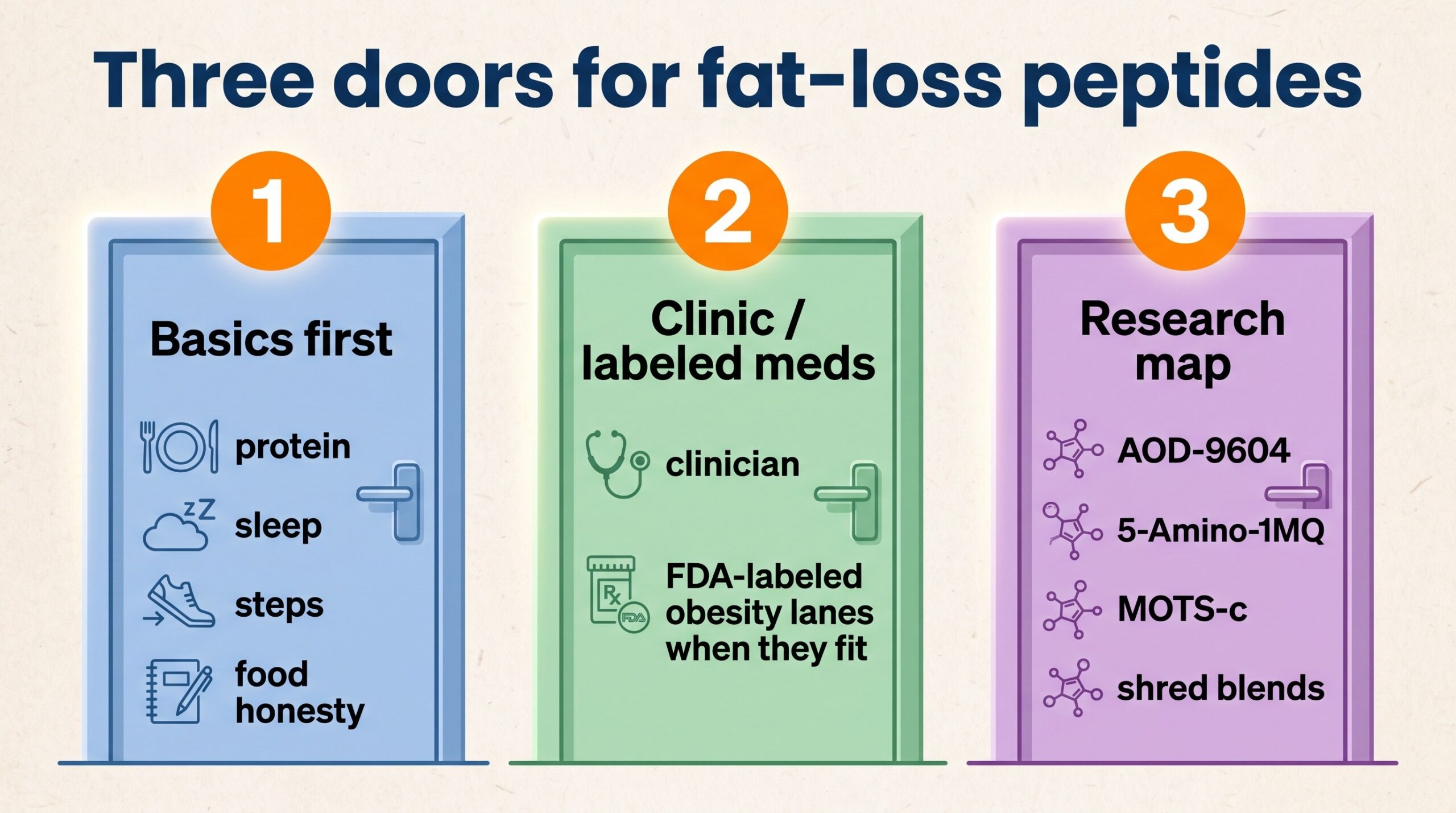
There are three doors for the same curiosity online, and each door does a different job.
Door 1 is basics first. Protein. Sleep. Steps. Food honesty. Strength work. Zone 2. Boring wins more fat battles than a mystery vial.
Door 2 is clinic and labeled meds. Diagnosis. Metabolic labs. FDA-labeled obesity lanes when they fit. Real clinicians own this door.
Door 3 is research map. AOD-9604. 5-Amino-1MQ. MOTS-c. Nearby shred blends. Education and research framing only on this free site. Not a public dose chart.
Why this matters: people lose money when they buy Door 3 while their real problem was Door 1 or Door 2.
So what for you: write your real goal in one sentence, then pick a door.
Map the common names without the mash-up
AOD-9604 is the lipolysis-ticket name most fat-loss searches park first. Start with the AOD-9604 map if that molecule is your question.
5-Amino-1MQ is the NNMT-brake cousin. Mouse obesity-model work is the main evidence shape. Deep dive: 5-Amino-1MQ.
MOTS-c is the mito messenger. Metabolic homeostasis papers sit here. Deep dive: MOTS-c.
Shred / metabolic blends stack several jobs in one bottle. Read each piece. A blend is not proof that every ingredient has human fat-loss trials.
GLP-1 appetite drugs are a different aisle. If that is your real question, go to peptides for weight loss and tirzepatide vs semaglutide.
Why this matters: one keyword should not erase five different products.
So what for you: open the single-compound page when you are ready for depth.
Myths that waste money
- “Peptides replace food honesty.” No. Door 1 still owns the base.
- “Mouse fat-oxidation study = proven obesity cure.” No. Species and trial gaps are real.
- “Fat loss peptides = the same as Ozempic.” No. Appetite drugs and oxidation tickets are different furnaces.
- “Every shred blend is AOD-9604.” No. Read the label.
- “If it is for sale, it is FDA-approved for fat loss.” No. Research-shelf listings are not obesity-drug approvals on this free site.
Why this matters: myth stacks are how health pages get people hurt and domains get punished.
So what for you: keep the curiosity. Kill the Marvel script.
Partner research options (codes in the links)
Education first. You already got the map. Limitless VIP-login and out-of-stock fat-loss SKUs are not the hero this pass. Below are InStock public options with codes that fire. Fat-oxidation and metabolic research maps. Research-use and education framing only. Not a treatment claim.
Public InStock fat-loss-adjacent maps
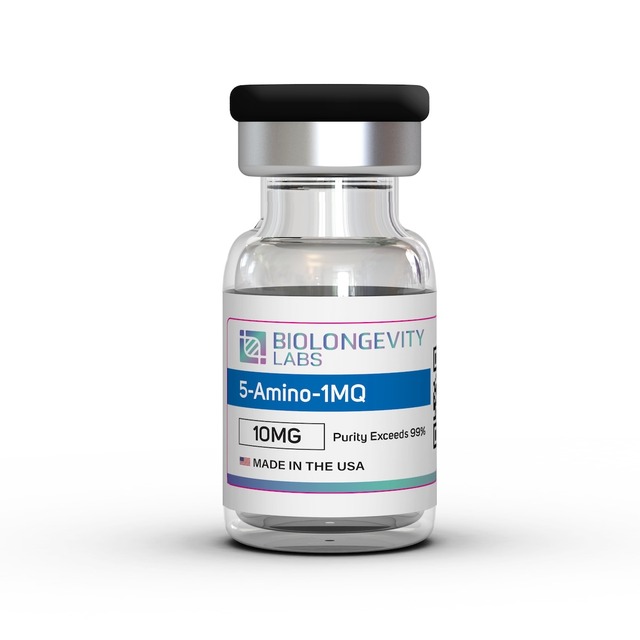 BioLongevity
5-Amino-1MQ 10 mg
LEE15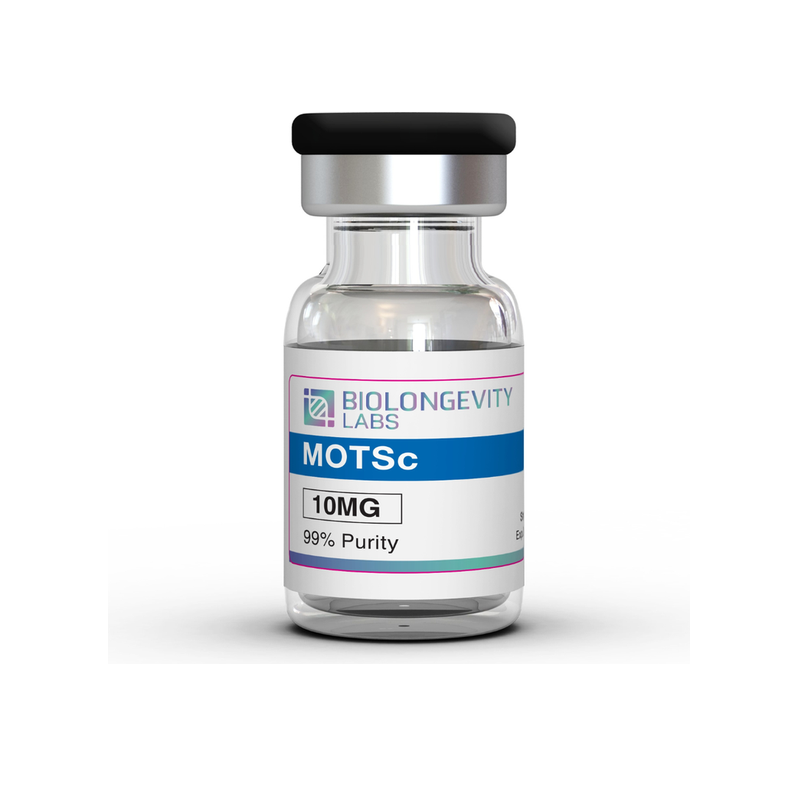 BioLongevity
MOTS-c 10 mg
LEE15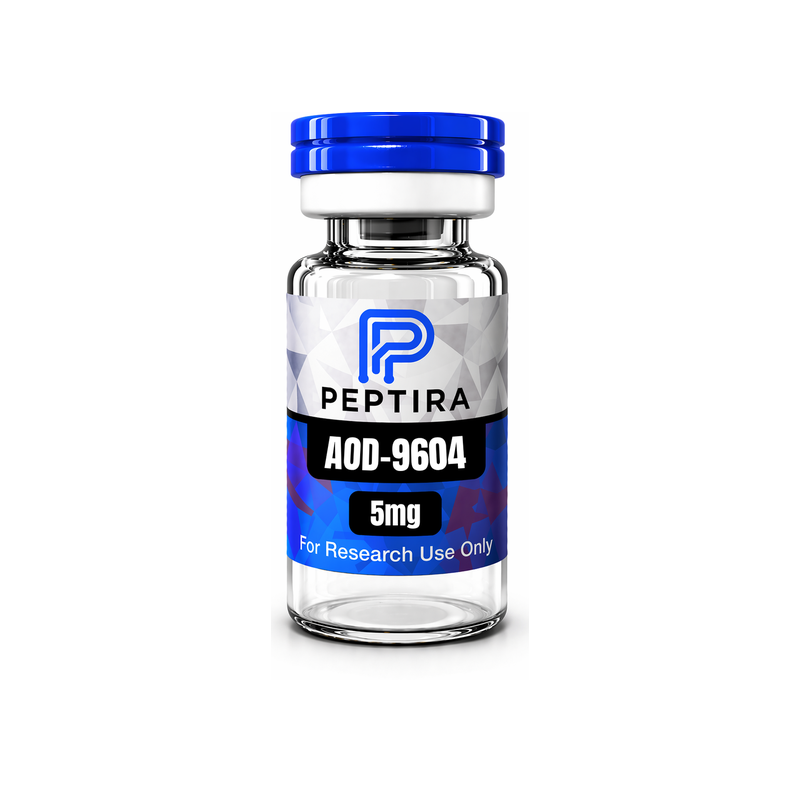 Peptira
AOD-9604
LEE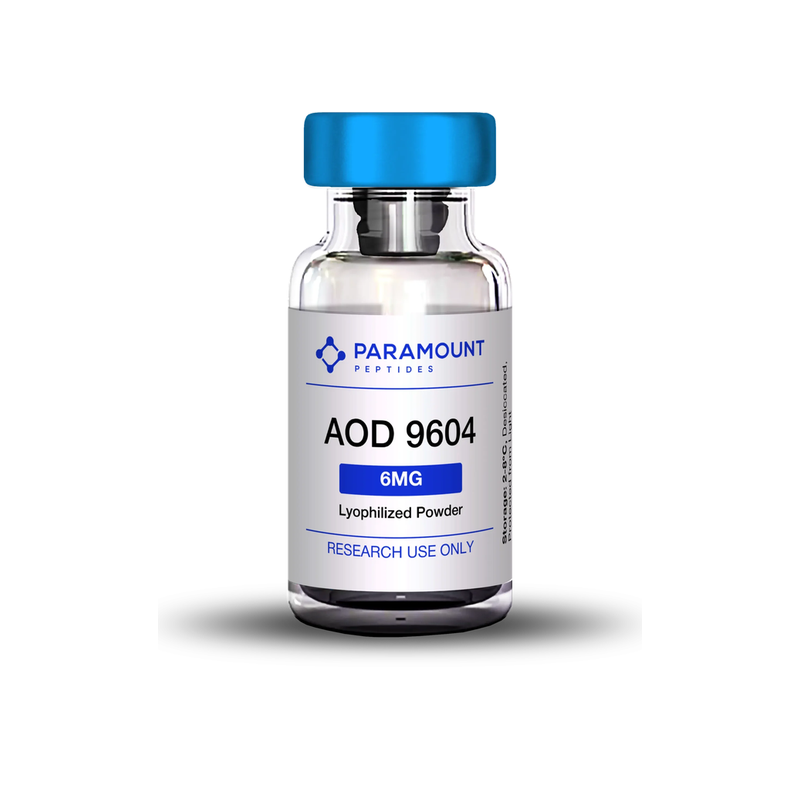 Paramount
AOD-9604 6 mg
LEE10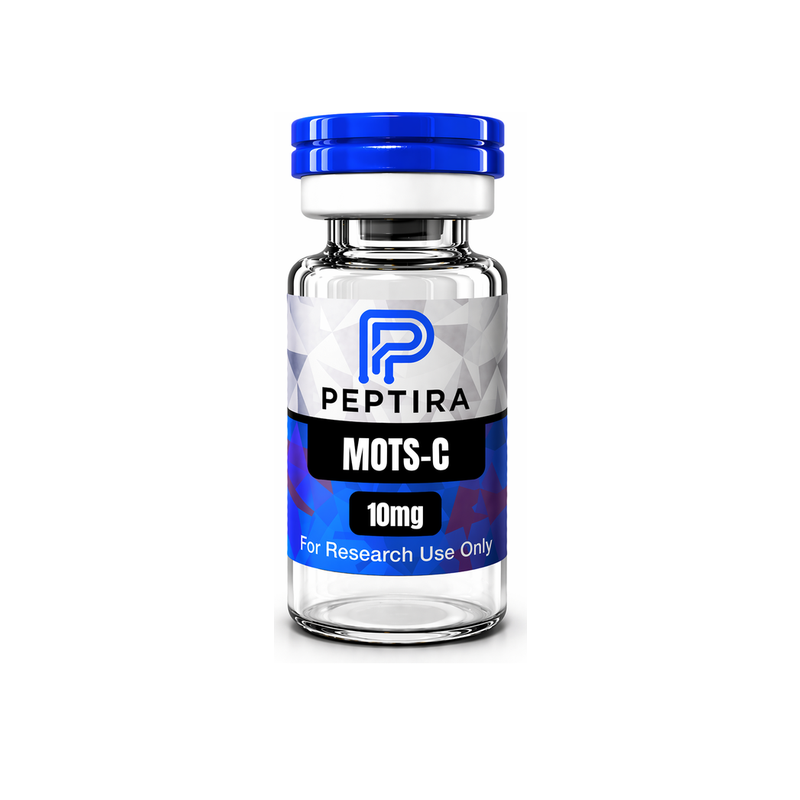 Peptira
MOTS-c
LEE5-Amino-1MQ · LEE15 MOTS-c · LEE15 SHRED Max · LEE15 SHREDX · LEE15 Peptira AOD-9604 · LEE Paramount AOD · LEE10 S1 MOTS-c · LEE10
No Limitless VIP fat-loss SKU is heroed here while those listings stay login or out of stock. Keep tracked homes handy: Limitless LEE20, Paramount LEE10, Peptira LEE, S1 LEE10, and BioLongevity LEE15.
How to think about next steps
If your real goal is losing fat, start with Door 1 and Door 2. Protein, sleep, steps, and a real clinician beat a bottle you cannot explain. If your real goal is the research map of AOD-9604, 5-Amino-1MQ, or MOTS-c, Door 3 literacy comes after the furnace story makes sense.
Pro goes deeper on stacks, timing frameworks, and how to read a COA without getting conned by a sales page. The free page’s job is still the map.
Why this matters: next steps that match the door save money and cut health-page risk.
So what for you: write down your actual question in one sentence before you click a code.
Key takeaways (echo)
- Peptides for fat loss are a map of oxidation and metabolic tickets, not one miracle bottle.
- The best one-line picture is different furnaces: AOD lipolysis, 5-Amino NNMT brake, MOTS-c mito messenger.
- Animal and mechanism files can be real. Big obesity-drug proof for catalog vials is still thinner than the ads. Basics and clinicians still beat hype vials for most readers.
Get the Peptide Playbook
Free email map for how to think about research peptides without the guru noise. No naked PDF dump — just the Playbook form.
Sources & Further Reading
- Heffernan MA, et al. Increase of fat oxidation and weight loss in obese mice caused by chronic treatment with human growth hormone or a modified C-terminal fragment. Int J Obes Relat Metab Disord. 2001. PMID 11673763
- Heffernan M, et al. The effects of human GH and its lipolytic fragment (AOD9604) on lipid metabolism following chronic treatment in obese mice and beta(3)-AR knock-out mice. Endocrinology. 2001. PMID 11713213
- Ng FM, et al. Metabolic studies of a synthetic lipolytic domain (AOD9604) of human growth hormone. Horm Res. 2000. PMID 11146367
- Lee C, et al. The mitochondrial-derived peptide MOTS-c promotes metabolic homeostasis and reduces obesity and insulin resistance. Cell Metab. 2015. PMID 25738459
- Kim KH, et al. The Mitochondrial-Encoded Peptide MOTS-c Translocates to the Nucleus to Regulate Nuclear Gene Expression in Response to Metabolic Stress. Cell Metab. 2018. PMID 29972823
- Kraus D, et al. Nicotinamide N-methyltransferase knockdown protects against diet-induced obesity. Nature. 2014. PMID 24717514
- Neelakantan H, et al. Selective and membrane-permeable small molecule inhibitors of nicotinamide N-methyltransferase reverse high fat diet-induced obesity in mice. Biochem Pharmacol. 2018. PMID 29155147
- Babula J, et al. Effects of 5-amino-1MQ on body composition, metabolic measures, and pharmacokinetics in diet-induced obese mice. Diabetes Obes Metab. 2024. PMID 39161060
Educational research map only. Not medical advice. Not FDA-approved treatment claims. Partner links may earn a commission. Codes live in the links.