Sauna Benefits: Heat, Contrast, and What the Finnish Data Actually Says
Key takeaways
- Verdict: Regular Finnish-style sauna is associated with better long-term heart outcomes in large observational cohorts — useful recovery heat for many healthy adults, not a youth drug and not a disease cure.
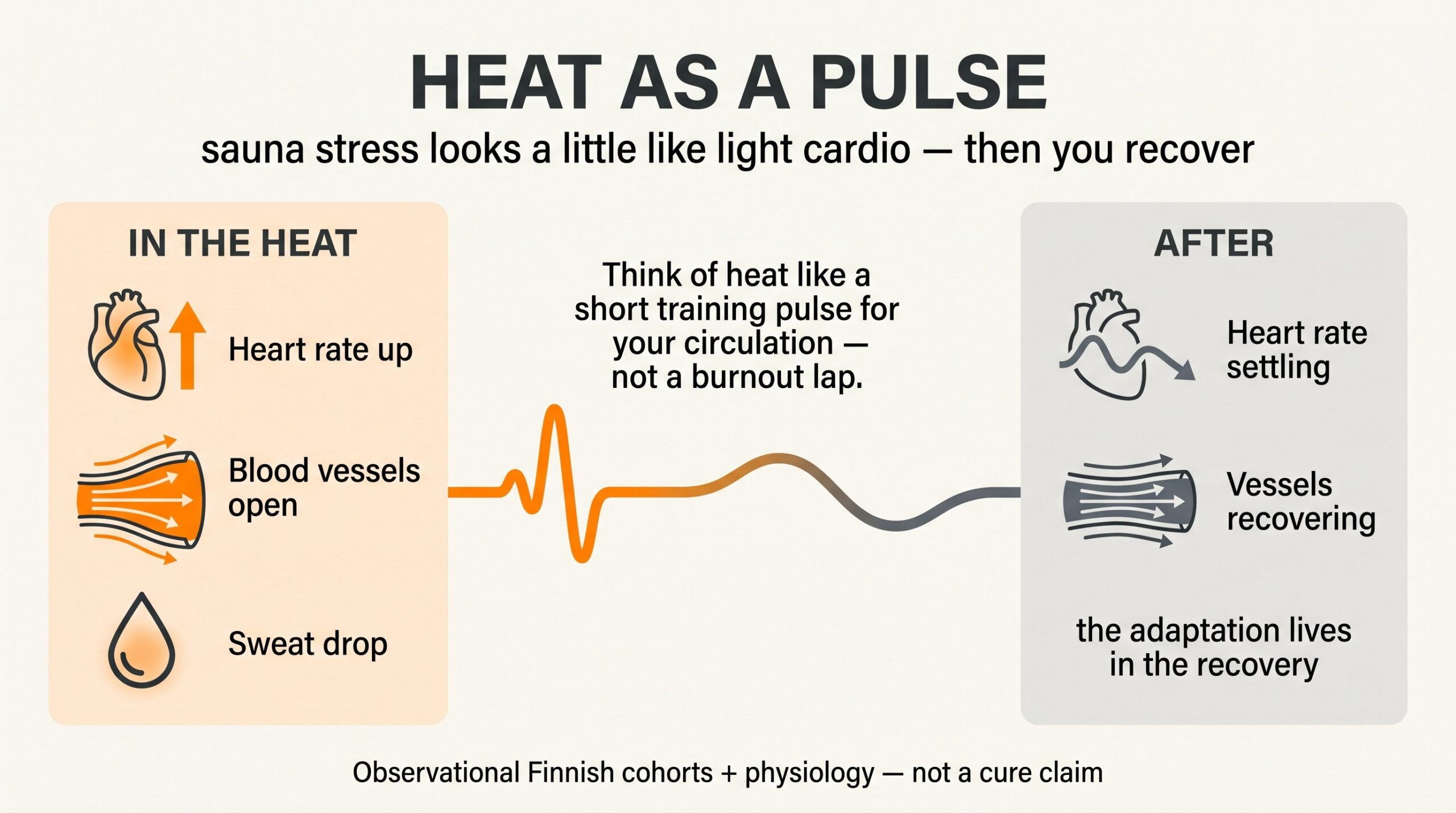
- Stop-you frame: in the classic KIHD men’s cohort, 4–7 sauna sessions per week linked to a much lower sudden-cardiac-death hazard than once weekly after risk-factor adjustment (JAMA Internal Medicine, 2015).
- Your next step: treat heat like a short circulatory pulse you can recover from, respect contraindications with a clinician, stack sleep/Zone 2/protein first, and keep peptides off this page as a sauna prescription.
Verdict up front: Sauna is worth doing if you tolerate heat. It is not worth turning into a miracle protocol, a cold-plunge ego contest, or a reason to buy a vial.
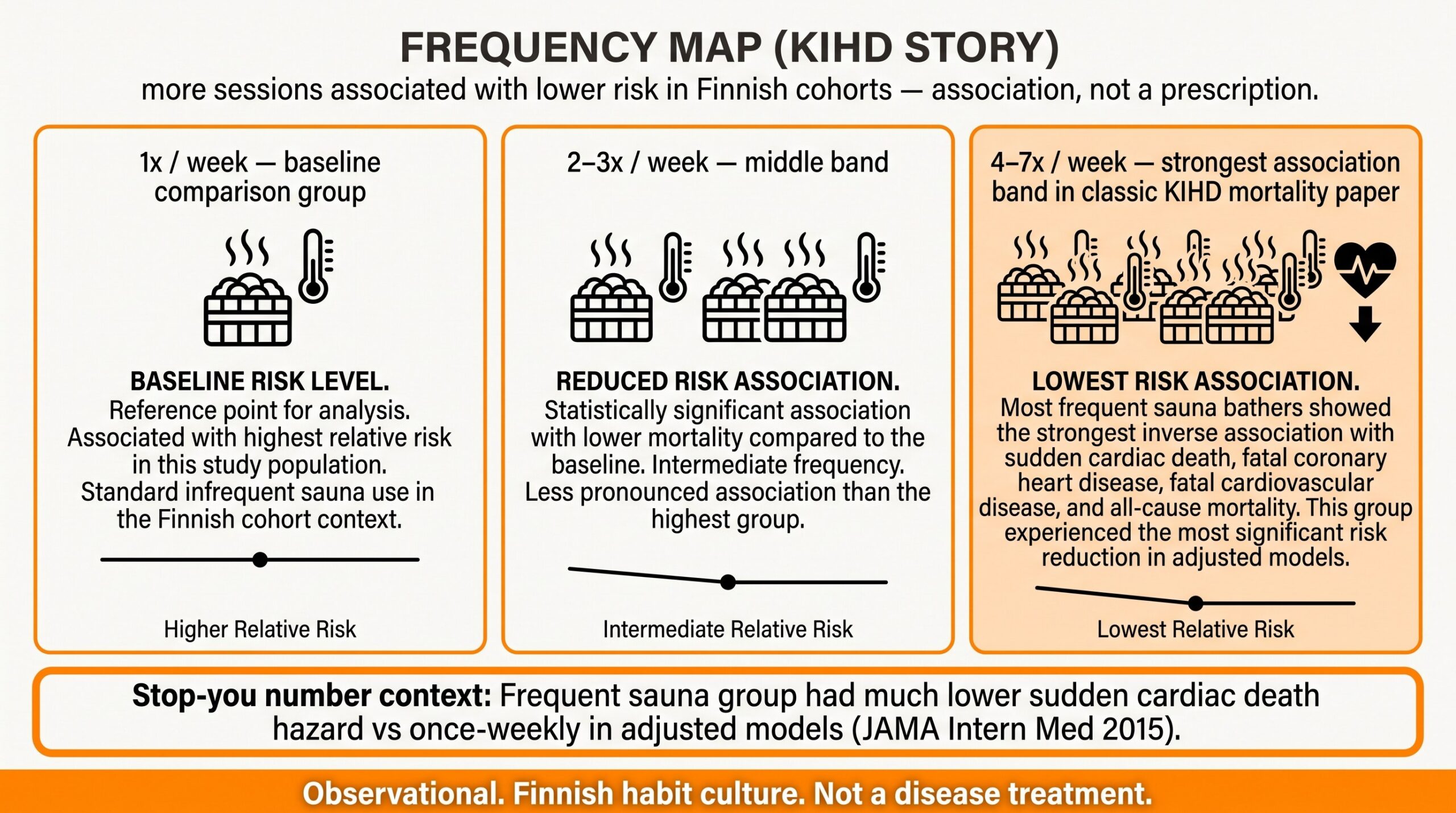
Hot room. Heart rate up. Vessels open. Then you cool down and the adaptation lives in the recovery — a lot like a short training pulse for your circulation.
Keep reading if you want the Finnish cohort story, what heat actually does in plain English, how contrast (heat + cool) fits without Wim-Hof theater, and who should talk to a clinician first. Skip if you want a cardiac-rehab order set, a “sauna cures Alzheimer’s” pitch, or a peptide stack “for sauna gains.” Those asks do not belong on this free education page.
Day-one site basics live on Start Here. Adjacent foundations: Zone 2 training, how to sleep better, creatine benefits, and protein intake. Mitochondrial research curiosity can wait on MOTS-c — as literacy, never as a heat drug.
Education only. Not medical advice. Not a treatment for heart disease, hypertension, dementia, or “inflammation.” If you are pregnant, have unstable cardiovascular disease, feel dizzy or chest pain with heat, or a clinician already limited your exercise, that conversation stays with them.
What the Finnish data actually says
Most of the big sauna headlines trace back to the Kuopio Ischemic Heart Disease Risk Factor Study — long follow-up on middle-aged Finnish adults who already lived in a sauna culture.
Laukkanen and colleagues followed 2,315 men for about two decades. Compared with one sauna session per week, men reporting four to seven sessions per week had a hazard ratio of 0.37 for sudden cardiac death after CVD risk-factor adjustment. Similar inverse trends showed up for fatal coronary disease, fatal CVD, and all-cause mortality. Longer sessions also associated with lower SCD risk in that paper.
That is the stop-you number. Not because it proves sauna is a fountain of youth. Because a clean, large cohort put a hard association on the table in JAMA Internal Medicine.
How sure should you be? Fairly sure the association is real in that population after adjustment. Less sure it transplants 1:1 to every American infrared booth, every hotel steam room, or every person with a complicated medical file. Observational work can still hide healthy-user bias. Finns who sauna a lot may also live differently in ways a questionnaire cannot fully catch.
Later KIHD-linked work extended the map: lower incident hypertension with more frequent sauna; inverse association with dementia and Alzheimer’s diagnoses in middle-aged men; and Mayo Clinic Proceedings reviews that stack cardiovascular and non-cardiovascular signals without turning sauna into a drug label.
Why this matters: the evidence tier is strong observational epidemiology — not a randomized “sauna cures CVD” trial.
So what for you: treat frequent, tolerable heat as a recovery habit with real cohort signal, not a prescription pad.
The heat-as-a-pulse analogy (one picture)
Here is the mechanism picture I want stuck in your head.
Think of a sauna round like a short pulse on your circulation. Heart rate climbs. Skin vessels open. You sweat. Cardiac output rises in a pattern that can look a little like mild-to-moderate aerobic work — then you step out and the system settles.
Hannuksela and Ellahham’s older safety review already framed sauna hemodynamics and who needs caution. More recent Finnish heat-and-cold reviews keep the same adult tone: useful physiology, real risks, no magic.
Heat shock proteins get talked about a lot online. They are cellular stress helpers that rise with heat stress in experimental settings. That is interesting biology. It is not the same thing as “I sat in a box so my Alzheimer’s risk is fixed.” Keep the confidence lanes separate.
Why this matters: if you understand heat as a recoverable pulse, you stop chasing punishment rounds and start chasing repeatable sessions.
So what for you: leave while you still feel clear-headed. Adaptation beats heroics.
What sauna is good for (and what it is not)
For a busy adult who already lifts and does some easy cardio, sensible sauna use usually means:
- A recovery ritual that raises heart rate without joint pounding
- A habit that Finnish cohorts link to better long-run cardiovascular signals
- Optional contrast (heat then cool) for people who tolerate both
- Not a replacement for Zone 2 miles, sleep, protein, or medical care
- Not proof that infrared equals classic Finnish dry heat in every study
Laukkanen’s group also showed cardiorespiratory fitness and sauna habits can stack in association analyses for sudden cardiac death risk. That fits the boring truth: fit people who also recover well tend to look better in long cohorts.
Why this matters: sauna is an adjunct habit, not a substitute for the foundations that actually move VO2 and muscle.
So what for you: keep Zone 2 and lifting on the calendar. Add heat if you like it and tolerate it.
Contrast therapy without the circus
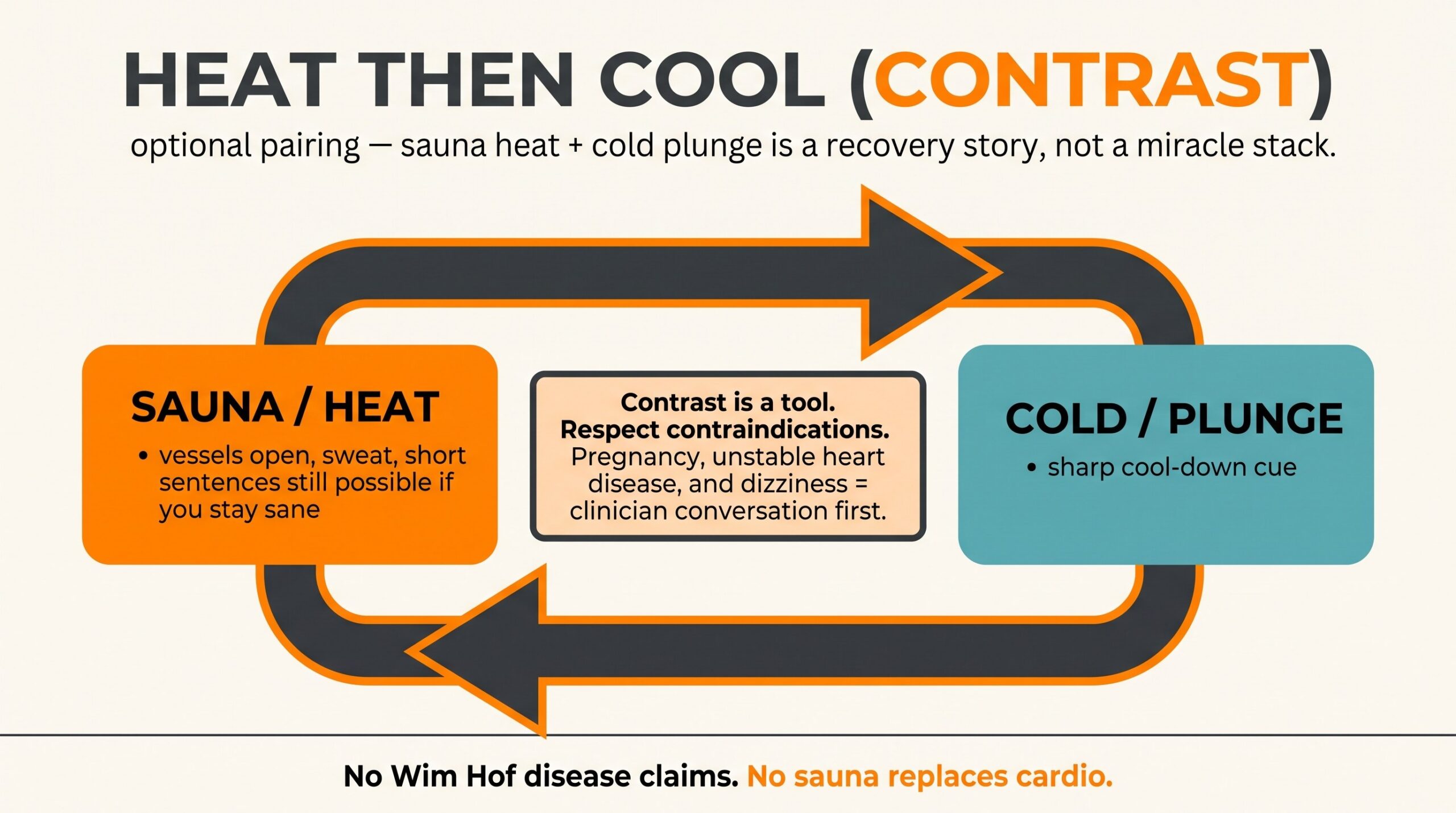
Contrast means pairing heat with cold — sauna then plunge, or hot then cool showers. Search demand for contrast and sauna-cold-plunge is real. The story people want is “hack my recovery.”
The honest version: contrast is a tool some athletes and recovery-minded adults enjoy. Cold has its own risk file (shock, arrhythmia risk in susceptible people, cold-water accidents). Heat has its own (overheating, blood-pressure swings, alcohol plus sauna is a classic bad combo in safety reviews).
This page will not sell Wim-Hof disease claims. It will not say cold cures depression or sauna replaces cardio. If contrast makes you feel wrecked the next day, you overdid the stress side of the pulse.
Why this matters: contrast is optional seasoning. The Finnish mortality signal is mostly about habitual heat exposure, not Instagram plunge counts.
So what for you: master plain sauna tolerance before you collect contrast badges.
How to think about a session (education map)
Education map. Not a prescription. Not rehab orders.
- Hydrate like an adult. You will sweat. Alcohol and sauna is a hard no in standard safety guidance.
- Start shorter than your ego wants. Build sessions you repeat. The KIHD story is about habitual frequency over years, not one heroic bake.
- Listen for off-ramps. Dizziness, chest pain, confusion, or feeling “wrong” means get out and get help if needed.
- Cool down on purpose. Sit, breathe, rehydrate. Contrast cold is optional, not mandatory.
- Match the box to the evidence. Traditional Finnish dry heat is what those cohorts measured. Fancy gadgets are not automatically the same dataset.
Why this matters: a boring weekly habit beats a once-a-month punishment session you dread.
So what for you: put heat on the calendar like easy cardio — recoverable and repeatable.
Myths that waste your week
- “Sauna replaces my Zone 2.” No. Heat is not the same training stimulus as conversational aerobic work. See the Zone 2 map.
- “Infrared is automatically the Finnish study.” Different hardware, different dose. Do not paste KIHD hazard ratios onto every booth.
- “More pain equals more longevity.” Overheating is not a virtue. The cohort signal favors frequent tolerable use, not emergency-room theater.
- “I need a peptide for sauna benefits.” Hard no on this page. Heat is the lever. Research maps are adjacent literacy.
- “Sauna cures dementia / hypertension.” Associations and mechanisms are interesting. Cures are not what this free page claims.
Why this matters: bad myths turn a useful habit into either neglect of real training or medical cosplay.
So what for you: keep the heat. Drop the slogan.
Foundations that sit beside sauna
Peptides & Pump is a peptide education site. Sauna is still a foundation recovery habit.
Sleep, easy aerobic minutes, protein, and creatine do more for most people than any research-catalog curiosity. Soft links worth your time:
- Zone 2 training — conversational aerobic base
- How to sleep better — recovery is not optional
- Protein intake — muscle still needs building blocks
- Creatine benefits — grocery-aisle performance support
- MOTS-c — mitochondrial peptide research map only; never a sauna prescription
Hard line: this page will never say “inject peptide X to unlock sauna benefits.” Earn the heat habit. Read research maps later if you are curious.
Why this matters: foundation stacking beats vial cosplay for recovery outcomes.
So what for you: protect sleep and easy miles before you chase a mitochondrial SKU.
Evidence limits
KIHD-style cohorts are impressive and still observational. Culture, fitness, and unmeasured habits can bias results. Randomized evidence for hard clinical endpoints is thinner than the headline internet wants.
Pregnancy, unstable angina, recent MI, severe aortic stenosis, acute illness, and alcohol intoxication sit on classic caution lists. Individual blood-pressure meds and autonomic issues change heat tolerance. That is clinician territory.
This page does not claim sauna cures metabolic disease, replaces cardiac rehab, or justifies unsupervised heat with a medical history you have not cleared.
Why this matters: confidence framing protects your week and your risk file.
So what for you: use heat you can repeat, keep a clinician in the loop when your history is not simple, and treat influencer sauna absolutism as entertainment.
Sources & Further Reading
- Laukkanen T, et al. Association between sauna bathing and fatal cardiovascular and all-cause mortality events. JAMA Intern Med. 2015. PubMed 25705824
- Zaccardi F, et al. Sauna bathing and incident hypertension: a prospective cohort study. Am J Hypertens. 2017. PubMed 28633297
- Laukkanen T, et al. Sauna bathing is inversely associated with dementia and Alzheimer’s disease in middle-aged Finnish men. Age Ageing. 2017. PubMed 27932366
- Laukkanen JA, Laukkanen T, Kunutsor SK. Cardiovascular and other health benefits of sauna bathing: a review of the evidence. Mayo Clin Proc. 2018. PubMed 30077204
- Kunutsor SK, et al. Combined effect of sauna bathing and cardiorespiratory fitness on the risk of sudden cardiac deaths in Caucasian men: a long-term prospective cohort study. Prog Cardiovasc Dis. 2018. PubMed 29551418
- Hannuksela ML, Ellahham S. Benefits and risks of sauna bathing. Am J Med. 2001. PubMed 11165553
- Heinonen I, Laukkanen JA. Effects of heat and cold on health, with special reference to Finnish sauna bathing. Am J Physiol Regul Integr Comp Physiol. 2018. PubMed 29351426
- Kunutsor SK, Laukkanen JA. Does the combination of Finnish sauna bathing and other lifestyle factors confer additional health benefits? A review. Mayo Clin Proc. 2023. PubMed 37270272
- Patrick RP, Johnson TL. The multifaceted benefits of passive heat therapies for extending the healthspan: a comprehensive review with a focus on Finnish sauna. Temperature (Austin). 2024. PubMed 38577299
The bottom line
Sauna is habitual heat with a real Finnish cohort signal and a simple pulse-and-recover mechanism picture. Build sessions you can repeat. Respect contraindications. Stack Zone 2, sleep, and protein before any research-catalog detour.
It is not a youth drug. It is not cardiac rehab. It is not a peptide indication.
Related research maps (after sauna is handled)
Sauna first. Habitual heat and honest recovery beat any catalog. When foundation is already moving — sleep, Zone 2, protein, creatine, heat you tolerate — some readers want adjacent research literacy on mitochondrial and recovery maps. That is curiosity after the work, not a shortcut around it.
Hard line: these are research-catalog options next to the recovery map. They are not “peptides that help sauna,” not a heat drug stack, and not a reason to skip a clinician when your history is not simple.
Start with the maps: MOTS-c, SS-31, NAD+. Partner vials below are for readers who already earned the base and still want the research SKU conversation.
Research-catalog SKUs currently live on partner audits (not a treatment recommendation).
 Limitless
MOTS-C
LEE20 BioLongevity
MOTS-c 10 mg
LEE15 Peptira
MOTS-C 10 mg
LEE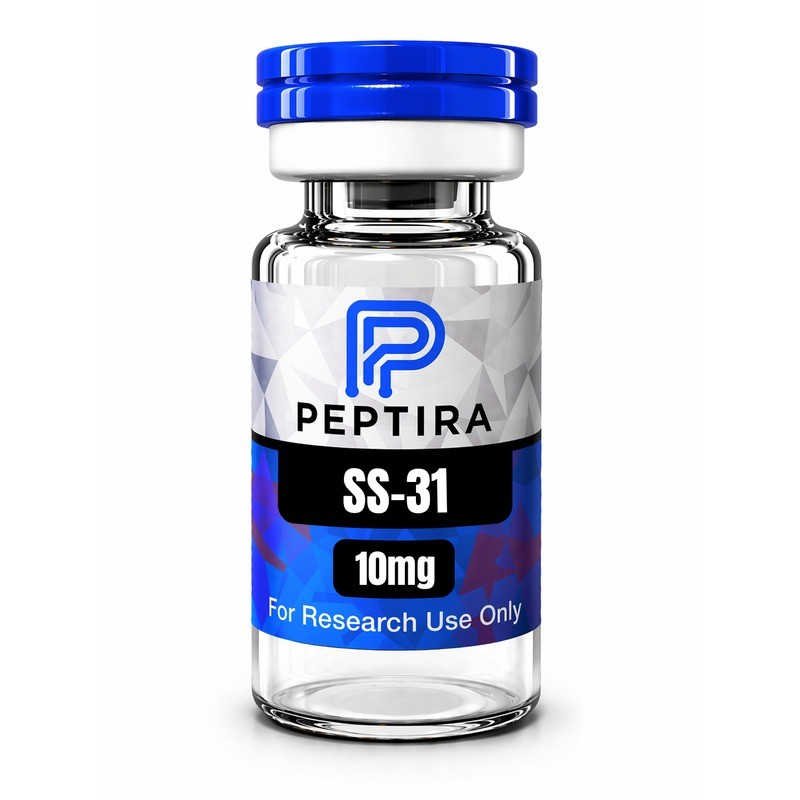 Peptira
SS-31 10 mg
LEE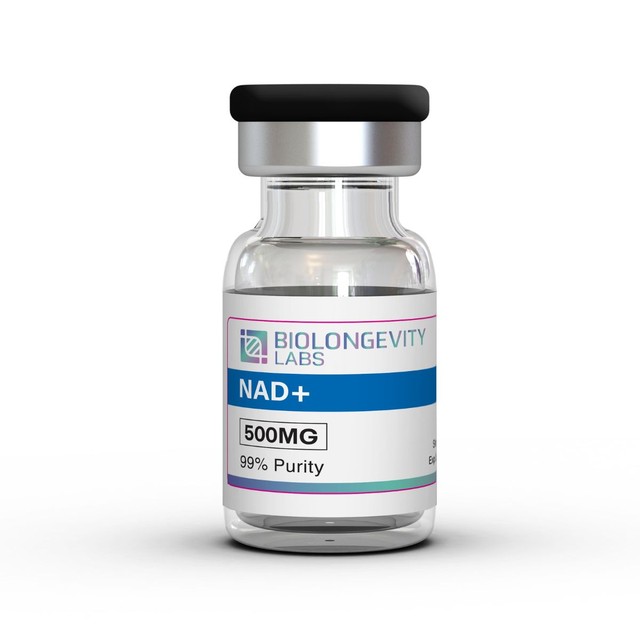 BioLongevity
NAD+ 500 mg
LEE15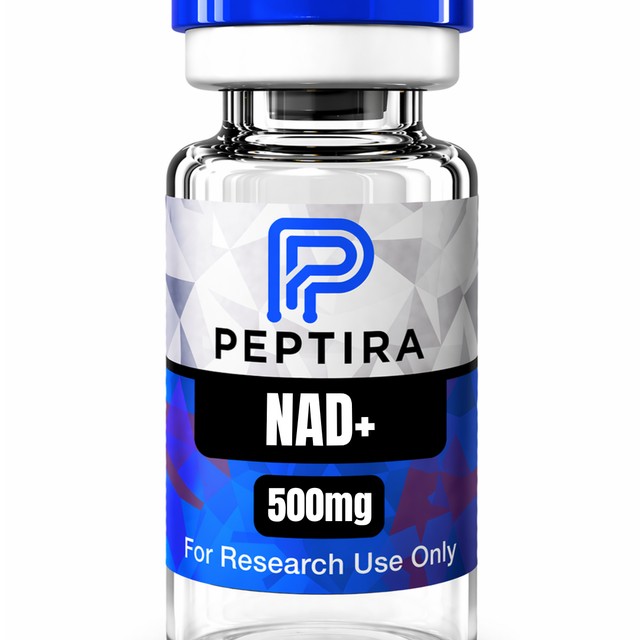 Peptira
NAD+ 500 mg
LEEMatch the map to the curiosity. Do not collect bottles to “unlock” sauna. Earn the heat habit first.
Want deeper protocol libraries after foundations are handled? Pro is the paid door. Want the free research PDF? Grab the Playbook below.
Free guide
Get The Peptide PlaybookEnter your email and we’ll send the research PDF. Education only — not medical advice.
I built Peptides & Pump so you can get foundation education without a guru tax. Sauna is one of those foundations. Free Knowledge Base first if you are not ready to pay. Pro if you want the protocol library after the basics are handled.
Related reads: What are peptides · Zone 2 training · How to sleep better · MOTS-c · SS-31 · NAD+
One Comment
Comments are closed.