Research Peptides: Catalog Shelf Map
Key takeaways
- Verdict: “Research peptides” means the catalog shelf lane — freeze-dried vials sold for research curiosity, not a pharmacy prescription pad.
- How it works in one line: Pharmacy drugs have labels. Compounding has pharmacists. Research catalogs sell lyophilized cakes with COA talk. Gray market skips the paperwork.
- Your next step: learn the four doors, read a COA like a checklist, then map famous names to deep pages. No free-site protocol dump here.
Verdict up front: a search for research peptides is not the same as “what are peptides” or “peptide therapy.” Peptides are short chains of amino acids. Amino acids are the building blocks your body already uses to make proteins. Some peptide drugs are FDA-approved medicines with labels and huge trials. Some clinic plans live with a pharmacist. Many online catalogs sell freeze-dried research vials. Mixing those lanes is how hype sells a fake one-shelf story.
This page is a catalog shelf map. It teaches what research peptides means, how catalogs work, how to read a COA, and which famous names sit on which lane. It is not a free protocol. It will not publish milligram schedules. It will not say a catalog vial treats disease. It will not tell you to skip a clinician.
Keep reading if you typed research peptides, research peptide catalog, COA purity, lyophilized peptide, research vs compounding, or gray market peptides and want honesty first. Skip if you want a public milligram table. Skip if you want a claim that a catalog vial is proven therapy. Skip if you want a reason to ignore a doctor. Those asks belong in Pro. Or a real clinic visit.
Day-one basics live on Start Here and what are peptides. Nearby maps: peptide therapy, peptide dosage, are peptides safe, peptide side effects, how to reconstitute peptides, bacteriostatic water, peptide calculator, peptide injections, BPC-157, TB-500, HGH peptides, semaglutide, peptides for weight loss, peptides for muscle growth, and Glow peptide.
This page is teaching only, not medical advice. Research-shelf curiosity is not an FDA-approved treatment claim. Real drug labels belong to clinics. This map will not tell you to skip a doctor.
What “research peptides” actually means
Start with the plain search. Most people are not asking for a chemistry textbook. They are staring at a catalog of freeze-dried vials and asking what lane that shelf is.
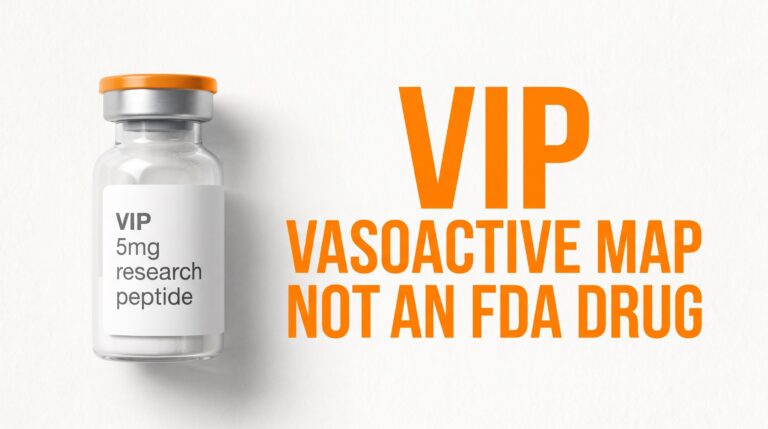
In plain words, research peptides usually means short amino-acid chains sold as research materials. The catalog frames them for lab curiosity and education. That is different from a pharmacy bottle with an FDA label. It is also different from a compounding order a pharmacist fills for a named patient.
Think of it like a hardware catalog vs a licensed electrician. The catalog can teach you what a breaker looks like. It does not make you the electrician. It does not make the breaker a finished house wiring job.
How sure are we? Pretty sure approved peptide drugs publish labels and trial files. Pretty sure many wellness names still live mostly in cells and animals. Pretty sure catalog language and pharmacy language get mashed together online on purpose. Not sure at all that a shiny vial photo equals a medicine.
Why this matters: if you treat every vial as “therapy,” you bought the wrong map.
So what for you: name the shelf before you trust the sales pitch.
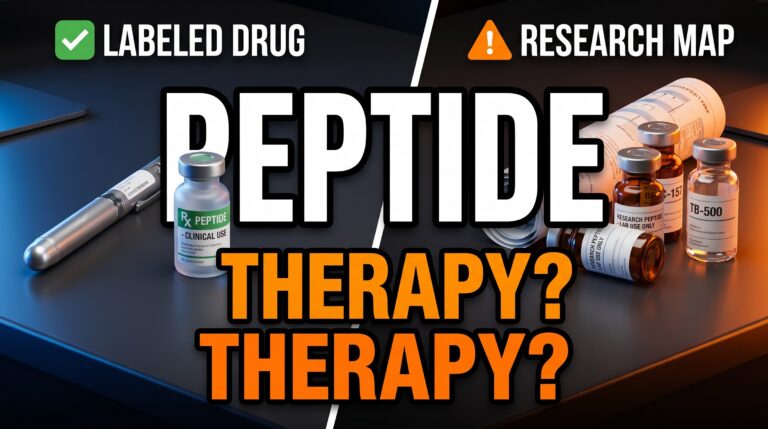
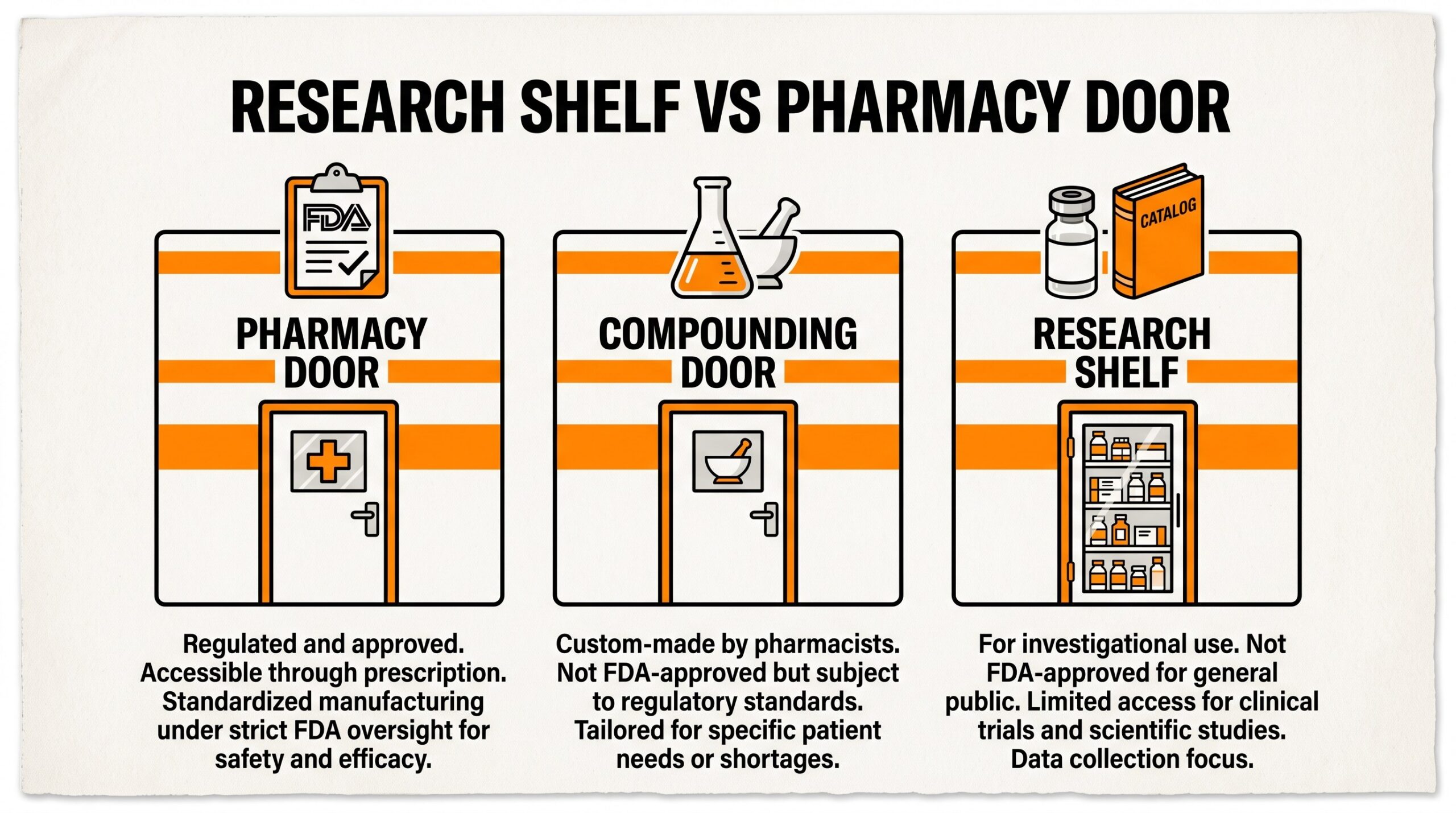
Four doors: research shelf vs pharmacy vs compounding vs gray market
Here is the only picture I want stuck in your head.
Door 1 is the pharmacy door. FDA-approved peptide drugs. Labels. Monitored plans. Huge trials. Think semaglutide-class medicines. See semaglutide and peptides for weight loss.
Door 2 is compounding. A licensed pharmacist and a clinician own that lane. Rules still matter. Sterility still matters. This is not a forum spreadsheet.
Door 3 is the research shelf. Catalogs sell lyophilized cakes. Lyophilized means freeze-dried powder until liquid is added. Education and curiosity framing only on this free site. COA talk matters. A COA is a certificate of analysis. It is a lab report about the batch. It is not a drug label for your body.
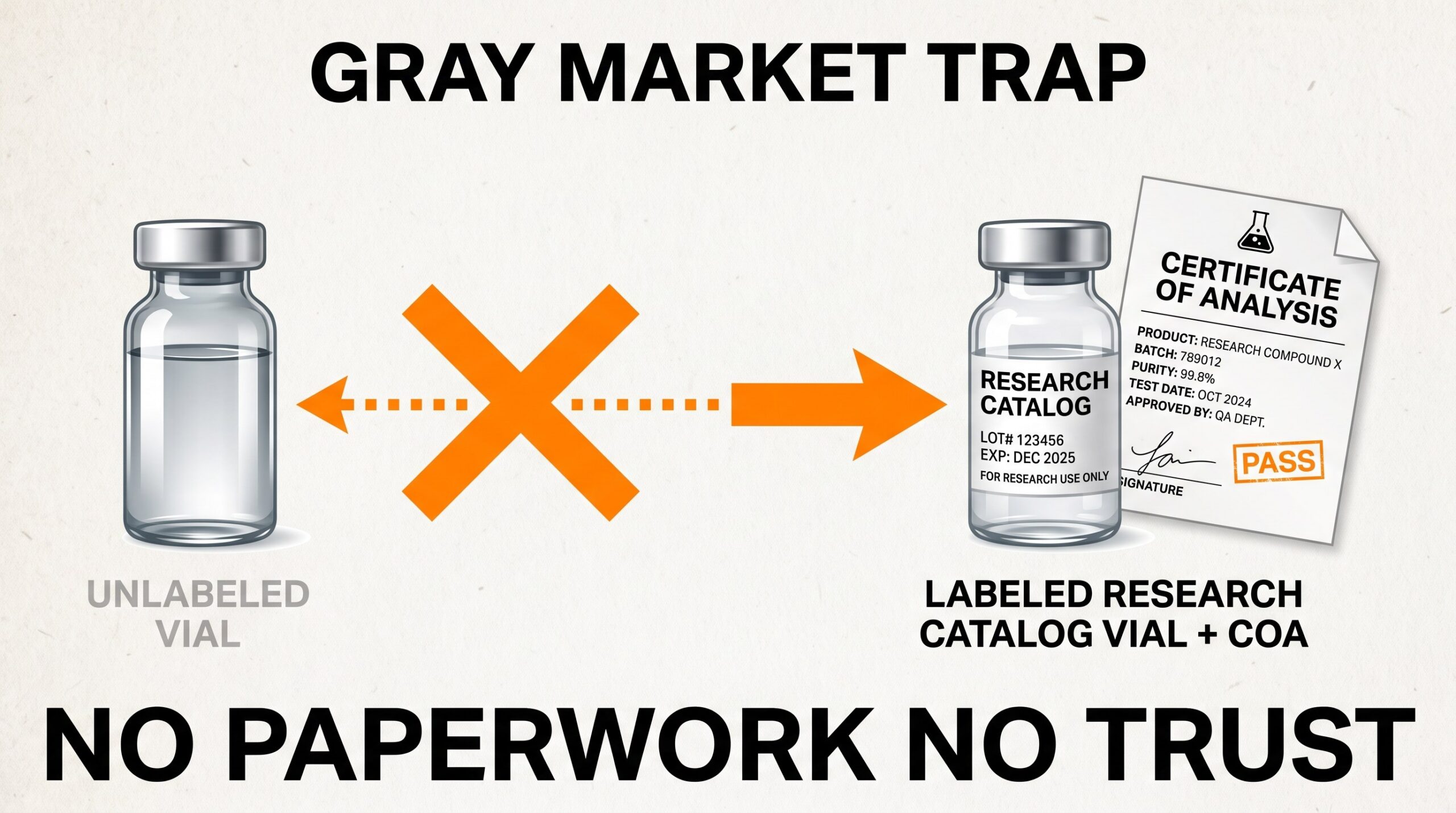
Door 4 is the gray market trap. No clear paperwork. Mystery sellers. Screenshots instead of batch files. That door is how people lose money and trust.
Stop-you number from the real drug lane: since insulin nearly a century ago, more than 80 peptide drugs have reached the market for many conditions. That is the pharmacy-lane evidence story. It does not magically upgrade every research catalog name to the same file.
Why this matters: four doors share the word peptide. Only one door owns a public drug label.
So what for you: ask which door a post is selling before you click.
COA and purity literacy (without pretending it is a drug label)
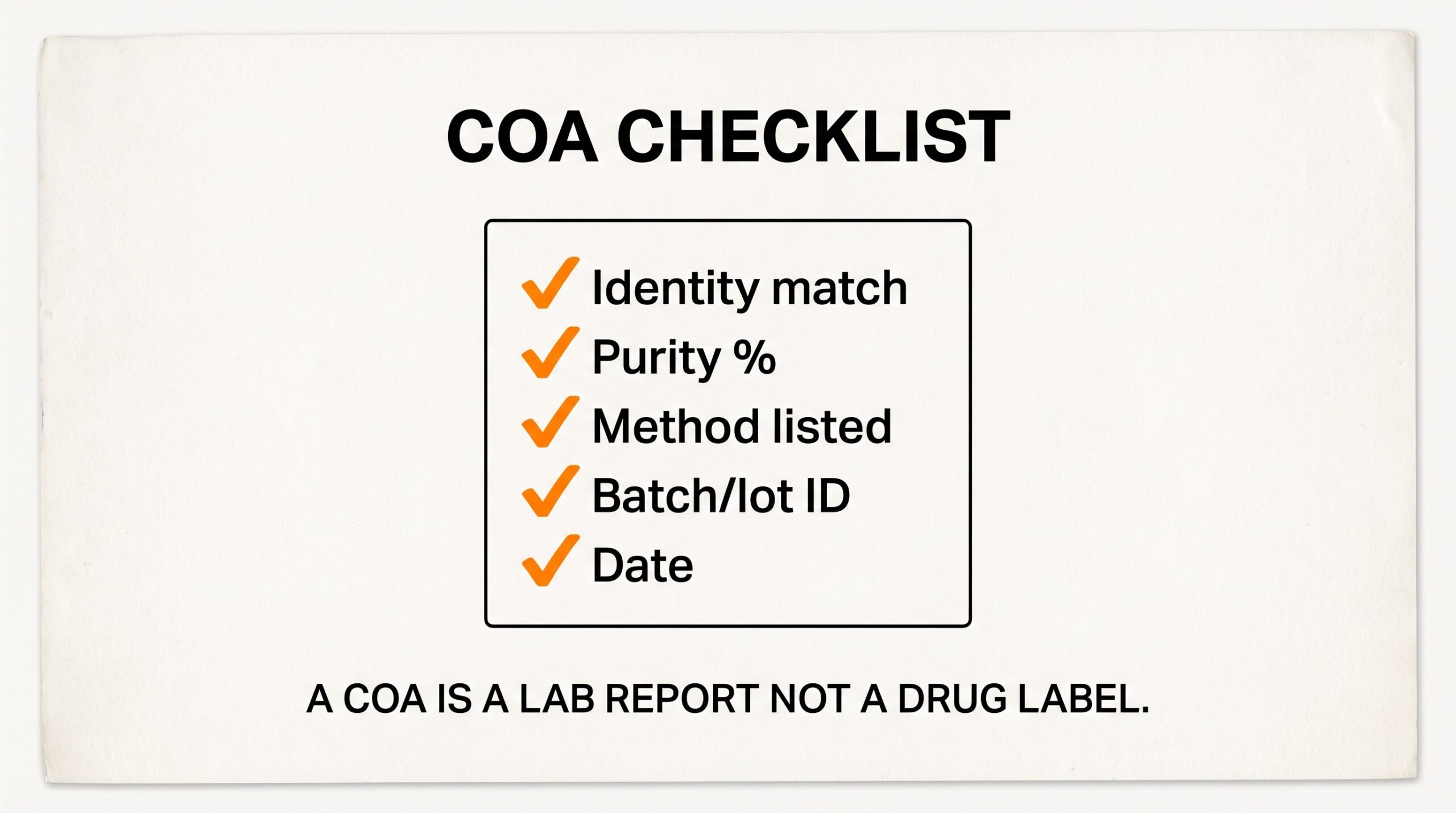
A good research catalog should make the paperwork easy to find. A COA is a batch report. People use it to check identity, purity percent, method, lot number, and date.
Identity match means the report names the same compound the listing claims. Purity percent is how clean that batch looked under the lab method. Method listed means you can see how they tested it. Batch or lot ID ties the paper to the vial. Date tells you how fresh the report is.
What a COA is not: proof the vial is an approved human medicine. Not proof it treats a disease. Not a free pass to skip a clinician. Not a guarantee every seller tells the truth.
How sure are we? Pretty sure batch paperwork beats vibes. Pretty sure purity talk without a method is weak. Not sure at all that a pretty PDF screenshot equals a real lab file.
Why this matters: COA literacy stops you from buying mystery powder with confidence cosplay.
So what for you: if you cannot name five COA checks, wait on the cart.
How catalogs sell lyophilized cakes
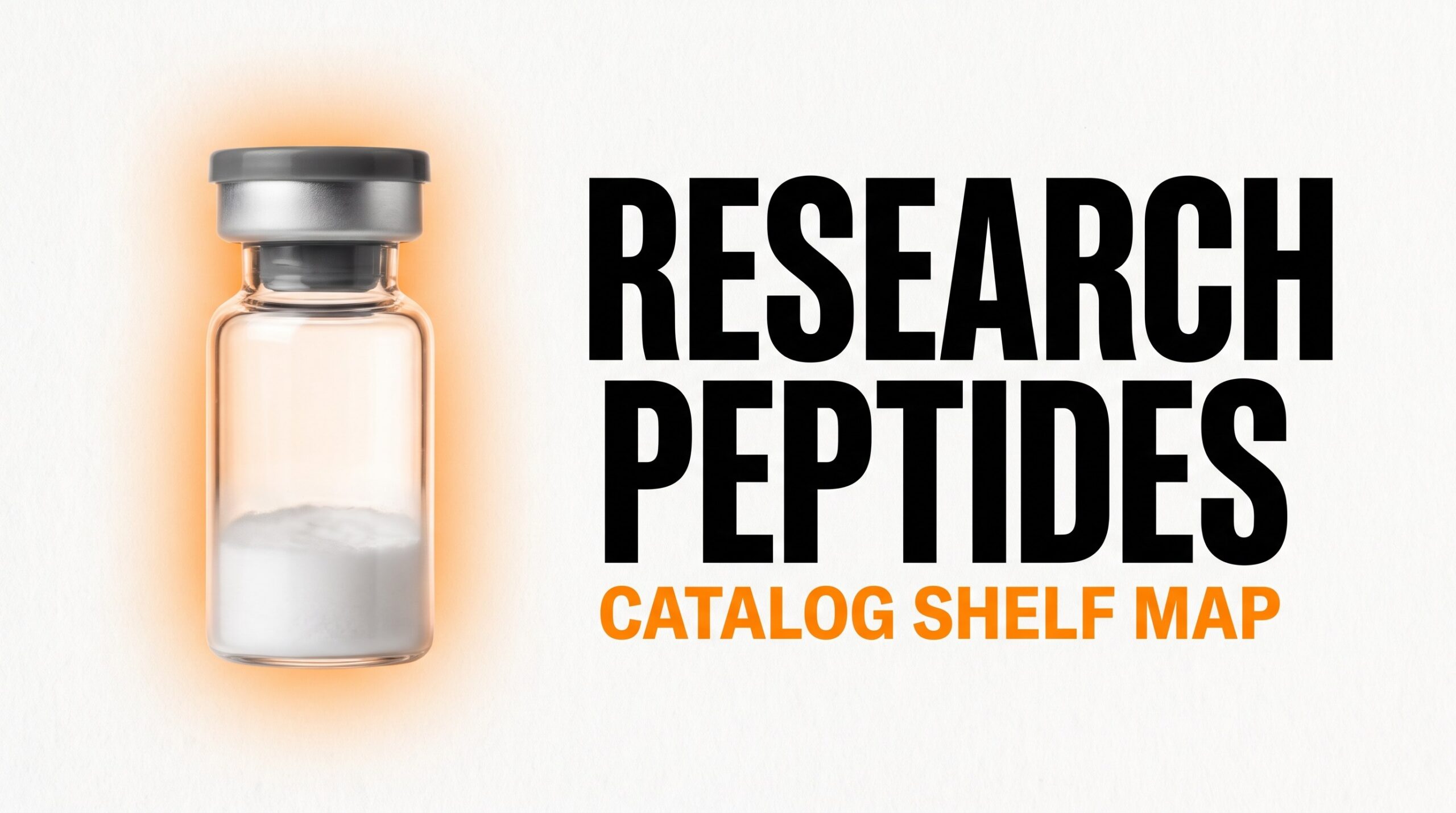
Most research vials arrive as a white cake or powder under a stopper. That is freeze-dried material. Add liquid later and you change concentration. Concentration changes how people talk about amounts. That is why recon literacy sits next to any catalog map.
See how to reconstitute peptides, bacteriostatic water, and the peptide calculator. Also see peptide dosage for why label dose, clinic plan, and blank research panel are three different maps.
A 2019 analysis looked at at-home freeze-dried medicine prep. Mixing took real work for patients and caregivers. That paper is about prep burden in chronic care. It is not a free research protocol. It still proves reconstitution is not a throwaway step.
Why this matters: a catalog photo without recon literacy is half a sentence.
So what for you: finish the recon map before you argue about syringe ticks.
Famous research names as a map (not a protocol dump)
Here is the magazine map. Teach lanes. Do not dump free-site dosing charts.
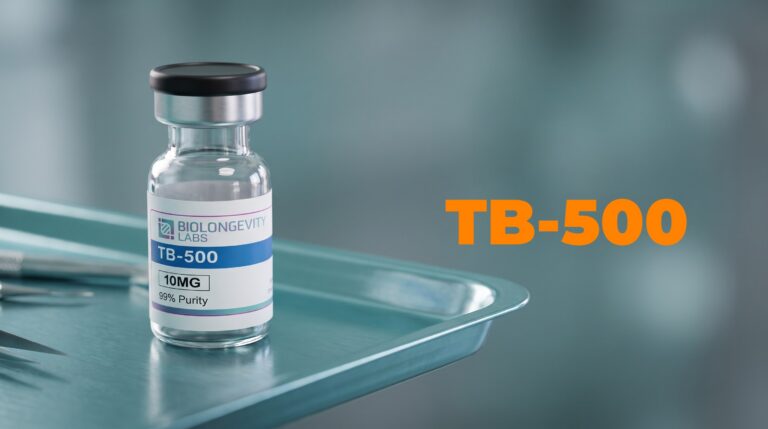
Healing / repair curiosity lane: BPC-157 and TB-500 show up constantly in research talk. Animal and cell papers are thick for some stories. Human files stay thinner. Education only on this free site.
Growth-signal curiosity lane: HGH peptides and the muscle cluster on peptides for muscle growth. Clinic and research language get mixed hard here. Keep doors honest.
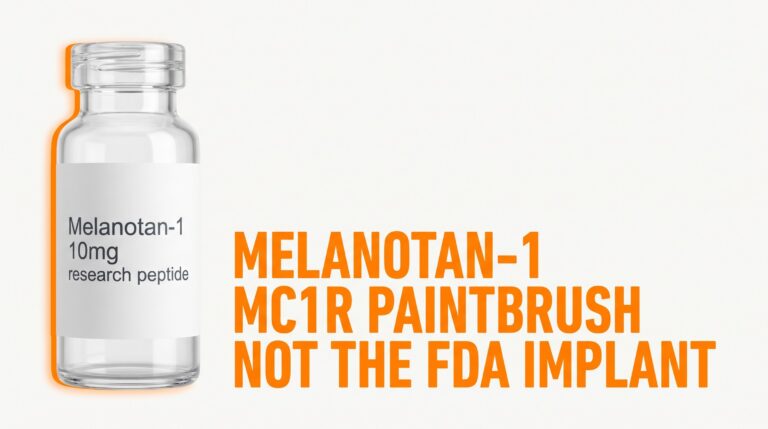
Skin / copper stack curiosity lane: Glow peptide maps GHK-Cu vs GLOW vs Klow talk. Still a map. Not a beauty cure claim.
Weight / GLP lane (pharmacy-heavy): semaglutide and peptides for weight loss. This lane owns large randomized trials. That is Door 1 strength. Do not paste research-shelf rules onto labeled drugs.
Injection and safety literacy: peptide injections, are peptides safe, and peptide side effects.
Therapeutic peptide reviews keep saying the same big picture. Peptide drug discovery has grown for decades. Chemistry tricks, delivery ideas, and better analytics keep expanding what can be made. That progress still does not turn every catalog SKU into an approved medicine overnight.
Why this matters: a name map beats a random cart full of vials you cannot explain.
So what for you: pick one lane page and finish it before you browse ten more SKUs.
Evidence honesty and FDA compounding caution
Labeled peptide drugs publish studied amounts in big trials. Wilding and colleagues ran STEP 1 on once-weekly semaglutide. Jastreboff and colleagues ran SURMOUNT-1 on tirzepatide. Those are dashboards with numbers. Not blank panels.
Flip the lane. Many research favorites still lean on animal and cell work. Thin human pilots do not equal Phase 3 labeled files. Be impressed by papers. Do not confuse them with a pharmacy bottle.
Also hold the FDA compounding caution. The agency has publicly flagged that some bulk peptide substances used in compounding may present significant safety risks. Limited human data. Impurity questions. That is a regulator talking about uncertainty. It is not a free pass. It is not a scare meme either. It is a reason to keep doors honest.
Why this matters: health pages get hurt when they blur “interesting research map” into “this catalog vial is therapy.”
So what for you: demand the evidence lane in one sentence before you trust a claim.
Myths that burn money
- Myth: every peptide vial is the same as a pharmacy drug. Truth: doors differ.
- Myth: a high purity percent alone means safe therapy. Truth: a COA is a lab report, not a treatment claim.
- Myth: “research use” language is just a wink for free public protocols. Truth: this free site teaches maps. Full mastery stays in Pro or a real clinic.
- Myth: gray market is fine if the price is lower. Truth: no paperwork is the trap.
- Myth: one forum chart covers research peptides, therapy, and dosage. Truth: see peptide therapy and peptide dosage for the separate maps.
Why this matters: myths are how carts fill with the wrong door.
So what for you: write your real question in one sentence, then pick a door.
Keep / skip checklist
- Keep: asking which door a listing is selling.
- Keep: COA checklist literacy.
- Keep: recon, BAC water, and calculator pages before research curiosity.
- Keep: clinic and pharmacist ownership for real ordered therapies.
- Skip: treating a research-shelf vial like an approved human medicine.
- Skip: free-site milligram schedules for research vials.
- Skip: gray market mystery sellers with no batch paper.
- Skip: ignoring a clinician because a clip felt confident.
Why this matters: keep/skip honesty saves money and cuts health-page risk.
So what for you: if a post fails the keep list, close the tab.
Partner research options (codes in the links)
Education first. You already have the shelf map. Below are public options people park next to basics reading: reconstitution tools and common research vials from tracked partners. Codes fire in the links. Research-use and education framing only. Not a treatment claim. Not a claim these SKUs are your personal therapy chart.
Public basics + research maps
 Peptira
BAC Water
LEE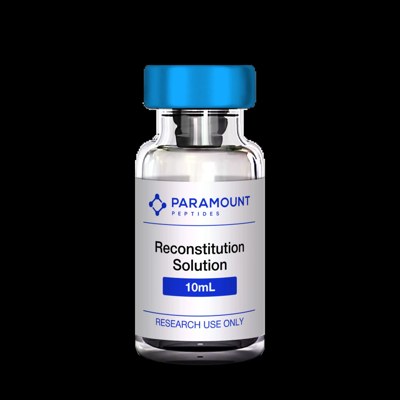 Paramount
Recon Solution
LEE10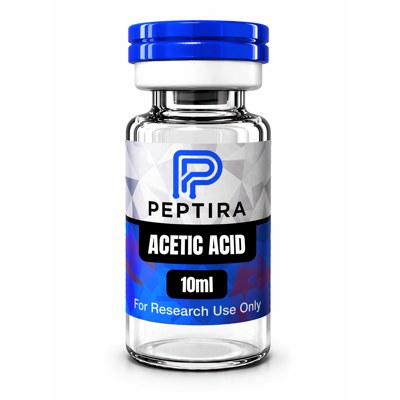 Peptira
Acetic Acid
LEE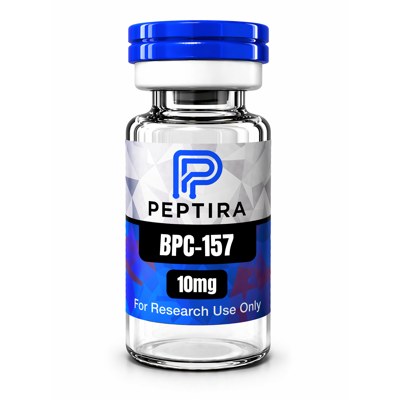 Peptira
BPC-157
LEE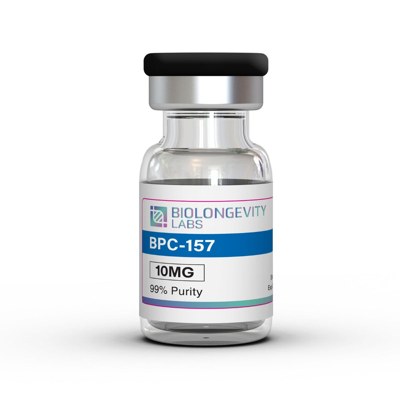 BioLongevity
BPC-157
LEE15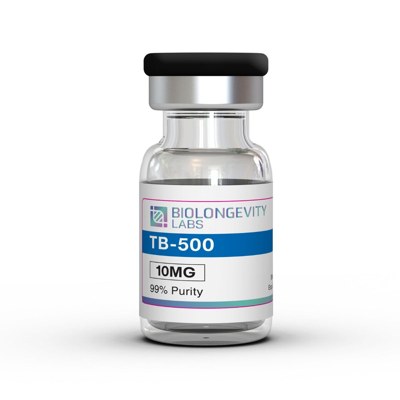 BioLongevity
TB-500
LEE15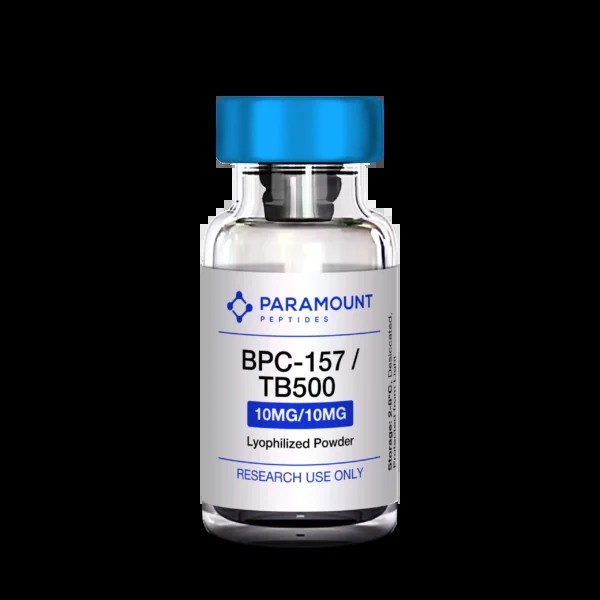 Paramount
Wolverine Blend
LEE10Peptira BAC · LEE Paramount Recon · LEE10 Peptira Acetic · LEE Peptira BPC-157 · LEE BLL BPC-157 · LEE15 BLL TB-500 · LEE15 Paramount Wolverine · LEE10 Limitless home · LEE20
No Limitless VIP-login SKU is heroed here. Keep tracked homes handy too: Limitless LEE20, Paramount LEE10, Peptira LEE, S1 LEE10, and BioLongevity LEE15.
How to think about next steps
If you do not want to waste money on the wrong door, start with basics and the four-door picture. Class clarity beats a random cart. If you want research curiosity, learn Door 3 after COA and recon click. Soft close to Pro for mastery frameworks. The free page’s job is still the map.
Why this matters: next steps that match the door save money. They also cut health-page risk.
So what for you: write your real research-peptides question in one sentence before you click a code.
Key takeaways (echo)
- Research peptides means the catalog shelf lane. Not a free therapy protocol.
- The best one-line picture is pharmacy vs compounding vs research shelf vs gray market. Same word family. Different evidence door.
- More than 80 peptide drugs have reached the market in the labeled lane. Research-shelf favorites often still lack that file. COA literacy and recon basics beat hype clips. Start there.
Get the Peptide Playbook
Free email map for how to think about research peptides without the guru noise. No naked PDF dump — just the Playbook form.
Sources & Further Reading
- Muttenthaler M, et al. Trends in peptide drug discovery. Nat Rev Drug Discov. 2021. PMID 33536635
- Wang L, et al. Therapeutic peptides: current applications and future directions. Signal Transduct Target Ther. 2022. PMID 35165272
- Lau JL, Dunn MK. Therapeutic peptides: Historical perspectives, current development trends, and future directions. Bioorg Med Chem. 2018. PMID 28720325
- Fosgerau K, Hoffmann T. Peptide therapeutics: current status and future directions. Drug Discov Today. 2015. PMID 25450771
- Wilding JPH, et al. Once-Weekly Semaglutide in Adults with Overweight or Obesity. N Engl J Med. 2021. PMID 33567185
- Jastreboff AM, et al. Tirzepatide Once Weekly for the Treatment of Obesity. N Engl J Med. 2022. PMID 35658024
- Franzese C, et al. Burden of at-home preparation of lyophilized parenteral medications. Expert Opin Drug Deliv. 2019. PMID 30636541
- U.S. Food and Drug Administration. Certain Bulk Drug Substances for Use in Compounding that May Present Significant Safety Risks. FDA compounding safety page
Educational research map only. Not medical advice. Not FDA-approved treatment claims. Partner links may earn a commission. Codes live in the links.