 PEPTIDES & PUMP
Menu
Peptide Side Effects: What a Labeled Drug Dashboard Shows, and What a Blank Vial Doesn’t
A search for peptide side effects deserves a clean map. How labeled peptide-drug side effects, clinic plans and research vials differ, and why a blank panel is not a safety file.

Peptide Insider Free email + the Peptide Playbook PDF.Get it free
Education only. Not medical advice. Unsubscribe anytime.
Research education, not medical advice. Talk with a licensed clinician before you act on anything here.
A search for peptide side effects deserves a clean answer. It does not deserve a scare caption or a shrug.
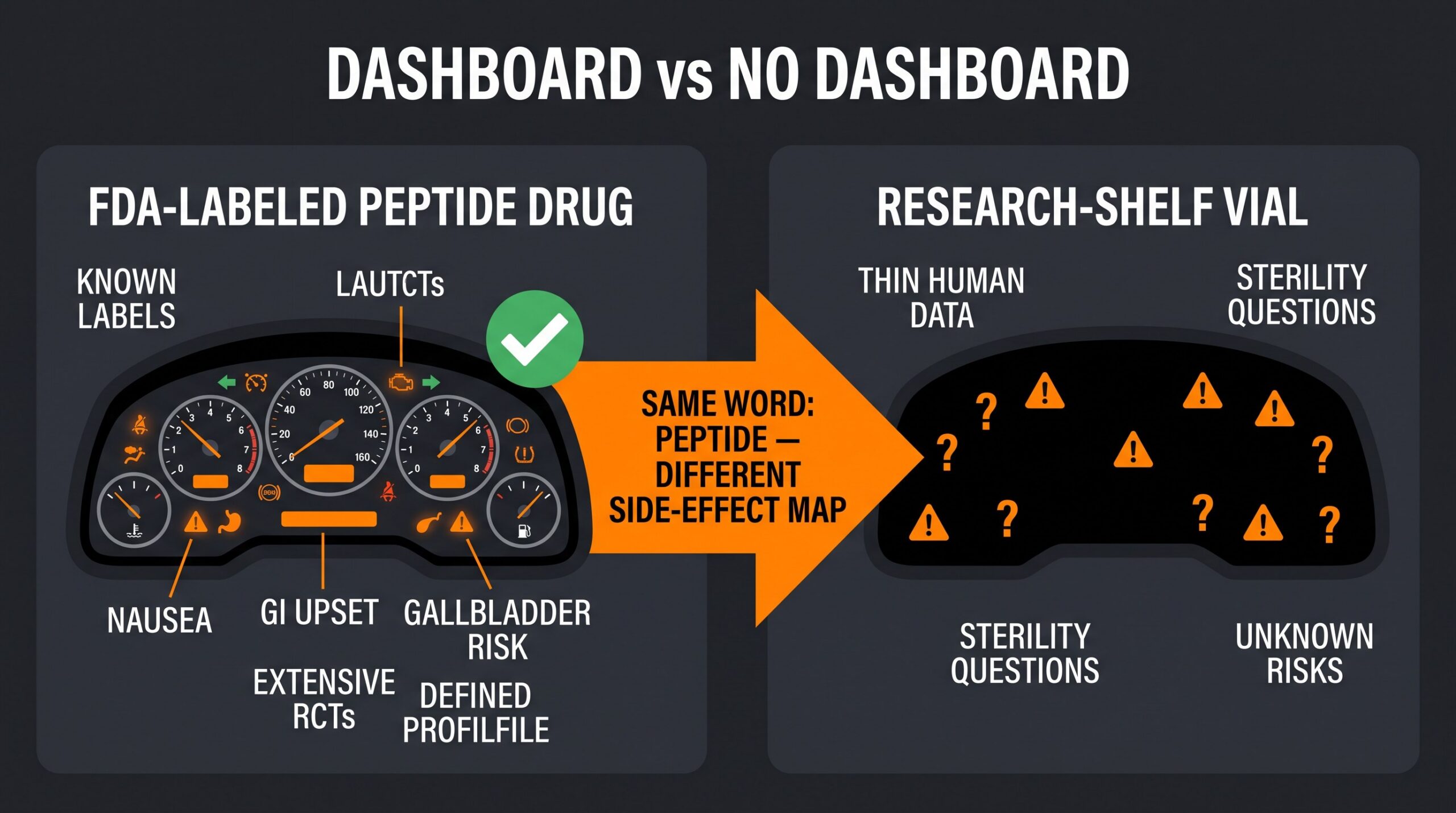
Labeled peptide drugs have a safety dashboard. A research vial is a blank panel. Those are not the same file.
Here’s the map, without a claim that a catalog vial is proven safe or proven therapy.
Key takeaways
- Verdict: “Peptide side effects” is not one list. Which peptide, and which evidence lane, changes the answer.
- How it works in one line: Labeled peptide drugs have a dashboard of known risks. Many research-shelf vials still have a blank panel.
- Your next step: sort FDA-labeled drugs from research curiosity. Then pick a door. No free-site dosing table here.
What people ask us about peptide side effects
Paraphrased from the kinds of questions people bring to our community. These are anecdotes, not data.
- “What side effects should I expect?”
- “Are research vials safer because they’re ‘natural’?”
- “What about GLP-1 stomach side effects?”
Straight answers below. No bro-science, no hype. Every study is linked at the bottom so you can check me.
Verdict up front: a search for peptide side effects deserves a clean answer. Peptides are short chains of amino acids. Amino acids are the building blocks your body already uses to make proteins. Some peptide drugs are FDA-approved medicines with big trials and known side-effect patterns. Some research vials still live mostly in animal papers and thin human pilots. Mixing those lanes is how people get confused online.
This page is a side-effect map. It is not a free protocol. It will not tell you a research vial treats disease. It will not tell you to skip a clinician.
Keep reading if you searched peptide side effects, are peptides safe, GLP-1 side effects, research peptides, or peptide therapy and want honesty first. Skip if you want a public milligram table. Skip if you want a claim that a catalog vial is proven therapy. Skip if you want a reason to ignore a doctor. Those asks belong in Pro. Or a real clinic visit.
Day-one basics live on Start Here and what are peptides. Nearby maps: are peptides safe, peptide therapy, peptide injections, how to reconstitute peptides, bacteriostatic water, BPC-157, TB-500, semaglutide, tirzepatide, and HGH peptides.
This page is teaching only, not medical advice. Research-shelf curiosity is not an FDA-approved treatment claim. Real drug labels belong to clinics. This map will not tell you to skip a doctor.
What people mean when they ask about peptide side effects
Start with the plain search. Most people are not asking about every molecule that ends in -tide. They are asking what can go wrong with the vial or pen in a forum post.
That question hides three different objects.
Object 1 is an FDA-approved peptide drug. Think semaglutide or tirzepatide. Those have labels, monitored plans, and huge trials. Side effects get tracked in public files.
Object 2 is a compounded or clinic-ordered plan. A pharmacist and a clinician own that door. Rules still matter. Side-effect talk still belongs with them.
Object 3 is a research-shelf vial. Education and curiosity only on this free site. Thin human data for many names. Sterility and purity questions still count. A blank risk dashboard is not proof of safety.
Why this matters: if you treat all three objects as one “peptide,” the side-effect answer turns into noise.
So what for you: name the object before you name the risk.
The dashboard analogy (one mechanism picture)
Here is the only picture I want stuck in your head.
An FDA-labeled peptide drug is like a car with a real dashboard. Warning lights exist. Engineers ran the tests. Regulators published rules. You can still ignore a light. A pharmacist can still mess up a refill. But the evidence lane is real.
A research-shelf vial is more like a kit with no gauges. There may be animal papers. There may be a certificate of analysis. There may be a cool forum story. That is not the same as a labeled side-effect file for your body.
How sure are we? Pretty sure approved peptide drugs have trial receipts for common risks. Pretty sure many wellness names still live mostly in cells and animals. Pretty sure sterility and purity can fail when manufacturing is loose. Not sure at all that a social clip equals a safety label.
Why this matters: if you cannot tell dashboard from blank panel in one line, wait on the cart.
So what for you: ask which evidence lane a post is selling before you trust its side-effect story.
The number people misread (and what it really means)
The cleanest stop-you line is not a gym tip. It is a 2025 meta-analysis of GLP-1 receptor agonists.
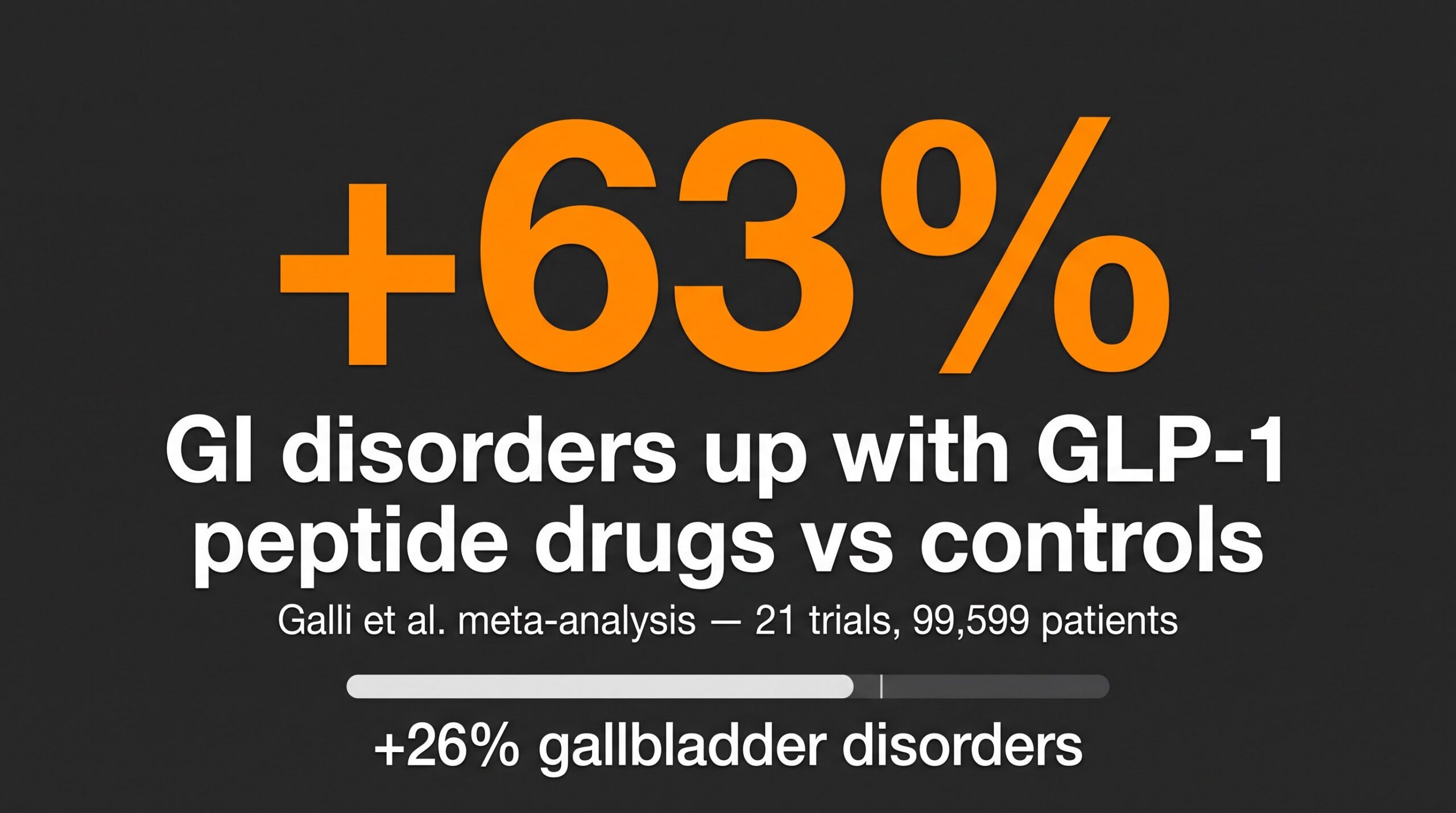
Galli and colleagues pooled 21 randomized trials. That is 99,599 patients. These are labeled peptide drugs used in diabetes and obesity care. The class cut death and major heart events. It also raised real side-effect rates. Gastrointestinal disorders were up about 63% versus controls. Gallbladder disorders were up about 26%. That is a dashboard with lights on. Not a “no side effects” fairy tale.
Hold one labeled trial next to that. Wilding and colleagues ran STEP 1 with once-weekly semaglutide in adults with overweight or obesity. Nausea and diarrhea were the most common adverse events. Most were mild to moderate and faded. Still, more people on semaglutide stopped for stomach issues than on placebo.
For contrast, look at a research-shelf favorite. McGuire and colleagues reviewed BPC-157 for musculoskeletal healing. They found a mountain of animal and cell work. Human work stayed tiny. Lee and Burgess later published a tiny intravenous safety pilot. Those papers matter. They still do not equal a Phase 3 side-effect file.
Want the BPC-157 detail? See the full breakdown of what the three human studies and the animal safety testing actually show: BPC-157 side effects.
Why this matters: the stop-you detail is that even labeled peptide drugs have side effects. Confidence for “all peptides are side-effect free” is thinner than the ads.
So what for you: be impressed by real trials. Do not confuse a blank forum thread with a clean risk map.
Evidence limits: what the research can’t tell you
Honest teaching rests on labels, large trials, sterility basics, and small pilots told plainly. Instagram before-and-afters are not that mountain.
Also hold the name trap. TB-500 is often sold as a thymosin beta-4 fragment story. Full-length thymosin beta-4 has older human IV work. A fragment in a research catalog is not automatically that parent molecule under a hospital label.
Also hold the FDA compounding caution. The agency has publicly flagged that some bulk peptide substances used in compounding may present significant safety risks. Limited human data. Impurity questions. Immunogenicity questions for some routes. That is a regulator talking about uncertainty. It is not a free pass. It is not a scare meme either. It is a reason to keep lanes honest.
Why this matters: health pages get hurt if they blur “interesting research map” into “no side effects for anyone from TikTok.”
So what for you: if someone is pregnant, has active cancer risk questions, immune disease, gallstones, severe GI disease, or a clinician gave a different plan, stop here. Get human help.
Three doors: basics vs clinic vs research map
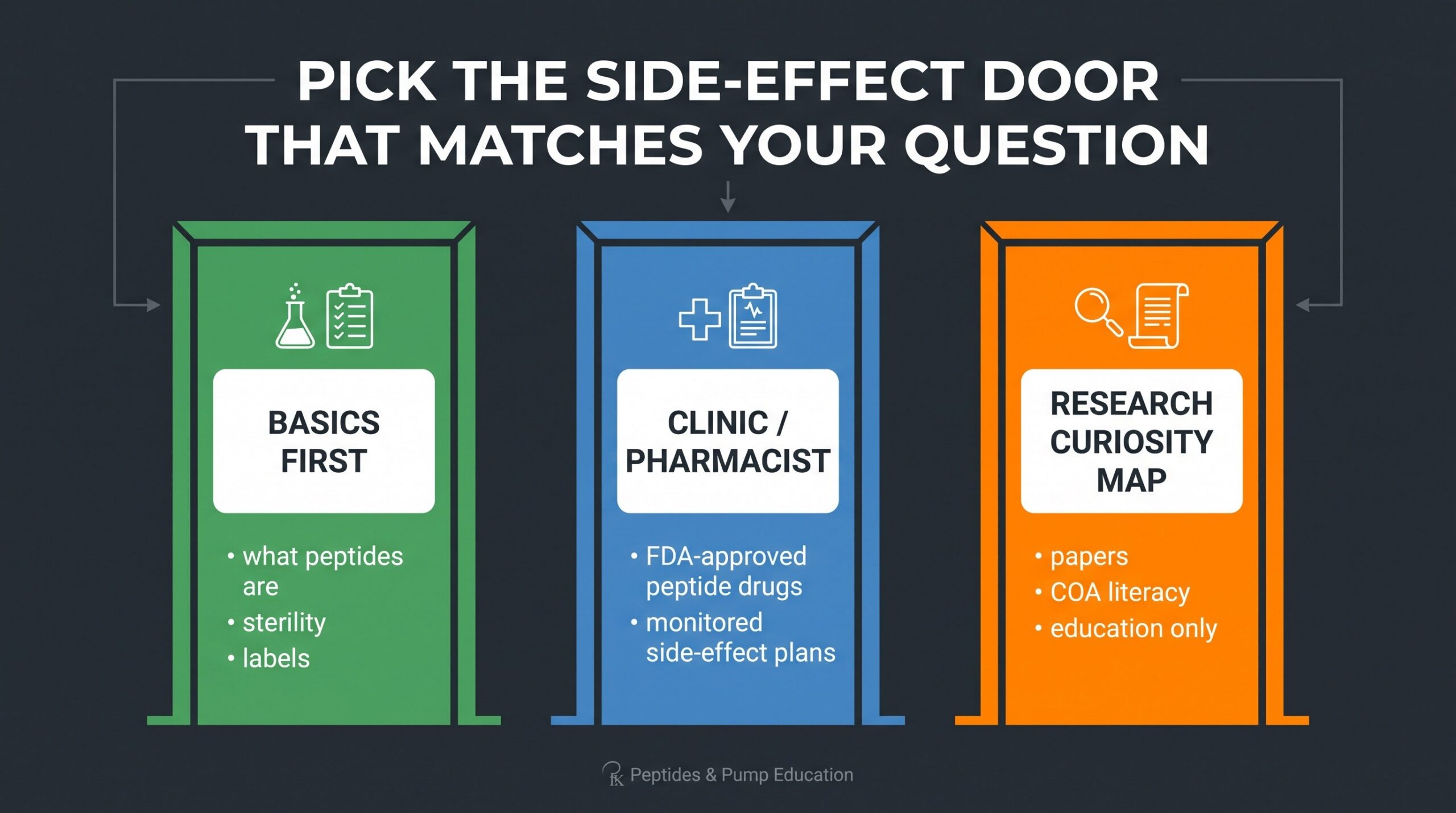
There are three doors for the same keyword online. Each door does a different job.
Door 1 is basics first. What peptides are. Why side effects need a comparison. Labels. Storage. Why a freeze-dried research vial is not a pen from a pharmacy. Start with what are peptides, are peptides safe, peptide injections, and bacteriostatic water.
Door 2 is clinic and pharmacist. Real ordered therapies. Monitored plans. Infection-control rules. Labeled peptide drugs with trial receipts and known GI patterns. Clinicians own this door.
Door 3 is research curiosity map. How a class shows up in papers. Nearby research vials. COA literacy. Education only on this free site. Not a public stack chart. Not a public side-effect dosing table.
Why this matters: people lose money and raise risk when they buy Door 3 while the real problem was Door 1 or Door 2.
So what for you: write your real side-effect question in one sentence, then pick a door.
Common side-effect patterns by lane (high level only)
Labeled GLP-1 peptide drugs often show stomach signals first. Nausea. Diarrhea. Constipation. Vomiting. Those show up a lot in the big trials. Gallbladder risk also rose in the large pooled map. Clinicians manage dose plans. This free site will not.
Needle-lane basics can add local issues. Redness. Bruising. Technique mistakes. That is why peptide injections and how to reconstitute peptides matter before any research curiosity.
Research-shelf names often lack a clean public side-effect dashboard. Missing surveillance is not proof of safety. Thin human pilots are not forever clearance.
Why this matters: pattern talk without lane talk is how hype sells.
So what for you: match the pattern to the object. Then decide if you need Door 2.
What smarter thinking looks like before any vial talk
Class literacy lives on what are peptides. That page is the word map.
Safety literacy lives on are peptides safe and peptide therapy.
Needle-lane basics live on peptide injections, how to reconstitute peptides, and bacteriostatic water.
Spoke honesty lives on pages like BPC-157, TB-500, semaglutide, and HGH peptides. Each molecule has its own evidence shape.
This hub sits beside those pages. It answers the side-effect search without pretending a free site can run a pharmacy.
Why this matters: side-effect talk without class literacy is cart-before-horse.
So what for you: finish the upstream map before you chase a blend name.
Myths that waste money (and raise risk)
- “Peptides are natural, so they have no side effects.” No. Insulin is a peptide hormone story with rules. Natural origin is not a free safety badge.
- “If a forum sells a stack, the side-effect file is settled.” No. Pilots and labeled indications are not the same as gym lore.
- “A research vial is the same as a pharmacy pen.” No. Labels, laws, and evidence tiers still differ.
- “No side effects reported online means no risk.” No. Missing surveillance is not proof of safety.
- “If a clip is free, it is FDA-approved therapy training.” No. Research-shelf curiosity is not a therapy approval here.
Why this matters: myth stacks hurt people and can punish domains.
So what for you: keep the curiosity. Kill the “zero side effects” script.
Research options from partner labs
Education first. You already have the side-effect map. Below are public options people park next to basics reading: reconstitution tools and common research vials from tracked partners. Codes fire in the links. Research-use and education framing only. Not a treatment claim. Not a claim these SKUs erase peptide side effects.
Public basics + research maps
 BioLongevity
BPC-157
LEE15 BioLongevity
TB-500
LEE15 Paramount
Recon Solution
My link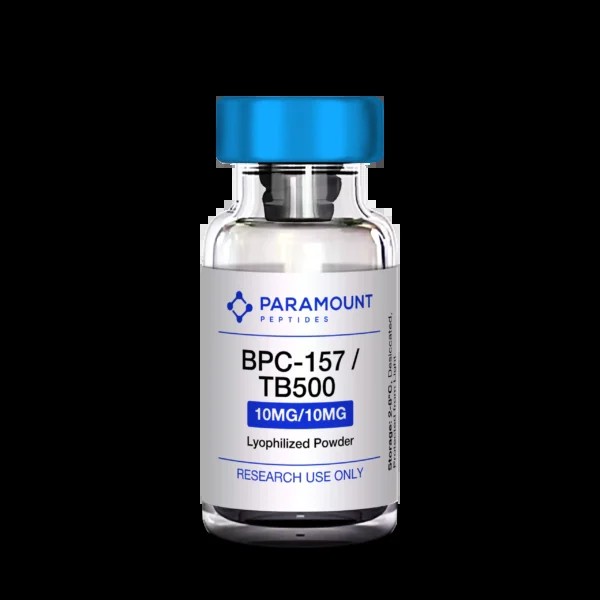 Paramount
Wolverine Blend
My link Peptira
BAC Water
LEETheir catalog needs a quick research-access sign-up before prices show. Use code LEE20 at checkout.
What to do next
If you do not want to waste money on “zero side effects” hype, start with Door 1 and the dashboard story. Class clarity beats a forum stack every time. If you want the research map, learn Door 3 after the lanes click.
Pro goes deeper on frameworks, storage windows, and how to read a COA. The free page’s job is still the map.
Why this matters: next steps that match the door save money. They also cut health-page risk.
So what for you: write your real side-effect question in one sentence before you click a code.
The short version, one more time
- Peptide side effects is a class map. Not a free therapy protocol.
- The best one-line picture is dashboard vs blank panel. Same word. Different evidence lane.
- A 2025 meta-analysis of 99,599 patients found GLP-1 peptide drugs raised GI disorders about 63% and gallbladder disorders about 26% versus controls. That is honesty. Forever “no side effects” claims are thinner than the ads. Basics and clinicians still beat hype clips. Start there.
Primary sources
We link the original study or document, not a summary.
- PubMedGalli M, et al. Cardiovascular Effects and Tolerability of GLP-1 Receptor Agonists: A Systematic Review and Meta-Analysis of 99,599 Patients. JACC. 2025. PMID 40892610
- PubMedWilding JPH, et al. Once-Weekly Semaglutide in Adults with Overweight or Obesity. N Engl J Med. 2021. PMID 33567185
- PubMedMcGuire FP, et al. Regeneration or Risk? A Narrative Review of BPC-157 for Musculoskeletal Healing. Curr Rev Musculoskelet Med. 2025. PMID 40789979
- PubMedLee E, Burgess K. Safety of Intravenous Infusion of BPC157 in Humans: A Pilot Study. Altern Ther Health Med. 2025. PMID 40131143
- FDAU.S. Food and Drug Administration. Certain Bulk Drug Substances for Use in Compounding that May Present Significant Safety Risks. FDA compounding safety page
Educational research map only. Not medical advice. Not FDA-approved treatment claims. Partner links may earn a commission. Codes live in the links.
Partner labs
Which vendor for what
Four labs, in the order I check them. Tap through my link, then use the code at checkout.
USA lab · cGMP
Best for: US-made vials, plus oral capsules.
Code LEE15
Enter code LEE15 at checkout.
USA lab · cGMP
Best for: A second US lab to compare price and stock.
No code needed: use my link
Click my link first. If Paramount shows its own sale code, use that one. Codes do not stack.
USA lab · cGMP · Lee’s main shop
Best for: The lab I use most.
Code LEE20
Their catalog needs a quick research-access sign-up before prices show. Use code LEE20 at checkout.
Import · US tested
Best for: Competitive price and Auto-Ship.
Code LEE
Auto-Ship keeps code LEE on every shipment; skip or cancel anytime.
Affiliate links: I may earn a commission at no extra cost to you. Research products only. Education, not medical advice. Each lab sets its own catalog and checkout rules.
Peptide Insider · free email
Get the research before the hype.
Lee’s Peptide Insider: new studies, FDA moves, and protocols explained in plain English. Join free and get the Peptide Playbook PDF.
Education only. Not medical advice. Unsubscribe anytime.
Keep reading
 Intermittent Fasting: What the Trials Really Show (and How Not to Lose Muscle)
 Thymalin: The Russian Thymus Peptide and What the Research Really Shows
 Semax vs Selank: What 25 Years of Russian Research Actually Shows
Free PDF
The Peptide Playbook
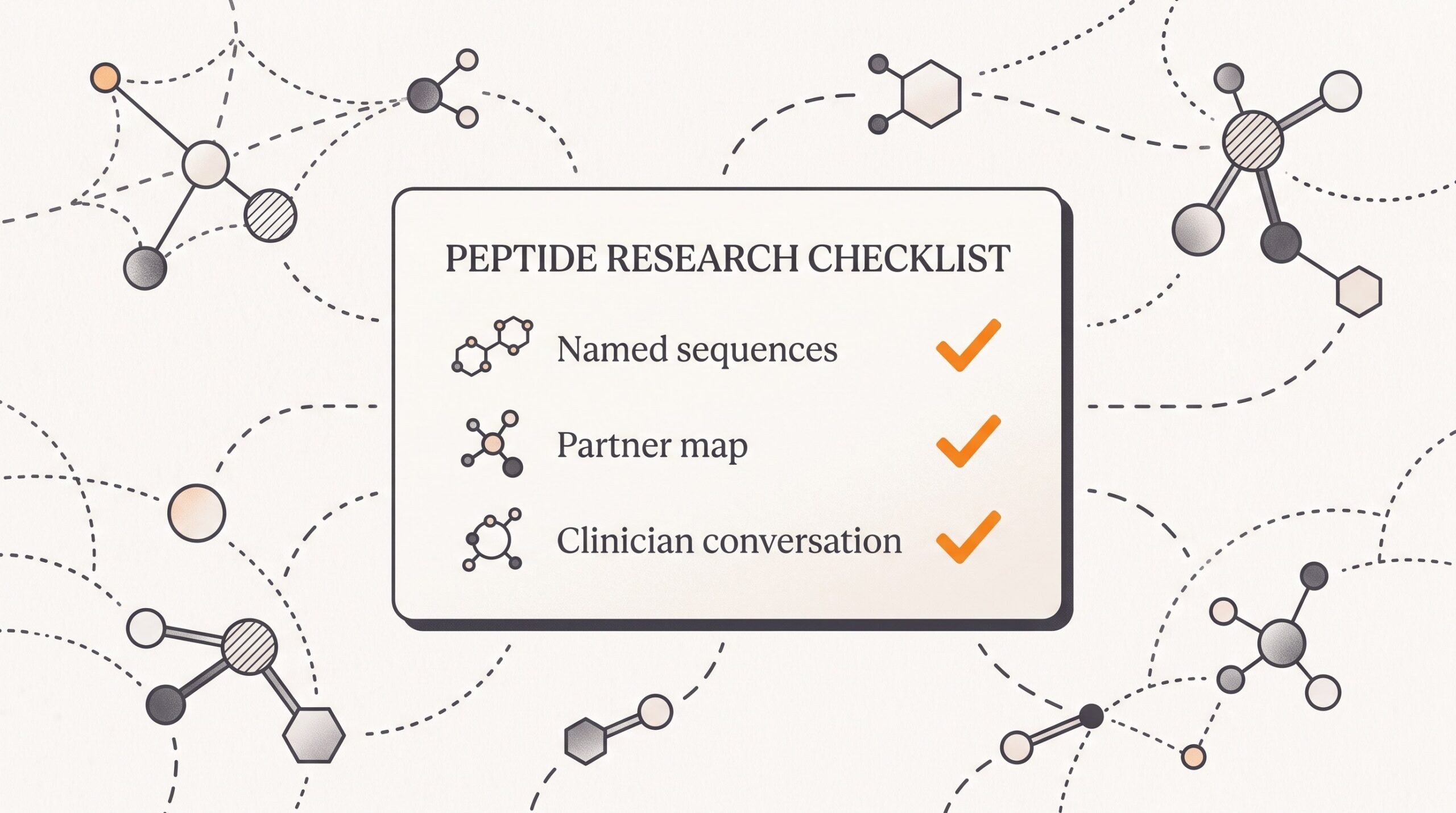
The research checklist Lee uses: named sequences, how to read a COA, and the questions to bring to your doctor. Free when you join Peptide Insider.
3 Comments
Comments are closed.