 PEPTIDES & PUMP
Menu
HHS Peptide Compounding Policy: BPC-157, TB-500, and the Four Other Names, Explained
On October 28, 2026, HHS filed a Federal Register notice saying it will hold off on enforcement for six peptides when a licensed pharmacy or doctor compounds them under the stated conditions. What changed, what it does not do, and how to comment.

Peptide Insider Free email + the Peptide Playbook PDF.Get it free
Education only. Not medical advice. Unsubscribe anytime.
Research education, not medical advice. Talk with a licensed clinician before you act on anything here.
On October 28, 2026, HHS filed a notice with the Federal Register about compounding six peptides. That is a policy document, not a shopping green light.
It says HHS will hold off on enforcement when a licensed pharmacy or doctor compounds those peptides under the stated conditions. It is not a new drug approval.
Here’s what changed, what it does not do, and where the six names actually sit.
Updated: November 2, 2026. The notice was published in the Federal Register on October 30, 2026 (91 FR 68526).
Key takeaways
- HHS says it will not take action against licensed pharmacies and doctors who compound six peptides: BPC-157, Epitalon, KPV, MOTS-c, Semax, and TB-500.
- It only covers a drug made for one patient with a valid prescription, through a 503A pharmacy, a Federal facility, or a licensed doctor.
- This is not FDA approval. None of the six peptides is approved as safe or effective.
- It does not cover “research use only” sellers.
- You can comment on Docket No. HHS-OASH-2026-0496 until Friday, November 13, 2026 at 11:59pm ET.
What people ask us about the HHS notice
Paraphrased from the kinds of questions people bring to our community. These are anecdotes, not data.
- “Does this make BPC-157 legal?”
- “Which six peptides are on the list?”
- “Can a research catalog use this as cover?”
Straight answers below. No bro-science, no hype. Every study is linked at the bottom so you can check me.
Verdict up front
On October 28, 2026, HHS filed a notice with the Federal Register (FR Doc. 2026-22192, RIN 0910-ZD94). It says HHS will hold off on enforcement for six peptides when a licensed pharmacy or doctor compounds them for one patient. There are strict rules. It is a policy about enforcement. It is not an approval, and it is not a green light for online vials.
Not legal advice. This page explains a public document in plain words. For your own case, ask a lawyer or your state board of pharmacy.
What changed
Some drugs are “compounded.” That means a licensed pharmacist or doctor mixes a drug for one patient. The law that covers this is section 503A of the Food, Drug, and Cosmetic Act. A 503A pharmacy can only use certain raw ingredients. Peptides like BPC-157 are not on that list yet. FDA is still writing the rules for the list.
The new notice says HHS will wait on enforcement while that list is built. Here is the key line:
“HHS does not intend to take enforcement action against a State-licensed pharmacy, Federal facility, or licensed physician compounding a drug product using a peptide bulk drug substance found in Appendix A.”
In plain words: if a 503A pharmacy, a Federal facility, or a licensed doctor makes one of the six peptides for a patient with a valid prescription, and follows the rules below, HHS says it does not plan to act against them.
Why? The full HHS policy says the goal is to move people away from risky imports. It says the policy:
“will discourage the continued, widespread use of certain research-use-only peptides supplied by foreign manufacturers that pose a safety risk to US patients.”
The notice also says this can change:
“HHS may revisit application of this interim policy (in whole or in part) if, among other things, a safety signal or product quality issue arises with a compounded drug product within the scope of this policy.”
Want the bigger picture on peptide rules? Read our guide: Are peptides legal?
Why this matters
Quality is the big issue. Compounding has gone badly before. In 2012, dirty steroid shots from one compounding pharmacy caused a large outbreak of fungal infections in the U.S. (Smith 2013, PMID 23252499). Drugs sold online without a prescription have quality problems too. One study bought semaglutide from online sellers. It found problems with purity, labels, and germs (Ashraf 2024, PMID 39509151). The HHS rules focus on testing and reporting for this reason.
The six peptides
Appendix A of the HHS policy lists six peptides. Appendix B limits how each one can be given. Each name links to our page about it.
| Peptide | Forms the policy allows |
|---|---|
| BPC-157 | Under the skin, into muscle, by mouth, or on the skin |
| Epitalon | Under the skin or into muscle, in short courses with breaks |
| KPV | On the skin or by mouth |
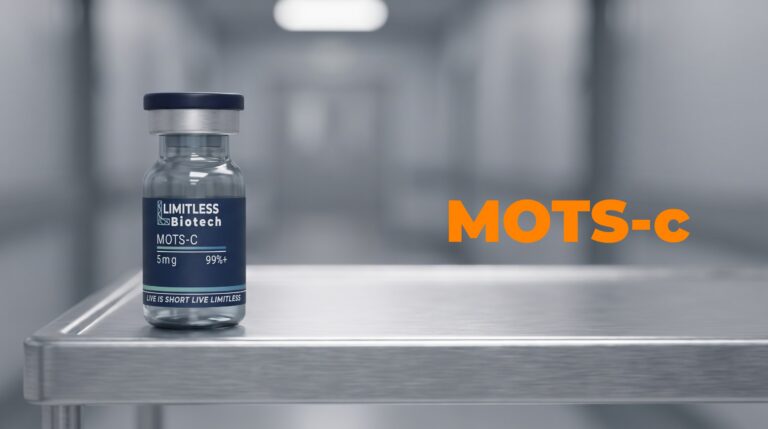
| MOTS-c | Under the skin or into muscle |
| Semax | In the nose |
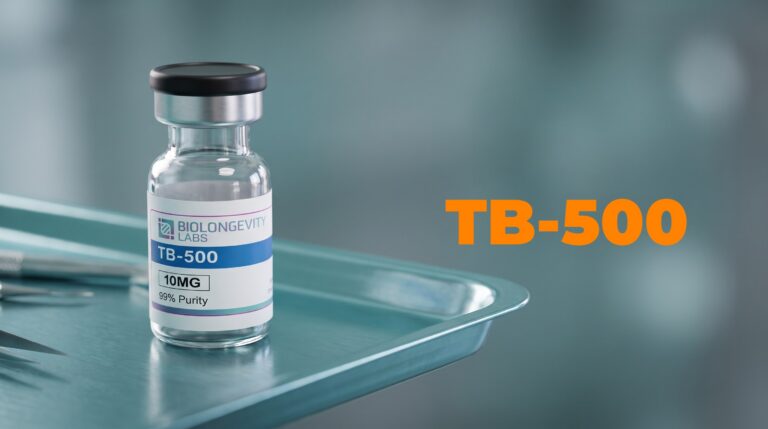
| TB-500 | Under the skin or into muscle |
The policy also says each product can have only one of these peptides in it. No blends.
The conditions
All of these must be true. This is a short, plain list. The HHS policy PDF has the full wording.
- On the list. The peptide is in Appendix A.
- Right identity and route. It matches the identity and the routes in Appendix B.
- A real COA. The raw peptide comes from an FDA-registered site. It has a valid certificate of analysis (COA). The COA shows tests for identity, purity, strength, and harmful things like endotoxin, heavy metals, and germs.
- A known maker. The original maker is registered with FDA and follows good manufacturing practice (CGMP). Its address is on the COA.
- Reporting. The compounder reports serious side effects and quality problems to FDA’s MedWatch program, and to the states involved. The patient’s label should explain how to report problems.
- The label. It must include this exact line: “This is a compounded drug product. Not for resale.”
- One active ingredient. Only one peptide per product.
- Proof for pills. Peptides are hard to absorb by mouth. If one is made as an oral form, the compounder must keep proof that it works in people.
- Simple devices only. The only device allowed with the drug is an FDA 510(k)-cleared syringe.
- All other rules. It must follow the rest of the law, including clean conditions and a valid prescription for each patient.
What it does NOT do
- It is not FDA approval. The notice says so plainly: “Compounded drugs are not FDA-approved, which means FDA does not review their safety, effectiveness, or quality before they are marketed.”
- The peptides are not proven safe or effective. No FDA review has found that.
- It does not cover research-use-only sellers. Vials sold “for research only” are outside this policy. In fact, HHS says the goal is to pull people away from them. Learn how to spot fake peptides.
- It does not create rights. The notice says the policy “does not establish any rights for any person and is not binding on HHS or the public.”
- It is not final. The notice calls it a draft and an interim policy.
- It does not cover outsourcing facilities (503B). It is about 503A compounding only.
How to comment on the docket
The notice was published in the Federal Register on October 30, 2026 (91 FR 68526). The comment window is now open. Comments close Friday, November 13, 2026 at 11:59pm ET on regulations.gov, Docket No. HHS-OASH-2026-0496. The notice says:
“Written comments can be submitted until 2 weeks after date of publication in the Federal Register via regulations.gov on Docket No. HHS-OASH-2026-0496”
- Go to Docket HHS-OASH-2026-0496 on regulations.gov.
- Open the notice and click “Comment.”
- Write in your own words. Be clear and polite. Facts help.
- Submit before 11:59pm ET on Friday, November 13, 2026.
Questions? The notice lists Victoria Marshall, Office of the Assistant Secretary for Health, at OASH-RFI@hhs.gov.
FAQ
Did the FDA approve BPC-157 or the other peptides?
No. This is not FDA approval. HHS says it will not take action against certain licensed pharmacies and doctors who compound six peptides. None of the six is approved as safe or effective.
Which peptides are on the list?
Six: BPC-157, Epitalon, KPV, MOTS-c, Semax, and TB-500. They are listed in Appendix A of the HHS policy.
Can I buy these peptides online now?
The policy is about a licensed 503A pharmacy, Federal facility, or licensed doctor making a drug for one patient with a valid prescription. It does not cover research-use-only sellers.
Is the policy final?
The notice calls it a draft and an interim policy. HHS says it may revisit it if a safety or quality problem comes up. It also says the policy is not binding on HHS or the public.
When does it take effect?
The notice was published in the Federal Register on October 30, 2026 (91 FR 68526).
How do I comment?
Go to regulations.gov and find Docket No. HHS-OASH-2026-0496. Comments close Friday, November 13, 2026 at 11:59pm ET. The notice published October 30, 2026 (91 FR 68526) and takes comments until 2 weeks after publication.
What does the label have to say?
The policy says the label should include: “This is a compounded drug product. Not for resale.”
Is this legal advice?
No. This page explains a public document in plain words. Talk to a lawyer or your state pharmacy board about your own situation.
Keep reading
- Are peptides legal?
- How to spot fake peptides
- Counterfeit research peptides
- Are peptides safe?
- Peptide side effects
- BPC-157 vs TB-500
Separate from the HHS policy: research-use-only suppliers
Disclosure: these are affiliate links. We may earn a commission at no extra cost to you. The products these sellers offer are sold for research use only. These sellers are not covered by the HHS policy above. Always check the COA for your batch.
BioLongevity Labs
Research peptide catalog, sold for research use only. Batch COAs are posted on product pages.
BioLongevity home code LEE15
Paramount Peptides
Research peptide catalog, sold for research use only. Check the COA and batch number before you order.
Primary sources
We link the original study or document, not a summary.
- Federal RegisterHHS. Enforcement Discretion Policy Regarding 503A Compounding Using Certain Peptide Bulk Drug Substances. Federal Register, 91 FR 68526 (October 30, 2026), FR Doc. 2026-22192, Docket No. HHS-OASH-2026-0496, RIN 0910-ZD94. Filed Oct 28, 2026. Published Oct 30, 2026. PDF.
- HHSHHS. HHS Enforcement Discretion Policy Regarding 503A Compounding Using Certain Peptide Bulk Drug Substances (with Appendices A and B).
- DocketRegulations.gov. Docket HHS-OASH-2026-0496.
- FDAFDA. Human Drug Compounding.
- FDAFDA. MedWatch: The FDA Safety Information and Adverse Event Reporting Program.
- PubMedSmith RM, et al. Fungal infections associated with contaminated methylprednisolone injections. N Engl J Med. 2013. PMID: 23252499
- PubMedAshraf AR, et al. Multifactor quality and safety analysis of semaglutide products sold by online sellers without a prescription. J Med Internet Res. 2024. PMID: 39509151
Partner labs
Which vendor for what
Four labs, in the order I check them. Tap through my link, then use the code at checkout.
USA lab · cGMP
Best for: US-made vials, plus oral capsules.
Code LEE15
Enter code LEE15 at checkout.
USA lab · cGMP
Best for: A second US lab to compare price and stock.
No code needed: use my link
Click my link first. If Paramount shows its own sale code, use that one. Codes do not stack.
USA lab · cGMP · Lee’s main shop
Best for: The lab I use most.
Code LEE20
Their catalog needs a quick research-access sign-up before prices show. Use code LEE20 at checkout.
Import · US tested
Best for: Competitive price and Auto-Ship.
Code LEE
Auto-Ship keeps code LEE on every shipment; skip or cancel anytime.
Affiliate links: I may earn a commission at no extra cost to you. Research products only. Education, not medical advice. Each lab sets its own catalog and checkout rules.
Peptide Insider · free email
Get the research before the hype.
Lee’s Peptide Insider: new studies, FDA moves, and protocols explained in plain English. Join free and get the Peptide Playbook PDF.
Education only. Not medical advice. Unsubscribe anytime.
Keep reading
 Retatrutide for Knee Osteoarthritis: TRIUMPH-4 Phase 3 Results (NEJM), Explained
 TRIUMPH-1 Retatrutide Phase 3 Results, Explained: Weight, Knees, and Sleep Apnea
 How to Spot Fake Peptides: The COA Checklist, Red Flags, and What CBS Found
Free PDF
The Peptide Playbook
The research checklist Lee uses: named sequences, how to read a COA, and the questions to bring to your doctor. Free when you join Peptide Insider.

One Comment
Comments are closed.