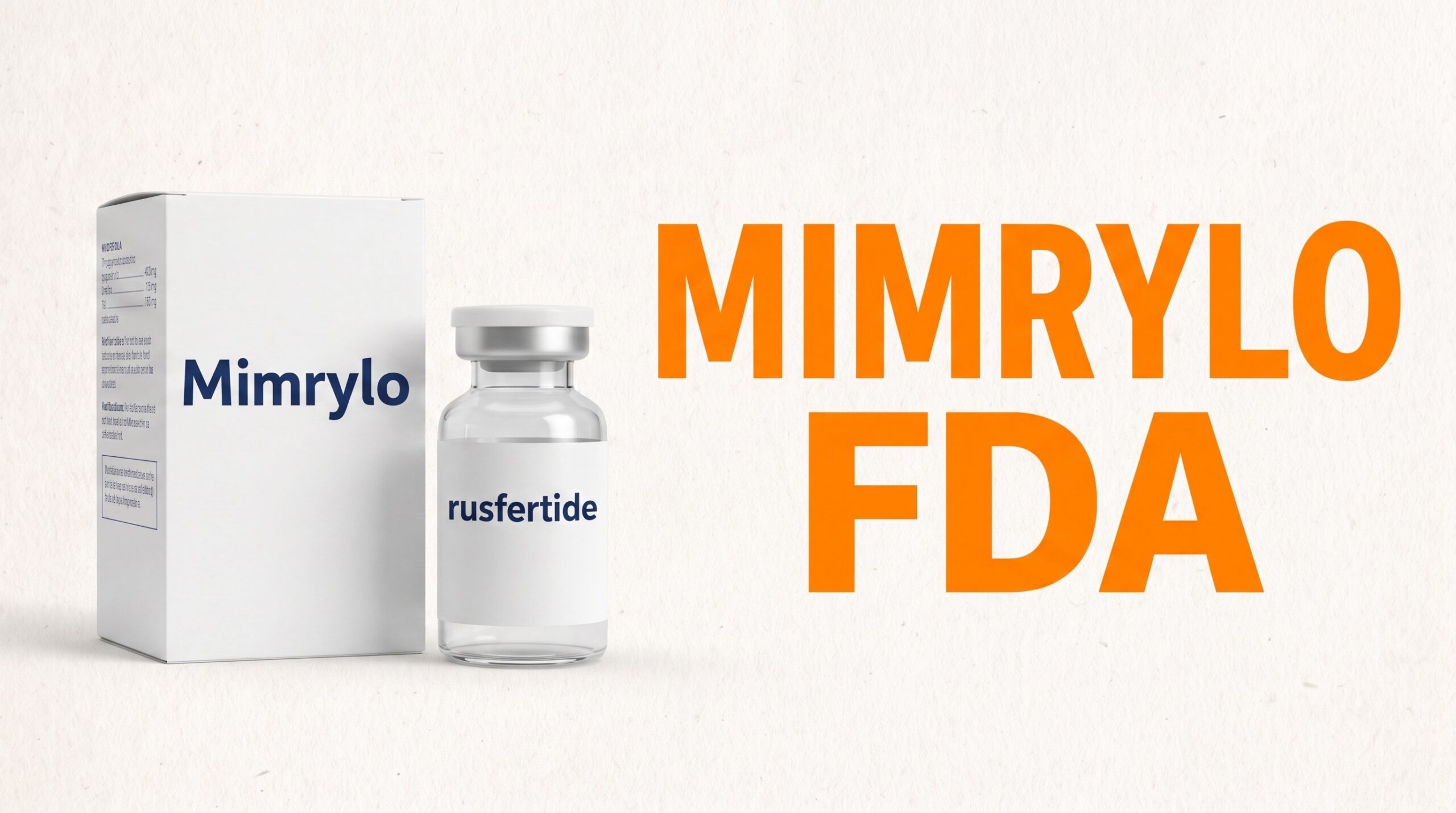
FDA Approves Mimrylo (Rusfertide), First Hepcidin-Mimetic Peptide for Polycythemia Vera
Free guide
Get The Peptide PlaybookEnter your email and we’ll send the research PDF. Education only — not medical advice.
Key takeaways
- The FDA approved Mimrylo (rusfertide) on Aug. 28, 2026, for adults with polycythemia vera — too many red blood cells, thicker blood, and a higher clot, stroke, and heart-attack risk.
- It is the first approved PV treatment that mimics hepcidin, the iron-regulating hormone. Limit the iron available for new red cells; help keep hematocrit below 45%.
- VERIFY, a phase 3 trial of 293 adults who still needed frequent phlebotomies: 76.9% on Mimrylo required no phlebotomies over 32 weeks, versus 32.9% on placebo.
- This is a Takeda prescription peptide, once-weekly subcutaneous. It is not a research-catalog SKU, not BPC-157, and not a GLP-1. Do not buy a gray-market stand-in.
- Most common adverse reactions: injection site reactions and anemia. Education, not medical advice.
News · FDA
Aug. 28, 2026
The Food and Drug Administration approved Mimrylo (rusfertide) on Aug. 28 for adults with polycythemia vera, a rare blood disorder in which the body makes too many red blood cells. The extra cells thicken the blood and raise the risk of clots, stroke, and heart attack.
Mimrylo is the first approved polycythemia vera treatment that mimics hepcidin, the hormone that regulates iron. By limiting the iron available to make new red blood cells, the drug is meant to slow that overproduction and help keep hematocrit — the share of blood that is red cells — below 45%.
That 45% line is the point of PV care. Getting there often means phlebotomy: drawing blood to drop the red-cell load. Some patients still need frequent draws even on standard treatment. The FDA framed Mimrylo as a first-in-class option for that burden. Approval was granted to Takeda Pharmaceuticals America, Inc., under priority review.
Hepcidin, iron, red cells
If you only know “peptides” from a catalog, this is a different map.
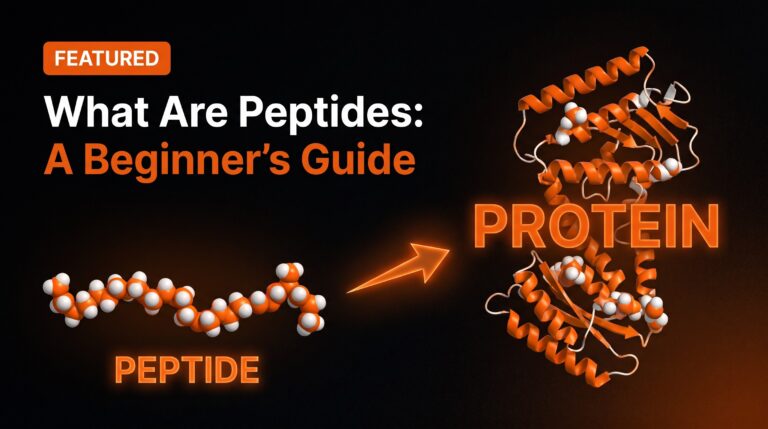
A peptide is a short chain of amino acids. Hepcidin is one. It is the body’s iron signal, not a gym recovery stack. When hepcidin is up, iron is locked away. When iron is locked away, the marrow has less raw material for hemoglobin, and new red cells are harder to mint. Rusfertide is built to copy that signal. Weekly, under the skin. A hepcidin-mimetic. The job is iron restriction, not tissue repair, not appetite, not growth hormone.
BPC-157 is a gastric fragment people talk about for healing. GLP-1s are a metabolic-hormone lane. Rusfertide does not sit in either file. Same word — peptide. Different door.
What VERIFY showed
Safety and efficacy were measured in VERIFY, a multicenter, randomized, double-blind, placebo-controlled phase 3 study of 293 adults with polycythemia vera who still needed frequent phlebotomies despite standard of care. Patients were randomized 1:1 to Mimrylo or placebo for 32 weeks.
Treatment started at 19 mg subcutaneous once weekly and was titrated to keep hematocrit below 45%. Efficacy was the proportion of patients who did not meet phlebotomy criteria between weeks 20 and 32. Overall, 76.9% of patients on Mimrylo required no phlebotomies during the 32-week period, compared with 32.9% on placebo.
The most common adverse reactions were injection site reactions and anemia.
“People living with polycythemia vera have long faced the challenge of managing a chronic blood disorder with frequent blood draws to help address the consequences of the red blood cell overproduction. Today’s approval of Mimrylo offers a new, first-in-class option that has the potential to meaningfully reduce patient burden.”
Tanya Wroblewski, M.D., Director, Division of Nonmalignant Hematology, FDA Center for Drug Evaluation and ResearchThe peptide map, not a substitute
I am not a Takeda fan and I am not going to pretend otherwise. I also will not pretend this approval is a research-vial story.
The peptide class is getting real FDA doors. Rusfertide is one of them: a hepcidin-mimetic, weekly subcutaneous peptide, labeled for a blood disorder, owned by a pharma company. That is news if you have been living in BPC-157 and GLP-1 threads. It is not a coupon. It is not a compounding shortcut. It is not permission to skip a hematologist or to hunt a “research” rusfertide analog for human use.
If PV is the diagnosis, that conversation belongs with a clinician who treats PV. Mimrylo is a prescription drug. This site does not sell it. This page is education and opinion, not medical advice, and nothing here is intended to diagnose, treat, cure, or prevent any disease.
Sources
The news is the label. The classroom is still the classroom — not a checkout on a blood-cancer drug.