Cerebrolysin: Neuropeptide Mix Research Map (Brain Peptide Blend)
Key takeaways
- Verdict: Cerebrolysin is a branded neuropeptide mix used in clinic stroke and dementia research stories. It is not one clean single-chain peptide like Semax. It is not a free-site research bottle with a European drug label glued on.
- How it works in one line: Many short protein scraps in one bag. The pitch is growth-factor-like repair talk for brain cells. Still a clinician door for the real brand.
- Your next step: learn the three doors (clinic brand vs research shelf vs basics). Use public tracked partners for nearby brain maps. Never treat a catalog listing like Cerebrolysin IV care.
Verdict up front: Cerebrolysin is worth understanding if you keep seeing “brain peptide mix,” FPF 1070, or stroke-recovery forum talk. It is not worth treating a research listing like a hospital drip. This free page will not hand you a public dose chart.
There is a real human trial file. There is also a careful Cochrane review that refuses the Marvel ending. Partner shelves can show nearby brain research maps with codes that fire. There is still no honest path from a catalog vial to “I ran stroke rehab from Instagram.”
Keep reading if you typed cerebrolysin, CerebroNeurogen, or brain peptide mix and want the map without guru noise. Skip if you want a public dose chart. Skip if you want a claim that a research product treats stroke or Alzheimer’s. Skip if you want a reason to skip sleep, Zone 2, and doctor care. Those asks belong in Pro or a real clinic.
Day-one basics live on Start Here and what are peptides. Nearby maps: Semax, Selank, Dihexa, PE-22-28, SS-31, Pinealon, DSIP, NAD, how to sleep better, Zone 2 training, HRV, VO2 max, and protein intake.
This page is teaching only, not medical advice. A research-shelf cerebrolysin-style listing is not an FDA-approved drug claim here. Branded Cerebrolysin still follows clinic rules where it is used. This map will not tell you to skip a doctor.
What is cerebrolysin?
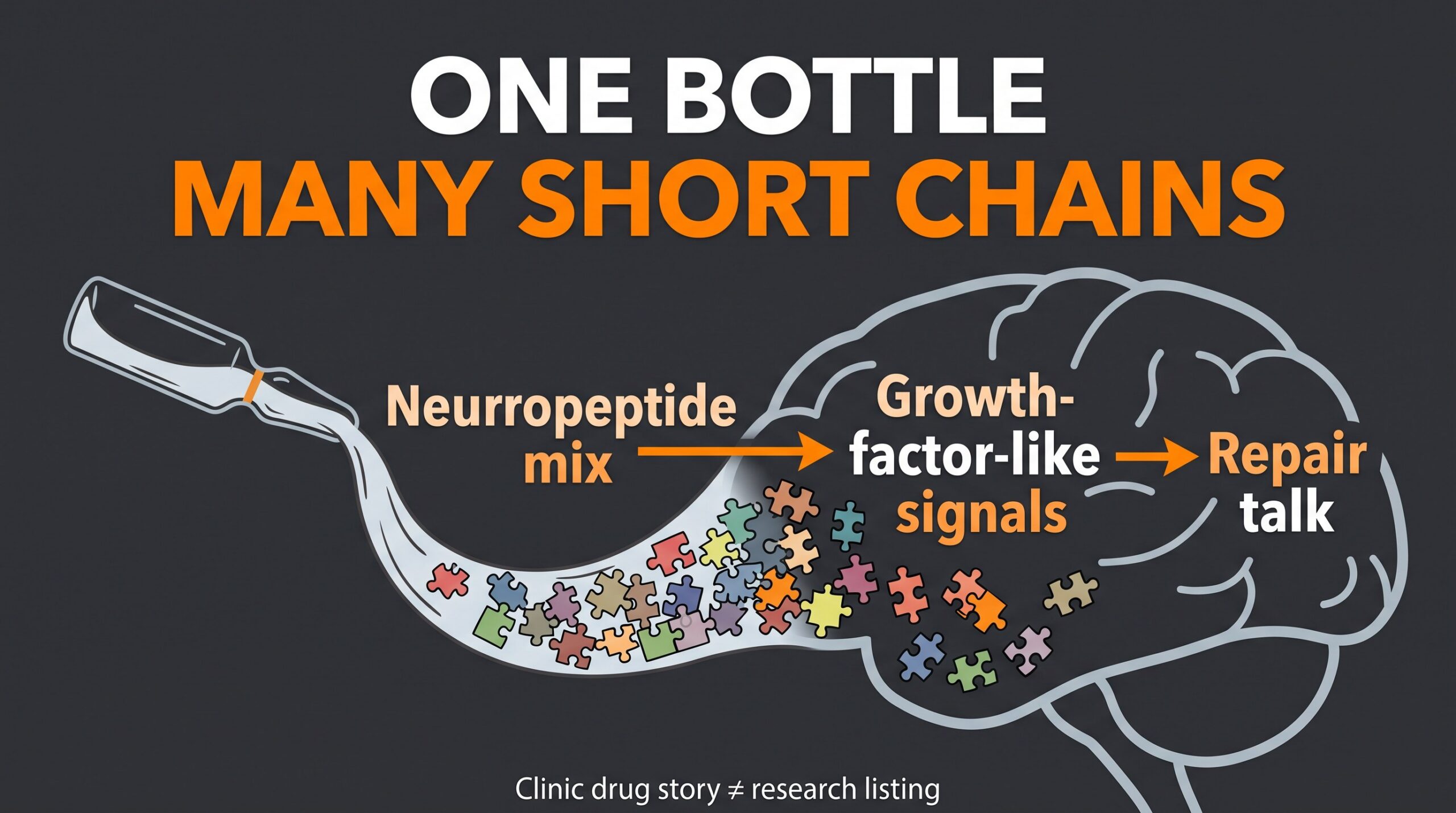
Start with the plain name. Cerebrolysin is a lab-made mix of short peptides. Think of it as many tiny protein scraps in one bag. It is not one neat single chain like Semax. It is not Selank. It is a blend.
A peptide is a short chain of amino acids. Most ranking pages on this site cover one chain with one name. Cerebrolysin breaks that pattern on purpose. The branded story is a porcine brain protein hydrolysate. That means animal brain proteins get broken into small bits. Those bits are what show up in the clinic talk.
You will also see research names online. CerebroNeurogen and FPF 1070 talk show up on research shelves. A research listing is not the same thing as a hospital brand drip. Same family of curiosity. Different rules.
It is not Semax. Semax is a cleaner ACTH fragment map. It is not Selank. Selank is an anxiety-lane peptide map. It is not Dihexa. Dihexa is a different brain-growth research story. They share one “brain peptide” aisle. They do not share one bottle.
Why this matters: forums mash every brain bottle into “just Cerebrolysin at home.” That is the wrong map, and it leads to the wrong confidence story.
So what for you: if a sales page never says neuropeptide mix out loud, it is selling vibes.
The fertilizer-mix analogy (one mechanism picture)
Here is the only picture I want stuck in your head.
Think of a hurt brain cell like a garden after a storm. One clean peptide can be like one tool. A shovel. Or a hose.
Cerebrolysin is more like a fertilizer mix. Many short chains in one bag. The branded story says those scraps can act a bit like growth-factor signals. Repair talk. Plasticity talk. Inflammation quieting talk. That is the whole map. It is still not magic dirt.
How sure are we? Pretty sure the branded product is a real peptide mixture with human trials. Pretty sure clinic use lives behind clinician rules in countries where it is used. Less sure that every online “cerebro” listing matches that brand. Not sure at all that a research catalog equals a stroke ward protocol.
Why this matters: if you cannot explain mix vs single-chain vs shelf bottle in one line, do not open a cart yet.
So what for you: ask for the form story before you ask for a price.
The stop-you number (and what it is not)
The cleanest stop-you line is not a forum screenshot. It is a published trial pool with a confidence label.
In a 2018 meta-analysis of nine randomized trials, about 1,879 adults in early post-stroke care were pooled for Cerebrolysin versus placebo. Early neurological scores on the NIHSS favored Cerebrolysin. The Mann-Whitney effect size was about 0.60. The combined number needed to treat for a meaningful early NIHSS change was about 7.7. Say that in plain words: in those pooled early-recovery trials, the mix arm looked better than placebo on early stroke scores.
Say that out loud. A pooled early-score signal is not a US drug label stamped on a research listing. A later Cochrane review of Cerebrolysin for acute ischemic stroke is more careful. It does not hand you a Marvel ending on death or long-term function. That honesty is part of the map.
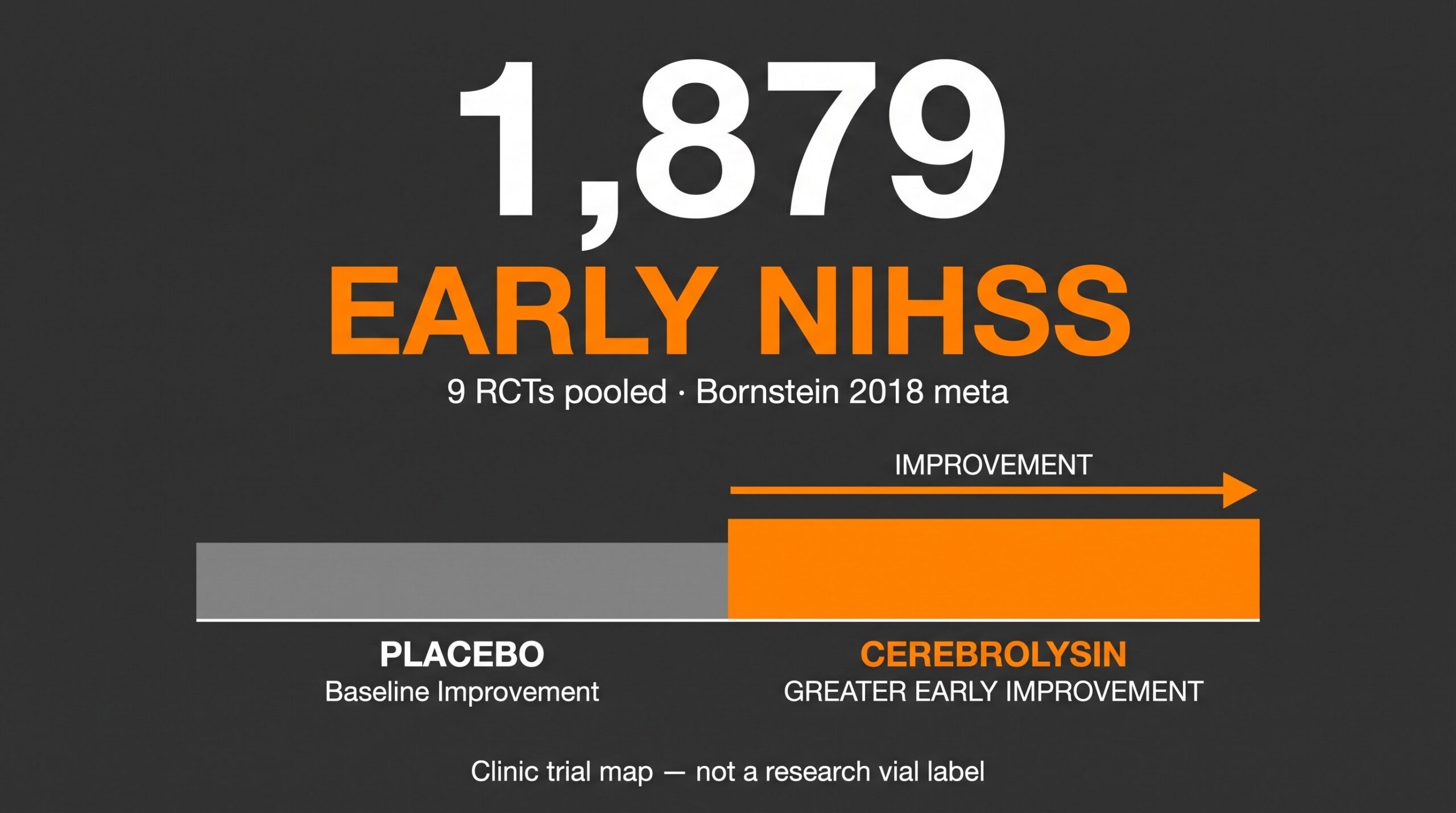
Why this matters: the stop-you detail is that cerebrolysin has a serious human trial stack. The confidence for “my research listing is just homemade stroke protocol” is still zero.
So what for you: be impressed by the map. Do not confuse a chemical tool with a prescription pad.
Evidence limits (say this out loud)
Most honest teaching rests on stroke recovery trials and dementia meta-analyses. Alzheimer’s meta-work exists for mild-to-moderate disease under clinic dosing stories. Safety meta-analyses exist too. That is a real evidence stack. It is still not your free-site DIY plan.
That does not make the science fake. It makes the confidence level clear for a free page. Human trials are useful teaching tools. They are not your sleep plan, your blood-pressure plan, or a green light to skip care.
Also hold the shelf-vs-paper gap. Social media sells “same as Cerebrolysin in a bottle.” PubMed studies supervised trial arms. Same molecule-family idea. Different sales story.
Why this matters: health pages get punished when they blur “interesting research chemical” into “treat yourself after a stroke.”
So what for you: if someone has a new stroke, seizure risk, pregnancy questions, or rapid odd thinking changes, this page is not the tool. Get human help.
Research SKU vs doctor care vs basics
There are three doors for the same curiosity online, and each door does a different job.
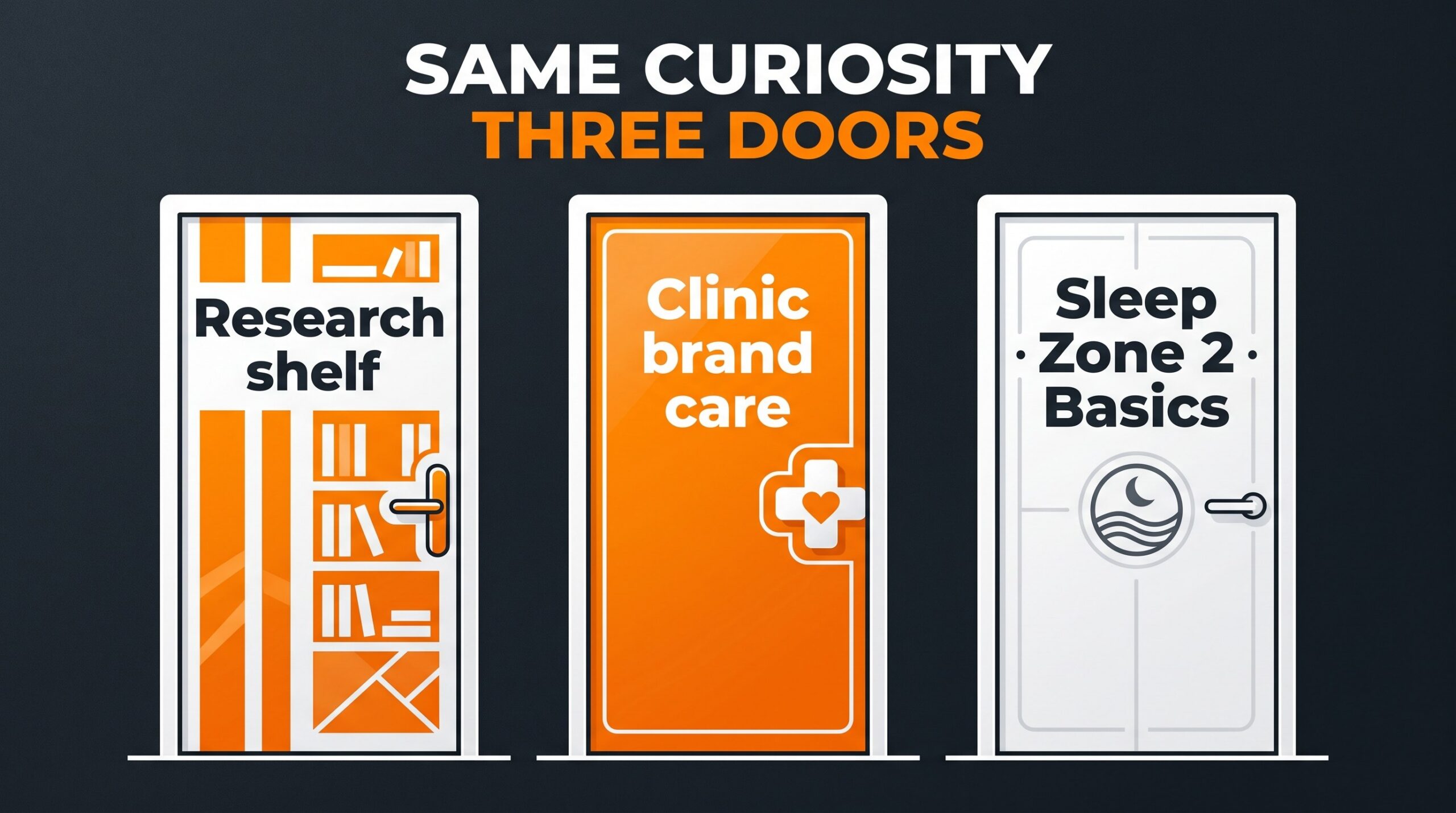
Door 1 — Research shelf curiosity. Partner shelves can list nearby brain maps. Some rows sit behind VIP logins. That is a convenience story. It is not FDA-approved medicine by default.
Door 2 — Doctor / branded care. Real stroke and dementia care belongs with a clinician. Branded Cerebrolysin lives in that lane where it is used under medical rules. Labs and follow-up belong there too. A research map does not replace that door.
Door 3 — Basics. Sleep that recovers. Zone 2 you can actually sustain. Strength that keeps you useful. Stress that does not fry your HRV. See how to sleep better, Zone 2 training, HRV, and protein intake.
Why this matters: most money gets wasted when people buy Door 1. While wanting Door 2 outcomes and skipping Door 3.
So what for you: pick the door that matches your actual question before you open a cart.
Cerebrolysin vs Semax / Selank / Dihexa / PE-22-28
They share the same Instagram “brain peptide” shelf. They still do different jobs.
- Cerebrolysin — branded neuropeptide mix map. Many short chains. Clinic stroke / dementia trial file.
- Semax — cleaner single-chain focus map. See Semax.
- Selank — anxiety-lane peptide map. See Selank.
- Dihexa — different brain-growth research map. See Dihexa.
- PE-22-28 — short antidepressant-lane research fragment. See PE-22-28.
- SS-31 — mitochondria repair research map. Different pathway. See SS-31.
Why this matters: stacking nicknames is how people buy five bottles for one unanswered question.
So what for you: pick the map that matches the form and mechanism you actually care about.
Myths that waste money
- “A research vial is the same as Cerebrolysin.” Same family idea can still mean different rules, purity, and follow-up.
- “1,879 patients means I can dose myself from a forum.” Trial protocols are supervised by clinicians. Free pages are maps, not marching orders.
- “Cochrane doubt means the science is fake.” Careful reviews lower confidence. They do not invent a DIY green light either.
- “VIP login research is a shortcut to branded care.” A login wall is not a clinician visit. It is only a shelf door.
- “More brain bottles beat better sleep and Zone 2.” Basics still outrank meme chemistry for most readers who want lasting results.
Why this matters: myth stacks are how health pages get people hurt and domains get punished.
So what for you: keep the neuropeptide curiosity. Kill the Marvel script.
Partner research options (codes in the links)
Education first. You already got the map. Dedicated cerebrolysin VIP product cards are not the hero this pass. Below are InStock public research options with codes that fire. Nearby brain maps. Not a VIP login maze. Research-use pages only. Not a treatment claim.
Adjacent brain research maps (public InStock)
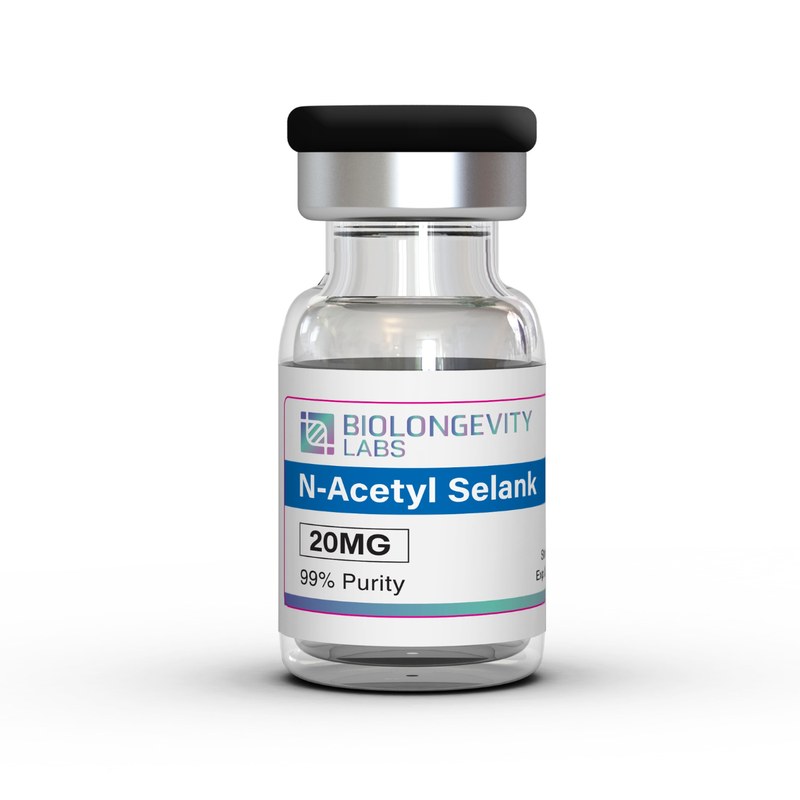 BioLongevity
N-Acetyl Selank Amidate
LEE15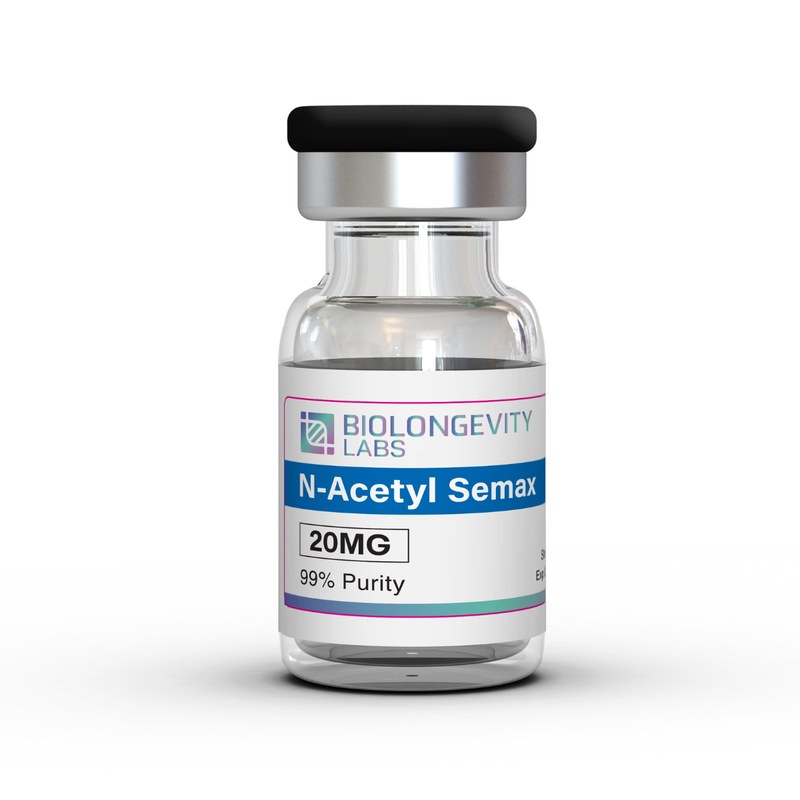 BioLongevity
N-Acetyl Semax Amidate
LEE15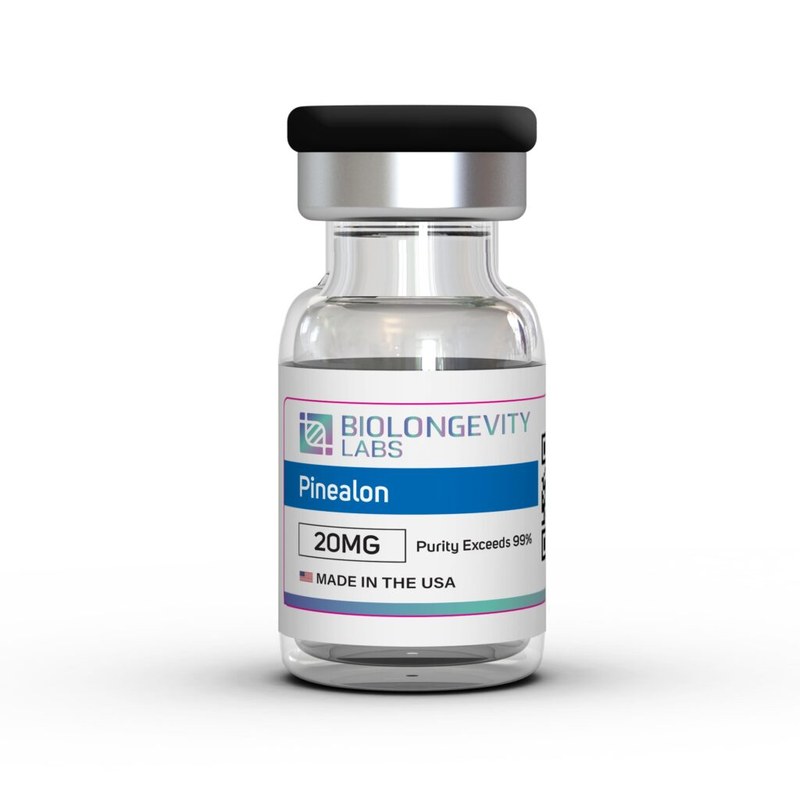 BioLongevity
Pinealon
LEE15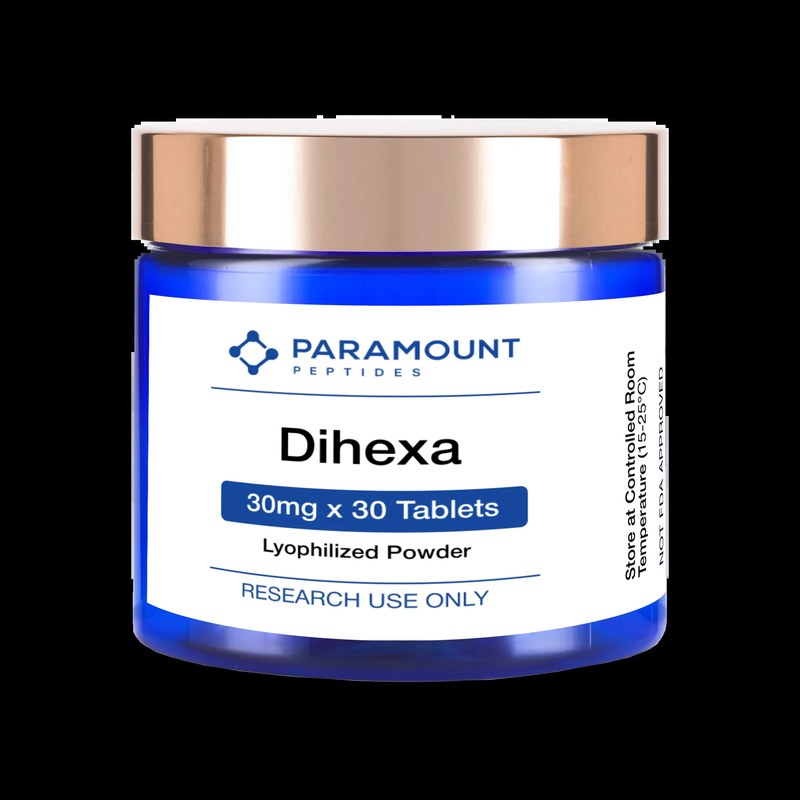 Paramount
Dihexa
LEE10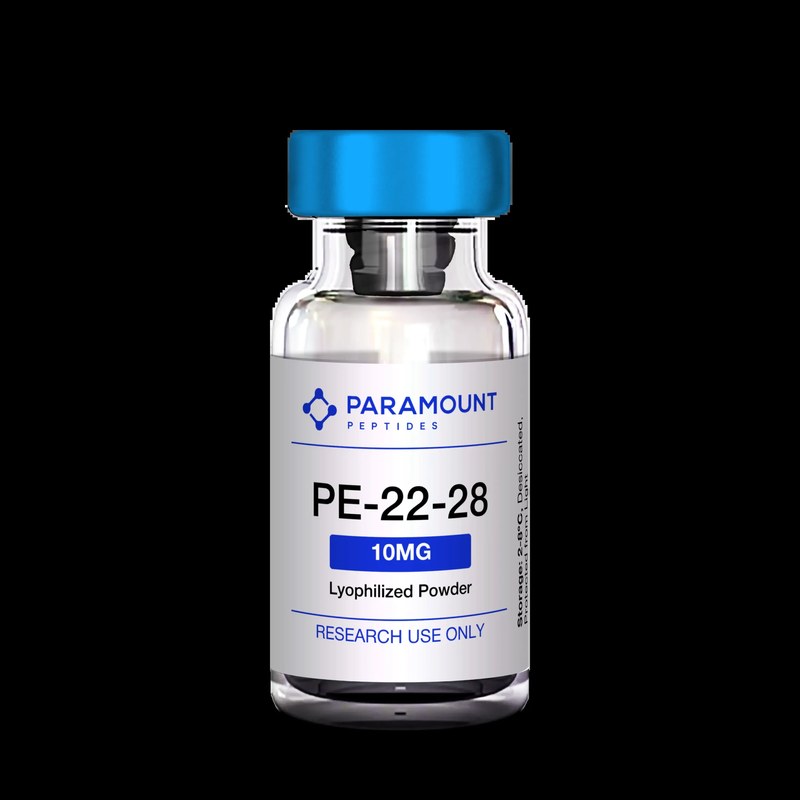 Paramount
PE-22-28
LEE10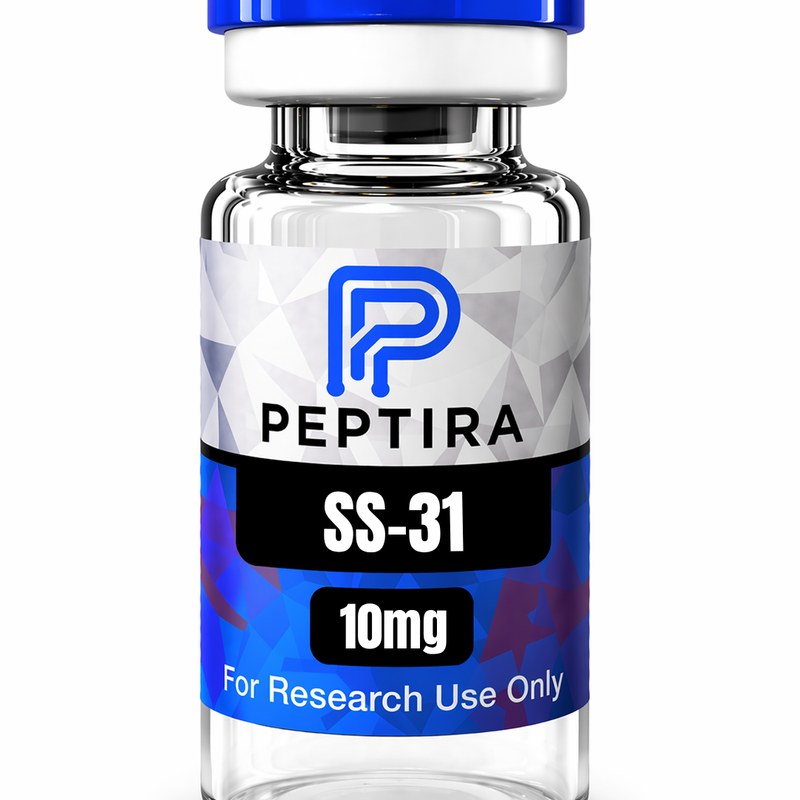 Peptira
SS-31
LEEN-Acetyl Selank Amidate · LEE15 N-Acetyl Semax Amidate · LEE15 Pinealon · LEE15 Dihexa · LEE10 PE-22-28 · LEE10 SS-31 · LEE
No cerebrolysin VIP product card is heroed here. Keep tracked homes handy: Limitless LEE20, Paramount LEE10, Peptira LEE, S1 LEE10, and BioLongevity LEE15.
How to think about next steps
If your real goal is clearer thinking habits, start with Door 3. Sleep and Zone 2 beat a bottle you cannot explain. If your real goal is disease care after stroke or dementia questions, start with Door 2. If your real goal is the neuropeptide mix map, Door 1 literacy is fine after the fertilizer-mix story makes sense.
Pro goes deeper on stacks, timing frameworks, and how to read a COA without getting conned by a sales page. The free page’s job is still the map.
Why this matters: next steps that match the door save money and cut health-page risk.
So what for you: write down your actual question in one sentence before you click a code.
Key takeaways (echo)
- Cerebrolysin is a branded neuropeptide mix. Many short chains. Not a free-site Rx.
- The best one-line picture is a fertilizer mix for repair talk, not one clean single-chain key.
- Evidence for the drug path is a serious human trial stack, with careful Cochrane limits. Basics and doctor care still beat hype bottles for most readers.
Get the Peptide Playbook
Free email map for how to think about research peptides without the guru noise. No naked PDF dump — just the Playbook form.
Sources & Further Reading
- Bornstein NM, et al. Safety and efficacy of Cerebrolysin in early post-stroke recovery: a meta-analysis of nine randomized clinical trials. Neurol Sci. 2018. PMID 29248999
- Ziganshina LE, et al. Cerebrolysin for acute ischaemic stroke. Cochrane Database Syst Rev. 2023. PMID 37818733
- Gauthier S, et al. Cerebrolysin in mild-to-moderate Alzheimer’s disease: a meta-analysis of randomized controlled clinical trials. Dement Geriatr Cogn Disord. 2015. PMID 25832905
- Strilciuc S, et al. Safety of Cerebrolysin for neurorecovery after acute ischemic stroke: a systematic review and meta-analysis of twelve randomized-controlled trials. Pharmaceuticals. 2021. PMID 34959697
- Muresanu DF, et al. Cerebrolysin and Recovery After Stroke (CARS): a randomized, placebo-controlled, double-blind, multicenter trial. Stroke. 2016. PMID 26564102
Educational research map only. Not medical advice. Not FDA-approved treatment claims. Partner links may earn a commission. Codes live in the links.