
 PEPTIDES & PUMP
Menu
Peptides for Sleep: DSIP, GHRH, Epitalon, and What the Science Really Shows
People search peptides for sleep hoping for one shot that brings back deep sleep. Your brain does run on sleep peptides. Here’s what the studies actually found, the safety flags, and the basics that still win.

Peptide Insider Free email + the Peptide Playbook PDF.Get it free
Education only. Not medical advice. Unsubscribe anytime.
Research education, not medical advice. Talk with a licensed clinician before you act on anything here.
People search peptides for sleep hoping for one shot that brings back the deep sleep they had at 20. That is not how this works.
Your brain does run on sleep peptides. Scientists have studied several of them. The data is uneven, and the boring basics still win.
Here’s the plain map, the safety flags, and what the studies actually found.
Key takeaways
- Verdict: No peptide is proven to fix sleep. The best peptide sleep science is real, but it is small, old, or done in sleep labs, not in daily life.
- DSIP, the “delta sleep-inducing peptide,” was found in 1977. Its human trials point both ways. A 2006 review called the sleep link “extremely poorly documented.”
- Ghrelin, GHRH, and the pill MK-677 can boost deep sleep in short lab studies. MK-677 also raised blood sugar in a two-year trial.
- The one sleep peptide that became real medicine is orexin. FDA-approved insomnia pills work by blocking it.
- First-line insomnia care is still CBT-I. Education only. Not medical advice.
What people ask us about sleep peptides
Paraphrased from the kinds of questions people bring to our community. These are anecdotes, not data.
- “Will DSIP knock me out?”
- “What about MK-677 or Epitalon for sleep?”
- “Is there an actual sleep-peptide drug?”
Straight answers below. No bro-science, no hype. Every study is linked at the bottom so you can check me.
Verdict up front: People search “peptides for sleep” hoping for one shot that brings back the deep sleep they had at 20. Here is the honest answer. Your brain does run on sleep peptides. Scientists have found several. But the research vials sold online have thin human data for sleep. The strongest wins in this field came from blocking a peptide, not adding one.
Why this matters: bad sleep is not a small problem. It touches mood, hunger, training, and focus. If you are going to read about sleep peptides, you should know which claims have real data and which are mostly hope.
Keep reading for a plain map of each sleep peptide, what the studies actually found, the safety flags, and the boring basics that still win. New to the topic? Start with what peptides are. Want the no-peptide playbook first? Read how to sleep better.
Quick note. This page is education. It is not medical advice. It does not diagnose or treat any sleep disorder. Peptides sold for research are not approved for people.
First, a 60-second sleep lesson
Sleep is not one thing. It moves in cycles through the night. Two parts matter most for this page.
- Deep sleep (also called slow-wave sleep, or SWS). Brain waves get slow and big. Your body releases its biggest pulse of growth hormone here.
- REM sleep. This is dream sleep. It is linked to memory and mood.
Deep sleep drops fast with age. A JAMA study pooled sleep data from 149 healthy men. Deep sleep made up about 18.9% of the night at ages 16 to 25. By ages 36 to 50, it was about 3.4%. Growth hormone fell in step with it (Van Cauter 2000).
That is the big reason people get excited about sleep peptides. If deep sleep and growth hormone are tied together, could a peptide push both back up? Keep that question in mind. It is a fair one. The answers are just messier than the ads.
Why this matters: when a product says it “improves sleep,” ask which part. More deep sleep, more REM, falling asleep faster, and feeling better the next day are all different things. A good study names which one it measured.
The sleep peptide map at a glance
| Peptide | What it is | Best human sleep data | Honest grade |
|---|---|---|---|
| DSIP | 9-amino-acid peptide found in 1977 | Small 1980s insomnia trials, mixed | Weak / unclear |
| GHRH | Your own growth-hormone-releasing hormone | Lab studies: more deep sleep in men | Real effect, lab only |
| Ghrelin | Your own “hunger hormone” | Lab studies: more deep sleep in young men | Real effect, lab only |
| MK-677 | Pill that copies ghrelin (not a peptide) | One small 1997 study | Promising, with real side effects |
| Epitalon | Pineal tetrapeptide | Melatonin levels, not sleep itself | Early, mostly one research group |
| Orexin | Your own “stay awake” peptide | Large Phase 3 trials of orexin blockers | Strong (as approved drugs) |
DSIP: the original “sleep peptide”
How it was found
In 1977, Swiss scientists Schoenenberger and Monnier in Basel pulled a small peptide out of the blood of sleeping rabbits. When they put it into the brains of other rabbits, it boosted slow “delta” brain waves. They named it delta sleep-inducing peptide, or DSIP. It is nine amino acids long: Trp-Ala-Gly-Gly-Asp-Ala-Ser-Gly-Glu (Schoenenberger 1977). The same year, the team reported that DSIP could cross the blood-brain barrier in rabbits (Monnier 1977).
That was a big deal at the time. A natural peptide that makes you sleep sounds like the perfect sleep aid.
What the human trials found
Through the 1980s, doctors in Europe tested DSIP shots in people with insomnia. Here is the honest scorecard.
- The hopeful side. Swiss researcher Schneider-Helmert summed up early work in 1984. He reported better sleep after single shots, and a build-up effect after several (Schneider-Helmert 1984). An open study in 7 people with severe insomnia reported normal sleep in all but one, for 3 to 7 months. It had no placebo group (Kaeser 1984). In 1987, a placebo-controlled, double-blind study in 14 middle-aged people gave DSIP for 7 nights. It reported better night sleep and better daytime alertness (Schneider-Helmert 1987).
- The doubtful side. Also in 1987, another team gave DSIP or placebo by IV for four nights. Some numbers moved, but the gaps were already there before treatment. They called the gain “of little clinical significance” (Monti 1987). In 1992, a Dutch double-blind study gave 16 patients DSIP or placebo. The authors said the effects were weak, might partly be chance, and that DSIP was “not likely to be of major therapeutic benefit” (Bes 1992).
What the Russian sleep scientists say
Some of the deepest DSIP work came from Moscow. In 2006, sleep researchers Kovalzon and Strekalova wrote a review titled “DSIP: a still unresolved riddle.” Their bottom line: no one has found a DSIP gene, a parent protein, or its receptor. The idea that DSIP is a true sleep factor is “extremely poorly documented and still weak.” In their own animal work, some lab-made DSIP look-alikes boosted deep sleep, “but not DSIP itself” (Kovalzon 2006).
Why this matters: DSIP is the most famous sleep peptide online. But almost all of its human data is more than 30 years old, in small groups, given by IV in clinics. That is not the same as a research vial at home. Read the full story on our DSIP page.
GHRH and ghrelin: your body’s own deep-sleep signals
This is where the science gets more solid, and more interesting for doctors.
GHRH is growth-hormone-releasing hormone. Your brain makes it to tell the pituitary to release growth hormone. In a German study, 12 young and 11 older healthy men took GHRH as a nose spray 30 minutes before bed. Sleep was tracked in a lab. GHRH raised both deep sleep and REM sleep, mostly in the second half of the night. The effect showed up in both age groups (Perras 1999).
Ghrelin is best known as the hunger hormone. It also tells your body to release growth hormone. At the Max Planck Institute in Munich, 7 men got four small IV doses of ghrelin between 10 pm and 1 am. Deep sleep went up across the night. The authors suggested ghrelin is one of the body’s own sleep-promoting signals (Weikel 2003). A follow-up in 10 young men found more non-REM sleep, but less REM sleep (Kluge 2008).
Why this matters: these studies show that the growth hormone system and deep sleep really are wired together. That is why GH-releasing peptides like ipamorelin and tesamorelin come up in sleep talk. But note what these studies were: small, short, in sleep labs, using the body’s own hormones by IV or nose spray. None of them tested a research vial at home for months. For the bigger picture, see HGH peptides.
MK-677: deep sleep, with a blood sugar catch
MK-677 (ibutamoren) is not a peptide. It is a pill that copies ghrelin. It shows up in every “sleep peptide” list, so it belongs here.
In a 1997 Belgian study, 8 young men took 5 mg, 25 mg, or placebo at bedtime for a week each. At 25 mg, the deepest stage of sleep went up about 50%, and REM went up more than 20%. In 6 older adults, REM sleep went up about 50% (Copinschi 1997).
Now the catch. A two-year trial gave 65 healthy adults aged 60 to 81 either 25 mg of MK-677 or placebo each day. Lean mass went up. But fasting blood sugar rose by about 5 mg/dL, insulin sensitivity dropped, appetite went up, and some people had mild leg swelling and muscle pain (Nass 2008).
Why this matters: better sleep in a lab is a real result. A slow rise in blood sugar is also a real result. Both belong in the same sentence. MK-677 is not FDA-approved. See our MK-677 page for the full picture.
Epitalon and pinealon: the melatonin lane
Your pineal gland makes melatonin, the hormone that tells your body it is night. Melatonin tends to fall with age.
Russian gerontologist Khavinson and his team in St. Petersburg made epitalon, a four-amino-acid peptide based on a pineal extract called epithalamin. In old rhesus monkeys, they reported that epitalon brought night melatonin back toward the pattern seen in younger monkeys (Khavinson 2001). A Russian-language paper reported that epithalamin and epitalon raised night melatonin in older people with low pineal function (Korkushko 2007).
Two honest limits. First, these papers measured melatonin, not sleep quality. Second, most of this work comes from one research network and has not been repeated by outside teams. Pinealon, a related short peptide, has no human sleep trials we could find. More on our epitalon and pinealon pages.
Why this matters: “raises melatonin” is not the same claim as “fixes sleep.” If timing is your issue, morning light and a fixed wake time move your body clock too, for free.
Selank: a calm-mind peptide, not a sleep peptide
Selank is a Russian-developed peptide studied mostly for anxiety and stress. It shows up in sleep stacks because a racing mind keeps people awake. But we did not find a solid human trial with sleep as the main result. Treat it as a stress-lane research peptide, not a sleep aid.
Orexin: the sleep peptide that became real medicine
This is the part most “peptides for sleep” lists miss.
In 1998, a team at UT Southwestern found two new brain peptides and named them orexin-A and orexin-B (Sakurai 1998). Another team found the same peptides and called them hypocretins. Soon it was clear they are a main “stay awake” signal. In 2000, a team led by Nishino and Mignot found that orexin was missing from the spinal fluid of 7 out of 9 people with narcolepsy (Nishino 2000). Narcolepsy is a disorder of sudden, strong sleepiness.
Drug makers then asked: what if we gently block orexin at night? That idea led to a class called dual orexin receptor antagonists, or DORAs. These are small-molecule pills, not peptides. The FDA has approved suvorexant, lemborexant, and daridorexant for insomnia.
- In the SUNRISE 1 trial, 1,006 adults aged 55 and up got lemborexant, placebo, or zolpidem ER for a month. Lemborexant cut time awake after falling asleep by about 24 to 25 minutes versus placebo, measured in a sleep lab (Rosenberg 2019).
- In two Phase 3 trials with 1,854 adults, daridorexant 50 mg cut time awake after falling asleep by about 23 minutes at month 1 and 18 minutes at month 3 versus placebo. It also helped daytime sleepiness scores (Mignot 2022).
Why this matters: the best evidence in sleep peptide science came from turning a wake peptide down, not from injecting a sleep peptide. These drugs are prescription only, have their own side effects, and are a talk-to-your-doctor decision.
Safety flags before you go any further
- Not approved. DSIP, epitalon, pinealon, Selank, and MK-677 are not FDA-approved for sleep or anything else in the US.
- Purity is on you. Research vials are not made under drug rules. Learn how to spot fake peptides and check the COA for your batch.
- Bad sleep can be a symptom. Loud snoring, gasping, morning headaches, restless legs, low mood, or heavy daytime sleepiness need a real workup. Sleep apnea will not go away with a peptide.
- Mixing adds risk. Stacking sleep drugs, alcohol, or sedatives with anything new can be dangerous.
- Side effects are real. See peptide side effects and are peptides safe.
What actually works first (and costs nothing)
Here is the boring truth. The best-tested insomnia treatment is not a pill or a peptide. It is CBT-I, short for cognitive behavioral therapy for insomnia. A meta-analysis of 20 trials with 1,162 adults found that CBT-I cut the time to fall asleep by about 19 minutes and time awake at night by about 26 minutes. Gains seemed to last after treatment ended (Trauer 2015).
The sleep societies say adults should get 7 or more hours a night on a regular basis (Watson 2015). Start here:
- Same wake time every day, weekends too.
- Bright light in the morning, dim light at night.
- Caffeine cut-off about 8 hours before bed.
- Alcohol honesty. It may knock you out, but it breaks up sleep later in the night.
- Cool, dark, quiet room.
- Get out of bed if you are wide awake for a long stretch. Go back when sleepy.
- Train smart. Easy cardio like Zone 2 helps many people. Track recovery with HRV if you like data.
The full plan is on our how to sleep better page.
Thinking about magnesium first? It is the cheapest foundation move on this list. We graded the trials, compared glycinate, threonate and oxide, and flagged the safety limits: magnesium for sleep.
FAQ
What is the best peptide for sleep?
There is no proven best peptide for sleep. DSIP has the longest history, but its human trials are small, old, and mixed. Ghrelin and GHRH change deep sleep in lab studies, but those were short studies in clinics. The best-proven sleep fixes are still CBT-I, a steady schedule, and getting checked for problems like sleep apnea.
Does DSIP work for sleep?
The evidence is mixed. A small 1987 study in 14 people with insomnia reported better sleep. A 1992 double-blind study in 16 patients found weak effects and said DSIP was not likely to be of major benefit. A 2006 review from Russian sleep scientists called the link between DSIP and sleep weak and still a riddle.
Are there FDA-approved drugs that work on a sleep peptide?
Yes, in a sense. Suvorexant, lemborexant, and daridorexant are FDA-approved insomnia pills. They are not peptides. They block the receptors for orexin, a brain peptide that keeps you awake. That is the one place where sleep peptide science became real medicine.
Does MK-677 help sleep?
One small 1997 study found more deep sleep and REM sleep in young men on 25 mg at bedtime. But MK-677 is not FDA-approved, and a two-year trial in older adults found higher fasting blood sugar, lower insulin sensitivity, more appetite, and some swelling.
Does epitalon help with sleep?
Russian studies report that epitalon and the related extract epithalamin raised night melatonin in old monkeys and older people. Melatonin is a sleep-timing hormone. But those studies did not show that people slept better, and they have not been repeated by outside groups.
Is it safe to use research peptides for sleep?
Research peptides are not approved for human use. Their purity can vary, and sleep is a place where mistakes add up. If you sleep badly most nights for three months or more, talk to a clinician. Loud snoring, gasping, or heavy daytime sleepiness need a sleep test.
How much sleep do adults need?
The American Academy of Sleep Medicine and the Sleep Research Society say adults should get 7 or more hours per night on a regular basis.
The bottom line
Sleep peptides are real biology. DSIP, GHRH, ghrelin, and orexin all touch sleep. But the research vials sold for sleep have small, old, or indirect human data. The best-proven tools are still a steady schedule, light, CBT-I, and a clinician when sleep stays broken. If you research peptides anyway, go in with clear eyes, clean sourcing, and the basics already in place.
The short version, one more time
- No peptide is proven to fix sleep. DSIP’s human trials are small and mixed.
- GHRH, ghrelin, and MK-677 raise deep sleep in short lab studies. MK-677 also raised blood sugar over two years.
- Orexin blockers are the real-medicine win, and they are prescription pills.
- CBT-I and sleep basics come first.
Related reads: DSIP · Epitalon · Pinealon · Selank · MK-677 · Ipamorelin · HGH peptides · Peptide stacks · How to sleep better · Start Here · Community
Sellers we work with
Disclosure: these are affiliate links. We may earn a commission at no extra cost to you. Listing a product does not mean it is safe, effective, or approved for human use. Products sold for research are not for human consumption. Always check the COA for your own batch.
Sleep-lane research peptides (in stock when checked)
BioLongevity Labs
DSIP 5mg
The classic 1977 sleep peptide. Human data is small and mixed.
View DSIP (research use) code LEE15
Paramount Peptides
DSIP 5mg
Same compound, second source. Match the COA to your batch.
BioLongevity Labs
Epithalon 20mg
Pineal tetrapeptide. Melatonin-rhythm research, mostly Russian.
View Epithalon (research use) code LEE15
BioLongevity Labs
Pinealon 20mg
Short brain bioregulator peptide. No human sleep trials.
View Pinealon (research use) code LEE15
Peptira
Pinealon 10mg
Second pinealon source. Early-stage research only.
BioLongevity Labs
N-Acetyl Selank Amidate 20mg
Stress-lane peptide. Not a sleep study, a calm-mind study.
View N-Acetyl (research use) code LEE15
Paramount Peptides
Selank 5mg
Standard Selank for the same stress-lane research.
BioLongevity Labs
Full research catalog with batch COAs on product pages.
BioLongevity home code LEE15
Paramount Peptides
Research catalog. Check the COA and batch number before you order.
Limitless Biotech
Their catalog needs a quick research-access sign-up before prices show. Use code LEE20 at checkout.
Primary sources
We link the original study or document, not a summary.
- PubMedSchoenenberger GA, Monnier M. Characterization of a delta-electroencephalogram (-sleep)-inducing peptide. Proc Natl Acad Sci U S A. 1977. PMID: 265572
- PubMedMonnier M, et al. Transport of the synthetic peptide DSIP through the blood-brain barrier in rabbit. Experientia. 1977. PMID: 590449
- PubMedSchneider-Helmert D. DSIP in insomnia. Eur Neurol. 1984. PMID: 6391925
- PubMedKaeser HE. A clinical trial with DSIP. Eur Neurol. 1984. PMID: 6391926
- PubMedSchneider-Helmert D. Effects of delta-sleep-inducing peptide on 24-hour sleep-wake behaviour in severe chronic insomnia. Eur Neurol. 1987. PMID: 3622582
- PubMedMonti JM, et al. Study of delta sleep-inducing peptide efficacy in improving sleep on short-term administration to chronic insomniacs. Int J Clin Pharmacol Res. 1987. PMID: 3583493
- PubMedBes F, et al. Effects of delta sleep-inducing peptide on sleep of chronic insomniac patients. A double-blind study. Neuropsychobiology. 1992. PMID: 1299794
- PubMedKovalzon VM, Strekalova TV. Delta sleep-inducing peptide (DSIP): a still unresolved riddle. J Neurochem. 2006. PMID: 16539679
- PubMedVan Cauter E, Leproult R, Plat L. Age-related changes in slow wave sleep and REM sleep and relationship with growth hormone and cortisol levels in healthy men. JAMA. 2000. PMID: 10938176
- PubMedPerras B, et al. Sleep and endocrine changes after intranasal administration of growth hormone-releasing hormone in young and aged humans. Psychoneuroendocrinology. 1999. PMID: 10451909
- PubMedWeikel JC, et al. Ghrelin promotes slow-wave sleep in humans. Am J Physiol Endocrinol Metab. 2003. PMID: 12388174
- PubMedKluge M, et al. Ghrelin alone or co-administered with GHRH or CRH increases non-REM sleep and decreases REM sleep in young males. Psychoneuroendocrinology. 2008. PMID: 18329818
- PubMedCopinschi G, et al. Prolonged oral treatment with MK-677, a novel growth hormone secretagogue, improves sleep quality in man. Neuroendocrinology. 1997. PMID: 9349662
- PubMedNass R, et al. Effects of an oral ghrelin mimetic on body composition and clinical outcomes in healthy older adults: a randomized trial. Ann Intern Med. 2008. PMID: 18981485
- PubMedKhavinson V, Goncharova N, Lapin B. Synthetic tetrapeptide epitalon restores disturbed neuroendocrine regulation in senescent monkeys. Neuro Endocrinol Lett. 2001. PMID: 11524632
- PubMedKorkushko OV, et al. Normalizing effect of the pineal gland peptides on the daily melatonin rhythm in old monkeys and elderly people. Adv Gerontol. 2007. [Article in Russian] PMID: 17969590
- PubMedSakurai T, et al. Orexins and orexin receptors: a family of hypothalamic neuropeptides and G protein-coupled receptors that regulate feeding behavior. Cell. 1998. PMID: 9491897
- PubMedNishino S, et al. Hypocretin (orexin) deficiency in human narcolepsy. Lancet. 2000. PMID: 10615891
- PubMedRosenberg R, et al. Comparison of lemborexant with placebo and zolpidem tartrate extended release for the treatment of older adults with insomnia disorder: a phase 3 randomized clinical trial. JAMA Netw Open. 2019. PMID: 31880796
- PubMedMignot E, et al. Safety and efficacy of daridorexant in patients with insomnia disorder: results from two multicentre, randomised, double-blind, placebo-controlled, phase 3 trials. Lancet Neurol. 2022. PMID: 35065036
- PubMedTrauer JM, et al. Cognitive behavioral therapy for chronic insomnia: a systematic review and meta-analysis. Ann Intern Med. 2015. PMID: 26054060
- PubMedWatson NF, et al. Recommended amount of sleep for a healthy adult: a joint consensus statement of the AASM and SRS. Sleep. 2015. PMID: 26039963
Partner labs · research use
Where I’d buy DSIP
Research vials from the labs I check first. Tap through my link, then use the code at checkout. Codes don’t stack.
BioLongevity Labs
DSIP (Delta Sleep-Inducing Peptide) 5 mg
Code LEE15
Enter the code at checkout.
Shop BioLongevity →Limitless Biotech
DSIP Delta Sleep-Inducing Peptide
Code LEE20
Prices show after a quick research-access sign-up.
Shop Limitless →Paramount Peptides
DSIP 5 mg
No code: my link
Click my link first. If Paramount shows its own sale code, use that one.
Shop Paramount →Or browse a whole lab:
Limitless hides prices until you sign up for research access. Get Limitless research access →
Affiliate links: I may earn a commission at no extra cost to you. Research-use products only. I don’t give dosing. Education, not medical advice.
Peptide Insider · free email
Get the research before the hype.
Lee’s Peptide Insider: new studies, FDA moves, and protocols explained in plain English. Join free and get the Peptide Playbook PDF.
Education only. Not medical advice. Unsubscribe anytime.
Keep reading
 Thymalin: The Russian Thymus Peptide and What the Research Really Shows
 Humanin: The Mitochondria Peptide and What the Research Really Shows
 TB-500 Side Effects: What the Human Trials Show (and the Vial Problem)
Free PDF
The Peptide Playbook
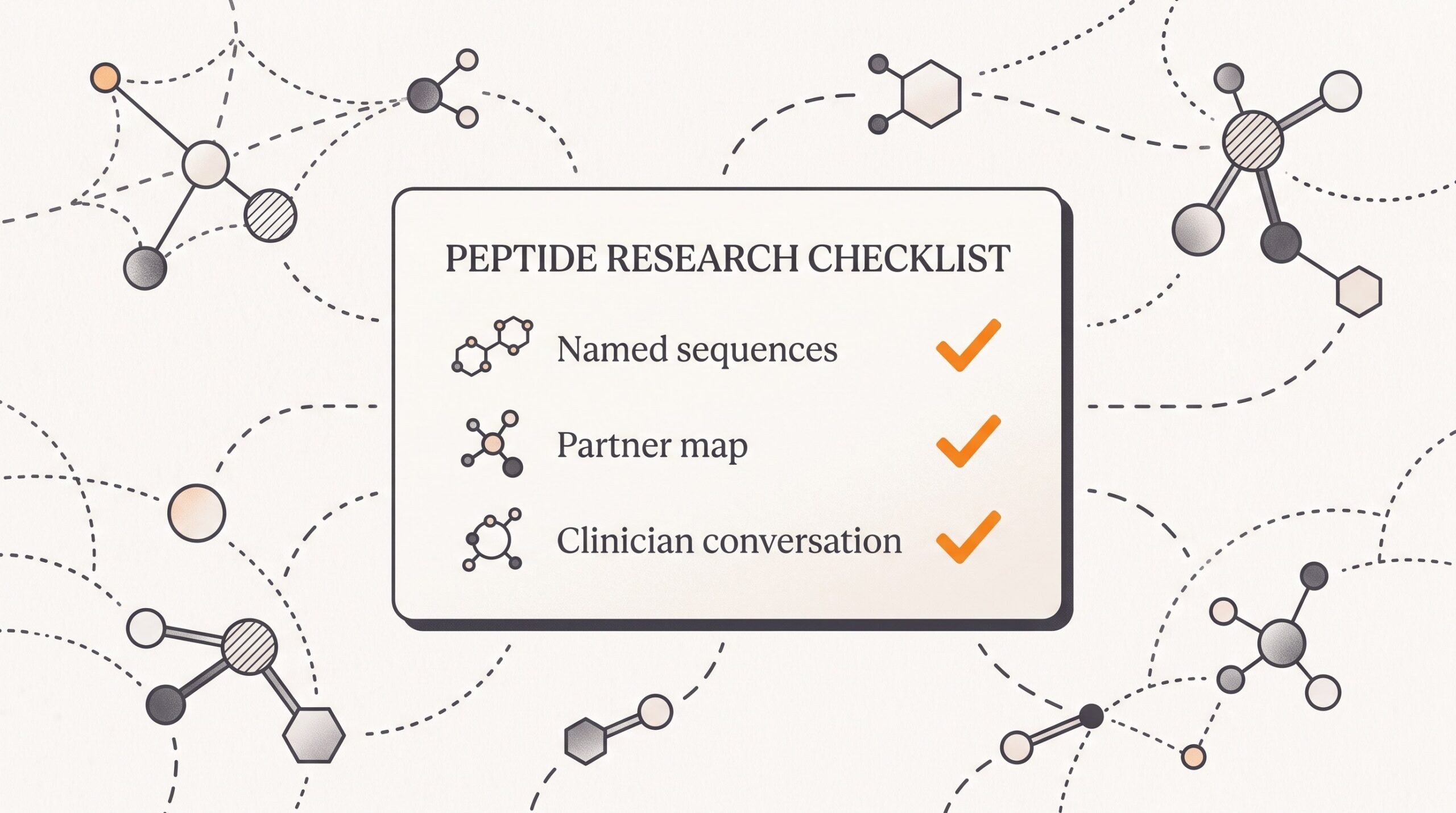
The research checklist Lee uses: named sequences, how to read a COA, and the questions to bring to your doctor. Free when you join Peptide Insider.
2 Comments
Comments are closed.