 PEPTIDES & PUMP
Menu
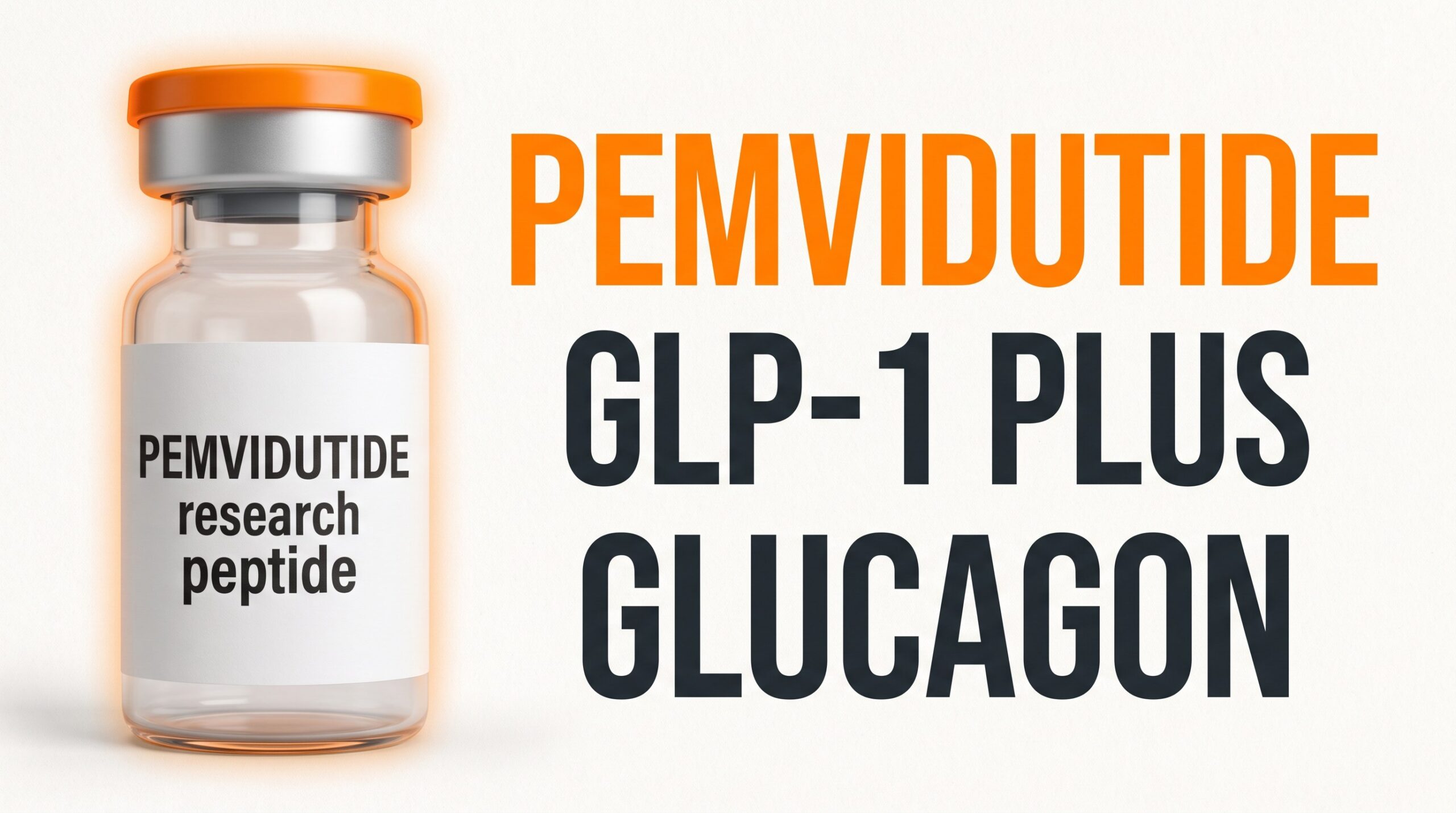
Pemvidutide: The GLP-1 + Glucagon Shot for MASH and Weight Loss, Explained
Pemvidutide is a weekly GLP-1 plus glucagon shot aimed at MASH. What trials show for weight and liver fat, how it compares to survodutide and mazdutide, and what is still unproven.

Peptide Insider Free email + the Peptide Playbook PDF.Get it free
Education only. Not medical advice. Unsubscribe anytime.
Research education, not medical advice. Talk with a licensed clinician before you act on anything here.
Pemvidutide’s big bet isn’t your waistline. It’s your liver.
It hits two locks, GLP-1 and glucagon. Human trials show real weight loss and big drops in liver fat.
But Phase 3 for MASH is just starting. Here’s what’s proven and what isn’t yet.
Key takeaways
- Verdict: Pemvidutide is a weekly shot that turns on two hormone locks at once: GLP-1 and glucagon. Trials in people show real weight loss and big drops in liver fat. Its lead bet is MASH, the inflamed form of fatty liver.
- It is a close cousin of survodutide and mazdutide. Same two locks. Different maker. Different trials.
- The catch: Phase 3 for MASH is just starting. Fibrosis improvement on biopsy at 24 weeks did not clearly beat placebo. Stomach side effects still happen.
- Not FDA-approved. Fast Track and Breakthrough Therapy speed review. They are not approval. Education only. Not medical advice.
What people ask us about pemvidutide
Paraphrased from the kinds of questions people bring to our community. These are anecdotes, not data.
- “Is pemvidutide better than semaglutide?”
- “What is MASH?”
- “How is it different from survodutide?”
Straight answers below. No bro-science, no hype. Every study is linked at the bottom so you can check me.
Verdict up front: If you typed pemvidutide into Google, here is the short answer. It is one of the most serious GLP-1 + glucagon drugs in the pipeline. It is not hype. It has finished Phase 2 obesity and Phase 2b MASH trials, with results in journals like the Lancet and the Journal of Hepatology.
But it is not a better semaglutide in every way. On the scale, it lands in the dual-agonist zone. Its real claim to fame is the liver, especially MASH.
Why this matters: about one in three adults carries extra fat in the liver. When that fat turns into inflammation and scarring, doctors call it MASH. A drug built to clear liver fat and calm inflammation is a different kind of bet than a pure appetite shot.
Keep reading if you want the plain-English map: what pemvidutide is, how it works, what MOMENTUM and IMPACT really showed, how it stacks up against survodutide, tirzepatide, and retatrutide, and what the risks are. New to this world? Start with what peptides are, then peptides for weight loss.
Quick note. This page is education. It is not medical advice. It does not diagnose or treat anything. And it is not a how-to.
What is pemvidutide?
Pemvidutide is a lab-made peptide. A peptide is a short chain of amino acids, the small building blocks of protein.
In early papers it was called ALT-801. The U.S. company Altimmune runs the program. It is a 29-piece peptide with a fatty side chain the company calls EuPort. That side chain grabs onto proteins in your blood. So the drug can be given as a shot under the skin once a week.
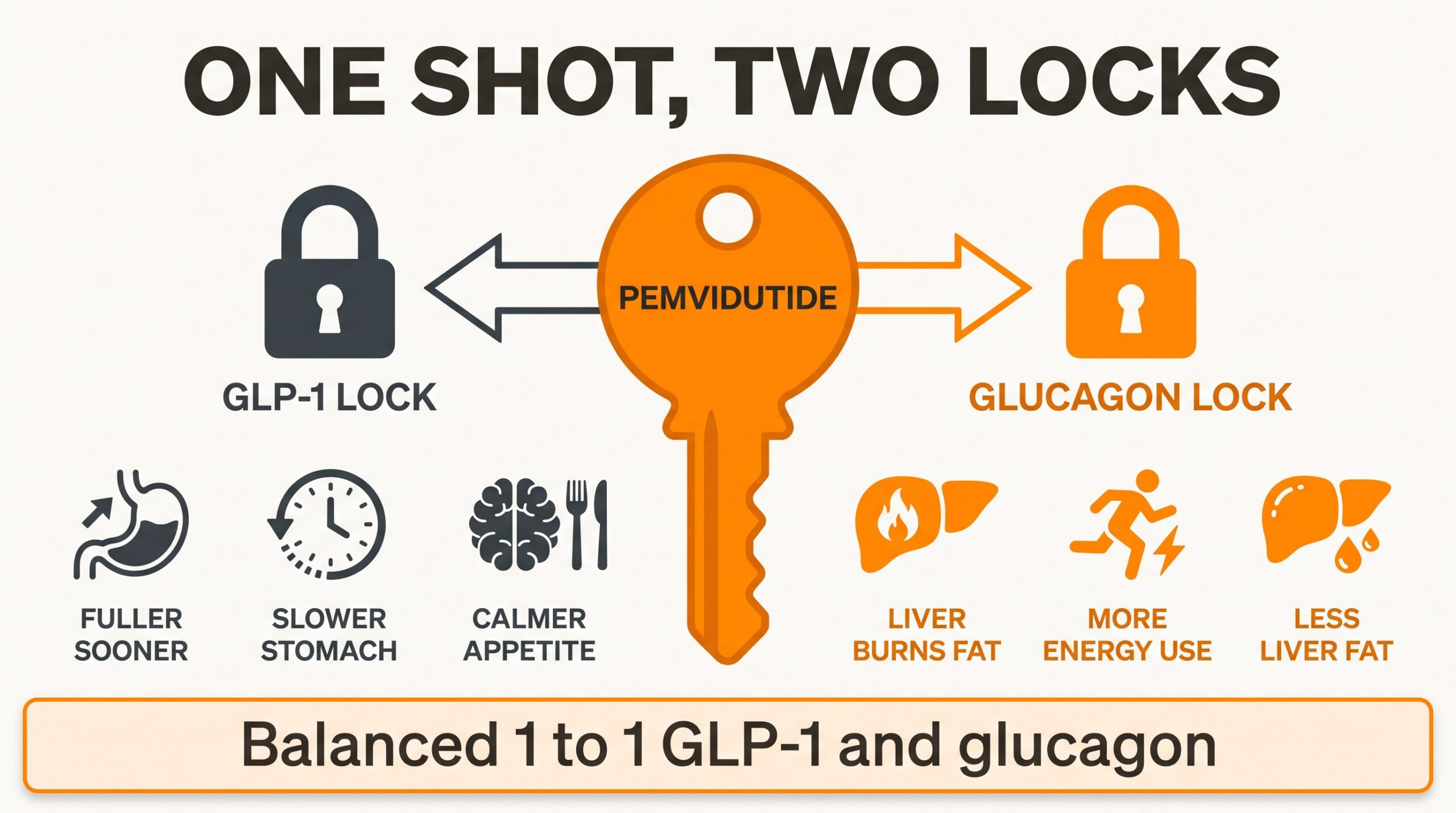
Here is the part that makes it special. Pemvidutide is a dual agonist. An agonist is something that turns a receptor on. A receptor is a lock on the outside of a cell that a hormone fits into. Dual means pemvidutide fits two locks.
- The GLP-1 lock. Same lock semaglutide uses. It calms appetite and helps you feel full.
- The glucagon lock. A lock found heavily on liver cells. It tells the liver to burn more fuel, including fat.
Altimmune designed it as a balanced 1:1 agonist. That means it hits both locks with about the same strength. The idea is to get appetite control from GLP-1 and a direct liver effect from glucagon, without tipping too far either way.
Why this matters: pemvidutide is not just another GLP-1 copy. It adds a second job aimed at the liver. That second job is why Altimmune is betting hardest on MASH, not only on the scale.
Where the idea came from: a gut hormone found in 1982
This drug did not come out of nowhere. Its family tree goes back more than 40 years. The same tree that grew survodutide and mazdutide.
Glucagon itself was found in 1923, right after insulin. For decades, doctors saw it as insulin’s opposite. Its main job was to raise blood sugar when you are fasting.
Then, in 1982, a French team led by Dominique Bataille pulled a new hormone out of pig gut. It looked like glucagon with a short tail of eight extra pieces. They named it oxyntomodulin. Later work showed it could turn on both the GLP-1 lock and the glucagon lock.
Fast forward to 2005. A London team gave oxyntomodulin shots to overweight people before meals for four weeks. People ate about a quarter less at a test meal. They lost about 2.3 kg, roughly 5 pounds, compared with half a kilo on placebo.
The catch? Natural oxyntomodulin breaks down fast. You needed three shots a day.
So in 2009, two separate labs built long-lasting lab versions that hit both locks. In obese mice, these shots wiped out the extra fat. The mice ate less, and they also burned more energy.
Why this matters: pemvidutide is a grown-up, once-a-week take on that 1982 discovery. Same family idea as survodutide. Different molecule. Different company. Different trial program.
How pemvidutide works: one key, two locks
Picture your metabolism as a house in winter. Your appetite is the front door, letting fuel in. Your liver is the furnace, deciding how much fuel to burn.
Most GLP-1 drugs work on the door. They close it a bit. You feel full sooner. Food leaves your stomach more slowly. Cravings get quieter.
Pemvidutide works the door and nudges the furnace. The glucagon side tells the liver to burn more fat and store less of it. That is the theory behind the big liver-fat drops in its trials.
Here is the clever part. Glucagon alone raises blood sugar. That would be a bad trade for most people. GLP-1 helps the body release insulin when sugar is high. So the GLP-1 side helps keep the glucagon side in check.
A small 2013 study in people showed this balance in action. Ten overweight volunteers got drips of glucagon, GLP-1, both, or placebo. Glucagon raised the calories they burned at rest. GLP-1 alone did not. When both ran together, calorie burn stayed up, and the sugar spike from glucagon shrank fast.
Why this matters: two locks means two different ways to lose fat. One side makes you eat less. The other side may help you burn more and clear liver fat. That is the theory. The trials are how we check it.
The stop-you number: 68 out of 100
In a 12-week Phase 2 trial published in the Journal of Hepatology, researchers tested pemvidutide in 94 adults. All had overweight or obesity and high liver fat on an MRI scan. About three in ten also had type 2 diabetes.
The goal was simple. How much did liver fat drop after 12 weeks?
At the 1.8 mg dose, liver fat fell by about 68.5% relative to baseline. On placebo, it barely moved. At that same dose, about 56 out of 100 people got their liver fat down into the normal range (5% or less on the scan).
Weight fell too, by about 4% in 12 weeks at that dose. Liver inflammation markers also moved the right way.
A 12-week extension pushed some people out to 24 weeks total. The liver-fat and weight signals kept going in the same direction.
So what for you: this is a real result in people, not mice. But it is liver fat on a scan over a short window. It is not yet proof of fewer liver failures or longer lives. That proof takes bigger, longer trials.
What the weight-loss trial showed: MOMENTUM
Pemvidutide’s main obesity trial is called MOMENTUM. It was a Phase 2 study. Altimmune reported the 48-week topline results in late 2023.
The trial enrolled 391 adults with obesity, or with overweight plus at least one related health problem. Nobody in this trial had diabetes. People got a weekly shot of 1.2 mg, 1.8 mg, or 2.4 mg pemvidutide, or placebo, for 48 weeks, plus diet and exercise guidance.
Here is the honest scoreboard, in plain words.
- At 1.2 mg, average weight loss was about 10%.
- At 1.8 mg, about 11%.
- At 2.4 mg, about 15.6%.
- On placebo, about 2%.
At the top dose, more than half of people who stuck with it lost at least 15% of their weight. About one in three lost 20% or more.
Blood fats and blood pressure also moved in a helpful direction. Fasting sugar and the long-term sugar marker A1c stayed about the same. That matters, because glucagon can raise sugar when it is used alone.
Why this matters: a 15% average loss at 48 weeks is serious. It sits in the same neighborhood as other strong dual agonists. It has not been shown to beat tirzepatide or retatrutide in a head-to-head trial. Cross-trial guesses are rough.
Why the liver is the real story: IMPACT
Fatty liver used to be called NAFLD. In 2023, liver doctors renamed it MASLD. The new name ties it to metabolism, things like belly fat, blood sugar, and blood pressure.
When that fat starts to inflame and scar the liver, it is called MASH. Scar tissue in the liver is called fibrosis. Too much scarring can lead to cirrhosis, which is a hard, failing liver.
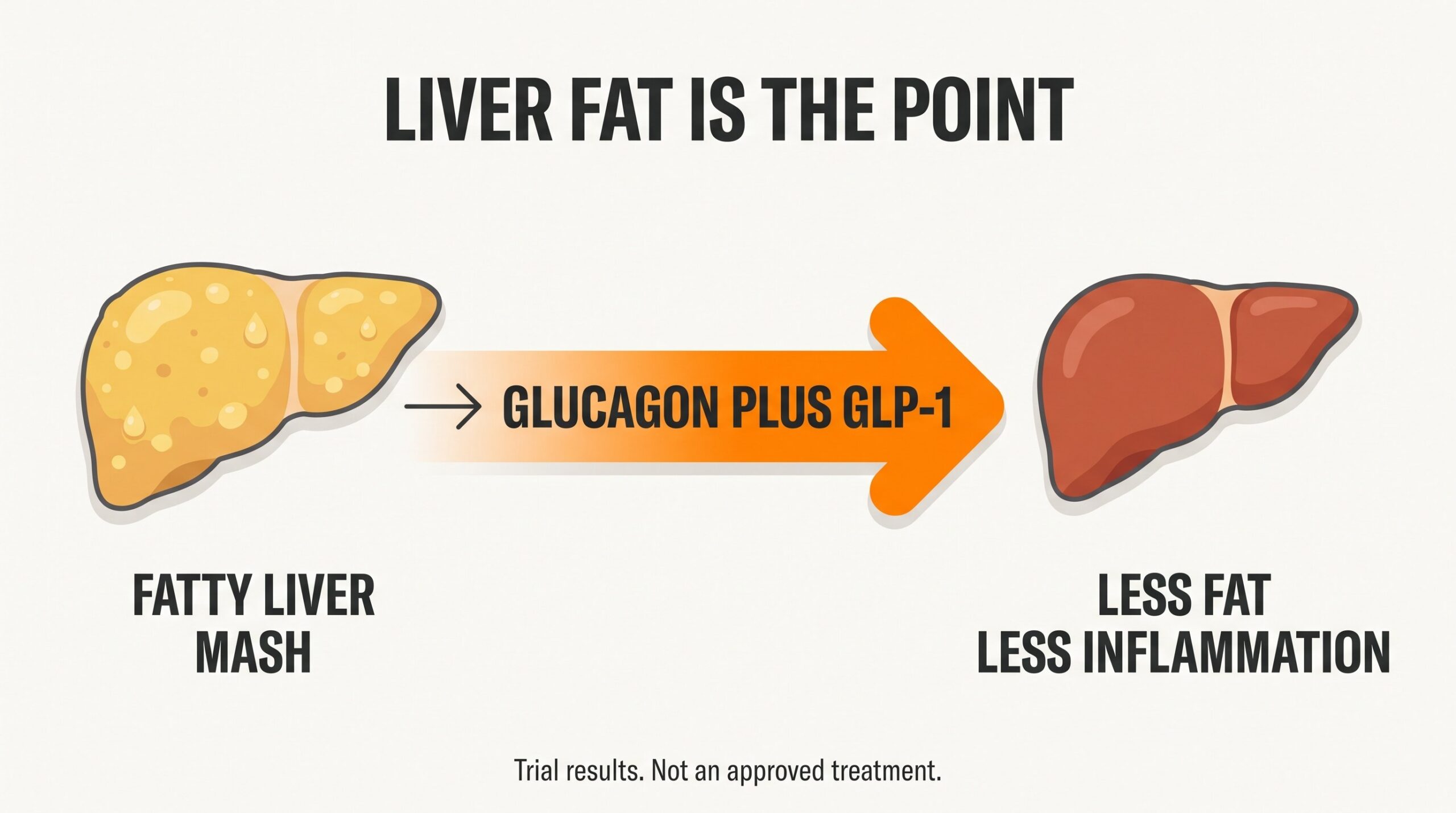
IMPACT is pemvidutide’s Phase 2b MASH trial. Results at 24 weeks ran in the Lancet. The trial enrolled 212 people with biopsy-proven MASH and moderate-to-advanced scarring (stages F2 or F3). People got weekly 1.2 mg, 1.8 mg, or placebo. Importantly, those doses were given without a long titration climb.
There were two main goals at 24 weeks:
- MASH resolution without worse scarring. This one hit. About 58% on 1.2 mg and 52% on 1.8 mg cleared the MASH pattern on biopsy, versus about 20% on placebo.
- Scarring improved by at least one stage without worse MASH. This one did not clearly beat placebo. About 33% and 36% improved on drug, versus about 28% on placebo. The gaps were not statistically significant.
That mixed result is important. The drug looked strong on resolving the inflamed fatty-liver pattern. It did not yet prove a clear win on scarring at 24 weeks by the main biopsy rule.
At 48 weeks, the company reported more non-invasive markers. Those include ELF (a blood fibrosis score), liver stiffness on FibroScan, ALT (a liver enzyme), and MRI liver fat. Those markers kept improving. Weight loss at 48 weeks in this MASH group was about 4.5% at 1.2 mg and 7.5% at 1.8 mg. That is less than MOMENTUM, which is common when the trial population is sicker and the doses are lower.
Stomach side effects happened. But discontinuations due to side effects were very low at 24 weeks, lower than or similar to placebo in the published readout.
The FDA has given pemvidutide Fast Track for MASH and for alcohol use disorder, plus Breakthrough Therapy status for MASH. Those labels speed the process. They are not approval.
Why this matters: MASH still has few approved options. A shot that clears MASH on biopsy and may keep improving fibrosis markers is a big deal. But the scarring endpoint at 24 weeks failed to hit. Phase 3 has to settle that question.
Pemvidutide vs survodutide, mazdutide, semaglutide, tirzepatide, and retatrutide
The simplest way to sort these drugs is by which locks they open.
- Semaglutide: GLP-1 only.
- Tirzepatide: GLP-1 plus GIP, another gut hormone.
- Pemvidutide: GLP-1 plus glucagon, balanced 1:1. Altimmune.
- Survodutide: also GLP-1 plus glucagon. Boehringer Ingelheim / Zealand. Further along in Phase 3.
- Mazdutide: also GLP-1 plus glucagon. Close cousin, approved in China. See mazdutide vs retatrutide.
- Retatrutide: all three, GLP-1, GIP, and glucagon.
On weight, here is the rough picture from each drug’s main obesity trial. Semaglutide’s big trial showed about 15% over 68 weeks. Tirzepatide showed up to about 21% over 72 weeks. Retatrutide’s Phase 2 trial showed up to about 24% over 48 weeks. Survodutide’s Phase 2 obesity trial landed around 15% at the top dose. Pemvidutide’s MOMENTUM top dose hit about 15.6% at 48 weeks.
Careful, though. These were different trials, with different people and different rules. Comparing them side by side is like comparing race times run on different tracks. Only a head-to-head trial can settle it.
The triple-agonist update: retatrutide has since reported its first Phase 3 obesity trial. See TRIUMPH-1 retatrutide results explained for the numbers and the estimand behind them.
On the liver, pemvidutide and survodutide are both dual agonists built with MASH in mind. Survodutide already has a Phase 2 MASH biopsy win in the New England Journal of Medicine and finished large Phase 3 obesity trials. Pemvidutide has a strong MASH-resolution signal in IMPACT, a miss on the 24-week fibrosis primary, and Phase 3 still ahead. Neither crowns the other yet.
Why this matters: if your interest is the liver side of metabolism, the dual GLP-1 + glucagon lane is the map to watch. For the GLP-1 basics, read peptides for weight loss. For the sister dual agonist, read survodutide.
Pemvidutide side effects: the honest catch
Here is the part the hype posts skip. Stomach side effects are common with this whole drug class.
- In MOMENTUM, nausea hit about half of people on the higher doses. Vomiting hit about one in four. Most cases were mild to moderate.
- Drug-related discontinuations rose with dose in MOMENTUM, into the mid-teens percent at 1.8 mg and 2.4 mg.
- In IMPACT, overall tolerability looked better at the doses used, with very few people quitting for side effects at 24 weeks.
Heart signals so far have not shown a clear red flag in the company’s reported trials, including low rates of rhythm problems in MOMENTUM. That is reassuring early news. It is not the same as a dedicated heart-outcomes trial.
There is also the muscle question. Fast weight loss from any drug can take some muscle with it. Strength training and enough protein matter here. See protein intake if that page is on your reading list, and keep lifting.
Why this matters: side effects decide whether people stay on a drug. And a drug only works if you can stay on it. For the bigger picture, read peptide side effects and are peptides safe?
Is pemvidutide approved? Where it stands in 2026
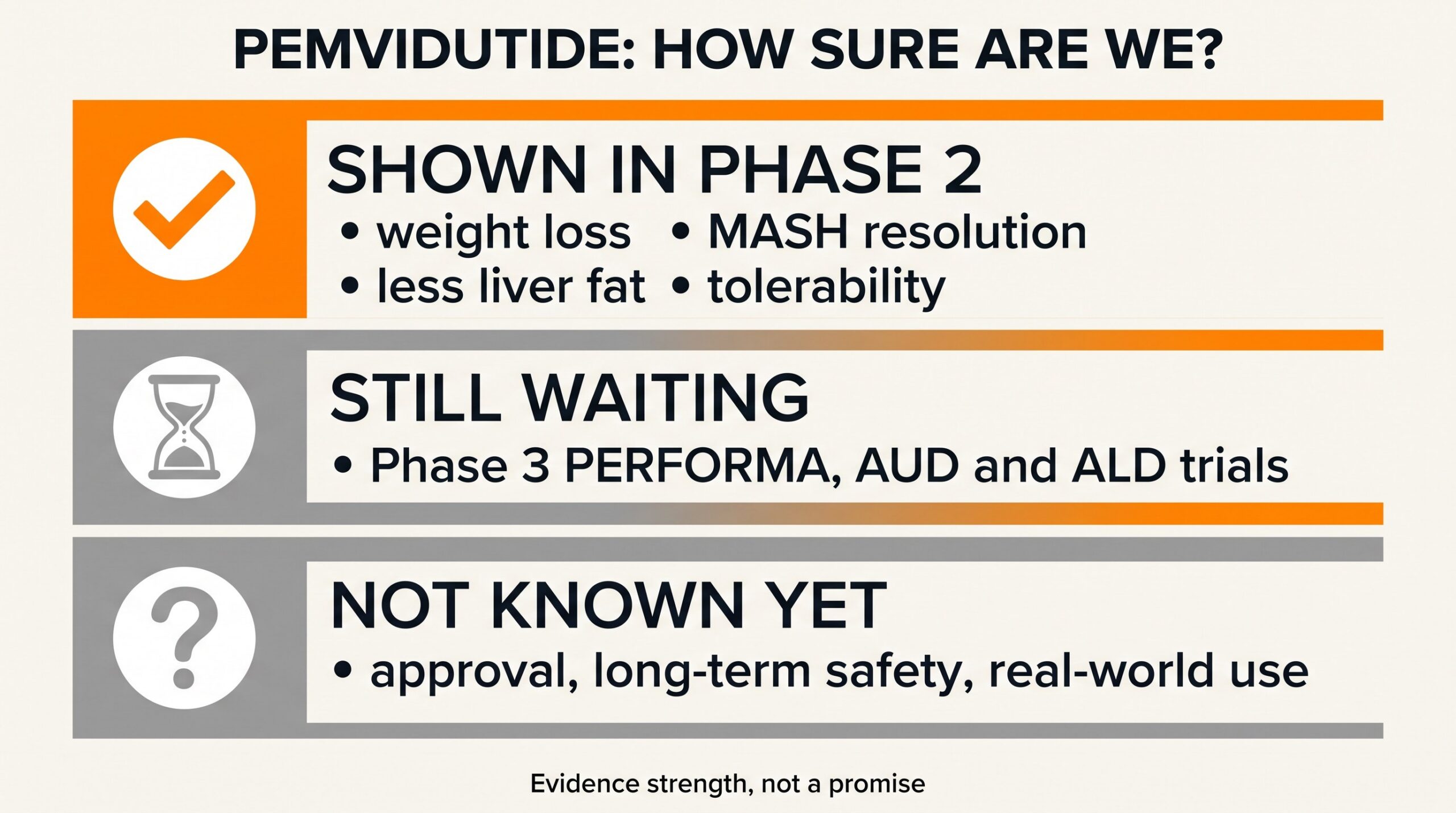
Short answer: no. As of October 2026, pemvidutide is not approved by the FDA or any major regulator for any use.
Here is what is still coming:
- PERFORMA, the planned Phase 3 MASH trial. Altimmune has said it aims to start a registrational study in people with moderate to advanced fibrosis.
- RECLAIM, a Phase 2 trial in alcohol use disorder.
- RESTORE, a Phase 2 trial in alcohol-related liver disease.
Fast Track and Breakthrough Therapy designations help with FDA meetings and review speed. They do not mean the drug works in Phase 3. They do not mean it will be approved.
You may see pemvidutide listed by research-chemical shops. Those vials are not the trial drug. They are sold as lab research products, not for human use. Purity can vary. The FDA has also warned about unapproved GLP-1 products. Read FDA warnings on unapproved GLP-1 weight-loss drugs.
For athletes under WADA rules: pemvidutide is not a named substance on the Prohibited List. Because it is not approved by any health authority for human use, it falls under the S0 “non-approved substances” catch-all. Treat it as prohibited if you are tested.
Why this matters: a strong Phase 2 trial is not the same as a drug you can get from a doctor. If you want help with weight or liver health today, approved options already exist. A clinician can walk you through them.
How a beginner should think about pemvidutide
Here is the simple order I would use with a friend at the gym.
1. Know your liver. Fatty liver is common and quiet. Basic blood work and, if needed, a scan can show where you stand. That is a doctor conversation.
2. Build the base. Lift weights. Eat enough protein. Walk daily. Sleep well. Cut back on alcohol and sugary drinks. These habits lower liver fat on their own.
3. Learn the receptor map. GLP-1. GIP. Glucagon. If you can say which drug opens which lock, you are ahead of most of the internet. Start with what peptides are.
4. Follow the data, not the forum. Watch for Phase 3 MASH results. Those will tell us more than any before-and-after photo. Keep survodutide and mazdutide vs retatrutide on the same watch list.
Why this matters: the people who do best long-term usually fix the base first. Then any tool they add, approved or still in trials, has something to build on. For the bigger view, see peptides for fat loss, cagrilintide, and AOD-9604.
Pemvidutide FAQ
Is pemvidutide a peptide?
Yes. It is a lab-made peptide with a fatty side chain added so it lasts all week.
Is pemvidutide the same as survodutide?
No. Both open the GLP-1 and glucagon locks. But they are different molecules from different companies, with different trials. Survodutide is further along in Phase 3 obesity work. Pemvidutide’s lead public bet is MASH.
Is pemvidutide better than tirzepatide?
Not shown. They have not gone head to head. On paper, tirzepatide’s obesity trials posted higher average weight loss. Pemvidutide’s strongest case so far is liver fat and MASH resolution.
Does pemvidutide cause muscle loss?
Any fast weight loss can cost some muscle. Altimmune has talked about lean-mass findings in earlier work, but treat marketing claims carefully. Lifting and protein are your best insurance.
When will pemvidutide be approved?
Nobody knows. Phase 3 for MASH is the next big step. No approval has been granted.
What does pemvidutide do to the liver?
In trials, it cut liver fat a lot, and in IMPACT it resolved MASH on biopsy for about half of people on drug versus one in five on placebo. The 24-week scarring primary did not clearly win. Those are trial results, not an approved use.
Is pemvidutide on the WADA list?
It is not named as its own line item. Unapproved drugs sit under WADA’s S0 rule. Athletes should treat it as off-limits.
The bottom line
Pemvidutide is a once-a-week shot that opens two locks: GLP-1 for appetite and glucagon for the liver. It grew out of a gut hormone found in 1982. Altimmune is the maker. ALT-801 was the early name.
The trials are real. MOMENTUM showed about 15.6% weight loss at the top dose over 48 weeks. IMPACT showed strong MASH resolution and big liver-fat drops, with a miss on the main 24-week fibrosis endpoint. Stomach side effects are common. Phase 3 is still ahead.
It is not approved. Fast Track and Breakthrough Therapy are process labels, not green lights. Learn the map, build the base, and let the data finish the story.
Metabolic research maps from partners
Foundation first: protein, lifting, walking, and sleep do the heavy work on body fat and liver fat. If you are researching the metabolic lane after that, these are in-stock partner listings for nearby energy-use and incretin-family compounds covered on this site. They are research-catalog products, not treatments, and not the trial drug. Pemvidutide itself is not sold here as a vial card.
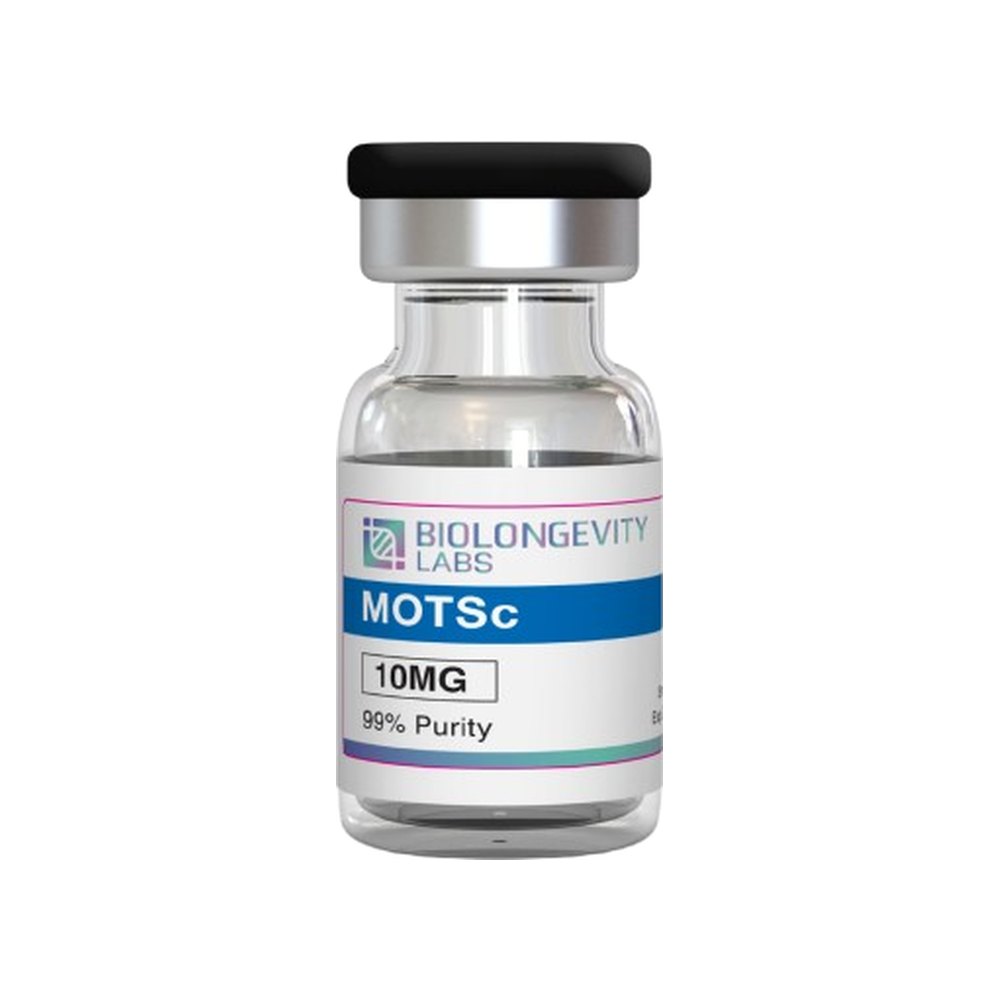 BioLongevity
MOTS-c 10 mg
LEE15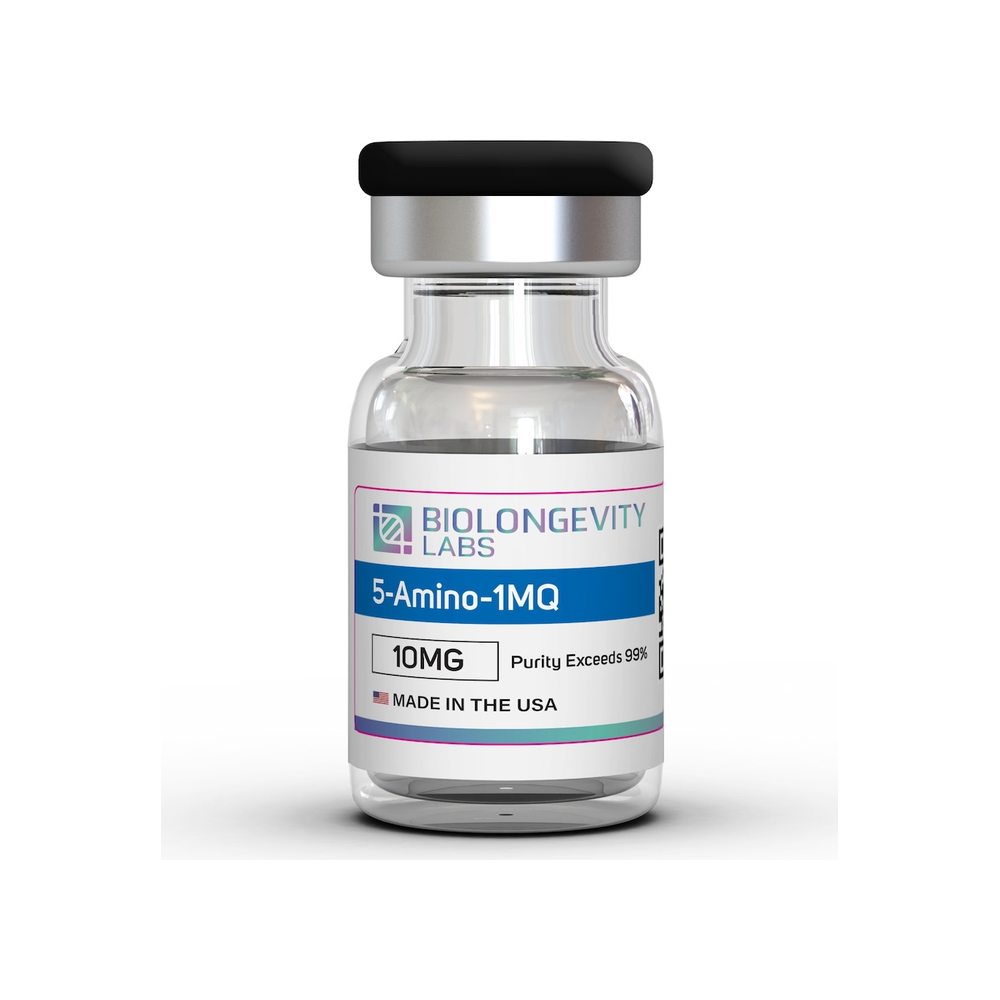 BioLongevity
5-Amino-1MQ
LEE15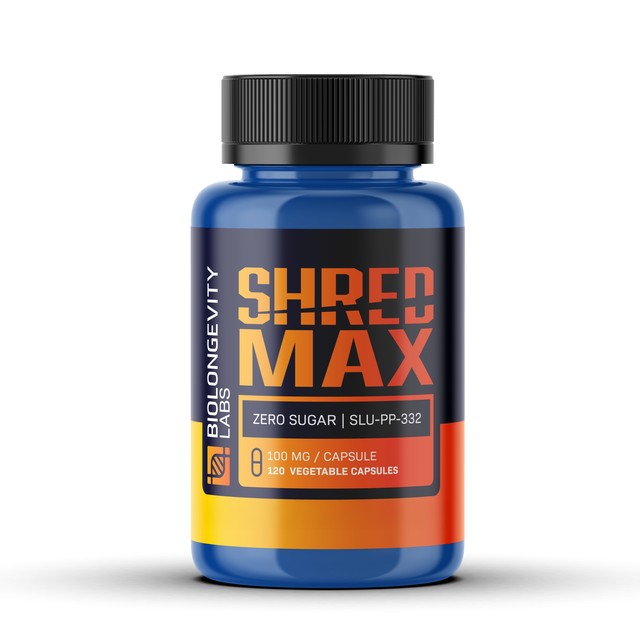 BioLongevity
ShredMAX (SLU-PP-332)
LEE15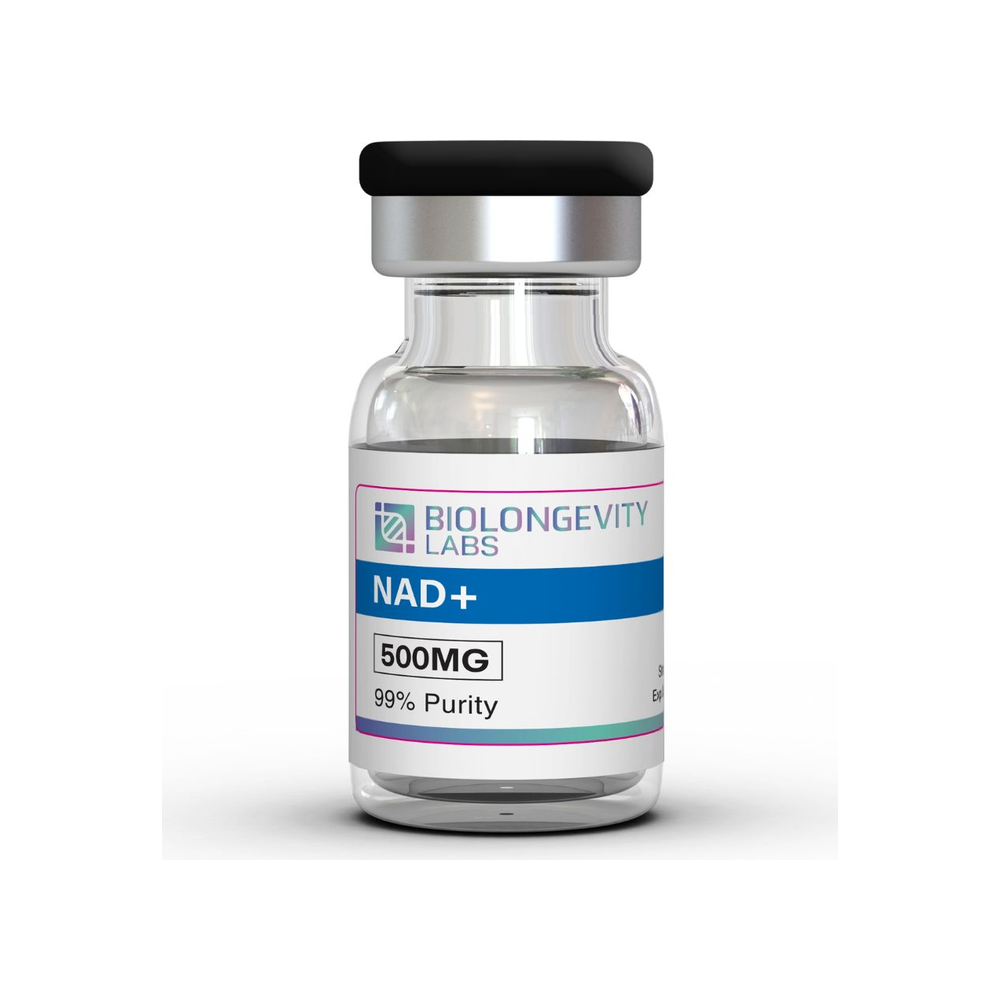 BioLongevity
NAD+ 500 mg
LEE15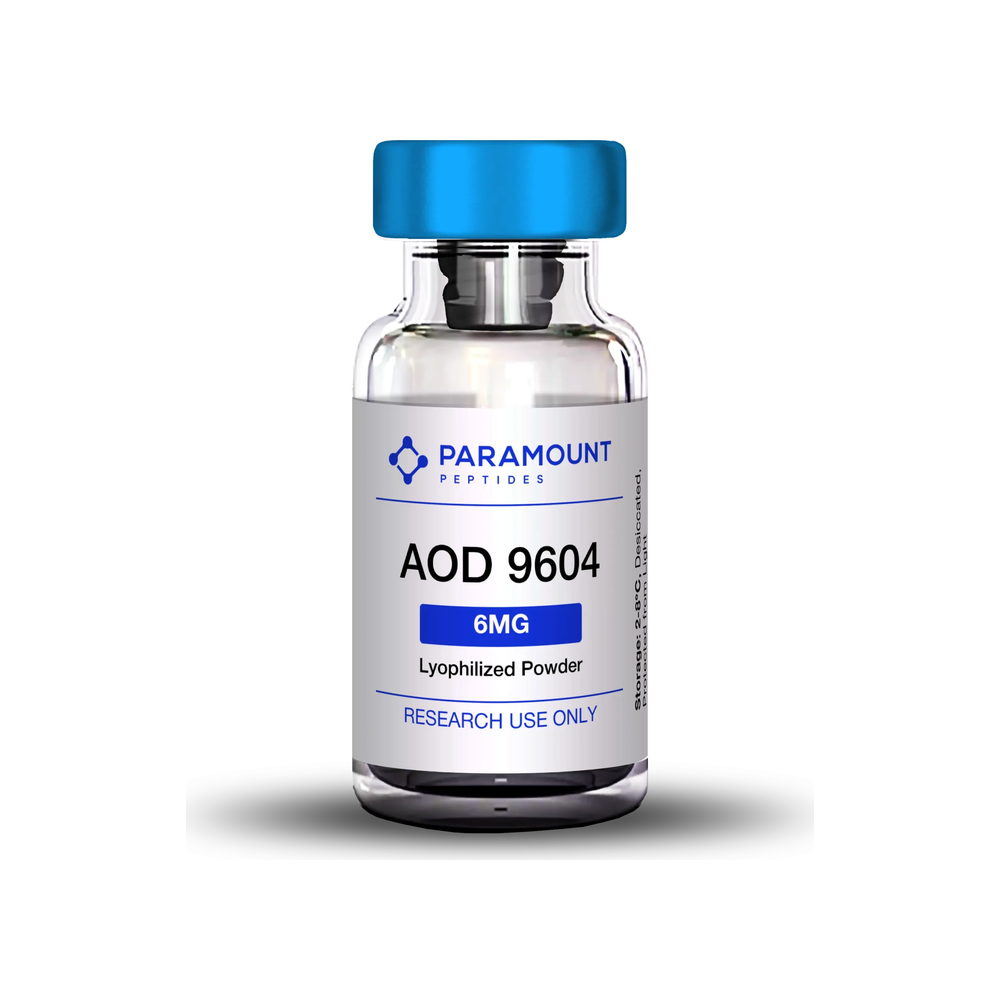 Paramount
AOD-9604
My link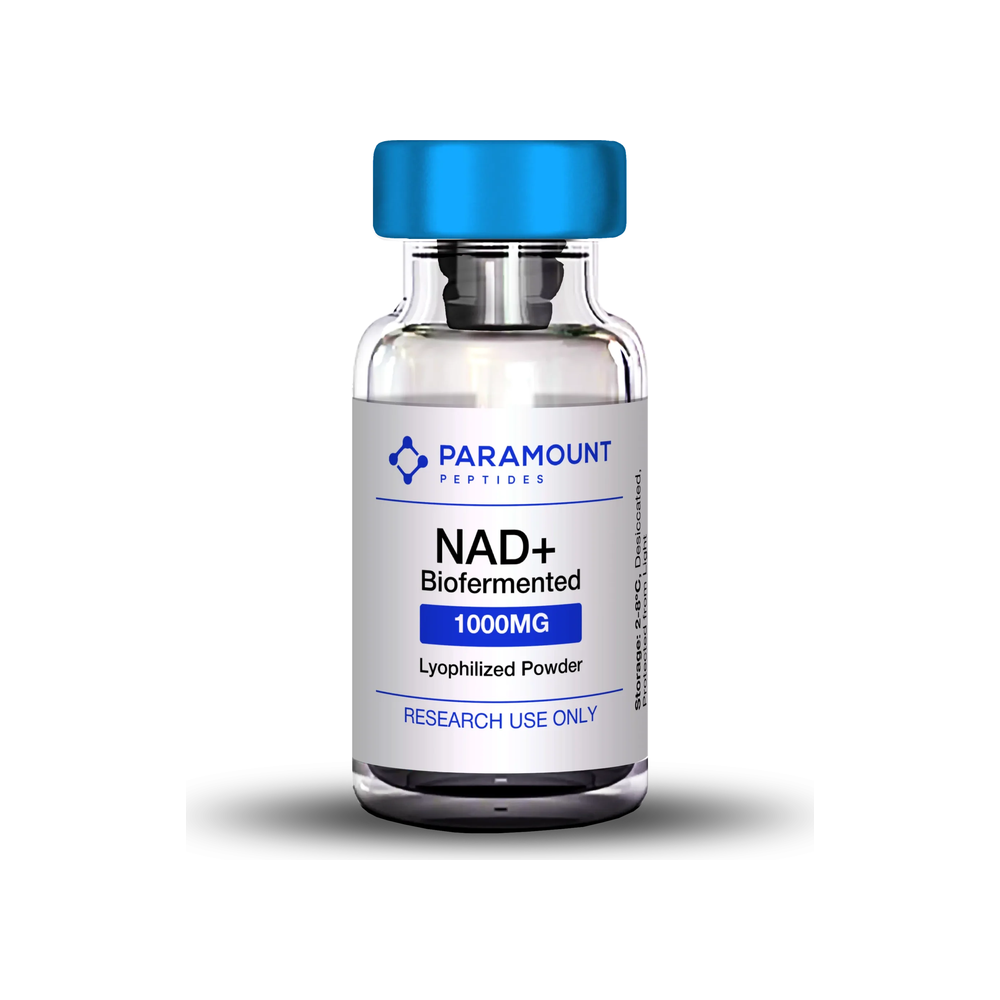 Paramount
NAD+ 1000 mg
My link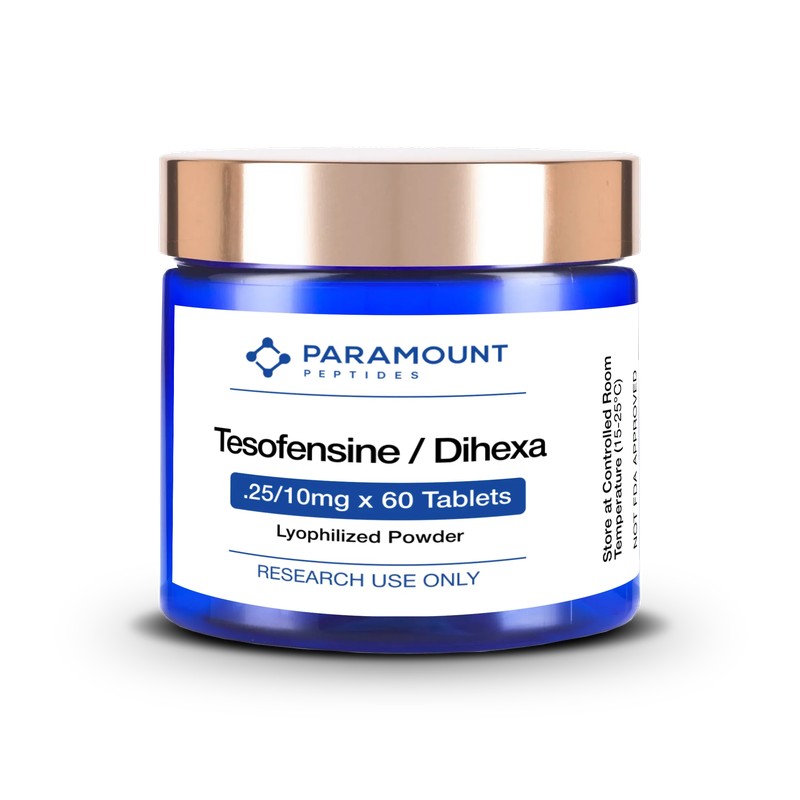 Paramount
Tesofensine / Dihexa
My link Paramount
Recon Solution
My linkPartner homes
BioLongevity home · LEE15 Paramount home · my link Limitless home · LEE20 Peptira home · LEE Their catalog needs a quick research-access sign-up before prices show. Use code LEE20 at checkout.
Adjacent research maps only. Codes live in the links. Education framing — not a treat-disease pitch.
The short version, one more time
- Pemvidutide is a weekly lab-made peptide shot that opens two locks: GLP-1 for appetite and glucagon for the liver.
- It descends from oxyntomodulin, a gut hormone found in 1982 that hits both locks. Same family idea as survodutide.
- MOMENTUM showed about 15.6% weight loss at the top dose over 48 weeks. IMPACT showed strong MASH resolution and a miss on the 24-week fibrosis primary.
- Stomach side effects are common. Phase 3 MASH work is still ahead.
- Not FDA-approved. Fast Track and Breakthrough Therapy are not approval. Build the base first, and bring a clinician into any weight or liver decision.
Related reads: Survodutide · Mazdutide vs retatrutide · Retatrutide · Tirzepatide · Semaglutide · Cagrilintide · Peptides for weight loss · MOTS-c · 5-Amino-1MQ · AOD-9604 · FDA unapproved GLP-1 warnings · Start here · Community
Primary sources
We link the original study or document, not a summary.
- PubMedBataille D, et al. Isolation of glucagon-37 (bioactive enteroglucagon/oxyntomodulin) from porcine jejuno-ileum. Characterization of the peptide. FEBS Lett. 1982. PMID 7140977
- PubMedBataille D, et al. Bioactive enteroglucagon (oxyntomodulin): present knowledge on its chemical structure and its biological activities. Peptides. 1981. PMID 6283496
- PubMedWynne K, et al. Subcutaneous oxyntomodulin reduces body weight in overweight and obese subjects: a double-blind, randomized, controlled trial. Diabetes. 2005. PMID 16046306
- PubMedDay JW, et al. A new glucagon and GLP-1 co-agonist eliminates obesity in rodents. Nat Chem Biol. 2009. PMID 19597507
- PubMedPocai A, et al. Glucagon-like peptide 1/glucagon receptor dual agonism reverses obesity in mice. Diabetes. 2009. PMID 19602537
- PubMedHabegger KM, et al. The metabolic actions of glucagon revisited. Nat Rev Endocrinol. 2010. PMID 20957001
- PubMedTan TM, et al. Coadministration of glucagon-like peptide-1 during glucagon infusion in humans results in increased energy expenditure and amelioration of hyperglycemia. Diabetes. 2013. PMID 23248172
- PubMedCegla J, et al. Coinfusion of low-dose GLP-1 and glucagon in man results in a reduction in food intake. Diabetes. 2014. PMID 24939425
- PubMedNestor JJ, et al. Effects of ALT-801, a GLP-1 and glucagon receptor dual agonist, in a translational mouse model of non-alcoholic steatohepatitis. Sci Rep. 2022. PMID 35461369
- PubMedHarrison SA, et al. Effect of pemvidutide, a GLP-1/glucagon dual receptor agonist, on MASLD: A randomized, double-blind, placebo-controlled study. J Hepatol. 2025. PMID 39002641
- PubMedBrowne SK, et al. Safety and efficacy of 24 weeks of pemvidutide in metabolic dysfunction-associated steatotic liver disease: A randomized, controlled clinical trial. JHEP Rep. 2025. PMID 41113119
- PubMedNoureddin M, et al. Safety and efficacy of weekly pemvidutide versus placebo for metabolic dysfunction-associated steatohepatitis (IMPACT): 24-week results from a multicentre, randomised, double-blind, phase 2b study. Lancet. 2025. PMID 41237796
- PubMedThe dual GLP-1-glucagon agonist pemvidutide in MASH: a phase 2b trial. Lancet. 2025. PMID 41352959
- PubMedle Roux CW, et al. Glucagon and GLP-1 receptor dual agonist survodutide for obesity: a randomised, double-blind, placebo-controlled, dose-finding phase 2 trial. Lancet Diabetes Endocrinol. 2024. PMID 38330987
- PubMedSanyal AJ, et al. A Phase 2 Randomized Trial of Survodutide in MASH and Fibrosis. N Engl J Med. 2024. PMID 38847460
- PubMedRinella ME, et al. A multisociety Delphi consensus statement on new fatty liver disease nomenclature. Hepatology. 2023. PMID 37363821
- PubMedYounossi ZM, et al. The global epidemiology of nonalcoholic fatty liver disease (NAFLD) and nonalcoholic steatohepatitis (NASH): a systematic review. Hepatology. 2023. PMID 36626630
- PubMedWilding JPH, et al. Once-Weekly Semaglutide in Adults with Overweight or Obesity. N Engl J Med. 2021. PMID 33567185
- PubMedJastreboff AM, et al. Tirzepatide Once Weekly for the Treatment of Obesity. N Engl J Med. 2022. PMID 35658024
- PubMedJastreboff AM, et al. Triple-Hormone-Receptor Agonist Retatrutide for Obesity – A Phase 2 Trial. N Engl J Med. 2023. PMID 37366315
- PubMedJi L, et al. Once-Weekly Mazdutide in Chinese Adults with Obesity or Overweight. N Engl J Med. 2025. PMID 40421736
- SourceAltimmune. Positive topline results from MOMENTUM 48-week Phase 2 obesity trial of pemvidutide. Press release, Nov 30, 2023. Altimmune IR
- SourceAltimmune. Pemvidutide achieved key measures of success at 48 weeks in IMPACT Phase 2b MASH trial. Press release, Dec 19, 2025. Altimmune IR
- SourceAltimmune. FDA Breakthrough Therapy Designation for pemvidutide in MASH. Press release, Jan 5, 2026. Altimmune IR
- TrialClinicalTrials.gov. IMPACT: pemvidutide in MASH (NCT05989711). ClinicalTrials.gov
- FDAU.S. Food and Drug Administration. FDA’s concerns with unapproved GLP-1 drugs used for weight loss. FDA.gov
- SourceWorld Anti-Doping Agency. Prohibited List (S0 Non-Approved Substances). WADA
Partner labs
Which vendor for what
Four labs, in the order I check them. Tap through my link, then use the code at checkout.
USA lab · cGMP
Best for: US-made vials, plus oral capsules.
Code LEE15
Enter code LEE15 at checkout.
USA lab · cGMP
Best for: A second US lab to compare price and stock.
No code needed: use my link
Click my link first. If Paramount shows its own sale code, use that one. Codes do not stack.
USA lab · cGMP · Lee’s main shop
Best for: The lab I use most.
Code LEE20
Their catalog needs a quick research-access sign-up before prices show. Use code LEE20 at checkout.
Import · US tested
Best for: Competitive price and Auto-Ship.
Code LEE
Auto-Ship keeps code LEE on every shipment; skip or cancel anytime.
Affiliate links: I may earn a commission at no extra cost to you. Research products only. Education, not medical advice. Each lab sets its own catalog and checkout rules.
Peptide Insider · free email
Get the research before the hype.
Lee’s Peptide Insider: new studies, FDA moves, and protocols explained in plain English. Join free and get the Peptide Playbook PDF.
Education only. Not medical advice. Unsubscribe anytime.
Keep reading
 Humanin: The Mitochondria Peptide and What the Research Really Shows
 Retatrutide for Knee Osteoarthritis: TRIUMPH-4 Phase 3 Results (NEJM), Explained
 TRIUMPH-1 Retatrutide Phase 3 Results, Explained: Weight, Knees, and Sleep Apnea
Free PDF
The Peptide Playbook
The research checklist Lee uses: named sequences, how to read a COA, and the questions to bring to your doctor. Free when you join Peptide Insider.