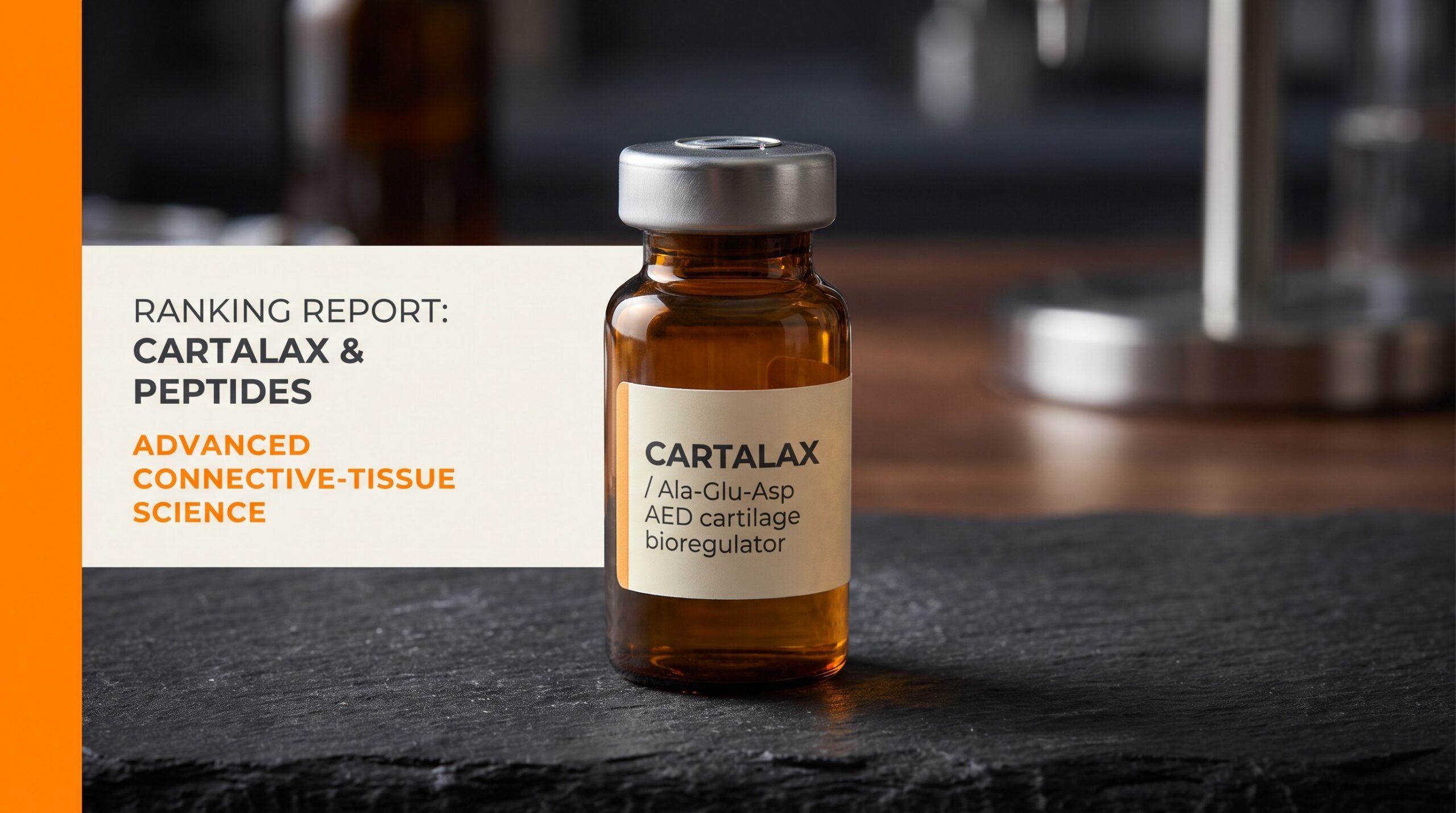
Cartalax (AED): Cartilage Bioregulator Research Map (Not a Joint Protocol)
Key takeaways
- Verdict: Cartalax is the research nickname for the Ala-Glu-Asp (AED) cartilage short peptide. It is a gene-cue story from cell and animal work. It is not an FDA joint drug. It is not a free-site joint pain/arthritis plan.
- How it works in one line: Think of Cartalax / AED as a three-letter library card. Papers study gene cues in cartilage-lane models. It is not Marvel joint juice in a vial cap.
- Your next step: Learn the three doors: research SKU vs short peptide cousins vs basics. Treat partner vials as research options with codes that fire. Never treat them as DIY cartilage injections.
Verdict up front: Cartalax is worth a map if you keep seeing AED, Ala-Glu-Asp, or “cartilage short peptide” next to joint sales talk. Do not treat a three-amino-acid peptide like a clinic joint drug. This free page will not hand you a joint stack.
Real cell work on AED and cartilage-leaning markers. Real partner SKUs that use the Cartalax name. Zero honest path from “I bought a 20 mg vial” to “I just ran a sports-medicine cartilage rehab from a vial cap.”.
Keep reading if you typed Cartalax, AED, Ala-Glu-Asp, cartilage peptide, or “is this just another Khavinson short peptide” and want the map without forum noise. Skip if you want a dose chart. Skip if you want a black-market “joint cycle.” Skip if you want a claim that a research vial treats joint pain/arthritis, cartilage loss, or “creaky knees.” Skip if you want a reason to skip sleep, protein, training, and a doctor. Those asks belong in Pro or a real clinic — not a free ranking page.
Day-one basics still live on Start Here and what are peptides. Nearby maps when you are done here: Cortagen, Vesugen, Pinealon, Epitalon, BPC-157, TB-500, Wolverine, GHK-Cu, how to reconstitute peptides, protein intake. How to sleep better.
Teaching only. Not medical advice. A research shelf Cartalax / AED short peptide is not an FDA-approved drug for joint pain/arthritis, cartilage holes, bone-thinning, or recovery. It is not a green light to skip a doctor when people oversell “just the cartilage peptide.”.
What is Cartalax?
Start with the plain name. Cartalax is the research shelf nickname most people mean when they say the Ala-Glu-Asp 3-letter peptide. That is three amino acids in a row. It is often shortened to AED. In the Khavinson short peptide lane you will also see Kartalax and T-31 for the same short sequence.
It is not a Marvel regen meme. It is not BPC-157. It is not a full cartilage-tissue extract. Shared social aisle with Cortagen, Vesugen, Pinealon, and Epitalon. Different tissue story. Different proof file.
People mash “cartilage peptide” with clinic gel joint shots. Stem-cell sales talk gets mashed in too. Your joint does not care about the nickname. It cares whether you can split a short peptide gene-cue story from a shelf SKU and from a real ortho plan.
Why this matters: forums treat Cartalax like one joint drug with one protocol. It is a short research sequence with a cartilage-leaning papers lane.
So what for you: if a sales page never says Ala-Glu-Asp out loud, it is selling vibes.
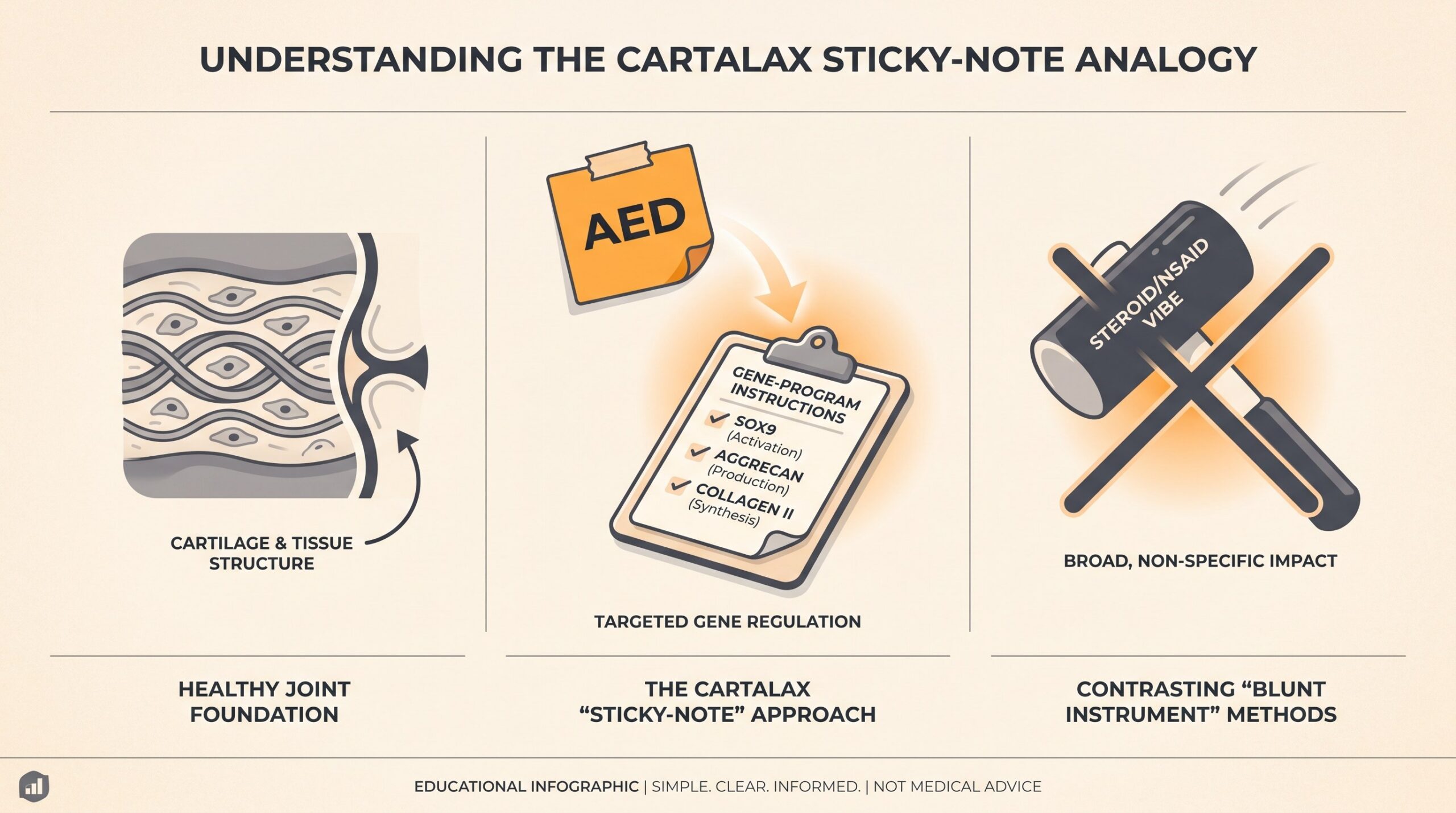
The sticky-note analogy (one mechanism picture)
Here is the only picture I want stuck in your head.
Think of aging connective tissue like a messy clipboard of gene programs. Chondrocytes and mesenchymal stem cells still have the instructions for matrix proteins. What drifts with age is the cueing — which sticky notes stay on the board.
Cartalax / AED shows up in the short peptide papers as a short peptide. It can nudge cartilage-leaning gene and protein readouts in cell models. Not by smashing irritation the way a steroid headline promises. More like putting a sticky note back on the SOX9, cartilage cushion, and collagen II section of the clipboard.
How sure are we? Pretty sure AED is a real studied 3-letter peptide with published cell work. Pretty sure the Khavinson school frames these short peptides as tissue-aimed gene cues. Less sure that every social media “cartilage stack” recreates those culture conditions. Not sure at all that a research vial replaces progressive loading, body-weight care, or an ortho visit. Get imaging if you hear bone-on-bone talk.
Why this matters: if you cannot explain “sticky note vs sledgehammer vs shelf nickname” in one sentence, you are not ready to open a cart.
So what for you: ask for the gene-cue story before you ask for a price.
The stop-you number (and what it is not)
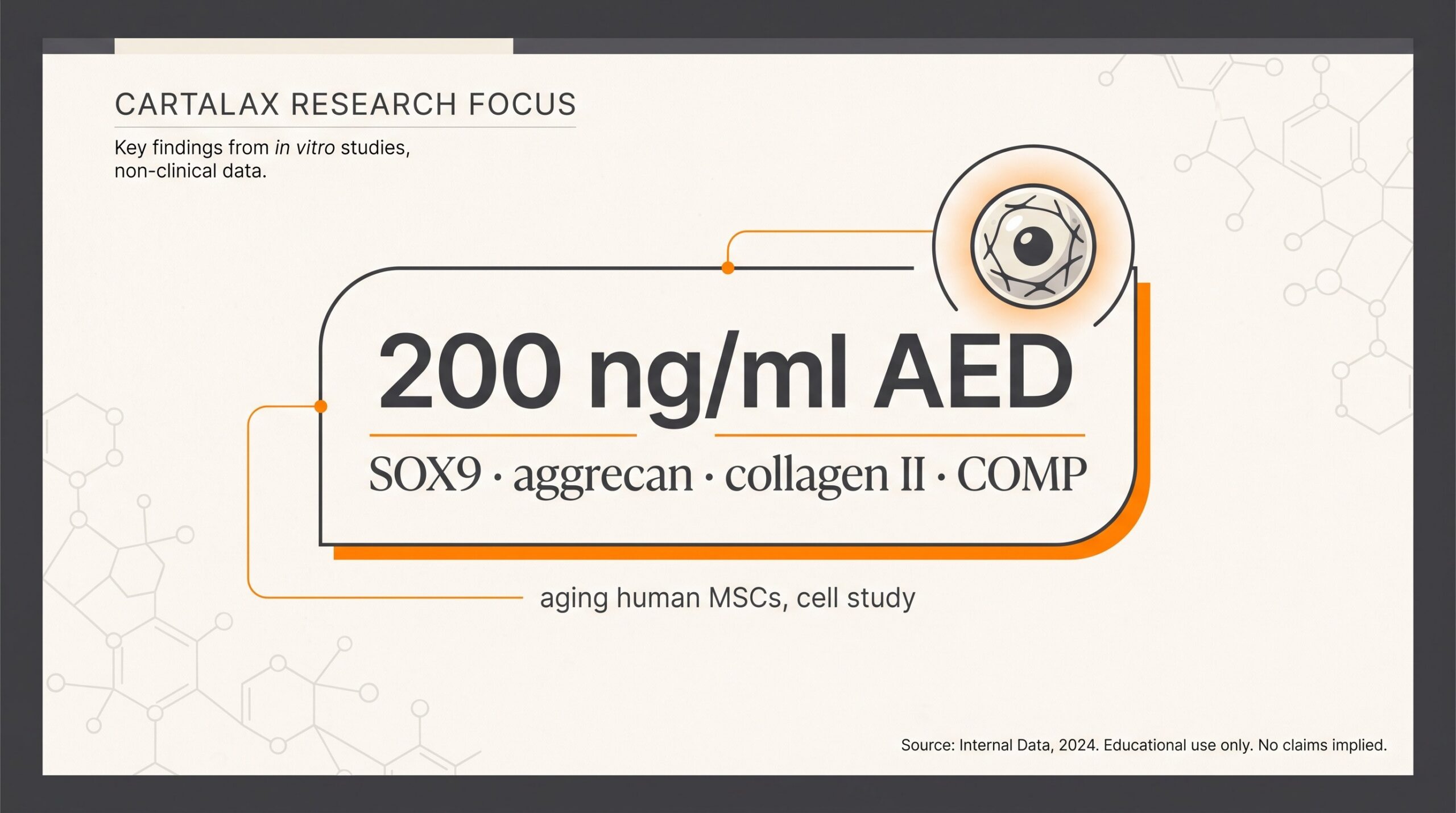
The cleanest “this pathway is not a cartoon” line on the Cartalax side is not a gym-bro screenshot. It is a cell study on aging human mesenchymal stem cells.
In 2023, researchers tested the AED peptide and a cartilage peptide complex on cartilage-leaning markers. The model was copy-aging of human stem cells. AED at about 200 ng/ml turned on gene activity and protein making for the classic cartilage set. That set is SOX9, cartilage cushion, type II collagen, and COMP.
That is Motley Fool confidence framing in one line: real published chondrogenic marker work on AED in aging human stem cells, cell model, not a human joint pain/arthritis drug printed on a research label.
Honesty check on the broader file. Related AED papers show collagen I and sirtuin signals in aging skin cells. Reviews discuss AED / Kartalax next to cartilage peptide complexes in OA-oriented short peptide writing. Strong lane. Still not FDA approval. Still not your vial as a clinic shot.
Why this matters: The stop-you detail is that about 200 ng/ml AED moved SOX9, cartilage cushion, collagen II, and COMP in aging human stem-cell cultures. And the how-sure level for “my Cartalax vial is just DIY joint medicine” is still zero.
So what for you: be impressed by the marker map. Do not confuse a culture concentration with a shopping list.
Research SKU vs short peptide cousins vs basics
Three doors. Same cartilage interest online. Different jobs.
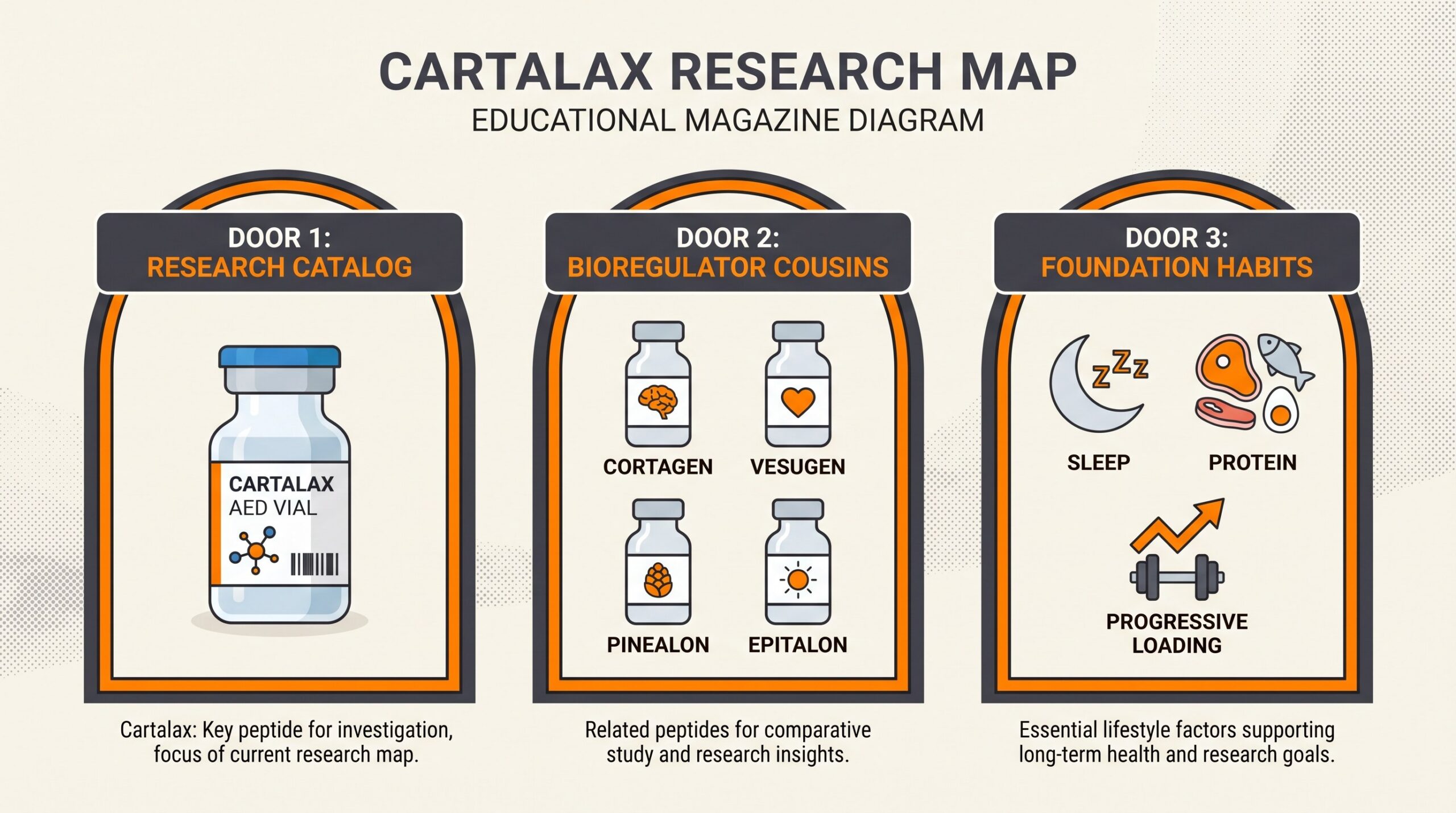
Door 1 — Research shelf Cartalax. Partner shelves can list Cartalax / AED as a research SKU. That is a convenience and a certificate story. It is not FDA-approved joint medicine and not a compounded Rx by default.
Door 2 — Short peptide cousin maps. Cortagen is the cortex AEDP story. Vesugen is vascular KED. Pinealon and Epitalon are pineal / AEDG neighbors. BioCartilage / Sigumir is the broader cartilage peptide complex lane. Different letters. Different tissue clips. See Cortagen, Vesugen, Pinealon, and Epitalon.
Door 3 — Basics. Sleep that recovers, protein that covers matrix substrates, progressive loading instead of chaos. A doctor if you have locking, instability, fever, or surgical timelines. See protein intake, how to sleep better, Zone 2, and HRV.
Why this matters: most money gets wasted when people buy Door 1. Wanting Door 3 outcomes.
So what for you: pick the door that matches your actual question before you open a cart.
Cartalax vs BPC / TB / Wolverine vs GHK
Quick lane honesty without turning this into a textbook.
- Cartalax / AED = short cartilage-leaning short peptide gene-cue story — cell markers, not Marvel regen.
- BPC-157 = gastric pentadecapeptide animal tendon / wound map — see BPC-157.
- TB-500 = TB-4 family catalog lane — see TB-500.
- Wolverine = BPC + TB blend nickname — convenience, not Cartalax. See Wolverine.
- GHK-Cu = copper-peptide / skin and matrix interest — see GHK-Cu.
Shared social aisle. Different jobs. If a stack post treats all five like one cartilage smoothie, your how-sure level should drop.
Why this matters: social media flattens five different objects into “heal my knees.”.
So what for you: if a page never separates AED vs BPC vs TB vs basics, treat the how-sure level as low.
Who should keep reading vs who can skip
Keep reading if you are trying to separate short peptide sales talk from published AED marker work, or if you saw a Cartalax vial and wanted literacy before interest spending.
You can skim or skip if you already have an orthopedist managing diagnosed OA or a cartilage defect with imaging and a rehab or surgical plan. This page will not outrank your chart.
Why this matters: Motley Fool pacing means telling you. When the article is signal for you vs noise for your situation.
So what for you: if your real question is “is this meniscus torn,” close the tab and get imaging. If your real question is “what is Cartalax and why is everyone yelling,” stay.
Myths that burn money
- “Cartalax = clinic cartilage injection.” Nickname sales talk is not gel joint shots. Your joint does not care about the logo.
- “200 ng/ml = I need a bottle today.” That concentration describes a cell-culture condition in aging MSC work. It is not a shopping list.
- “AED = Epitalon.” Epitalon is AEDG. One letter matters. See Epitalon.
- “If Paramount or Peptira shelves rotate, the pathway is fake.” Partner shelves rotate. BioLongevity currently carries a public Cartalax research SKU on this pass. Missing shelf ≠ missing biology.
- “Stack Cartalax with Wolverine, GLOW. Oral BPC because all say healing.” Shared interest neighborhood. Different mechanisms. Stacking forum screenshots is not a plan.
- “Russian OA reviews = FDA approval.” Reviews and animal / observational short peptide writing are a confidence level. They are not a US drug label.
Why this matters: the expensive mistake is buying a story you cannot falsify.
So what for you: falsify the door first. Then decide whether a research SKU even belongs in the talk.
Partner research options (codes that fire)
If you are mapping research SKUs after you understand the doors, this is the public InStock Cartalax partner on this publish pass, plus adjacent short peptide and connective-tissue research maps. Codes live in the links. Click them so the discount fires.
Cartalax hero
 BioLongevity
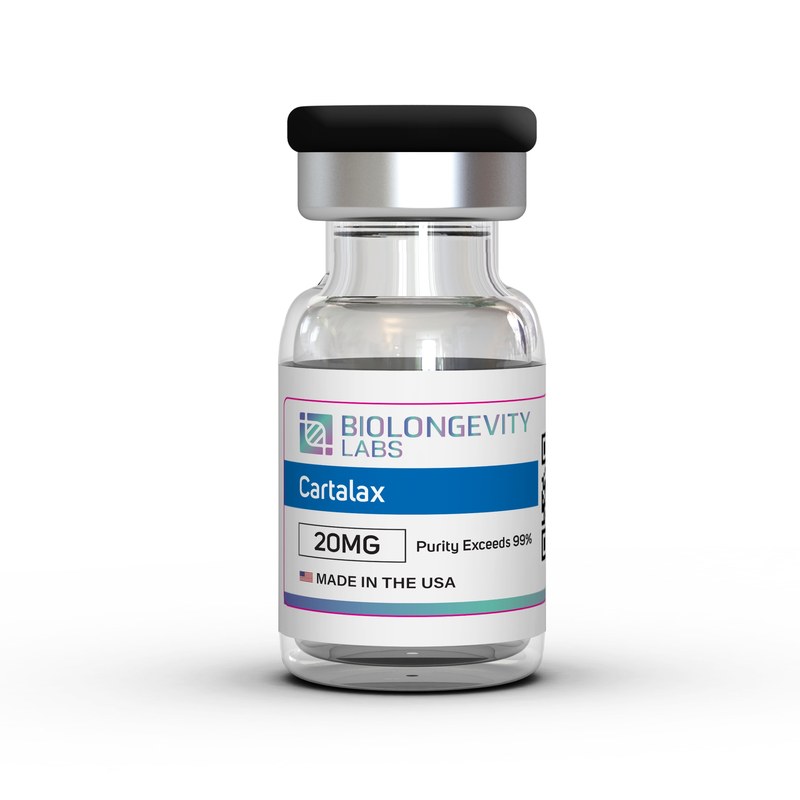
Cartalax 20 mg
LEE15Adjacent research maps (convert)
 BioLongevity
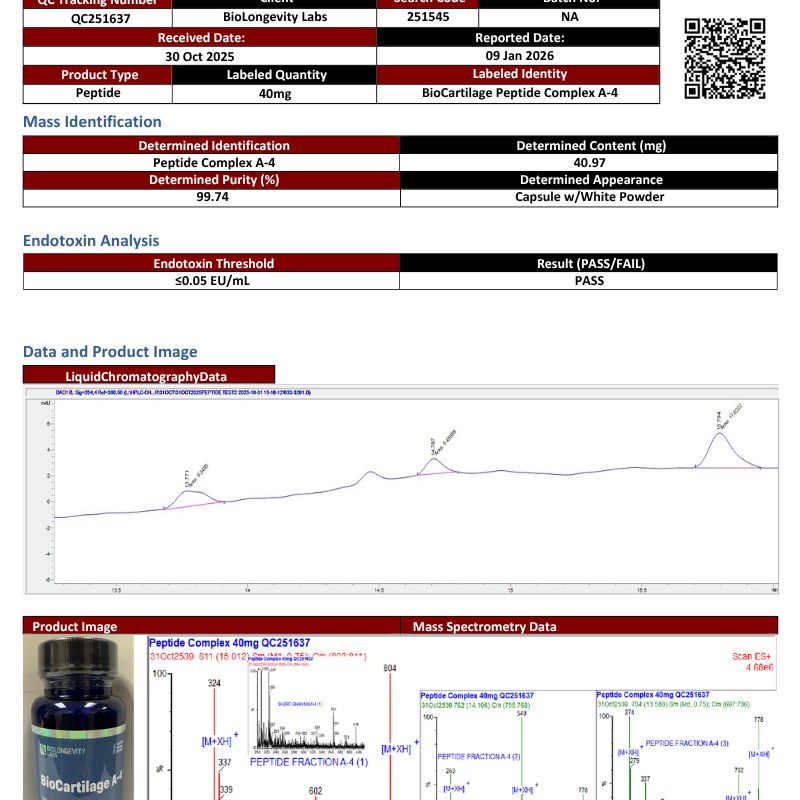
BioCartilage (Sigumir)
LEE15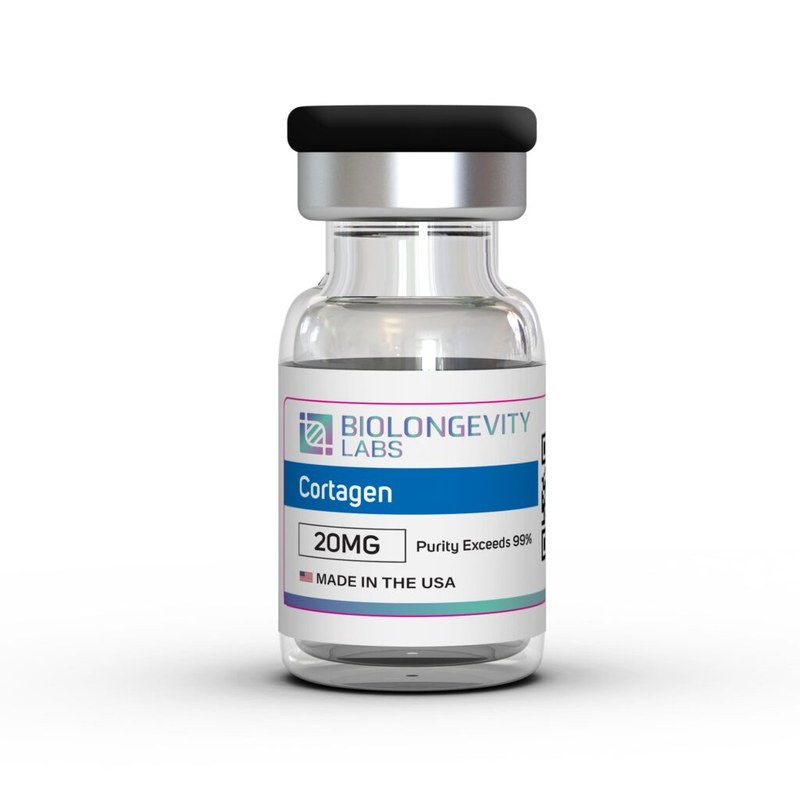 BioLongevity
Cortagen 20 mg
LEE15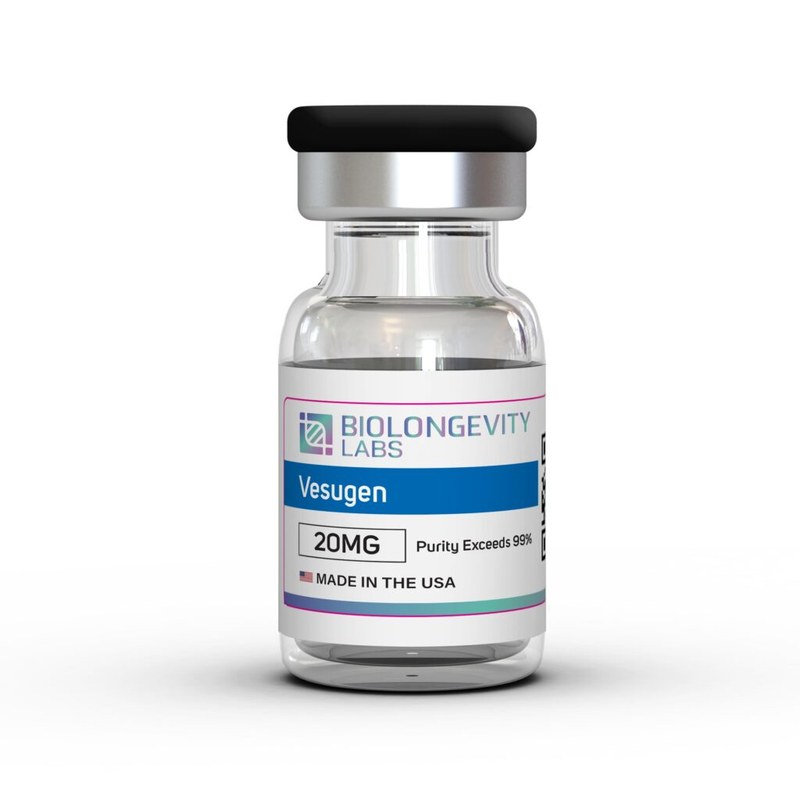 BioLongevity
Vesugen 20 mg
LEE15 BioLongevity
Pinealon 20 mg
LEE15 BioLongevity
Epithalon 20 mg
LEE15 BioLongevity
BPC-157 10 mg
LEE15 BioLongevity
TB-500 10 mg
LEE15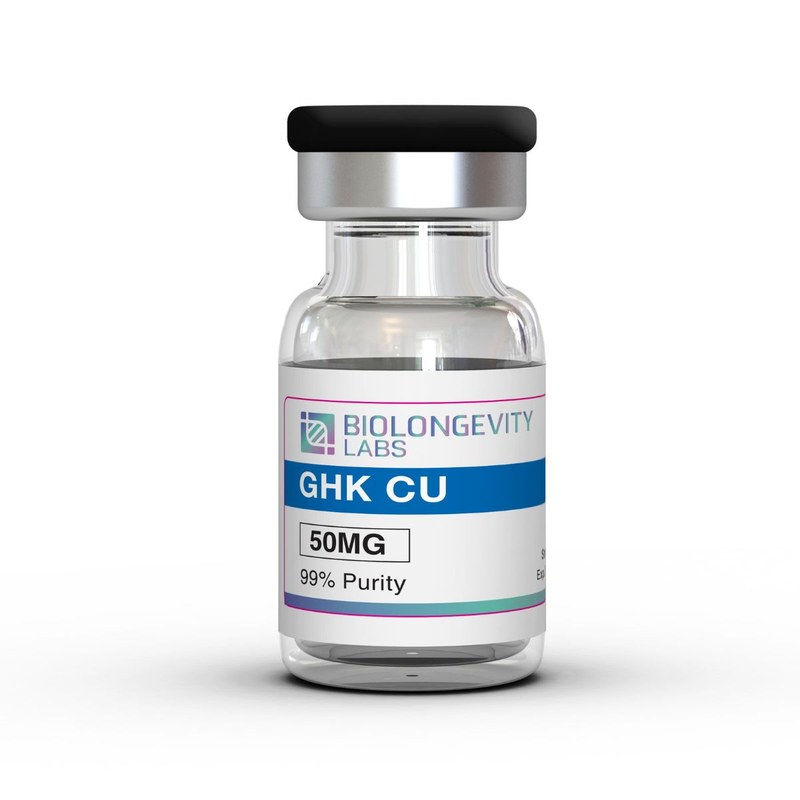 BioLongevity
GHK-Cu 50 mg
LEE15Limitless home · LEE20Paramount home · LEE10Peptira home · LEES1 shop · LEE10BioLongevity home · LEE15
Why this matters: conversion without honesty is how domains die. These cards are research maps with tracking that works — not treatment claims.
So what for you: if you came for a protocol table, stop. If you came to understand AED and keep clean partner links, you are in the right place.
How to think about next steps
Foundation first. Then research interest. Never the reverse as a personality trait.
If sleep is wrecked, protein is a rumor. If you are still training through a locking knee, Cartalax lore will not outrun physics. If you already run Door 3 and still want catalog literacy, use the partner cards as maps with tracking. Not as treatment claims.
Talk with a doctor before you turn a joint interest into an injectable habit. Ask about imaging and rehab that actually match your cartilage story instead of shopping for a meme.
Why this matters: the free site teaches the map. Pro and clinics carry plan depth.
So what for you: leave this page smarter about AED, short peptide cousins, and partner SKUs. Leave dosing theater for paid doors that can supervise it.
Related research maps
- Cortagen — cortex AEDP short peptide cousin.
- Vesugen — vascular KED short peptide cousin.
- Pinealon / Epitalon — pineal neighbors (AEDG is not AED).
- BPC-157 / TB-500 / Wolverine — healing aisle, different jobs.
- GHK-Cu — copper / matrix interest.
- How to reconstitute peptides — lab literacy, not a protocol dump.
- Sleep / protein / Zone 2 — Door 3 basics.
Evidence limits (read this twice)
Partner shelves are not selling clinic cartilage repair. A Cartalax vial on a research shelf is not the 200 ng/ml MSC culture condition. It is not a DIY joint pain/arthritis drug.
If you have locking, instability, unexplained swelling, infection signs, surgical hardware, pregnancy questions, or drug-interaction concerns, this is a doctor talk. Not a research-cart talk.
Why this matters: confidence framing protects your wallet and your risk file.
So what for you: use this page to get smarter. Use a doctor to get safer. Use Pro if you want plan depth without random forum screenshots.
Sources & Further Reading
- Influence of peptides on chondrogenic differentiation of human MSCs during replicative aging (AED at ~200 ng/ml. SOX9, aggrecan, collagen II, COMP). Adv Gerontol. 2023. PubMed 37782646.
- Peptides prevent forming of secretory phenotype of chondrocytes linked to aging (AED and cartilage polypeptide complex). Adv Gerontol. 2023. PubMed 37356100.
- Chondrocyte SASP in osteoarthritis and peptide bioregulation (AED / Kartalax; Sigumir neighborhood). Adv Gerontol. 2023. PubMed 37782637.
- Lin’kova NS, et al. Comparison of KE and AED peptides on human skin fibroblasts during replicative aging (collagen I, sirtuins). Bull Exp Biol Med. 2020. PubMed 33231794.
- Ashapkin V, et al. Gene expression in human mesenchymal stem cell aging cultures: modulation by short peptides (AED / KED / KE; IGF1). Mol Biol Rep. 2020. PubMed 32399807.
- Lin’kova NS, et al. Peptide regulation of skin fibroblast functions during aging in vitro (AED. MMP-9, Ki-67, apoptosis). Bull Exp Biol Med. 2016. PubMed 27259496.
- Peptides regulate signaling molecules in kidney cell cultures during in vitro aging (T-31 / AED). Bull Exp Biol Med. 2014. PubMed 24958378.
- Peptide regulation of cell renewal in kidney tissue cultures (T-31 / AED). Bull Exp Biol Med. 2015. PubMed 26033601.
- Tripeptides slow aging process in renal cell culture (AED, EDL). Adv Gerontol. 2014. PubMed 25946838.
- Effect of peptide regulators on bone tissue in ageing rats (cartilage preparation and T-31). Adv Gerontol. 2008. PubMed 18306703.
The bottom line
Cartalax is one of the quieter but sticky names in the short-peptide aisle. AED. Sticky-note gene cues. Real cell marker work. A public partner SKU exists.
It is still not clinic cartilage repair in a crimp cap and not a DIY osteoarthritis drug. Read the three-door warning. Talk to a doctor about real joint problems. Build sleep and loading habits that do not require a meme.
Want the deeper protocol library after that? Pro is the paid door. Want the free research PDF? Grab the Playbook below.
Free guide
Get The Peptide PlaybookEnter your email and we’ll send the research PDF. Teaching only — not medical advice.
I built Peptides & Pump so you can get this without a guru tax. Free Knowledge Base first if you are not ready to pay. Pro if you want the protocol library.
 Keep going on Peptides & Pump
Free is the peptide community. Pro is the paid door. Codes are the links. Click them so the discount fires.
Free
Knowledge Base
The peptide community · 2,500+
- 2,500+ member peptide community
- Sourcing questions before you buy anything random.
- The basics, from people actually using peptides.
Pro
Peptides & Pump Pro
$10/mo · 7-day trial
- Science-backed protocol library
- 1-on-1 support from Lee and Matt.
- Step-by-step video, plus a monthly $500 drawing.
LEE20 Limitless LEE15 BioLongevity LEE10 Paramount LEE Peptira LEE10 S1.
Supplier footnote: Research supplier I mention when people ask about Cartalax / AED: BioLongevity Cartalax 20 mg (code LEE15). Adjacent research maps: BioCartilage (Sigumir), Cortagen, Vesugen, Pinealon, Epithalon, BPC-157, TB-500, GHK-Cu. Partner home/shop chips: Limitless (code LEE20), Paramount (code LEE10), Peptira (code LEE), S1 shop (code LEE10), plus BioLongevity home (code LEE15). Paramount and Peptira may carry Cartalax on some passes, but product rows were not on Lee’s Drive sheet for this ship — home chips only. Match the product to the job. Do not collect bottles..
Disclaimer. This article is for educational and research purposes only. It is not medical advice. It is not intended to diagnose, treat, cure, or prevent any disease. Cartalax, Ala-Glu-Asp (AED), Kartalax, T-31, BioCartilage / Sigumir, Cortagen, Vesugen, Pinealon, Epitalon / Epithalon, BPC-157, TB-500, Wolverine blends, GHK-Cu. Other related research compounds are not presented here as FDA-approved treatments you should self-administer for osteoarthritis, cartilage defects, osteoporosis, joint pain, “inflammation,” or any other indication. Research compounds discussed here are research sequences. A research-shelf vial is not a compounded Rx and is not a DIY injection protocol. Evidence discussed here includes cell culture and animal / short-peptide papers on AED and related peptides. None of that is a substitute for a doctor. Individual results vary. Always consult a qualified healthcare provider before starting any peptide, drug, supplement, or protocol, especially if you have a medical condition, recent surgery, or take Rx medication. Peptides & Pump does not sell peptides.
Affiliate disclosure. Some links on this page are affiliate links. If you buy through them, I may earn a commission at no extra cost to you. Codes LEE15, LEE20, LEE. LEE10 are the ones I actually use where a coupon fires. That commission is how I keep publishing free education. I only link suppliers I am willing to put my name on.

One Comment
Comments are closed.