Are Peptides Steroids? Chemistry, Signaling, and Myths
Key takeaways
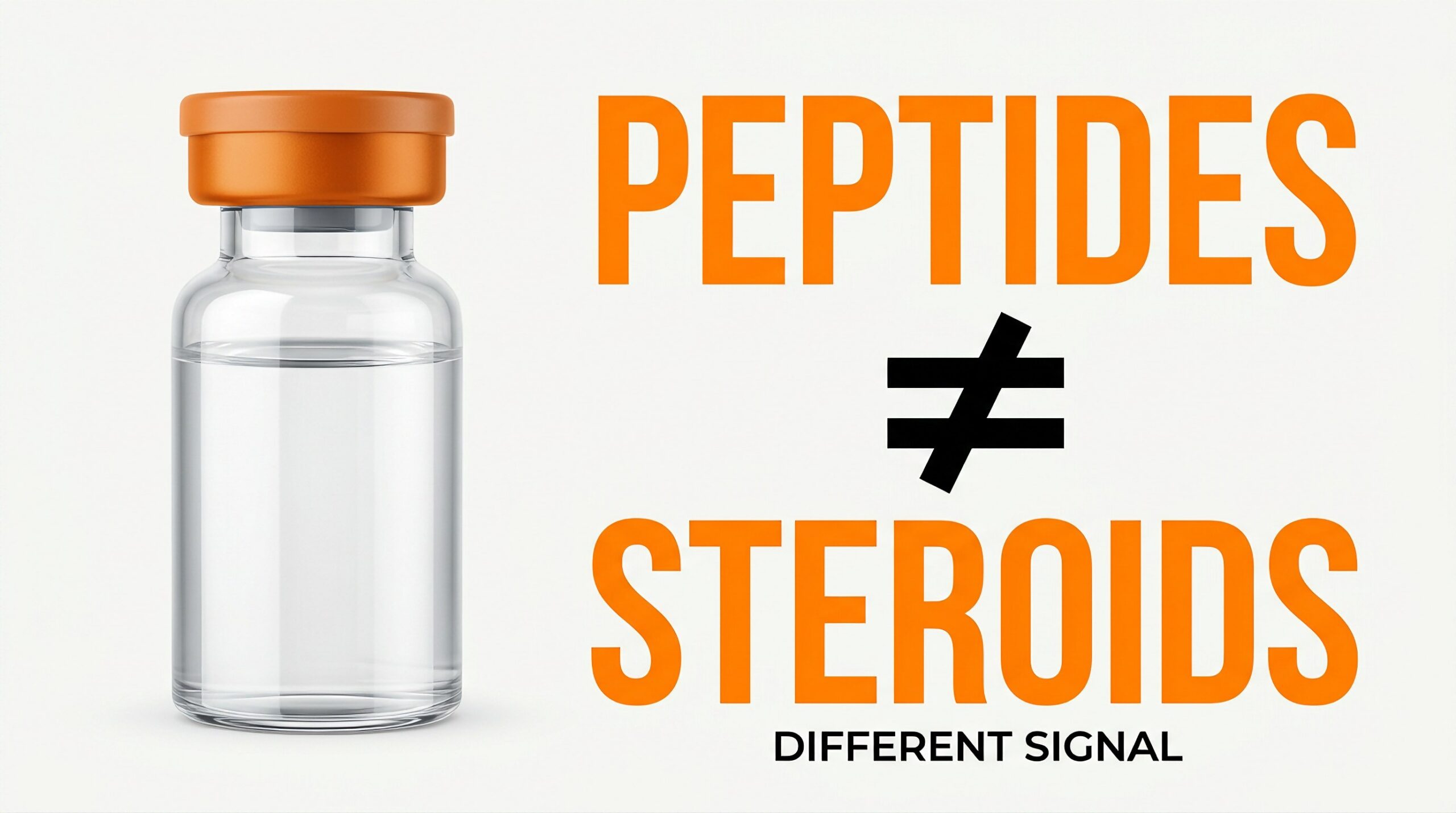
- Verdict: No — peptides are not steroids. Different chemistry. Different cell door. Different risk story.
- Anabolic-androgenic steroids (AAS) are testosterone cousins that usually rewrite gene programs inside the cell. Most peptides are short amino-acid messages that dock on the surface first.
- “Natural” is a marketing word, not a free pass. Your body makes steroid hormones and peptide signals. That does not make every bottle safe.
- Both lanes can carry real risks. Peptides are not “safe steroids.” Steroids are not a template for peptide literacy.
- Education only. Not medical advice. Not an FDA-approved treatment claim. No free-site dosing or PED coaching.
Verdict up front: If you searched are peptides steroids, the short answer is no. Peptides and anabolic-androgenic steroids sit in different chemistry families. They use different doors on the cell. Gym culture still mashes them together. This page untangles that mash-up in plain English.
This page is education and research framing only. It is not medical advice. It is not an FDA-approved treatment claim. It will not coach steroid use. It will not crown peptides as a safer PED shortcut.
Why this matters: one wrong label turns a literacy question into a shopping myth. You deserve the map before the hype.
Keep reading if you want peptides vs steroids signaling literacy, the “natural” myth, bodybuilding confusion, honest risk talk on both lanes, high-level sport status, research vs clinic doors, and partner research cards that stay InStock. No disease hustle. No skip-the-doctor pitch.
What people mean when they say “steroid”
In everyday talk, “steroid” often means two different things. One is medical corticosteroids. Think anti-inflammation medicines in a doctor’s lane. The other is anabolic-androgenic steroids. Those are the muscle-and-male-hormone cousins people mean in gym talk.
Write it out. Anabolic means tissue-building. Androgenic means male-hormone effects. Anabolic-androgenic steroids are a class of hormones. Many are lab-made cousins of testosterone. Testosterone is the main male sex hormone. Reviews show how AAS enter cells. They can change into other forms. Then they bind the androgen receptor. That receptor sits inside target cells. It helps rewrite gene programs.
Classic sports-medicine reviews also note short-term strength and lean-mass changes in athletes who used AAS in studied settings. That is AAS research. It is not a peptide claim. It is also not a green light. Adverse-effect reviews track real problems. Skin. Blood pressure. Liver. Lipids. Hormones. Fertility. Heart structure. Misuse is not a hobby.
So what for you: when a comment section says “steroids,” ask which steroid story they mean. Cortisone is not testosterone. Testosterone cousins are not peptides.
What a peptide actually is
A peptide is a short chain of amino acids. Amino acids are the building blocks of proteins. Think of peptides as short text messages cells can read. Proteins are longer novels. Hormones like insulin are peptides. Many modern medicines are peptides too. A big obesity-medicine trial of once-weekly semaglutide is peptide-medicine evidence in a major journal. That is Door A clinic literacy. It is not proof that every research vial online is the same thing.
On this magazine, peptide pages teach maps. Recovery curiosity around BPC-157 and TB-500. Skin copper around GHK-Cu. GH signal literacy around CJC-1295 + Ipamorelin and Tesamorelin. Body-comp education on peptides for weight loss. Muscle-intent talk on peptides for muscle growth and peptides for bodybuilding.
New to the category? Start with what are peptides, then best peptides, then come back here for the steroids confusion.
Why this matters: if you cannot say “short amino-acid chain,” you are not ready to compare peptides to steroids yet.
The signaling map: not the same door
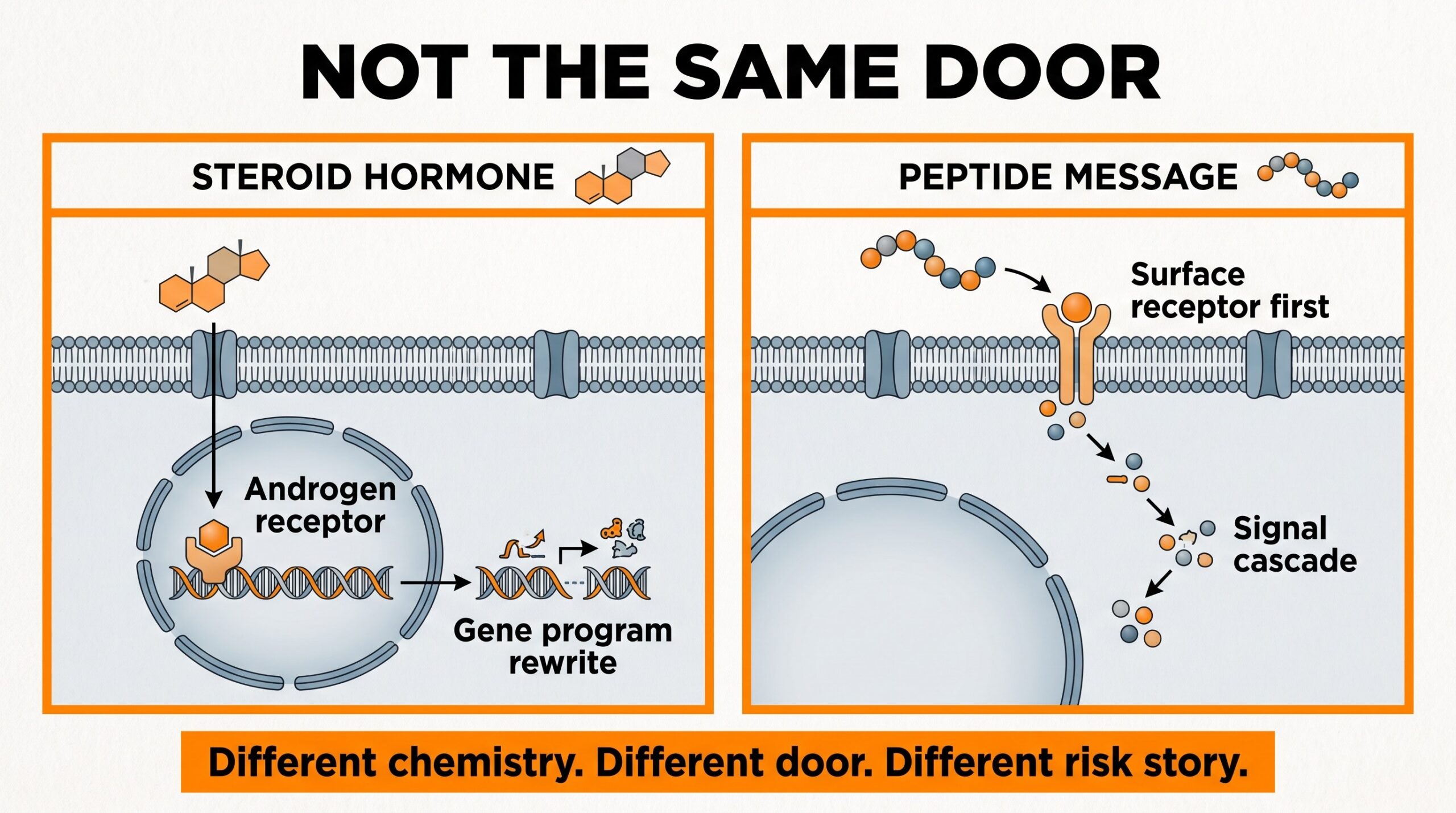
Here is the mechanism analogy. Picture two buildings with two front doors.
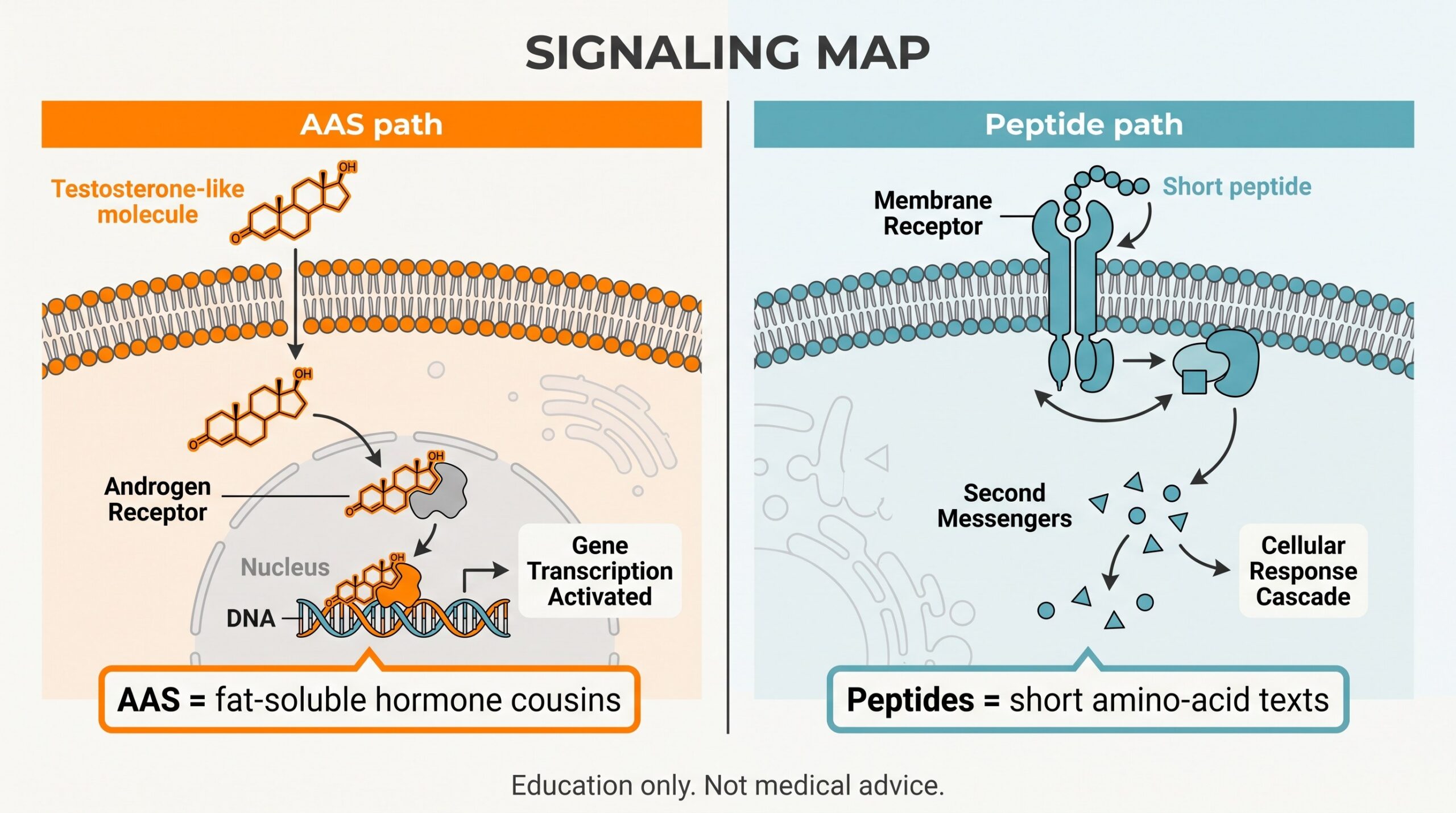
Door Steroid: fat-soluble hormone cousins can slip through the cell membrane. Inside, they can bind the androgen receptor. That receptor helps change which genes get read. Think rewrite-the-playbook.
Door Peptide: many peptides are water-loving chains. They often dock on a receptor sitting on the cell surface first. That kickstarts a signal cascade inside. Think press-the-doorbell, not move-into-the-office.
This is a teaching simplification. Biology always has exceptions. Some signals cross categories. The point still holds for gym literacy. AAS and research peptides are not interchangeable tools with a new sticker.
Stop-you number from the AAS public-health literature. One adverse-effects review estimated that about 1–3% of people in the United States have used anabolic-androgenic steroids. That is not a niche locker-room rumor. It is a classification problem big enough that wrong labels spread fast.
Why this matters: wrong door talk creates wrong risk talk. Wrong risk talk creates dumb shopping decisions.
Peptides vs steroids: the comparison people actually want
Search loves the phrase peptides vs steroids. Here is the clean scoreboard for literacy, not for a PED cookbook.
- Chemistry: AAS are steroid-ring hormone cousins. Peptides are short amino-acid chains.
- Typical first door: AAS often act through intracellular androgen receptors. Many peptides start at surface receptors.
- Job boards: AAS are famous for androgen and anabolic programs. Peptides span repair curiosity, skin science, GH secretagogue signals, metabolic medicines, and more.
- Evidence shelves: AAS have decades of clinical and sports literature plus serious misuse literature. Peptide topics range from FDA-approved medicines to thin preclinical research vials. Do not glue those shelves together.
- Sport rules: many AAS and many peptide-related agents appear on anti-doping lists. Sport status is not the same as “safe for home experiments.”
Keep vs skip: keep the chemistry split. Skip any influencer who says peptides are just “softer steroids.”
So what for you: if a post swaps the words like synonyms, close the tab.
Are peptides “natural”?
Search also asks are peptides natural. Your body makes peptide signals every day. Your body also makes steroid hormones every day. Natural origin does not equal harmless bottle. Snake venom is natural. Cyanide in some seeds is natural. The word sells. It does not grade risk.
Lab-made research peptides are designed sequences. Some copy pieces of human biology. Some are analogues. Analogues are close cousins with intentional tweaks. GHK is a three-amino-acid copper-binding peptide studied in skin and tissue-remodeling work. That is peptide science. It is still not a steroid story.
Why this matters: “natural” is a brand adjective. Classification is a science noun.
Why bodybuilding culture mixes them up
Gym forums mash everything under “PED.” PED means performance-enhancing drug in sport talk. That umbrella is about intent and rules. It is not a chemistry class.
Someone runs an AAS cycle. Someone else talks about a GH secretagogue. Someone else buys a recovery research blend. Comment sections call all of it “juice.” That slang hides the map.
Ipamorelin was described as a selective growth hormone secretagogue in late-1990s lab work. A secretagogue asks the body to release more of a hormone. That is a signal story. Injecting testosterone is a hormone-replacement or AAS story. Different tools. Different monitoring. Different legal and sport frames.
Tesamorelin has an FDA-approved medicine story for reducing deep belly fat in specific HIV-related fat disorders. That labeled clinical story is precise. It does not turn every research catalog name into a free fat-loss coupon. It also does not turn Tesamorelin into a steroid.
For gym-intent reading, use the muscle and bodybuilding hubs. Keep this page as the classification hub.
So what for you: PED slang is not a lab notebook.
Are peptides safer than steroids?
This is the trap question. Search volume for are peptides safer than steroids is real. A clean answer needs humility.
AAS misuse has a long adverse-effect trail. Reviews describe acne and blood-pressure problems. Some oral agents stress the liver. Cholesterol can shift the wrong way. Hormones can shut down. Fertility can take a hit. Some men get breast tissue growth. Heart muscle can change. Sudden cardiac death case reviews exist for AAS users. That is not scare theater. It is why clinicians take AAS history seriously.
Peptides are not one risk bucket. An FDA-approved peptide medicine has labeled risks, trial data, and a clinician pathway. A research vial sold online has a different paperwork story, different quality questions, and often thinner human evidence. Some peptide topics are mostly animal and cell work. See are peptides safe and peptide side effects for that honesty lane.
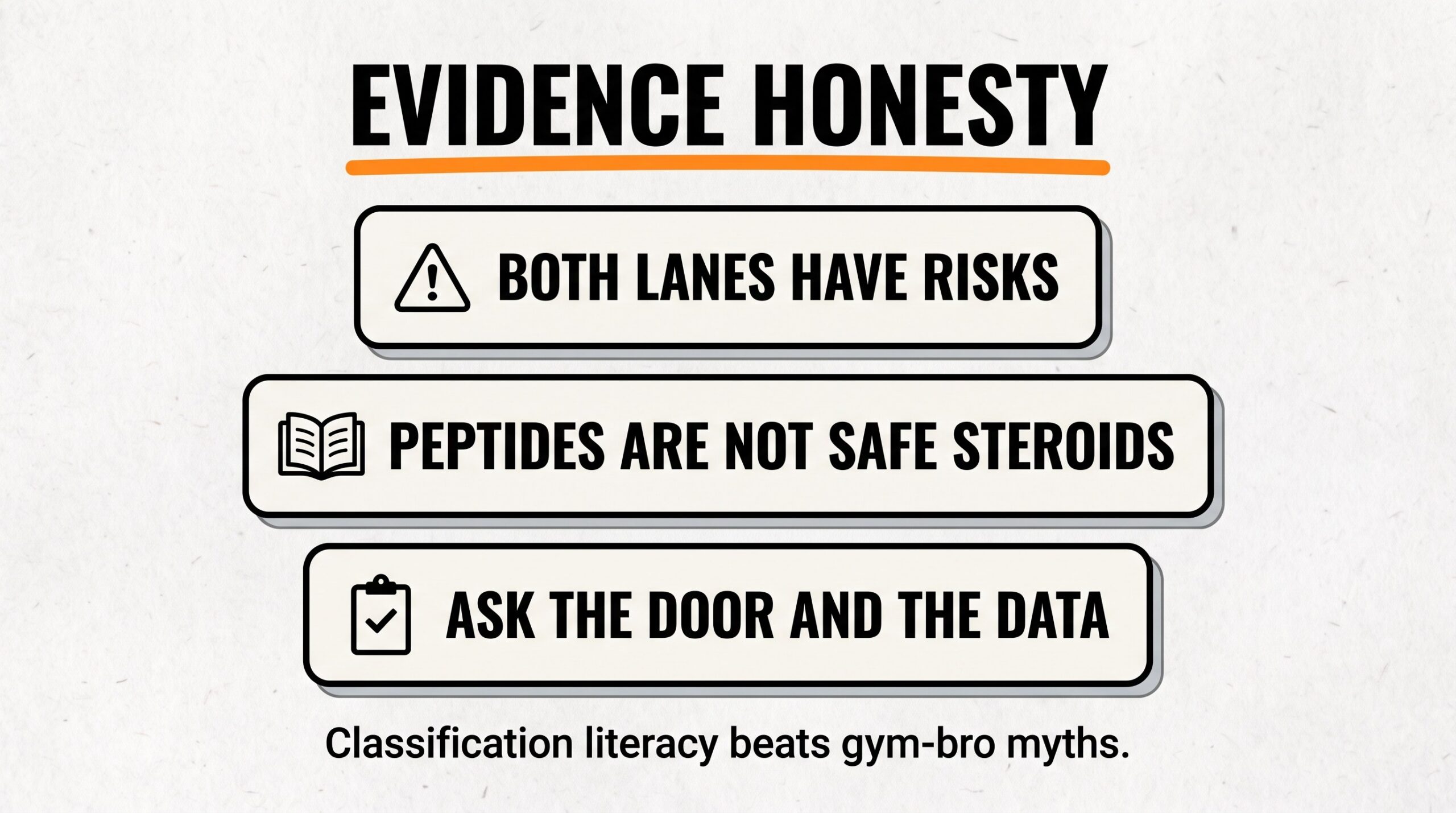
So are peptides “safer than steroids”? Sometimes people mean “not the same androgen receptor rewrite program.” That can be true as chemistry. It does not mean risk-free. It does not mean PEDs are fine. It does not mean you should treat a research catalog like a pharmacy.
How sure should you be? High that AAS and peptides are different classes. High that AAS misuse risks are well documented. Lower on any blanket claim that “peptides are safe.” Lower still on social-media dosing tips.
Why this matters: safer-than-X marketing is how bad decisions get a halo.
Sport status at a high level (WADA literacy)
Anti-doping agencies publish prohibited lists. Anabolic agents have long been restricted in sport. Growth-hormone related substances and many releasing-hormone analogues also show up in detection and policy literature. Reviews of WADA-prohibited substances discuss how limited performance-evidence can be for some listed agents. Sport bans are about fair play and athlete health frameworks. They are not a shopping guide for civilians.
If you compete under tested rules, assume you need your federation’s current list and a qualified advisor. This free page will not invent a loophole chart.
So what for you: sport status answers “can I compete clean.” It does not answer “is this smart for my health.”
Are peptides legal? (tease only — keep the lanes split)
People also search are peptides legal. That is a big hub of its own. FDA-approved peptide medicines, compounded clinician pathways, and research-use catalog framing follow different rules. State and federal details matter. This page will not swallow that whole topic. Leave room for a dedicated legal literacy page later.
For now: legality is not the same as safety. Safety is not the same as sport status. Sport status is not the same as chemistry class. Keep those drawers shut until you label them.
Quality literacy still belongs here. Label is not contents. Counterfeit and mislabel problems are real. Read counterfeit research peptides and research peptides before you trust a pretty vial photo.
Why this matters: one page cannot honestly be chemistry class, PED coach, and lawyer at once.
Three doors you should not smash together
- Door A — Clinic / Rx: FDA-approved medicines when they exist for a labeled use. Doctor visit. Pharmacy rules.
- Door B — Compounding / clinician: a licensed clinician may discuss compounded options under medical rules. Still not a TikTok protocol.
- Door C — Research vial literacy: freeze-dried powders sold under research-use framing. Different intent language. Different quality questions.
Same nickname can sit behind different doors. Rules do not travel with the nickname alone. Basics that help Door C literacy without turning this into a free protocol dump: how to reconstitute peptides as education, bacteriostatic water, and Start Here.
Keep vs skip: keep door labels. Skip any pitch that treats Door C like Door A.
How to think about next steps
If you arrived from a “peptides are just safer steroids” reel, slow down. Say the chemistry out loud. Say the door out loud. Open the matching deep page. Keep free-site reading as a map. Save protocols for a clinician or for Pro classroom depth.
Useful next reads on this magazine:
- What are peptides
- Are peptides safe
- Research peptides
- HGH peptides
- Peptides for bodybuilding
- Best peptides
- Peptide side effects
- Counterfeit research peptides
Why this matters: the next smart step is literacy. Not a panic buy. Not a miracle claim. Not a PED tutorial.
So what for you: write one sentence before you trust any peptides-vs-steroids pitch: “Which chemistry am I looking at — and which door?”
Application: a simple sorting board
Use this board when a post mixes peptides and steroids.
- Name the molecule class. Steroid-ring hormone cousin? Or short amino-acid chain?
- Name the door. Clinic Rx? Clinician compounding? Research vial literacy?
- Name the claim size. Big human trials? Thin animal work? Forum story?
- Name the risk talk. Labeled medicine risks? AAS misuse literature? Unknown powder quality?
- Name the next read. Open one deep page. Do not buy from panic.
Write it out. A sorting board is a thinking tool. It is not a protocol. It will not tell you what to inject. It will tell you when a caption is lying by blending classes.
If the caption says peptides are safe steroids, that caption failed steps 1 and 4. If it skips doors, it failed step 2. If it treats a research vial like a finished FDA medicine, it failed steps 2 and 3.
Why this matters: clear thinking beats cool slang.
So what for you: keep the board on your phone notes. Use it before you trust a cart.
FAQs
Are peptides steroids?
No. Peptides are short amino-acid chains. Anabolic-androgenic steroids are testosterone-related hormone cousins with a steroid-ring chemistry story.
Are peptides the same as anabolic steroids?
No. Different structure. Different typical receptor door. Different evidence and risk shelves.
Can peptides build muscle like steroids?
Do not glue those claims. AAS literature describes anabolic programs through androgen signaling. Peptide topics that touch muscle or recovery are a mixed bag of mechanisms and evidence strength. Teach the map. Do not crown a free-site stack.
Are peptides safer than steroids?
They are not the same risk class. That does not make peptides risk-free. Approved medicines, compounding, and research vials also are not one bucket.
Are peptides natural?
Your body makes peptide signals. Your body also makes steroid hormones. “Natural” is not a safety certificate.
Are peptides legal?
It depends on the exact product, claim, and pathway. Keep that as its own literacy hub. Do not treat this chemistry page as legal advice.
Do bodybuilders use peptides instead of steroids?
Some athletes talk about both. Forum slang is not a clinical study. Sport rules may restrict many agents in either lane.
Key takeaways (echo)
- Peptides are not steroids. Different chemistry. Different door.
- “Safer than steroids” is not a free pass. Both lanes need honesty.
- Keep Rx, compounding, and research vials in separate drawers.
- Education only. Not medical advice. Not an FDA-approved treatment claim.
Adjacent research maps — InStock partner cards
These are education-adjacent research cards, not steroid products. No PED coaching. Codes live in the links.
 Peptira
BPC-157
LEE BioLongevity
BPC-157
LEE15 BioLongevity
TB-500
LEE15 Paramount
Wolverine Blend
LEE10 Peptira
GHK-Cu
LEE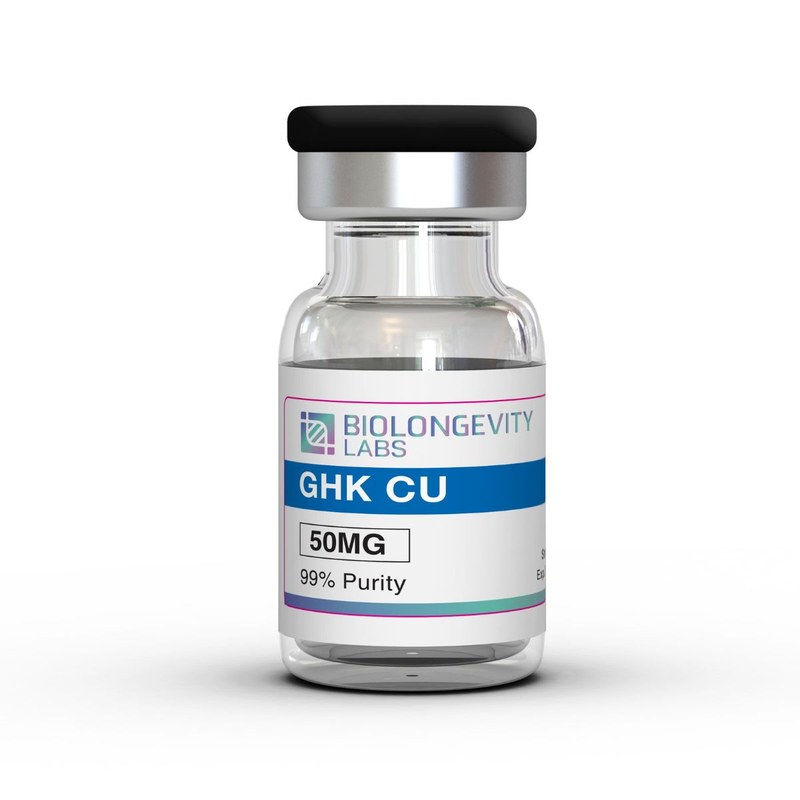 BioLongevity
GHK-Cu
LEE15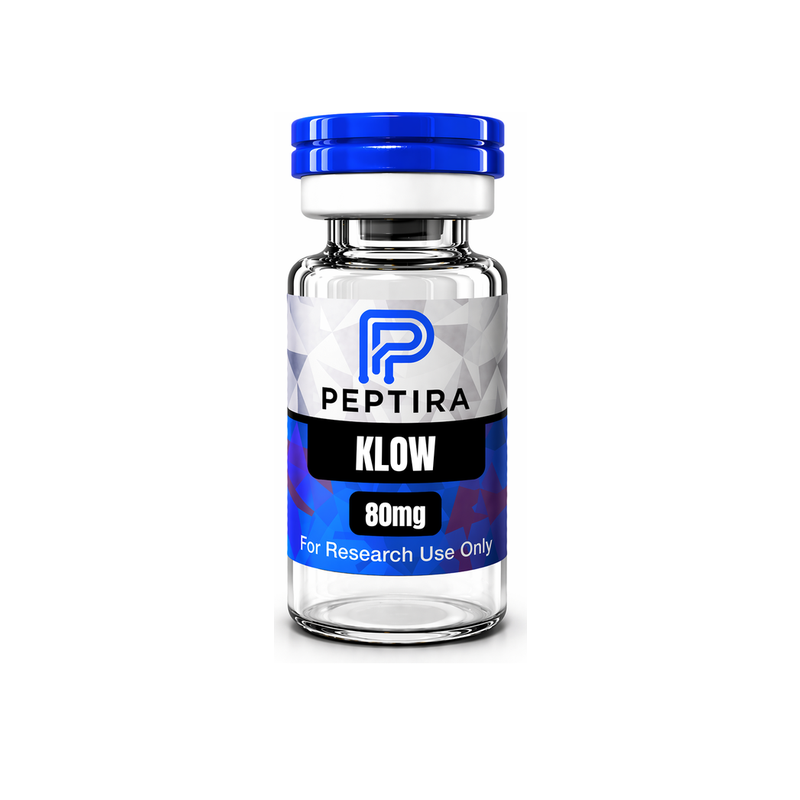 Peptira
KLOW
LEE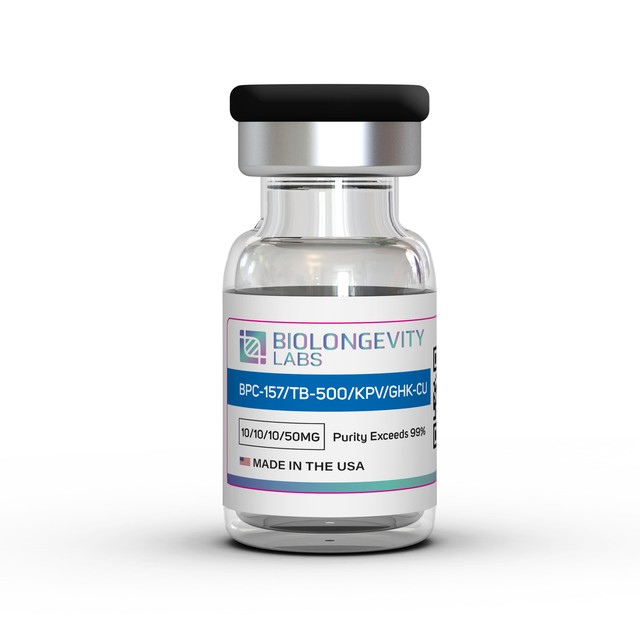 BioLongevity
KLOW
LEE15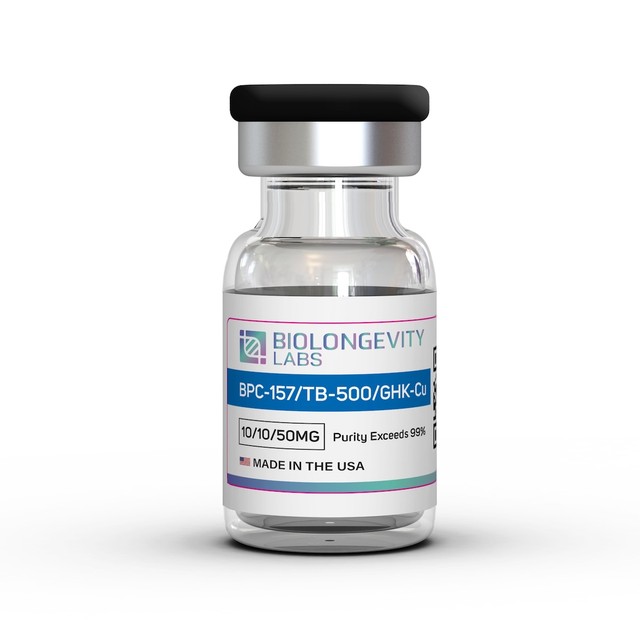 BioLongevity
GLOW
LEE15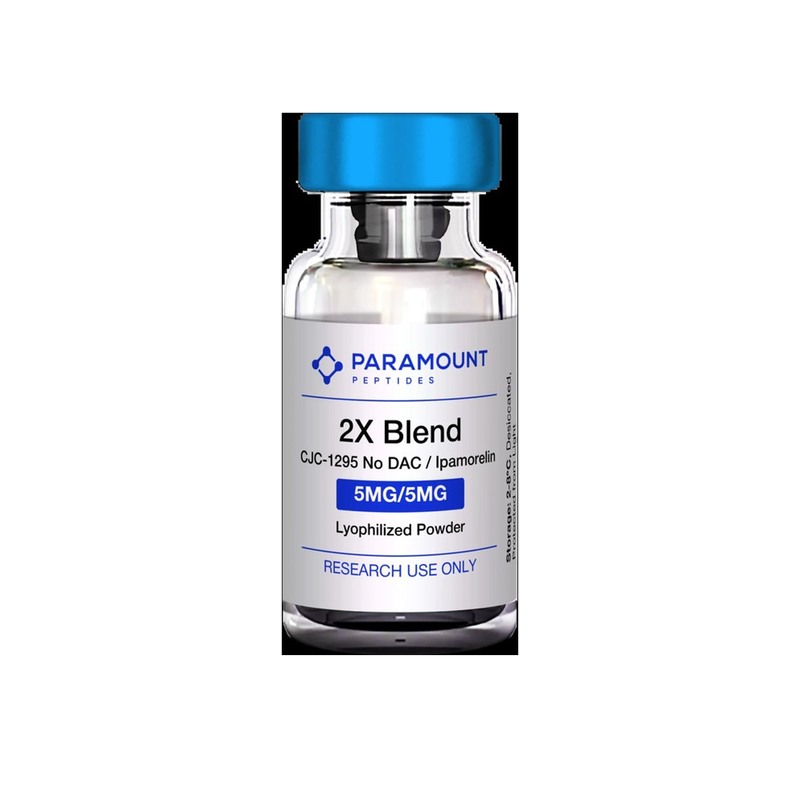 Paramount
CJC / Ipamorelin
LEE10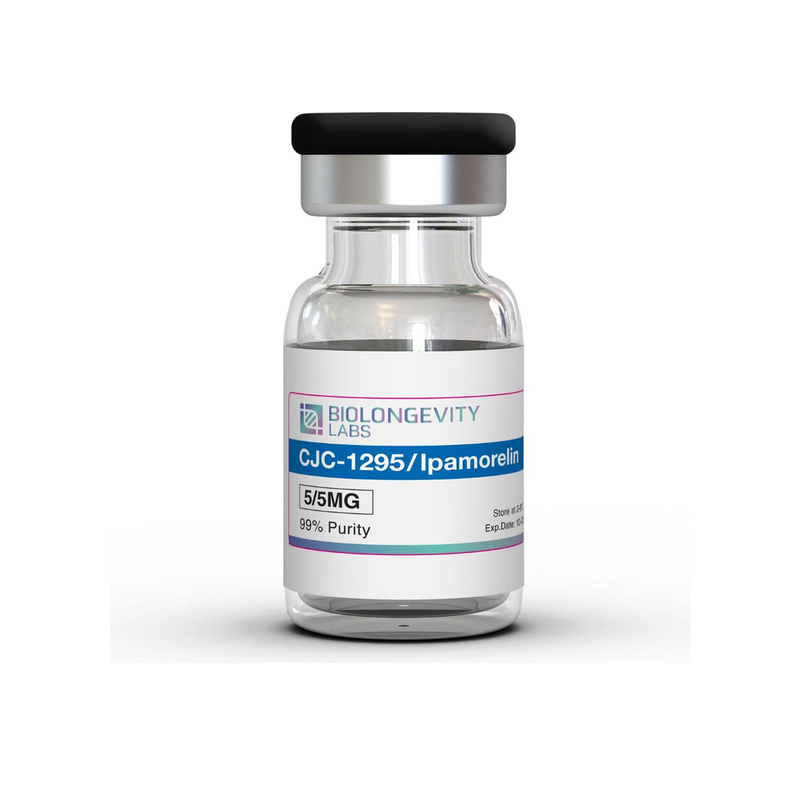 BioLongevity
CJC / Ipamorelin
LEE15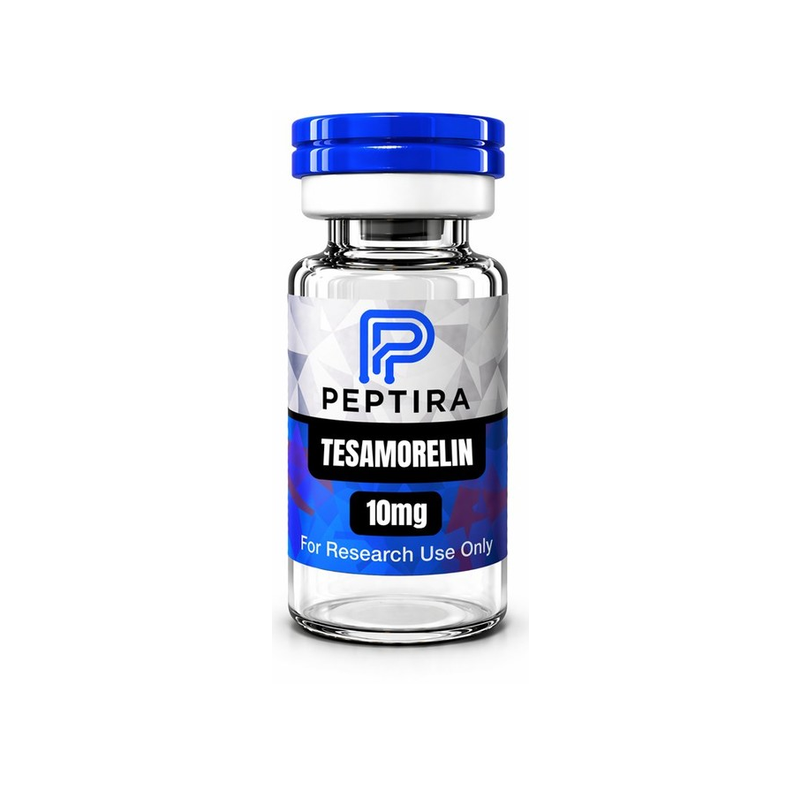 Peptira
Tesamorelin
LEE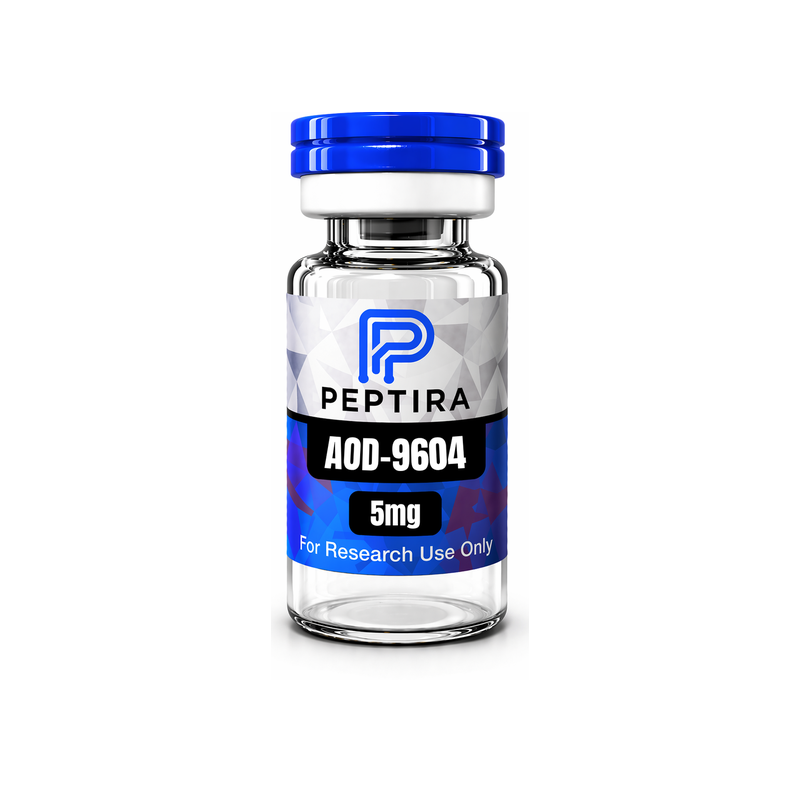 Peptira
AOD-9604
LEE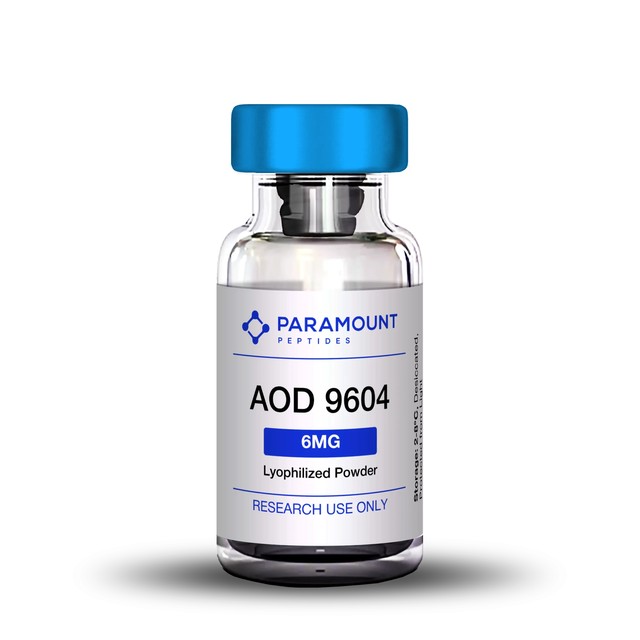 Paramount
AOD-9604
LEE10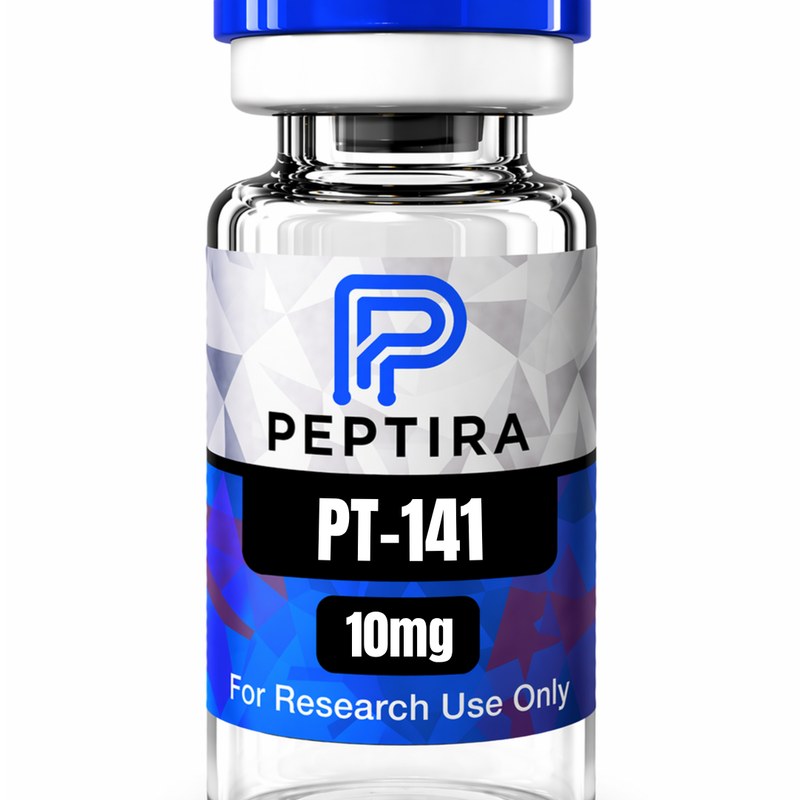 Peptira
PT-141
LEE Peptira
BAC Water
LEE Paramount
Recon Solution
LEE10 Peptira
Acetic Acid
LEEPartner homes
Limitless home · LEE20 S1 home · LEE10
Tracked homes: Limitless LEE20, Paramount LEE10, Peptira LEE, S1 LEE10, and BioLongevity LEE15.
Pro mastery: full classroom protocols stay in Peptides & Pump Pro. Free map first: community.
Get the Peptide Playbook
Free email map for how to think about peptides without the guru noise. No naked PDF dump — just the Playbook form.
Sources & Further Reading
- Bond P, et al. Anabolic-androgenic steroids: How do they work and what are the risks? Front Endocrinol. 2022. PMID 36644692
- Kicman AT. Pharmacology of anabolic steroids. Br J Pharmacol. 2008. PMID 18500378
- Albano GD, et al. Adverse effects of anabolic-androgenic steroids: a literature review. Healthcare. 2021. PMID 33477800
- Hartgens F, Kuipers H. Effects of androgenic-anabolic steroids in athletes. Sports Med. 2004. PMID 15248788
- Corona G, et al. Impact of anabolic androgenic steroids on male sexual and reproductive function: a systematic review. Andrology. 2022. PMID 35146992
- Alemany M. Basics of androgen synthesis and action. Biomedicines. 2022. PMID 35595638
- Torrisi M, et al. Sudden cardiac death in anabolic-androgenic steroid users: a literature review. Medicina. 2020. PMID 33158202
- Petrovic A, et al. Anabolic androgenic steroid-induced liver injury: an update. World J Gastroenterol. 2022. PMID 36051334
- Heuberger JAAC, Cohen AF. Review of WADA prohibited substances: limited evidence for performance-enhancing effects. Sports Med. 2019. PMID 30411235
- Handelsman DJ. Performance enhancing hormone doping in sport. Endotext. 2020. PMID 26247087
- Knoop A, et al. Advances in the detection of growth hormone releasing hormone synthetic analogs. Drug Test Anal. 2022. PMID 34665524
- Wang L, et al. Peptide-based drug discovery: current status and recent advances. Expert Opin Drug Discov. 2023. PMID 36481586
- Wilding JPH, et al. Once-weekly semaglutide in adults with overweight or obesity. N Engl J Med. 2021. PMID 33567185
- Raun K, et al. Ipamorelin, the first selective growth hormone secretagogue. Eur J Endocrinol. 1998. PMID 9849822
- Falutz J, et al. Metabolic effects of a growth hormone-releasing factor in patients with HIV. N Engl J Med. 2007. PMID 18057338
- Falutz J, et al. Long-term safety and effects of tesamorelin, a growth hormone-releasing factor analogue, in HIV patients with abdominal fat accumulation. AIDS. 2008. PMID 18690162
- Stanley TL, et al. Effect of tesamorelin on visceral fat and liver fat in HIV-infected patients with abdominal fat accumulation: a randomized clinical trial. JAMA. 2014. PMID 25038357
- Chang CH, et al. The promoting effect of pentadecapeptide BPC 157 on tendon healing involves tendon outgrowth, cell survival, and ERK activation. J Appl Physiol. 2011. PMID 21030672
- Gwyer D, et al. Gastric pentadecapeptide body protection compound BPC 157 and its role in accelerating musculoskeletal soft tissue healing. Cell Tissue Res. 2019. PMID 30915550
- Malinda KM, et al. Thymosin beta4 accelerates wound healing. J Invest Dermatol. 1999. PMID 10469335
- Goldstein AL, et al. Thymosin beta4: actin-sequestering protein moonlights to repair injured tissues. Trends Mol Med. 2005. PMID 16099219
- Maquart FX, et al. Stimulation of collagen synthesis in fibroblast cultures by the tripeptide-copper complex glycyl-L-histidyl-L-lysine-Cu2+. FEBS Lett. 1988. PMID 3169264
- Pickart L. The human tri-peptide GHK and tissue remodeling. J Biomater Sci Polym Ed. 2008. PMID 18644225
- Pickart L, et al. GHK peptide as a natural modulator of multiple cellular pathways in skin regeneration. Biomed Res Int. 2015. PMID 26236730
- Dou Y, et al. The potential of GHK as an anti-aging peptide. Trends Pharmacol Sci. 2020. PMID 35083444
- Ng FM, et al. Metabolic studies of a synthetic lipolytic domain (AOD9604) of human growth hormone. Horm Res. 2000. PMID 11146367
- Heffernan M, et al. The effects of human GH and its lipolytic fragment (AOD9604) on lipid metabolism following chronic treatment in obese mice and beta(3)-AR knock-out mice. Endocrinology. 2001. PMID 11713213
- Diamond LE, et al. Double-blind, placebo-controlled evaluation of the safety, pharmacokinetic properties and pharmacodynamic effects of intranasal PT-141. Int J Impot Res. 2004. PMID 14963471
Education only. Not medical advice. Not an FDA-approved treatment claim. Research framing for mechanism and quality literacy. This page does not coach steroid use or PED protocols. Talk with a qualified clinician about personal health decisions. Partner links may earn a commission; codes live in the links.