 PEPTIDES & PUMP
Menu
Sermorelin vs Ipamorelin: Two Different Doors to Growth Hormone, Explained
Sermorelin vs ipamorelin in plain English and real science: GHRH-R vs GHS-R1a mechanism, cortisol and prolactin selectivity, the Geref drug history, ipamorelin's failed Phase 2, why people stack them, plus verified FDA and WADA status.

Peptide Insider Free email + the Peptide Playbook PDF.Get it free
Education only. Not medical advice. Unsubscribe anytime.
Research education, not medical advice. Talk with a licensed clinician before you act on anything here.
Sermorelin vs ipamorelin is the wrong fight. They are not two versions of the same thing.
One copies your body’s GH accelerator. The other copies hunger’s accelerator and quietly lifts the brake. That is why people run them together, not against each other.
Here is the real mechanism, the actual human evidence (there is less than the ads imply), and the regulatory and anti-doping status, verified at the source.
Key takeaways
- Two different doors. Sermorelin is a GHRH analog (GHRH-R). Ipamorelin is a ghrelin mimetic (GHS-R1a). Same goal — a bigger GH pulse — different receptors.
- Ipamorelin’s edge: in the 1998 discovery paper it raised GH without raising cortisol or prolactin, unlike older GHRPs. That selectivity is the whole reason it got famous.
- Sermorelin’s edge: it has a real drug history. It was FDA-approved as Geref for childhood GH deficiency before being discontinued for business reasons.
- Why people stack them: a GHRH analog plus a ghrelin-receptor agonist make a synergistic GH pulse, shown repeatedly in humans for GHRH + GHRP.
- Reality check: neither has modern human trials for anti-aging or physique use, both are banned by WADA, and neither research vial is an FDA-approved drug.
What people actually ask us
Paraphrased from the kinds of questions people bring to our community. Anecdotes, not data.
- “Which one builds more muscle, sermorelin or ipamorelin?”
- “Do I have to stack them, or pick one?”
- “Is ipamorelin really side-effect free?”
Short version below. We do not give protocols or doses for unapproved compounds.
Verdict up front: Comparing sermorelin to ipamorelin like they are rival pre-workouts misses the point. They hit two different receptors on the way to the same place: a pulse of your own growth hormone. Sermorelin works like the hormone your hypothalamus already makes to say “release GH.” Ipamorelin works like ghrelin, the hunger hormone, which pushes a second GH button and eases off the off-switch. Alone, each gives a small bump. Together, they add up. That is the honest frame, and it is not the one a sales page gives you.
Keep reading for the plain-English map first and the doctor-level detail in gray boxes. New here? Start with what are peptides and our Start Here page, then the big-picture HGH peptides guide. Want the single-peptide deep dives? We have full pages on sermorelin and ipamorelin.
A note on who is writing this: I am a coach and researcher sharing what the published science says. I am not a doctor, and this is not medical advice. Every claim below links to a PubMed record or a government document you can read yourself.
The 30-second version
Sermorelin is a short copy of a hormone you already make, called GHRH. Your body uses GHRH to tell the pituitary gland to send out a pulse of growth hormone. Sermorelin sends that same message at the same spot.
Ipamorelin copies ghrelin, the hormone your gut makes when you are hungry. Ghrelin also sets off growth hormone. But it uses a different spot, and it works partly by easing off the body’s GH brake.
So one peptide hits the gas at door one. The other hits the gas at door two and eases the brake. Push both and the pulse is bigger than either alone. That is the only reason people stack them.
What this means for you
If you only remember one thing: sermorelin and ipamorelin are teammates, not rivals. The marketing “vs” is a search term, not a biology question. Neither one is a shortcut to muscle growth, and a vial is not the same as prescription growth hormone — see the HGH peptide map.
GHRH-R vs GHS-R1a: the two-door mechanism
Your pituitary releases growth hormone in pulses, mostly at night. Two upstream signals drive those pulses, and a third one stops them:
- GHRH (growth-hormone-releasing hormone) presses the accelerator at the GHRH receptor. Sermorelin, tesamorelin, and the CJC-1295 family all copy GHRH.
- Ghrelin presses a second accelerator at the GHS-R1a receptor (the “growth-hormone secretagogue receptor”). Ipamorelin, the older GHRPs, hexarelin, and MK-677 all copy ghrelin.
- Somatostatin is the brake. Ghrelin-type signals also blunt the brake, which is part of why the two classes synergize.
Sermorelin is the 1-29 fragment of human GHRH — the shortest piece that still has full GHRH activity (Prakash 1999). Because it is a near-copy of a natural hormone, it clears fast; small chemical tweaks like a D-Ala swap are what later analogs used to slow that clearance down (Soule 1994). Ipamorelin is a five-amino-acid synthetic (Aib-His-D-2-Nal-D-Phe-Lys-NH2) built by Novo Nordisk by stripping the central dipeptide out of GHRP-1; it binds the ghrelin receptor, not the GHRH receptor (Raun 1998).
For the clinicians reading
Pharmacologic separation is clean. Raun 1998 (PMID 9849822) used GHRP and GHRH antagonists to show ipamorelin stimulates GH via a GHRP-like (GHS-R1a) receptor, with in-vitro potency and efficacy similar to GHRP-6 (EC50 ~1.3 nmol/L; Emax ~85%). Human PK (Gobburu 1999, PMID 10496658) shows a short terminal half-life of ~2 h with dose-proportional, episodic GH release. Sermorelin is GHRH(1-29)NH2, full intrinsic GHRH-R agonist; its rapid metabolic clearance (Soule 1994, PMID 7962295: MCR ~40 mL/kg/min, t1/2 ~4 min for the parent fragment) is why clinical GHRH analogs were engineered for stability.
Sermorelin vs ipamorelin at a glance
| Feature | Sermorelin | Ipamorelin |
|---|---|---|
| Class | GHRH analog | Ghrelin mimetic / GH secretagogue |
| Receptor | GHRH-R | GHS-R1a |
| Copies which hormone | Your own GHRH | Ghrelin (hunger hormone) |
| Structure | GHRH 1-29 (29 amino acids) | Synthetic pentapeptide (5 amino acids) |
| First described | GHRH 1-29 work, 1980s–90s | 1998 (Raun, Novo Nordisk) |
| Cortisol / prolactin | Selective for GH | Selective for GH (no cortisol/prolactin rise at >200x dose) |
| Best human data | Pediatric GH deficiency; short-term aging studies | One Phase 2 ileus trial (did not meet endpoint) |
| FDA drug history | Yes — Geref (discontinued 2008, withdrawn 2009) | No approval; 503B compounding category 2 |
| WADA 2026 status | Banned, class S2 (GHRH analog) | Banned, class S2 (GH secretagogue) |
Sermorelin: the one with a real drug history
Sermorelin is the GH peptide people search first, and it has the deepest clinical paper trail of the two — just not for the reasons the ads imply. The classic literature is pediatric. In growth-hormone-deficient children, once-daily bedtime GHRH 1-29 accelerated growth: in the Geref International study of 110 kids, mean height velocity jumped from 4.1 cm/year at baseline to 8.0 cm/year at 6 months, and 74% were rated good responders (Thorner 1996). A head-to-head Turkish study found high-dose GHRH 1-29 gave growth comparable to GH itself over 6 months, though only the GH group gained height SDS for bone age (Neyzi 1993). A full review covered its use both as a diagnostic agent and a treatment (Prakash 1999).
Then came the aging studies — the ones peptide sellers quietly borrow. In healthy old men, GHRH 1-29 twice daily for two weeks reversed the age-related drop in GH and IGF-1 back toward young-adult levels (Corpas 1992). Nightly GHRH over 6 weeks raised GH pulse amplitude and nudged a couple of strength measures (Vittone 1997). A 4-month study of a GHRH analog in older men and women increased IGF-1, skin thickness, and — in men — lean mass, insulin sensitivity, and well-being, while women saw far less (Khorram 1997). Note the caveats baked into those papers: short, small, and run on the deficient or the elderly, not healthy lifters.
The Geref story, verified
Here is the part people get wrong. Sermorelin acetate really was an FDA-approved drug, sold as Geref. Per the FDA’s own 2013 Federal Register notice: the diagnostic Geref was first approved December 28, 1990, and the pediatric growth-failure version on September 26, 1997. The maker (EMD Serono) told the FDA in 2008 it was discontinuing both products, and the FDA formally withdrew the approvals effective June 18, 2009. In 2013, after a citizen petition, the FDA determined Geref was not withdrawn for reasons of safety or effectiveness — it was a business decision (FDA Federal Register, 2013).
So “banned” is the wrong word, and so is “FDA-approved peptide.” The brand left the market for commercial reasons. A research-catalog sermorelin vial today is not Geref: same fragment family, different product, no approval. That distinction matters legally and for quality.
For the clinicians reading
Geref NDAs: 19-863 (diagnostic, 0.05 mg base/amp, approved 1990-12-28) and 20-443 (0.5 and 1.0 mg base/vial, approved 1997-09-26), both EMD Serono. Discontinuation letters 2008; approvals withdrawn 74 FR 23407, effective 2009-06-18; 21 CFR 314.161 determination of “not withdrawn for safety or effectiveness” published 78 FR 14095, 2013-03-04. The determination permits ANDAs to reference the listed drug; it does not convert current research-grade material into an approved product.
Ipamorelin: the selective one that never got approved
Ipamorelin’s fame rests on one word: selectivity. When Novo Nordisk first described it in 1998, it released GH in rats and pigs with potency similar to GHRP-6 — but, surprisingly, it did not raise ACTH or cortisol, even at doses more than 200 times the GH-releasing dose, and it did not touch prolactin, FSH, LH, or TSH (Raun 1998). That was the opposite of the older GHRPs. GHRP-2 and hexarelin, tested head-to-head in humans, clearly bumped prolactin, ACTH, and cortisol (Arvat 1997). Ipamorelin’s clean profile is exactly why it displaced them in the research-peptide world.
The classic animal work backs the GH-axis effects: ipamorelin and GHRP-6 both increased bone mineral content in adult female rats, mostly by growing bigger bones rather than denser ones (Svensson 2000); and in a rat model of postoperative ileus, repeated ipamorelin dosing sped gut transit and restored food intake and weight gain (Venkova 2009).
The one human trial that matters — and missed
Here is what the ipamorelin ads never mention. Ipamorelin was actually developed as a drug for postoperative ileus (the sluggish gut after bowel surgery), not for muscle or anti-aging. In a randomized, double-blind, placebo-controlled Phase 2 trial (NCT00672074) of 117 bowel-resection patients, ipamorelin was well tolerated, but it did not beat placebo on the main endpoint: median time to first tolerated meal was 25.3 h vs 32.6 h, which was not statistically significant (p = 0.15) (Beck 2014). The program stalled. That is why, despite 25+ years, ipamorelin has no approval and no large human trial for anything an influencer would sell it for.
For the clinicians reading
Beck 2014 (PMID 25331030): multicenter RCT, 0.03 mg/kg IV ipamorelin twice daily vs placebo, 114 in mITT. Primary endpoint (time to tolerance of solid meal) not met (p=0.15); AE rates 87.5% vs 94.8%. Underpowered and heterogeneous per the authors. Human PK: Gobburu 1999 (PMID 10496658), t1/2 ~2 h. There is no published long-term human safety dataset for ipamorelin, and no RCT for body composition, recovery, sleep, or longevity.
Cortisol, prolactin, and pulsatility: why selectivity matters
Two things separate a “clean” GH signal from a messy one. First, selectivity: does the peptide also push stress hormones? Sermorelin, as a GHRH copy, is naturally GH-selective. Ipamorelin is the GHS-type peptide that managed to stay GH-selective, unlike GHRP-2 and hexarelin (Raun 1998; Arvat 1997). Second, pulsatility: both work with your pituitary’s own rhythm rather than flooding the system like injected GH, so there is a natural ceiling — you cannot pulse what the pituitary cannot make.
Why people stack them (and the evidence limits)
The synergy is real pharmacology. In healthy men, GHRH plus a GH-releasing peptide produces a GH pulse bigger than the sum of the parts (Bowers 1990; Tiulpakov 1995). The size of that synergy depends on age, sex steroids, and visceral fat (Veldhuis 2009). Two doors beat one.
But notice what that evidence is and is not. It is short, acute, pulse-size pharmacology in research settings. It is not a trial showing that stacking sermorelin and ipamorelin for months builds muscle, burns fat, fixes sleep, or extends healthspan. One honest wrinkle: most “sermorelin + ipamorelin” products sold online are actually CJC-1295 and ipamorelin — CJC-1295 is a longer-acting GHRH analog, not sermorelin. Same lane, different horse.
For honest context on where GH secretagogues land for real goals, the oral ghrelin mimetic MK-677 is the most-studied of the family: in a 2-year RCT it raised GH and IGF-1 and increased fat-free mass, but also raised appetite, blood glucose, and cortisol, with no gain in strength or function (Nass 2008). That is the ceiling of the category in a real trial, and it is a sobering one.
What this means for you
If someone is selling you a sermorelin/ipamorelin stack as a GH shortcut for abs or anti-aging, they are selling pulse-size pharmacology as if it were an outcome trial. The outcome trials do not exist. Build the base first — sleep, the fundamentals, and real training — and treat these as research compounds, not supplements.
Safety: what we know and what we do not
- Short-term tolerability looks okay. Sermorelin’s most common side effects in trials were transient facial flushing and injection-site pain (Prakash 1999). Ipamorelin was well tolerated in its Phase 2 trial (Beck 2014).
- Long-term human safety is unknown for both at the doses and durations people actually use. The 2026 reviews of performance peptides flag exactly this gap (Dominikowski 2026; Mendias 2026).
- GH-axis effects carry GH-axis risks. Anything that pushes GH and IGF-1 can, in theory, affect blood sugar and insulin sensitivity — seen clearly with MK-677 (Nass 2008). People with cancer history, diabetes, or on other hormones should not freelance here.
- Product quality is the quiet risk. Research vials are not made under drug rules. The FDA explicitly flagged ipamorelin for immunogenicity, peptide-related impurities, and unnatural amino acids that complicate characterization (FDA category 2 list). Read how to spot fake peptides and peptide side effects.
- Not for pregnancy, kids, or competition. No safety data for pregnancy, and both are banned in tested sport (see below).
Regulatory and anti-doping status (verified)
FDA. Neither research-catalog peptide is an FDA-approved drug today. Sermorelin has the Geref history above; ipamorelin was never approved and sits in the FDA’s 503B category 2 — substances that may present significant safety risks — citing immunogenicity concerns and a literature report of serious adverse events including death when ipamorelin was given intravenously for gastric motility (FDA, current as of 04/22/2026).
WADA. On the 2026 World Anti-Doping Agency Prohibited List, both are in class S2 and prohibited at all times (in and out of competition). Sermorelin is named under growth-hormone-releasing factors as a GHRH analog; ipamorelin is named as a growth-hormone secretagogue (WADA 2026 Prohibited List). If you get tested, both are a hard no — and so is the whole GHRP family, GHRP-2, GHRP-6, and hexarelin.
For the clinicians reading
WADA 2026 List, S2.2.4 (Growth Hormone Releasing Factors): GHRH and analogues (e.g., CJC-1293, CJC-1295, sermorelin, tesamorelin); growth hormone secretagogues (e.g., anamorelin, ipamorelin, macimorelin); GHRPs (e.g., hexarelin, GHRP-1 through -6). All non-Specified, prohibited at all times. FDA 503B category 2 entry for ipamorelin acetate added 2023-09-29; page content current 2026-04-22. BPC-157, by contrast, is captured under S0 (non-approved substances).
How to think about it (without the hype)
We do not give dosing protocols for unapproved compounds. Here is the frame that keeps you honest:
- Stop asking “which is better.” Ask “what does each receptor do, and do I even need to touch this?”
- Separate drug history from the vial in your hand. Geref existed; your research sermorelin is not Geref. Ipamorelin was a drug candidate that missed; it is not an approved therapy.
- Weigh the evidence tier. Pediatric GHD and acute pulse pharmacology are not the same as a healthy-adult physique trial. Those trials do not exist.
- Mind the test. Tested athlete? Both are banned, full stop.
- Fix the base first. Sleep, protein, and strength training move GH and body composition with far better evidence. See peptides for muscle growth and the HGH peptide map.
FAQ
Is sermorelin or ipamorelin better?
Neither is 'better' on its own, because they do different jobs. Sermorelin is a GHRH analog: it presses the growth-hormone accelerator at one receptor (GHRH-R). Ipamorelin is a ghrelin mimetic: it presses a different accelerator (GHS-R1a) and also damps the brake. People who stack them do it because two different pedals push harder together than either alone. The honest answer is that neither has modern human trials for anti-aging or physique use.
What is the main difference between sermorelin and ipamorelin?
Different receptors. Sermorelin copies your own GHRH and works on the GHRH receptor. Ipamorelin copies ghrelin and works on the GHS-R1a receptor, the same one the old GHRPs hit. Sermorelin has a real FDA drug history (Geref) in kids; ipamorelin was a drug candidate that never got approved and failed its one published Phase 2 trial.
Do sermorelin and ipamorelin raise cortisol or prolactin?
This is ipamorelin's claim to fame. In the 1998 discovery study, ipamorelin released growth hormone without raising cortisol or prolactin, even at doses 200 times the GH-releasing dose. That was the opposite of older GHRPs like GHRP-6 and GHRP-2, which do bump cortisol and prolactin. Sermorelin, as a GHRH analog, is also selective for GH.
Can you stack sermorelin and ipamorelin together?
People do, and the logic is real: a GHRH analog plus a ghrelin-receptor agonist produce a bigger, synergistic GH pulse than either alone, shown repeatedly for GHRH + GHRP combinations in humans. But that is lab and short-term pharmacology, not a long-term safety or benefit study. In practice most 'sermorelin stacks' sold online actually pair CJC-1295 (a longer-acting GHRH analog) with ipamorelin.
Comparing the two GHRH analogs instead? Sermorelin clears in minutes; CJC-1295 with DAC lasts days. Full breakdown: sermorelin vs CJC-1295.
Are sermorelin and ipamorelin FDA-approved?
No research-catalog version is an FDA-approved drug. Sermorelin was once approved as Geref for diagnosing and treating childhood growth-hormone deficiency; the brand was discontinued for commercial reasons in 2008 and the approvals were withdrawn in 2009, and in 2013 the FDA confirmed it was not pulled for safety or effectiveness. Ipamorelin was never approved and sits in the FDA's 503B category 2 for compounding, flagged for safety risks.
Are sermorelin and ipamorelin banned in sports?
Yes. On the 2026 WADA Prohibited List, both are in class S2 and banned at all times, in and out of competition. Sermorelin is listed as a GHRH analog and ipamorelin as a growth-hormone secretagogue. If you are drug-tested, both are a hard no.
Which one is better for sleep or recovery?
There is no good head-to-head human trial answering that. Both raise GH in pulses, and GH does most of its work during deep sleep, which is the theory people lean on. The real sleep evidence for the GH axis is thin and mixed. Fix sleep, training, and protein first; see our guides linked below.
The bottom line
Sermorelin vs ipamorelin is a false fight. Sermorelin copies your GHRH. It has a real clinical record, though it is old and mostly in kids. It also had a real FDA brand, Geref, that left the market for business reasons, not safety. Ipamorelin copies ghrelin. It built its name on being clean — it does not raise stress hormones. It is the tidier molecule. But it never got approved, and it missed its one human trial goal. Both raise GH in pulses, both synergize when stacked, both lack modern outcome trials for the goals they are marketed on, both are banned in sport, and neither research vial is an FDA-approved drug. Learn the two doors, respect the evidence gap, and build the foundation first.
The short version, one more time
- Sermorelin = GHRH analog, GHRH-R, copies your own GHRH, real Geref drug history.
- Ipamorelin = ghrelin mimetic, GHS-R1a, cortisol-sparing, never approved, missed Phase 2.
- They synergize; the online “sermorelin stack” is usually CJC-1295 + ipamorelin.
- No modern human anti-aging or physique trials for either. Both WADA-banned.
- Education only. Not medical advice. Talk to a licensed clinician.
Get the Peptide Playbook
Free email map for building the foundation first, then thinking clearly about GH peptides like these without the guru noise.
Related reads: Sermorelin · Ipamorelin · CJC-1295 + Ipamorelin · Tesamorelin · HGH peptides · MK-677 · GHRP-2 · GHRP-6 · Hexarelin · Gonadorelin · Peptides for muscle growth · Peptide stacks · Peptides for sleep
Sellers we work with
Disclosure: these are affiliate links. We may earn a commission at no extra cost to you. Listing a product does not mean it is safe, effective, or approved for human use. Products sold for research are not for human consumption. Always check the COA for your own batch.
One source per lane (in stock when checked)
Paramount Peptides
Sermorelin 10mg
The GHRH-R lane. Same GHRH 1-29 fragment family the old Geref brand used. Match the COA to your batch number.
View Sermorelin (research use) no code needed, my link tracks it
BioLongevity Labs
Ipamorelin
The GHS-R1a lane. The selective, cortisol-sparing pentapeptide from the 1998 Novo Nordisk paper. Batch COA on the page.
View Ipamorelin (research use) code LEE15 auto-applies
BioLongevity Labs
Deep research catalog including ipamorelin and the GH-secretagogue family, with batch COAs on product pages.
BioLongevity home code LEE15
Paramount Peptides
Carries both sermorelin and ipamorelin. Check the COA and batch number before you order.
Paramount home no code needed, my link tracks it
Limitless Biotech
Their catalog needs a quick research-access sign-up before prices show. Use code LEE20 at checkout.
Get the code: BioLongevity Labs code LEE15 · Paramount Peptides discount, explained · Limitless code LEE20 · every live sale on one page
Shopping for research vials? See where to buy CJC-1295 + ipamorelin: three labs compared on DAC vs no DAC, COAs and codes.
Primary sources
We link the original study or document, not a summary.
- PubMedRaun K, Hansen BS, Johansen NL, et al. Ipamorelin, the first selective growth hormone secretagogue. Eur J Endocrinol. 1998;139(5):552-61. PMID: 9849822
- PubMedGobburu JV, Agerso H, Jusko WJ, Ynddal L. Pharmacokinetic-pharmacodynamic modeling of ipamorelin, a growth hormone releasing peptide, in human volunteers. Pharm Res. 1999;16(9):1412-6. PMID: 10496658
- PubMedBeck DE, Sweeney WB, McCarter MD; Ipamorelin 201 Study Group. Prospective, randomized, controlled, proof-of-concept study of the Ghrelin mimetic ipamorelin for the management of postoperative ileus in bowel resection patients. Int J Colorectal Dis. 2014;29(12):1527-34. PMID: 25331030
- PubMedVenkova K, Mann W, Nelson R, Greenwood-Van Meerveld B. Efficacy of ipamorelin, a novel ghrelin mimetic, in a rodent model of postoperative ileus. J Pharmacol Exp Ther. 2009;329(3):1110-6. PMID: 19289567
- PubMedSvensson J, Lall S, Dickson SL, et al. The GH secretagogues ipamorelin and GH-releasing peptide-6 increase bone mineral content in adult female rats. J Endocrinol. 2000;165(3):569-77. PMID: 10828840
- PubMedPrakash A, Goa KL. Sermorelin: a review of its use in the diagnosis and treatment of children with idiopathic growth hormone deficiency. BioDrugs. 1999;12(2):139-57. PMID: 18031173
- PubMedThorner M, Rochiccioli P, Colle M, et al; Geref International Study Group. Once daily subcutaneous growth hormone-releasing hormone therapy accelerates growth in growth hormone-deficient children during the first year of therapy. J Clin Endocrinol Metab. 1996;81(3):1189-96. PMID: 8772599
- PubMedNeyzi O, Yordam N, Ocal G, et al. Growth response to growth hormone-releasing hormone(1-29)-NH2 compared with growth hormone. Acta Paediatr Suppl. 1993;388:16-21. PMID: 8329826
- PubMedWalker RF. Sermorelin: a better approach to management of adult-onset growth hormone insufficiency? Clin Interv Aging. 2006;1(4):307-8. PMID: 18046908
- PubMedCorpas E, Harman SM, Pineyro MA, Roberson R, Blackman MR. Growth hormone (GH)-releasing hormone-(1-29) twice daily reverses the decreased GH and insulin-like growth factor-I levels in old men. J Clin Endocrinol Metab. 1992;75(2):530-5. PMID: 1379256
- PubMedVittone J, Blackman MR, Busby-Whitehead J, et al. Effects of single nightly injections of growth hormone-releasing hormone (GHRH 1-29) in healthy elderly men. Metabolism. 1997;46(1):89-96. PMID: 9005976
- PubMedKhorram O, Laughlin GA, Yen SS. Endocrine and metabolic effects of long-term administration of [Nle27]growth hormone-releasing hormone-(1-29)-NH2 in age-advanced men and women. J Clin Endocrinol Metab. 1997;82(5):1472-9. PMID: 9141536
- PubMedSoule S, King JA, Millar RP. Incorporation of D-Ala2 in growth hormone-releasing hormone-(1-29)-NH2 increases the half-life and decreases metabolic clearance in normal men. J Clin Endocrinol Metab. 1994;79(4):1208-11. PMID: 7962295
- PubMedBowers CY, Reynolds GA, Durham D, et al. Growth hormone (GH)-releasing peptide stimulates GH release in normal men and acts synergistically with GH-releasing hormone. J Clin Endocrinol Metab. 1990;70(4):975-82. PMID: 2108187
- PubMedTiulpakov AN, Brook CG, Pringle PJ, et al. GH responses to intravenous bolus infusions of GH releasing hormone and GH releasing peptide 2 separately and in combination in adult volunteers. Clin Endocrinol (Oxf). 1995;43(3):347-50. PMID: 7586605
- PubMedVeldhuis JD, Bowers CY. Determinants of GH-releasing hormone and GH-releasing peptide synergy in men. Am J Physiol Endocrinol Metab. 2009;296(5):E1085-92. PMID: 19240251
- PubMedArvat E, di Vito L, Maccagno B, et al. Effects of GHRP-2 and hexarelin, two synthetic GH-releasing peptides, on GH, prolactin, ACTH and cortisol levels in man. Peptides. 1997;18(6):885-91. PMID: 9285939
- PubMedNass R, Pezzoli SS, Oliveri MC, et al. Effects of an oral ghrelin mimetic on body composition and clinical outcomes in healthy older adults: a randomized trial. Ann Intern Med. 2008;149(9):601-11. PMID: 18981485
- PubMedPerras B, Marshall L, Kohler G, Born J, Fehm HL. Sleep and endocrine changes after intranasal administration of growth hormone-releasing hormone in young and aged humans. Psychoneuroendocrinology. 1999;24(7):743-57. PMID: 10451909
- PubMedFalutz J, Potvin D, Mamputu JC, et al. Effects of tesamorelin, a growth hormone-releasing factor, in HIV-infected patients with abdominal fat accumulation: a randomized placebo-controlled trial with a safety extension. J Acquir Immune Defic Syndr. 2010;53(3):311-22. PMID: 20101189
- PubMedDominikowski A, Rekos Z, Olejarz M, et al. The emerging landscape of performance-enhancing peptides modulating GH-IGF1 axis: bridging the gap between clinical evidence and patient self-administration. Front Endocrinol (Lausanne). 2026;17:1822475. PMID: 42395176
- PubMedMendias CL, Awan TM. Safety and Efficacy of Approved and Unapproved Peptide Therapies for Musculoskeletal Injuries and Athletic Performance. Sports Med. 2026;56(8):1921-1935. PMID: 41966639
- PubMedWillis J, Vu N. Synthetic Peptides in Pharmacy Compounding: Analysis of PCAC Recommendations and Industry Safety Standards. Int J Pharm Compd. 2026;30(4):329-336. PMID: 42752426
- Federal RegisterFDA. Determination That GEREF (Sermorelin Acetate) Injection Was Not Withdrawn From Sale for Reasons of Safety or Effectiveness. 78 FR 14095, March 4, 2013. Federal Register
- FDAFDA. Certain Bulk Drug Substances for Use in Compounding That May Present Significant Safety Risks (503B category 2; content current 04/22/2026). FDA.gov
- SourceWorld Anti-Doping Agency. 2026 Prohibited List, class S2. WADA
Partner labs · research use
Where I’d buy sermorelin or ipamorelin
Research vials from the labs I check first. Tap through my link, then use the code at checkout. Codes don’t stack.
BioLongevity Labs
Sermorelin 10 mg
Code LEE15
Enter the code at checkout.
Shop BioLongevity →BioLongevity Labs
Ipamorelin 10 mg
Code LEE15
Enter the code at checkout.
Shop BioLongevity →Limitless Biotech
Sermorelin
Code LEE20
Prices show after a quick research-access sign-up.
Shop Limitless →Limitless Biotech
Ipamorelin
Code LEE20
Prices show after a quick research-access sign-up.
Shop Limitless →Paramount Peptides
Sermorelin 10 mg
No code: my link
Click my link first. If Paramount shows its own sale code, use that one.
Shop Paramount →Paramount Peptides
Ipamorelin 10 mg
No code: my link
Click my link first. If Paramount shows its own sale code, use that one.
Shop Paramount →Or browse a whole lab:
Limitless hides prices until you sign up for research access. Get Limitless research access →
Affiliate links: I may earn a commission at no extra cost to you. Research-use products only. I don’t give dosing. Education, not medical advice.
Keep reading
 Sermorelin vs CJC-1295: Half-Life, DAC, and What the Studies Really Show
 Where to Buy CJC-1295 + Ipamorelin: 3 Research Labs Compared
 Peptides for Bodybuilding: The Gym Lane Map, Not a Steroid Stack
Free PDF
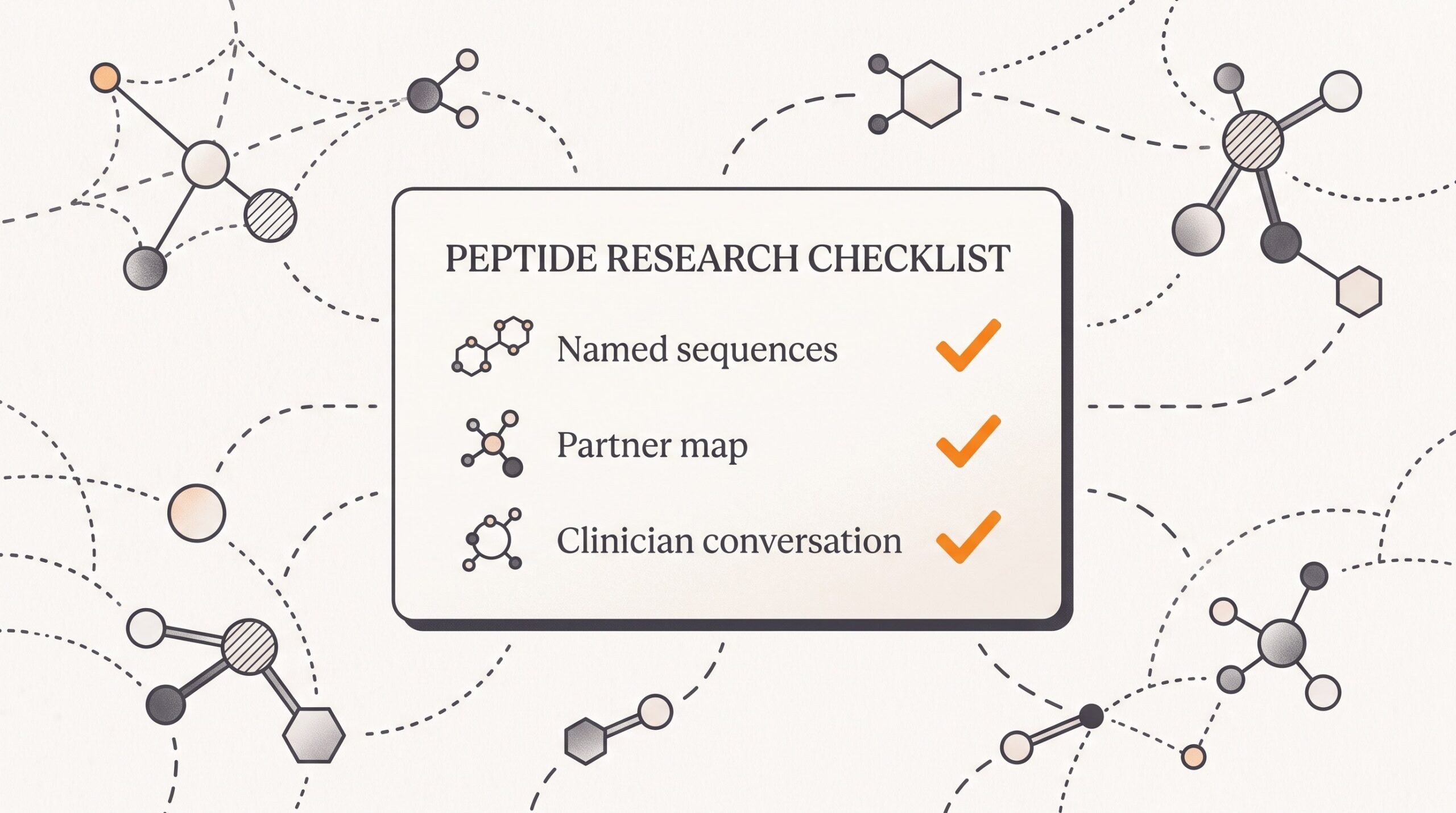
The Peptide Playbook
The research checklist Lee uses: named sequences, how to read a COA, and the questions to bring to your doctor. Free when you join Peptide Insider.