Wolverine Peptide Blend (BPC-157 + TB-500): Research Map (Not a Protocol)
Key takeaways
- Verdict: “Wolverine” is a research-catalog nickname for a BPC-157 + TB-500 blend — two different research lanes in one vial, not a Marvel drug and not a free-site injury protocol.
- Mechanism in one line: BPC-157 shows up in animal tendon-repair maps; the TB-4 family is the actin / cell-migration scaffolding story; a blend is convenience, not proof they act as one medicine.
- Your next step: learn the three doors (blend SKU vs solo maps vs foundations), then treat partner vials as research options with codes that fire — never as a DIY tendon injection kit.
Verdict up front: Wolverine is worth understanding if you keep seeing BPC-157 and TB-500 mashed into one “heal anything” bottle. It is not worth treating a research blend like comic-book regeneration, and it is not a free ranking page that hands you a soft-tissue protocol.
Real animal tendon and wound files on the parent compounds. Real catalog SKUs that use the Wolverine nickname. Zero honest path from “I bought a blend” to “I just ran a clinic rehab protocol from a crimp cap.”
Keep reading if you typed Wolverine peptide, Wolverine blend, BPC-157 TB-500 stack, “BPC and TB together,” or “is Wolverine just marketing” and want the map without guru tax. Skip if you want a dosing table, a black-market “cycle,” a claim that a research vial treats torn ACLs, rotator cuffs, gut ulcers, or “chronic inflammation,” or a reason to skip progressive loading and sleep. Those asks belong in Pro or a real clinician — not a free ranking page.
Day-one basics still live on Start Here and what are peptides. Adjacent maps when you are done here: BPC-157, TB-500, GHK-Cu, GLOW, KLOW, oral BPC-157, how to reconstitute peptides, how to sleep better, and protein intake.
Education only. Not medical advice. A research-catalog Wolverine / BPC-157 + TB-500 blend is not an FDA-approved drug for tendon tears, ligament injuries, gut healing, or recovery, and it is not permission to ignore a clinician when people oversell “just the Wolverine stack.”
What is the Wolverine peptide blend?
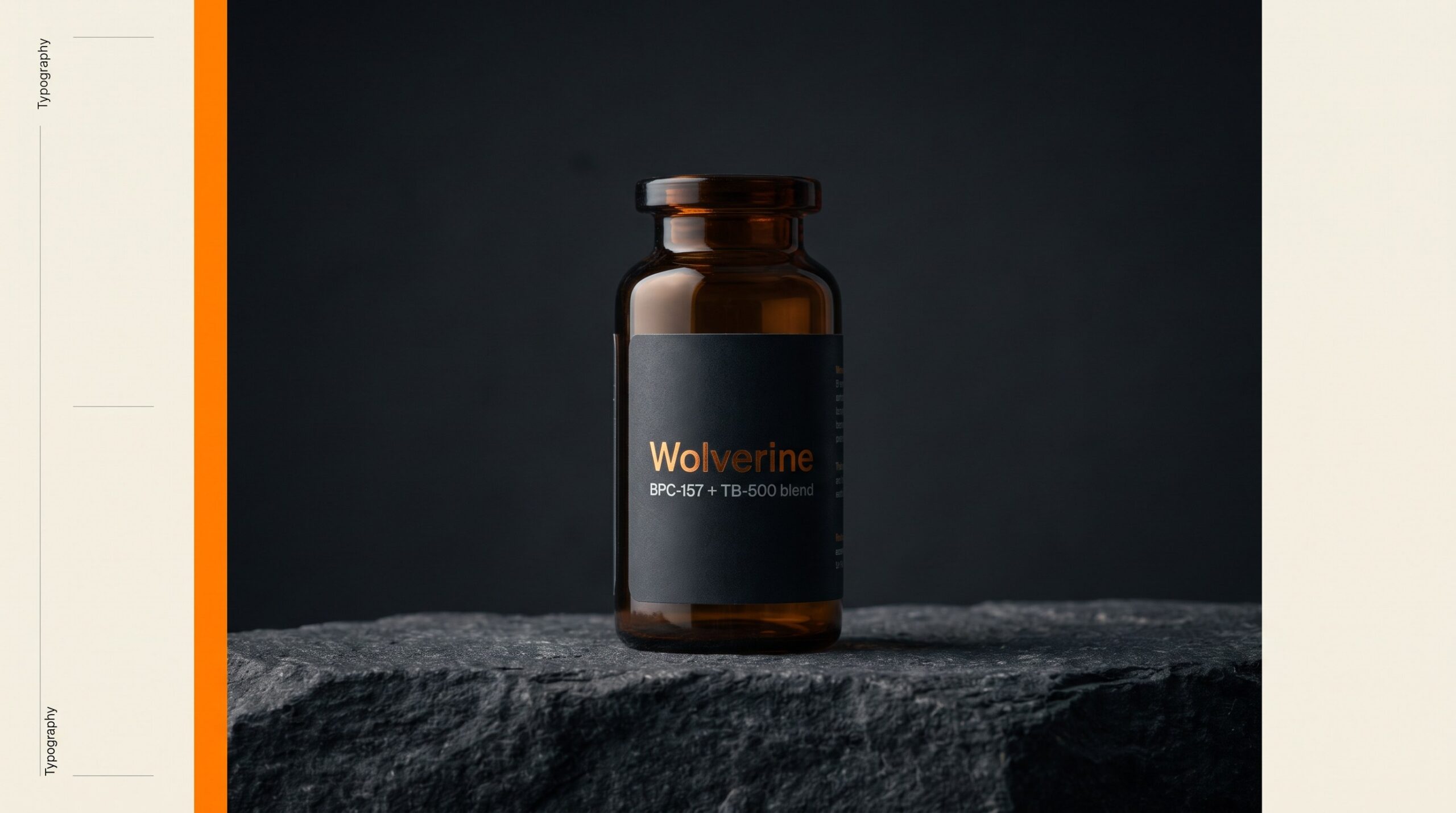
Start with the plain name. Wolverine is not a unique amino-acid sequence invented by a comics studio. On partner shelves it is usually a research nickname for a BPC-157 + TB-500 blend in one vial.
BPC-157 is a 15-amino-acid gastric pentadecapeptide studied hard in animal injury models. TB-500 is the research-catalog label most people use when they mean thymosin-beta-4 family fragments or related actin-binding research peptides. Shared Instagram aisle. Different molecules. Different evidence files.
That is why you will also see labels like “BPC / TB blend,” “healing blend,” or “Wolverine stack.” Shared research neighborhood. Different ratios, COAs, fragment choices, and jobs from solo BPC, solo TB-500, GLOW, and KLOW.
People mash the nickname with the Marvel fantasy hard. Your connective tissue does not care about the meme. It cares whether you can separate a catalog convenience from a mechanism story and from a clinic rehab plan.
Why this matters: forums treat “Wolverine” like one drug with one protocol. It is two research lanes sold together.
So what for you: if a sales page never separates BPC-157 from TB-500 from the blend SKU, it is selling vibes.
The two-crew jobsite (one analogy)
Here is the only picture I want stuck in your head.
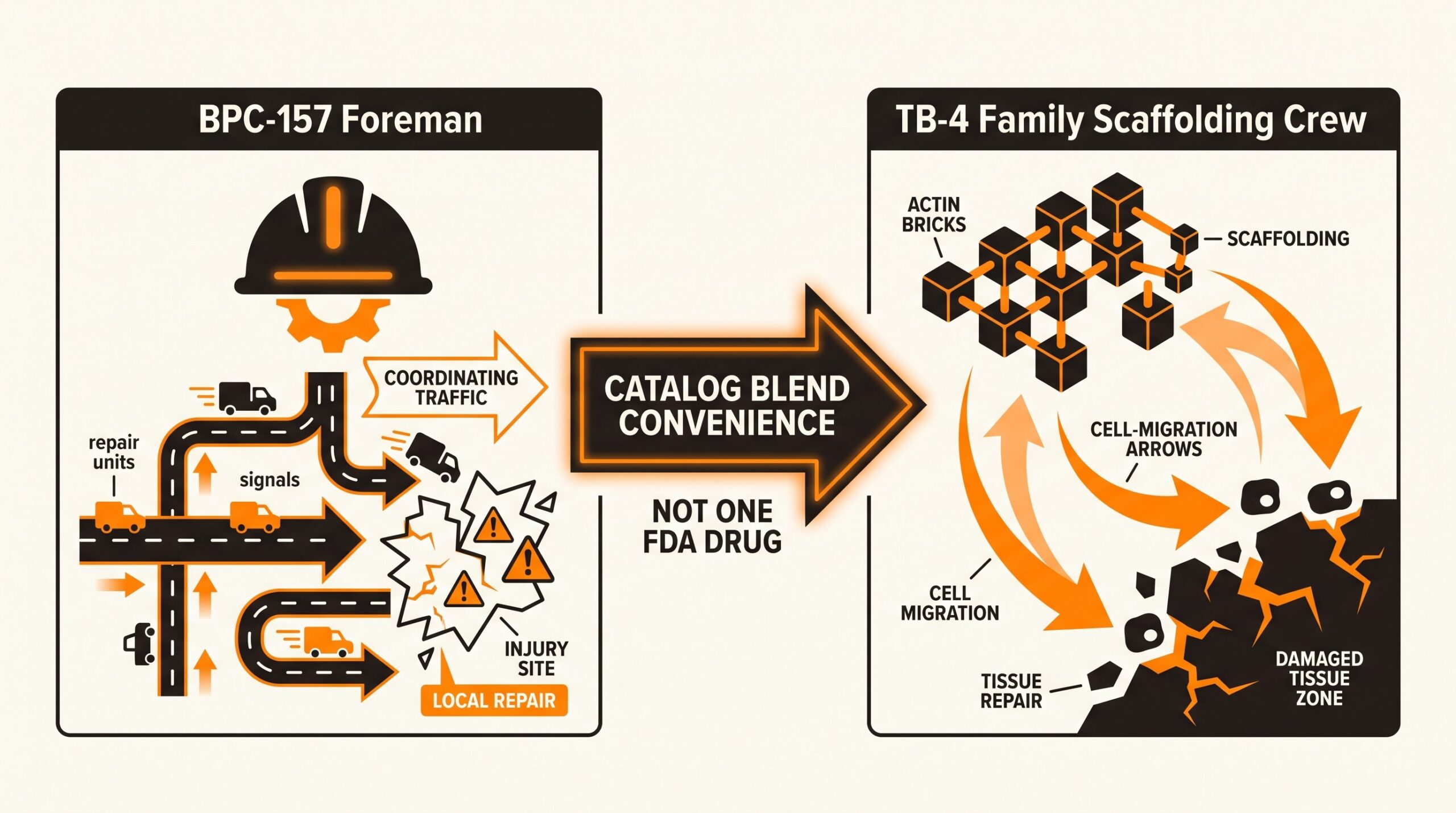
Think of soft-tissue repair like a jobsite after a storm. BPC-157 shows up in the animal literature as a local foreman story — tendon fibroblast migration, outgrowth, survival under stress, FAK-paxillin signaling in lab models. TB-4 family peptides show up as the scaffolding crew — actin sequestration and cell-migration chemistry that helps repair cells move into damaged territory.
Put both crews on the same truck and you get a convenient catalog blend. Convenience is not the same thing as “these two become one FDA medicine.” It is also not the same thing as “your rotator cuff just got comic-book regen.”
How sure should you be? Fairly sure BPC-157 has a deep animal tendon and wound file. Fairly sure thymosin beta-4 is a real actin-binding protein with wound-healing research. Much less sure that every vial labeled TB-500 is identical full-length Tβ4 from a Phase 2 ulcer trial. Zero sure that a research blend recreates supervised rehab.
Why this matters: if you cannot explain “foreman vs scaffolding vs catalog nickname” in one sentence, you are not ready to open a cart.
So what for you: ask for the solo-vs-blend story before you ask for a price.
The stop-you number (and what it is not)
The cleanest “this pathway is not a cartoon” number on the TB-4 side is not a gym bro screenshot. It is an animal wound study on the parent protein.
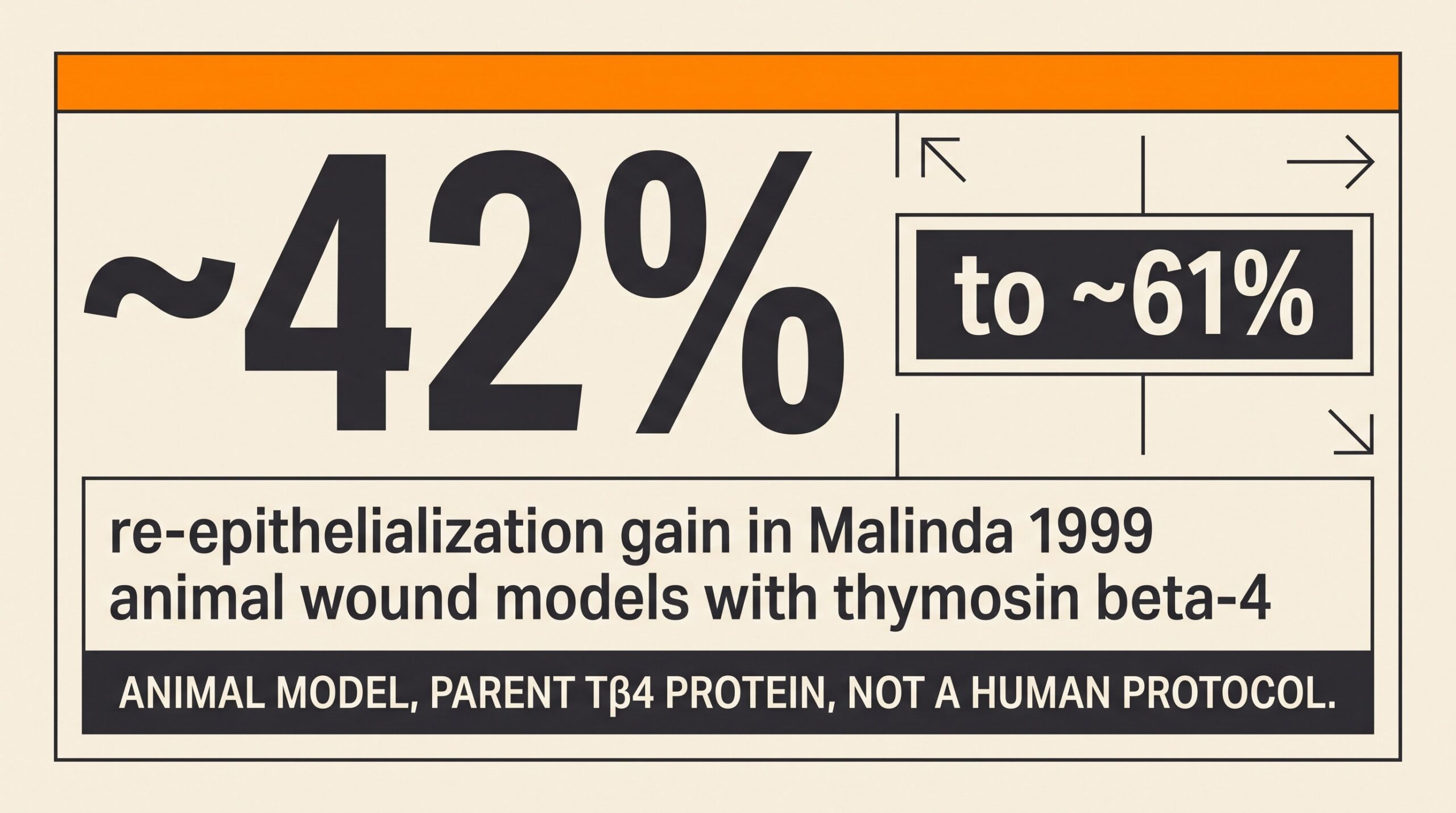
Malinda and colleagues in 1999 tested thymosin beta-4 in full-thickness dermal wound models. Treated wounds showed about 42% greater re-epithelialization at day 4 and up to about 61% at day 7 versus controls, with more wound contraction by day 7.
That is Motley Fool confidence framing in one line: real published wound biology on Tβ4, animal model, not a human Wolverine protocol printed on a research label.
Honesty check on the BPC side: Staresinic and colleagues in 2003 reported fully improved recovery of transected rat Achilles tendon across biomechanical, functional, and microscopic readouts after BPC-157. Strong animal signal. Still not a human soft-tissue drug approval, and still not your blend vial.
Both files can sit on the same Sources list without becoming a religion. Parent-compound animal data is not the same endpoint as “this catalog blend healed my ACL.”
Why this matters: the stop-you ratio is that roughly 42–61% re-epithelialization gain in Malinda 1999 Tβ4 animal wounds — and the confidence level for “my Wolverine vial is just DIY sports medicine” is still zero.
So what for you: be impressed by the parent research maps. Do not confuse animal Tβ4 or rat Achilles BPC work with a lyophilized blend SKU.
Research blend vs solo maps vs foundations
Three doors. Same meme online. Different jobs.
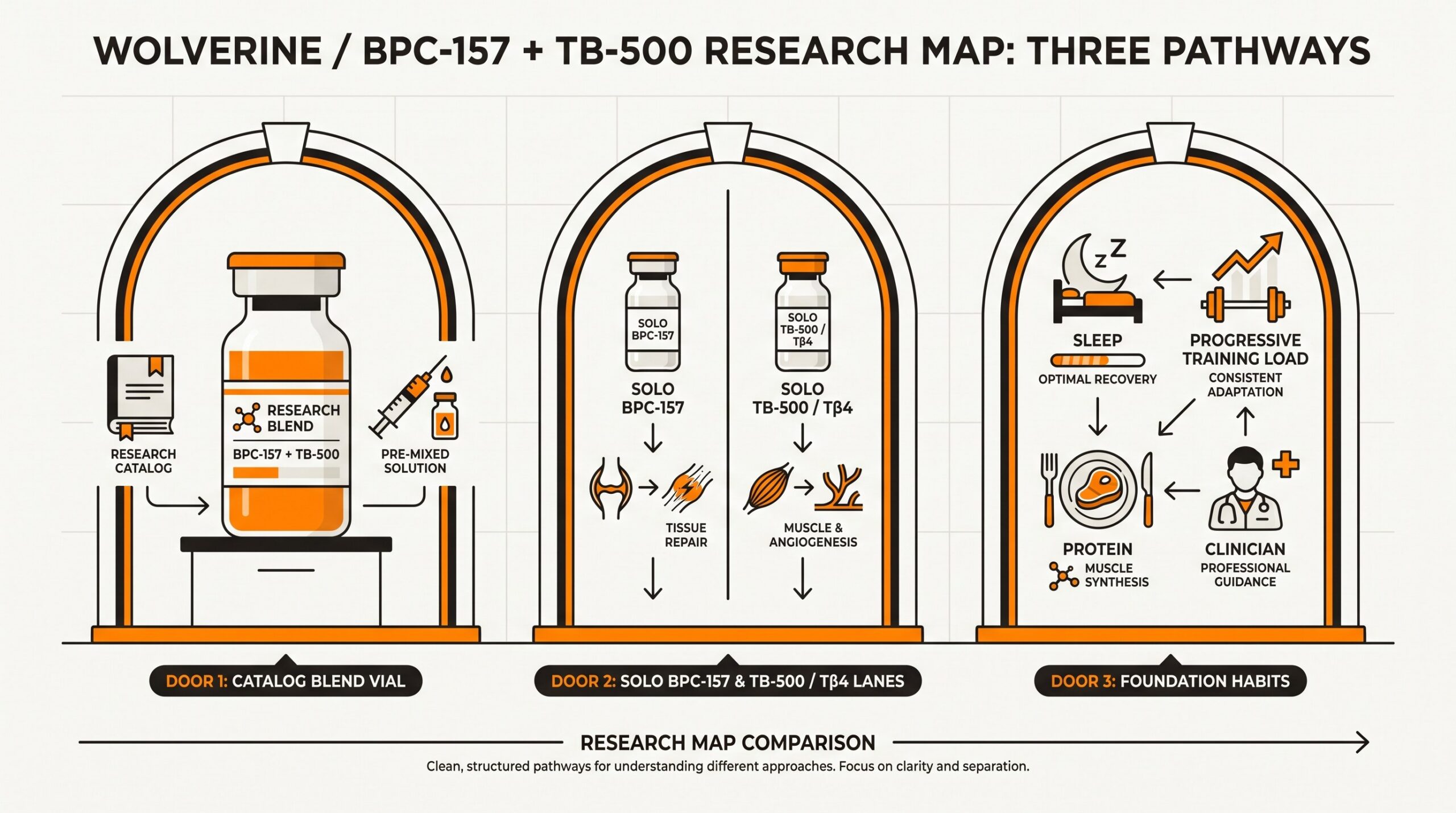
Door 1 — Research catalog blend. Partner shelves can list Wolverine / BPC-157 + TB-500 as a combined research SKU. That is a convenience and a certificate story. It is not FDA-approved sports medicine and not a compounded prescription by default.
Door 2 — Solo research maps. BPC-157 alone and TB-500 / Tβ4-family peptides alone each have their own mechanism files, purity questions, and fragment-identity questions. See BPC-157 and TB-500. A blend does not erase those differences.
Door 3 — Foundations. Sleep that recovers, protein that covers repair substrates, progressive loading instead of chaos, and a clinician if you have a real tear, infection risk, or surgical timeline. See protein intake, how to sleep better, Zone 2, and HRV.
Why this matters: most money gets wasted when people buy Door 1 while wanting Door 3 outcomes.
So what for you: pick the door that matches your actual question before you open a cart.
Blend vs solo BPC vs solo TB vs GLOW / KLOW
Quick lane honesty without turning this into a textbook.
- Wolverine blend = BPC-157 + TB-500 research SKU nickname — convenience, not a new molecule.
- Solo BPC-157 = gastric pentadecapeptide animal tendon / wound map — see the dedicated page.
- Solo TB-500 = catalog label for TB-4 family research peptides — fragment identity matters; ask for the COA story.
- GLOW = GHK-Cu + BPC + TB neighborhood often aimed at skin / copper curiosity — different blend job. See GLOW.
- KLOW = GLOW-style stack plus KPV — another catalog cousin, not “stronger Wolverine.” See KLOW.
Nasal sprays and capsule “healing blends” add another route story. Route changes kinetics. Route does not magically create human sports-medicine approvals.
Why this matters: Instagram flattens five different objects into “Wolverine = heal faster.”
So what for you: if a page never separates blend vs solo vs GLOW/KLOW vs foundations, treat the confidence level as low.
Who should keep reading vs who can skip
Keep reading if you are trying to separate meme marketing from parent-compound research maps, or if you saw a Wolverine vial and wanted literacy before curiosity spending.
You can skim or skip if you already have a sports-medicine clinician managing a diagnosed tear with imaging and a rehab plan. This page will not outrank your chart.
Why this matters: Motley Fool pacing means telling you when the article is signal for you vs noise for your situation.
So what for you: if your real question is “is this tendon torn,” close the tab and get imaging. If your real question is “what is this blend nickname and why is everyone yelling,” stay.
Myths that burn money
- “Wolverine = Marvel regen.” Nickname marketing is not biology. Your tissue does not care about the logo.
- “Blend = stronger than solo.” Convenience is not automatically synergy. Different jobs can still collide if you do not understand either lane.
- “42–61% = I need a bottle today.” That rise describes animal Tβ4 wound re-epithelialization in Malinda 1999. It is not a shopping list.
- “TB-500 on the label = Phase 2 ulcer Tβ4.” Catalog fragments and clinical Tβ4 programs are related neighborhoods, not identical SKUs.
- “If Peptira’s old Wolverine URL 404s, the pathway is fake.” Partner catalogs rotate. Paramount and BioLongevity currently carry public blend SKUs on this pass. Missing shelf ≠ missing biology.
- “Stack Wolverine with GLOW, KLOW, and oral BPC because all say healing.” Shared curiosity neighborhood. Different mechanisms. Stacking Discord screenshots is not a plan.
Why this matters: the expensive mistake is buying a story you cannot falsify.
So what for you: falsify the door first. Then decide whether a research SKU even belongs in the conversation.
Partner research options (codes that fire)
If you are mapping research SKUs after you understand the doors, these are the public InStock Wolverine / BPC+TB blend partners on this publish pass, plus adjacent healing research maps. Codes live in the links. Click them so the discount fires.
Wolverine / BPC+TB heroes
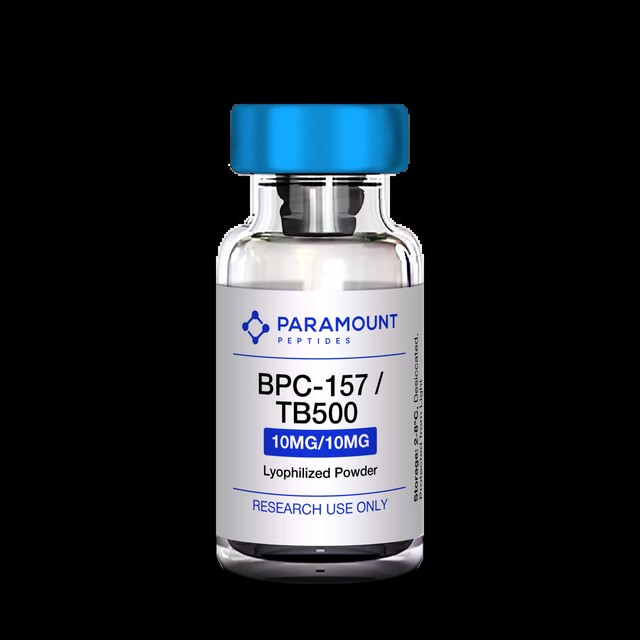
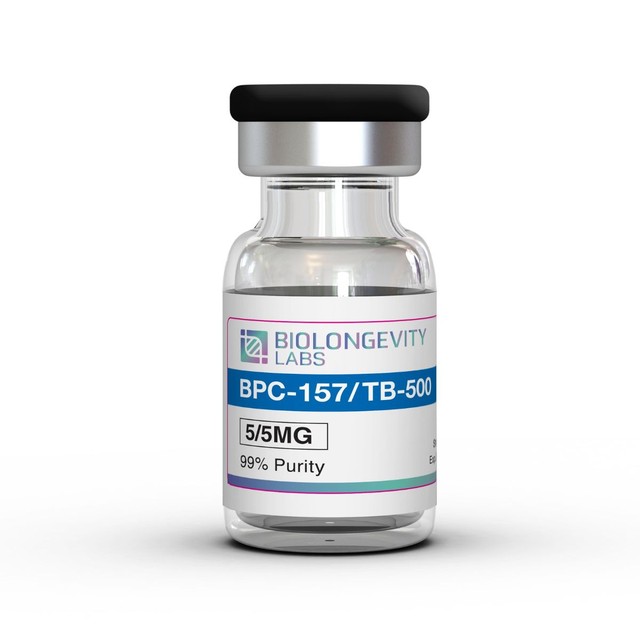
Paramount Wolverine · LEE10BLL BPC/TB Blend · LEE15Limitless Wolverine spray page · LEE20 (schema OOS on this pass)
Adjacent research maps (convert)
 BioLongevity
BPC-157 10 mg
LEE15 BioLongevity
TB-500 10 mg
LEE15 Peptira
BPC-157
LEE BioLongevity
GHK-Cu 50 mg
LEE15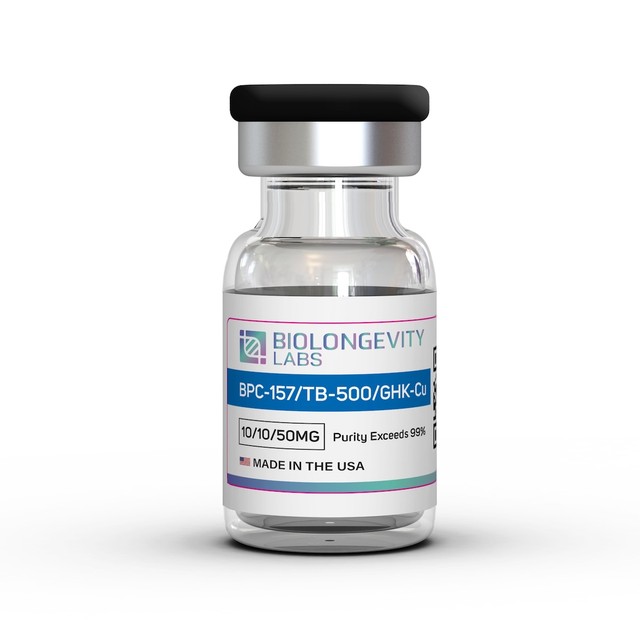 BioLongevity
GLOW Blend
LEE15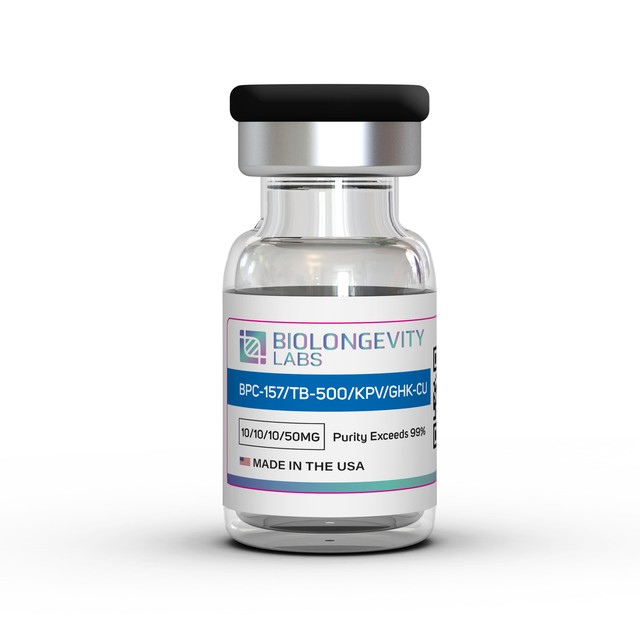 BioLongevity
KLOW Blend
LEE15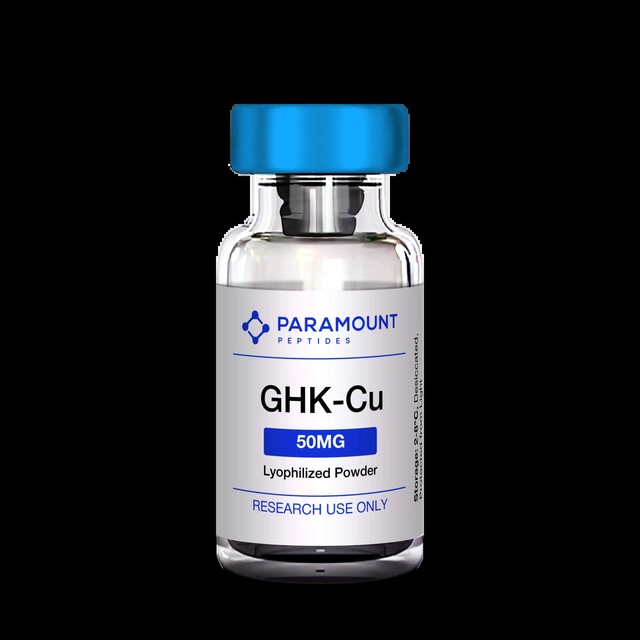 Paramount
GHK-Cu
LEE10Limitless home · LEE20Paramount home · LEE10Peptira home · LEES1 shop · LEE10BioLongevity home · LEE15
Why this matters: conversion without honesty is how domains die. These cards are research maps with tracking that works — not treatment claims.
So what for you: if you came for a protocol table, stop. If you came to understand the nickname and keep clean partner links, you are in the right place.
How to think about next steps
Foundation first. Then research curiosity. Never the reverse as a personality trait.
If sleep is wrecked, protein is a rumor, and you are still training through a suspected tear, Wolverine lore will not outrun physics. If you already run Door 3 and still want catalog literacy, use the partner cards as maps with tracking — not as treatment claims.
Talk with a clinician before you turn a soft-tissue curiosity into an injectable habit. Ask about imaging and rehab that actually match your injury instead of shopping for a meme.
Why this matters: the free site teaches the map. Pro and clinics carry protocol depth.
So what for you: leave this page smarter about BPC-157, TB-500 / Tβ4, blend nicknames, and partner SKUs. Leave dosing theater for paid doors that can supervise it.
Wolverine vs the healing aisle
BPC-157 is the gastric pentadecapeptide animal tendon map. TB-500 is the TB-4 family catalog lane. GHK-Cu is copper-peptide / skin curiosity. GLOW and KLOW are multi-peptide catalog cousins. Oral BPC is a different route story.
Shared Instagram aisle. Different jobs. If a stack post treats all five like one regen smoothie, your confidence level should drop.
Why this matters: adjacent maps are for literacy and convert cards, not for mashed claims.
So what for you: open the map that matches the question you actually typed.
Related research maps
- BPC-157 — solo gastric pentadecapeptide map
- TB-500 — solo TB-4 family research map
- Oral BPC-157 — route cousin, not the same object
- GHK-Cu / GLOW / KLOW — skin / multi-peptide neighbors
- How to reconstitute peptides — lab literacy, not a protocol dump
- Sleep / protein / Zone 2 — Door 3 foundations
Evidence limits (read this twice)
Partner catalogs are not selling comic-book regeneration. A Wolverine blend on a research shelf is not Malinda 1999 and not a DIY sports-medicine drug.
If you have a suspected complete tear, infection signs, unexplained swelling, surgical hardware, pregnancy questions, or drug-interaction concerns, this is a clinician conversation. Not a research-cart conversation.
Why this matters: confidence framing protects your wallet and your risk file.
So what for you: use this page to get smarter. Use a clinician to get safer. Use Pro if you want protocol depth without random Discord screenshots.
Sources & Further Reading
- Staresinic M, et al. Gastric pentadecapeptide BPC 157 accelerates healing of transected rat Achilles tendon and in vitro stimulates tendocytes growth. J Orthop Res. 2003. PubMed 14554208
- Chang CH, et al. The promoting effect of pentadecapeptide BPC 157 on tendon healing involves tendon outgrowth, cell survival, and cell migration. J Appl Physiol. 2011. PubMed 21030672
- Krivic A, et al. Achilles detachment in rat and stable gastric pentadecapeptide BPC 157: promoted tendon-to-bone healing and opposed corticosteroid aggravation. J Orthop Res. 2006. PubMed 16583442
- Japjec M, et al. Stable gastric pentadecapeptide BPC 157 as a therapy for the disable myotendinous junction. Biomedicines. 2021. PubMed 34829776
- Malinda KM, et al. Thymosin beta4 accelerates wound healing. J Invest Dermatol. 1999. PubMed 10469335
- Goldstein AL, Hannappel E, Kleinman HK. Thymosin beta4: actin-sequestering protein moonlights to repair injured tissues. Trends Mol Med. 2005. PubMed 16099219
- Philp D, et al. The regenerative peptide thymosin β4 accelerates the rate of dermal healing in preclinical animal models and human patients. Ann N Y Acad Sci. 2012. PubMed 23050815
- Emerging use of BPC-157 in orthopaedic sports medicine: a systematic review. 2025. PubMed 40756949
The bottom line
Wolverine is one of the loudest healing nicknames in the research aisle. Two crews. Real parent-compound animal files. Partner blend SKUs exist.
It is still not Marvel regeneration in a crimp cap and not a DIY sports-medicine drug. Read the three-door warning. Talk to a clinician about real tears and rehab. Build sleep and loading habits that do not require a meme.
Want the deeper protocol library after that? Pro is the paid door. Want the free research PDF? Grab the Playbook below.
Free guide
Get The Peptide PlaybookEnter your email and we’ll send the research PDF. Education only — not medical advice.
I built Peptides & Pump so you can get this without a guru tax. Free Knowledge Base first if you are not ready to pay. Pro if you want the protocol library.
 Keep going on Peptides & Pump
Free is the peptide community. Pro is the paid door. Codes are the links. Click them so the discount fires.
Free
Knowledge Base
The peptide community · 2,500+
- 2,500+ member peptide community
- Sourcing questions before you buy anything random
- The basics, from people actually using peptides
Pro
Peptides & Pump Pro
$10/mo · 7-day trial
- Science-backed protocol library
- 1-on-1 support from Lee and Matt
- Step-by-step video, plus a monthly $500 drawing
LEE20 Limitless LEE15 BioLongevity LEE10 Paramount LEE Peptira LEE10 S1
Supplier footnote: Research suppliers I mention when people ask about Wolverine / BPC-157 + TB-500 blends: Paramount Wolverine Blend (code LEE10), BioLongevity BPC-157 / TB-500 Blend (code LEE15). Limitless Wolverine nasal spray page exists with code LEE20 but showed schema OOS on this pass. Adjacent research maps: BioLongevity BPC-157, BioLongevity TB-500, Peptira BPC-157 (code LEE), GHK-Cu, GLOW, KLOW, Paramount GHK-Cu. Partner home/shop chips: Limitless (code LEE20), Paramount (code LEE10), Peptira (code LEE), S1 shop (code LEE10), plus BioLongevity home (code LEE15). Match the product to the job. Do not collect bottles.
Disclaimer. This article is for educational and research purposes only. It is not medical advice. It is not intended to diagnose, treat, cure, or prevent any disease. Wolverine blend, BPC-157, TB-500, thymosin beta-4, GHK-Cu, GLOW, KLOW, oral BPC-157, and other related research compounds are not presented here as FDA-approved treatments you should self-administer for tendon tears, ligament injuries, muscle strains, gut ulcers, “inflammation,” or any other indication. Research compounds discussed here are research sequences; a research-catalog vial is not a compounded prescription and is not a DIY injection protocol. Evidence discussed here includes animal tendon and wound studies and reviews of parent compounds; none of that is a substitute for a clinician. Individual results vary. Always consult a qualified healthcare provider before starting any peptide, drug, supplement, or protocol, especially if you have a medical condition, recent surgery, or take prescription medication. Peptides & Pump does not sell peptides.
Affiliate disclosure. Some links on this page are affiliate links. If you buy through them, I may earn a commission at no extra cost to you. Codes LEE15, LEE20, LEE, and LEE10 are the ones I actually use where a coupon fires. That commission is how I keep publishing free education. I only link suppliers I am willing to put my name on.