 PEPTIDES & PUMP
Menu
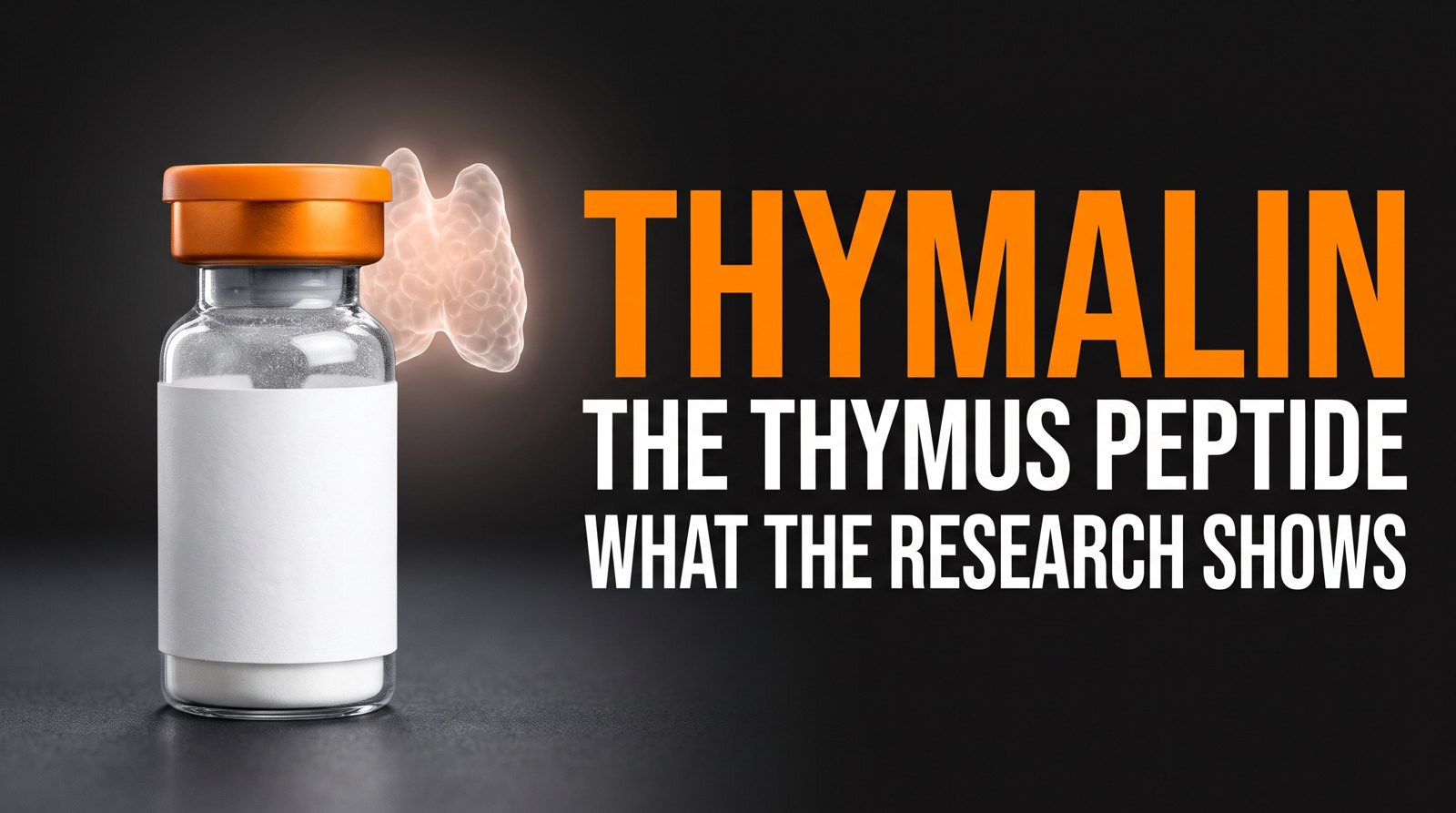
Thymalin: The Russian Thymus Peptide and What the Research Really Shows
Thymalin is a calf-thymus peptide extract developed in St. Petersburg and used as a medicine in Russia. One cohort reported half the death rate in older adults, but the evidence is old, small and from one school. Here is what it is, how it differs from thymulin and thymosin alpha-1, and every claim cited.

Peptide Insider Free email + the Peptide Playbook PDF.Get it free
Education only. Not medical advice. Unsubscribe anytime.
Research education, not medical advice. Talk with a licensed clinician before you act on anything here.
Your thymus is the training camp for your immune system. By middle age, most of it has turned to fat. Thymalin is Russia’s 40-year bet on that problem.
It is a mix of small peptides pulled from calf thymus glands. It has been sold as a medicine in Russia for decades. One famous study says older people who got it died at half the rate. Here is what that study really shows, what it does not, and how thymalin differs from thymulin, thymosin alpha-1 and Thymogen.
Key takeaways
- Thymalin is an extract, not one peptide. Russian scientists made it from calf thymus with a mild acid. It was put into practice as an “immunocorrector” (Morozov 1997).
- It is not thymulin. Thymulin is one small thymus hormone that needs zinc to work (Reggiani 2009). Thymalin is a whole blend. Different names, different products.
- The headline study is big for its kind and weak by modern rules. 266 older adults, followed 6 to 8 years. Death rates were 2.0 to 2.1 times lower with thymalin than in controls (Khavinson 2003). The abstract does not describe a placebo, blinding, or random assignment.
- Its active bits have been named. Two tiny dipeptides, KE and EW, are listed as active parts of the drug (Linkova 2023). EW became its own product, Thymogen (Anisimov 2000).
- COVID brought it back into journals. Russian hospital reports added thymalin to standard care and saw faster drops in some inflammation and clotting markers (Khavinson 2021; Kuznik 2022).
- Almost all of it comes from one research school. No Western randomized trial. Not FDA-approved. Nothing registered on ClinicalTrials.gov when we checked.
What people actually ask us
Paraphrased from the kinds of questions that land in our community. Anecdotes, not data.
- “Is thymalin the same thing as thymulin? The names are one letter apart.”
- “Did a study really show it cut death rates in half?”
- “Thymalin or thymosin alpha-1 for immune support?”
- “Is the vial online the same as the Russian drug?”
Straight answers below. We do not give protocols or doses for unapproved compounds. Every study is linked so you can check me.
Verdict up front: thymalin is one of the oldest and most-used peptide products in the whole bioregulator story. The idea behind it is sound. Your thymus really does shrink with age, and fewer fresh T cells really is a problem. The Russian data is long, wide and interesting. But it is mostly small, mostly old, mostly from one institute, and almost none of it meets the bar a Western drug would need. Treat the “half the death rate” line as a lead worth testing, not a fact you can bank.
Why this matters: thymus peptides are having a moment. Thymosin alpha-1, thymulin, Thymogen and thymalin all show up in the same Reddit threads and vendor menus. They sound alike. They are not alike. If you mix them up, you mix up the evidence too.
Keep reading for the plain-English version first. The gray boxes carry the technical detail for the science nerds and the doctors who land here. Related deep dives: Thymulin, Thymosin alpha-1, Peptide bioregulators, and Epitalon.
A note on who is writing this: I am a coach and researcher sharing what the published science says, plus what I hear from people running peptides in their own research. I am not a doctor, and this is not medical advice. Every claim below links to a PubMed record you can read yourself.
Looking for a vial while you read?
Straight talk: BioLongevity Labs does not carry thymalin itself. It does stock Thymagen, the synthetic EW dipeptide first found inside thymalin, plus thymosin alpha-1. Paramount stocks a 20mg thymalin vial. Sale pricing moves daily this week, so check the live price on the product page. Research use only.
Thymagen at BioLongevity Labs code LEE15 Thymalin at Paramount All four vials
What thymalin actually is
Start in Leningrad. Beginning in the 1970s, a team led by Vladimir Khavinson and Vladimir Morozov studied peptides pulled from animal organs (Avolio 2022). For the thymus, they took calf glands and pulled out the small peptides with a mild acid. The product became Thymalin (Morozov 1997).
So thymalin is not one molecule. It is a family of short protein pieces from one organ. Think of it like a broth, not a single spice.
Later the team went looking for the active pieces inside that broth. They found a two-amino-acid peptide, glutamic acid plus tryptophan, called EW for short. They made it in the lab and sold it as Thymogen (Morozov 1997; Anisimov 2000). A 2023 paper from the same school lists two dipeptides, KE and EW, as active substances of the thymalin drug (Linkova 2023). KE (lysine plus glutamic acid) is a thymic dipeptide the same lab also tested on its own in mice (Anisimov 2001).
Thymalin became a registered medicine in Russia. A 2013 Russian paper even calls it “pharmacopoeia thymalin” when it compares it with a newer drug (Kuznetsova 2013). A 2013 review from Khavinson’s group lists it first among the bioregulators they used in clinics for decades (Khavinson 2013).
The bigger idea behind it is Khavinson’s “peptide theory of aging.” In plain English: as we age, organs make fewer of their own small signal peptides, and giving those peptides back may help the organ work better (Khavinson 2002). That is a theory. It is not settled science.
For the science nerds: thymalin at a glance
| Feature | Detail |
|---|---|
| Type | Polypeptide complex extracted from calf (bovine) thymus by mild acid extraction |
| Origin | Morozov and Khavinson, Leningrad / St. Petersburg Institute of Bioregulation and Gerontology |
| Named active parts | Dipeptides KE (Lys-Glu) and EW (Glu-Trp) |
| Spin-off drugs | Thymogen (synthetic EW); Vilon, a second synthetic dipeptide from the same lab |
| Status | Used as a medicine in Russia; not FDA-approved; no ClinicalTrials.gov entries found |
| Main reported effects | T-cell differentiation, cytokine shifts (IL-2, interferon), lymphocyte markers |
Sources: Morozov & Khavinson 1997; Linkova 2023; Khavinson 2013 clinical review (Russian); Kuznetsova 2013. Morozov 1997 also notes the natural extract and the synthetic dipeptides behave differently, for example on antioxidant response in thymocytes.
What this means for you: when someone says “thymalin,” ask which thing they mean. The Russian drug is a calf-thymus extract. Thymogen is one synthetic dipeptide. They are cousins, not twins, and the studies on one do not automatically cover the other.
Thymalin vs thymulin vs thymosin alpha-1 vs Thymogen
This is the part that trips up almost everyone. The thymus gave science a whole shelf of products, and many of them start with “thym.” A 1997 Russian review listed thymosins, thymulin, thymopoietin, thymostimulin, thymopentin, thymalin, T-activin and more (Arion 1997). Here are the four you will see most.
- Thymalin is the calf-thymus extract. Many peptides in one vial. Russian origin.
- Thymulin is one tiny hormone made by the lining cells of the thymus. It is nine amino acids long and only works when it is bound to zinc (Reggiani 2009). Most of its research is on the brain-hormone link, pain and inflammation (Reggiani 2014). Full story on our thymulin page.
- Thymosin alpha-1 is one 28-amino-acid peptide from the thymus. A synthetic copy, thymalfasin, is an approved drug in a number of countries (Mao 2023). It has by far the most Western data of the four. A 2025 review notes it may improve vaccine response in older adults (Simonova 2025). See our thymosin alpha-1 guide.
- Thymogen (often spelled Thymagen) is the synthetic EW dipeptide first pulled out of thymalin (Anisimov 2000). Fun fact: its mirror-image twin, Thymodepressin, does the opposite and damps immunity down (Deigin 2024).
Side by side
| Name | What it is | Size | Evidence base |
|---|---|---|---|
| Thymalin | Calf-thymus polypeptide extract | Mixture | Mostly Russian clinical and animal reports, 1980s to 2020s |
| Thymulin | Zinc-bound thymic hormone | 9 amino acids | Animal and lab work, gene-therapy models |
| Thymosin alpha-1 | Single thymic peptide (thymalfasin) | 28 amino acids | Approved abroad; many trials and meta-analyses |
| Thymogen | Synthetic Glu-Trp dipeptide | 2 amino acids | Russian lab, animal and clinical reports |
Sources: Arion 1997; Reggiani 2009, 2014; Mao 2023; Anisimov 2000; Morozov & Khavinson 1997.
What this means for you: if a post says “thymulin” but cites the Russian elderly study, it got the names crossed. That study tested thymalin, the extract. When the evidence matters, match the exact name to the exact paper.
Why anyone cares: your thymus shrinks
The thymus sits behind your breastbone. It is where young T cells go to school. They learn to attack germs and leave your own body alone.
Here is the catch. The thymus shrinks as you age, and much of the working tissue is swapped for fat. That shrinking is called involution. A London review calls it one of the most dramatic changes in the aging immune system. Fewer new T cells come out, and the T-cell army gets less diverse. That is linked with more infections, autoimmune disease and cancer as we age (Palmer 2013).
A 2020 review ties the same shrinking to “inflammaging,” the low, steady inflammation many older people carry (Thomas 2020). Even thymalin-like material in the skin seems to fade with age. One Russian team found the layer of cells stained for thymalin was thin and patchy by age 70 (Khlystova 2002).
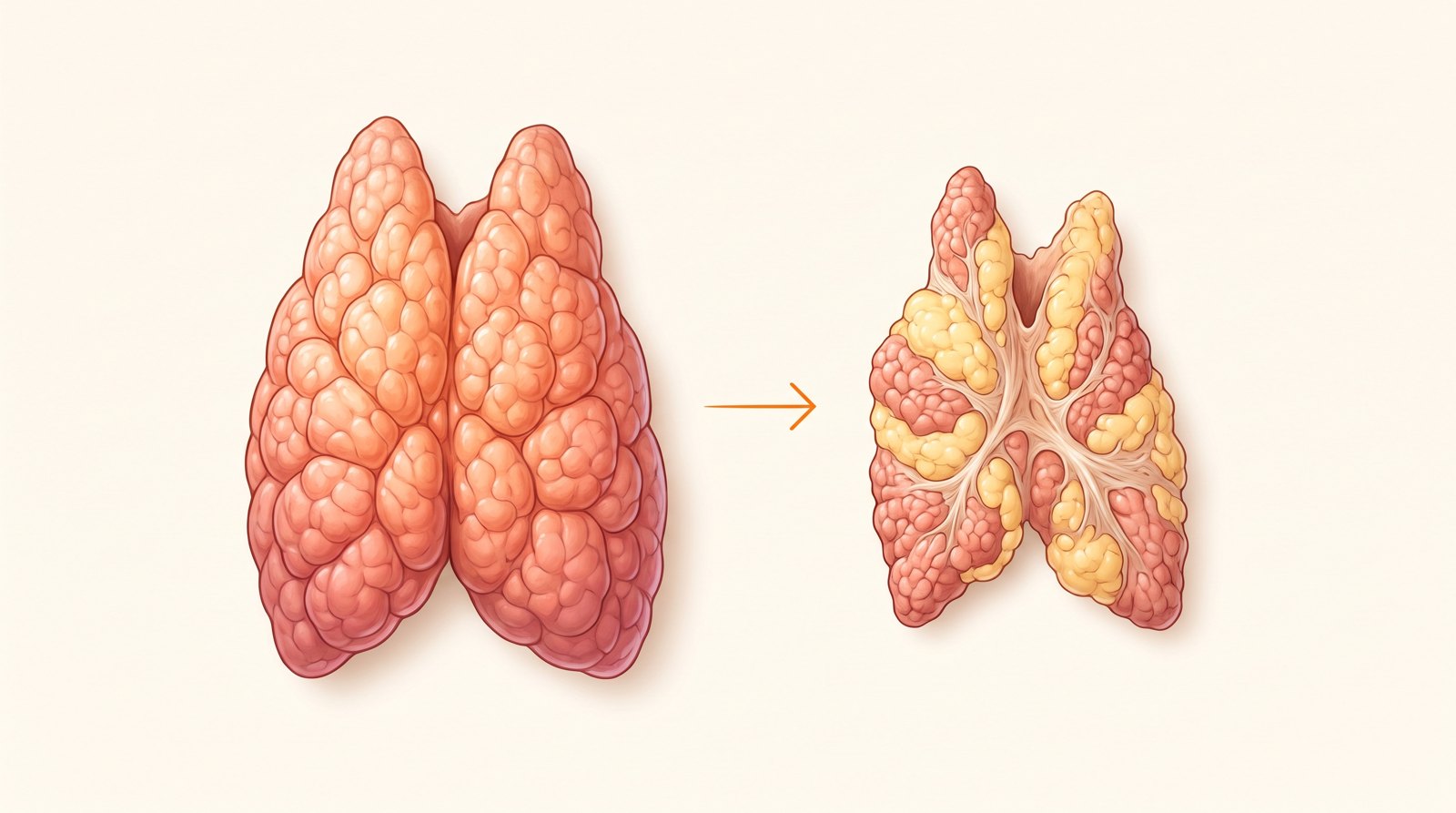
So the logic of thymalin is simple. If the thymus makes fewer signals as you age, maybe giving thymus signals back helps. That logic is not crazy. Western scientists have chased the same target in other ways. One study used a drug protocol meant to regrow the thymus and reported better immune markers and a younger epigenetic age after a year (Fahy 2019). Different approach. Same goal.
What this means for you: the problem thymalin targets is real and well documented. Whether a calf-thymus extract fixes it in people is a separate question, and that is where the evidence gets thin.
The famous study: 266 older adults, 6 to 8 years
This is the paper every thymalin post leans on. Researchers in St. Petersburg and Kyiv followed 266 older adults for 6 to 8 years. Some got thymalin, some got epithalamin (the pineal extract that led to Epitalon), some got both, and some got neither. The peptides were given in the first 2 to 3 years only (Khavinson 2003).
The results, as the authors report them:
- Death rates were 2.0 to 2.1 times lower in the thymalin group than in controls.
- 1.6 to 1.8 times lower with epithalamin.
- 2.5 times lower with both.
- A separate group got both every year for 6 years. Their death rate was 4.1 times lower.
- Acute respiratory illness was 2.0 to 2.4 times less common.
The same data also ran in a Russian journal a year earlier, so this is one cohort reported twice, not two studies (Khavinson 2002).
Those are huge numbers. A drug that halved deaths in older people would be the biggest story in medicine. That is exactly why you should slow down before you repeat it.
For the clinicians reading: why this is hypothesis-grade
- Design not described. The English abstract does not report random assignment, blinding, or a placebo arm.
- Small arms. 266 people split four or more ways leaves small groups for a mortality endpoint.
- Single school. The work comes from the same institute that developed the products.
- No replication. We found no independent Western trial that repeated it.
- Extracts, not vials. The study used the pharmaceutical extracts, not research-catalog powders.
Read the abstract yourself: Khavinson & Morozov, Neuro Endocrinol Lett 2003 (PMID 14523363). The authors conclude the peptides have “high geroprotective efficacy.” We think the data supports “worth a real trial.”
What this means for you: when you see “thymalin cut deaths in half,” the honest version is “one open, older Russian cohort reported that.” Interesting. Not proof.
What the animal studies show
Before the human cohort, there were mice. Lots of them. Vladimir Anisimov’s group ran lifespan and tumor studies with thymus and pineal peptide factors from the early 1980s on.
- 1982: low-weight peptide factors from cattle thymus boosted immune responses in mice. Long-term use cut spontaneous tumors and lengthened life in one strain of female mice (Anisimov 1982).
- 1989: monthly courses of thymus factor lengthened life only when started in young mice, not middle-aged ones. The pineal factor did better, raising lifespan 20% in young mice and 17% in middle-aged ones (Anisimov 1989).
- 2000: the EW dipeptide from thymalin (Thymogen) was tested in 76 female rats. Average lifespan did not change. But the longest-lived rats lived longer, and total tumors were 1.5 times lower (Anisimov 2000).
- 2001: the KE thymic dipeptide made mice more active and lowered lung tumors, but the abstract reports no survival gain. The pineal peptide Epitalon did, by 5.3% (Anisimov 2001).
Notice the pattern. In head-to-head mouse work, the pineal side (epithalamin, Epitalon) usually beat the thymus side on lifespan. A 2010 Russian review came to the same view: pineal peptides helped the aging thymus more than thymic peptides helped the aging pineal gland (Linkova 2010).
One more animal result gets passed around online. In rats with a transplanted sarcoma, low-dose thymalin stopped tumor growth in more than half the animals (Zhukova 2018). That is one rat model. It is not a cancer treatment, and nobody should read it as one.
What this means for you: the animal data is real but mixed. Thymus peptides moved immune and tumor numbers. They were less reliable than the pineal peptides at extending life. If longevity is your interest, read our Epitalon breakdown too.
The immune work: what thymalin does to T cells
Thymalin was sold as an immune drug first and an aging drug second. So most of its papers are about T cells.
The core claim from the 1990s: both thymalin and its synthetic dipeptides pushed T cells to mature, helped them recognize targets, and changed how blood lymphocytes released signal molecules like IL-2 and interferon (Morozov 1997). A 1990 paper reported that thymalin brought lymphocyte enzyme patterns back toward normal and raised T-cell maturity markers in a group of patients (Khavinson 1990).
For decades Russian and Ukrainian clinics added it to care for a long list of problems: lung infections, burns, surgery recovery, tuberculosis and more. One example: in 32 patients with severe burns, adding thymalin was linked to better clotting markers and an 11-day shorter hospital stay (Kuznik 2000). Small, uncontrolled reports like this are typical of the field.

Then came newer lab work with modern tools. In 2020, the Khavinson group put thymalin on human blood stem cells in a dish. Stem-cell markers CD44 and CD117 dropped 2 to 3 times. The mature T-cell marker CD28 rose 6.8 times (Khavinson 2020). Their read: thymalin nudges stem cells toward becoming mature T cells.
A 2022 study tested thymalin with four other Khavinson peptides on a human immune cell line. All five changed growth signals inside the cells (Avolio 2022). That paper is useful because it came partly from an Italian team, not only the home institute.
For the clinicians reading
The 2020 stem-cell result (PMID 33237528) is in vitro marker data, not a functional immune outcome in people. The clinical reports across the 1980s to 2000s are mostly open-label add-on studies in Russian-language journals, with immune markers as endpoints. A 2013 comparison also found thymalin raised both pro-inflammatory (TNF-α, IL-1) and anti-inflammatory (IL-10) cytokines in blood-cell cultures (Kuznetsova 2013), so “anti-inflammatory” is too simple a label.
What this means for you: thymalin clearly does something to immune cells in the lab. What that means for a healthy adult who wants to “boost immunity” has never been tested in a modern trial.
The COVID-era papers
In 2020 the Khavinson group pitched short peptides as add-ons for COVID-19. Their review argued peptides like KE and EW could protect lung cells and calm clotting problems, and stated that peptides have “virtually no side effects” (Khavinson 2020). That is the authors’ claim, not a tested safety result.
Then came hospital reports.
- 2021: patients got standard care, with or without thymalin. Standard care alone lowered IL-6, C-reactive protein and D-dimer. Adding thymalin made those markers fall faster, and the authors say this cut the risk of clots (Khavinson 2021).
- 2022: severe COVID patients, middle-aged and older, were split three ways: standard care, standard care plus tocilizumab, or standard care plus thymalin. Hospital deaths were 40.9%, 28.4% and 20.6%. Thymalin doubled lymphocyte counts and lowered fibrinogen, LDH and D-dimer (Kuznik 2022).
- 2023: a lab study tried to explain why, looking at how the KE and EW dipeptides in thymalin affect inflammation genes tied to COVID (Linkova 2023).
The 2022 death numbers jump off the page. But the abstract does not say how patients were assigned to groups, how many were in each, or whether anyone was blinded. In a sick hospital population, who gets which add-on can drive the result more than the drug does.
What this means for you: these are signals from Russian hospitals during a crisis. They are not a reason to use a research vial for any infection. If you are sick, that is a job for your doctor, full stop.
Safety, side effects and the evidence limits
Here is the honest truth: we could not find a modern, independent safety study of thymalin. The Russian papers rarely report side effects in their abstracts, and the authors describe the peptides as very gentle. That may be true. It has not been shown the way a Western drug label would show it.
A few things worth knowing before you go deeper:
- It is an animal-tissue extract. The Russian drug is made from calf thymus. Any animal-derived product raises questions about purity and allergic reactions that a single synthetic peptide does not.
- A research vial is not the Russian medicine. A vial sold online for research is made by a different maker to a different standard. Ask for the batch COA every time.
- Immune signals are not free. Thymalin raised both inflammatory and calming cytokines in lab tests (Kuznetsova 2013). People with autoimmune disease, organ transplants or immune-related treatment should treat any immune peptide as a doctor conversation, not a weekend experiment.
- Cancer is a gray zone. Animal data mostly points to fewer tumors (Anisimov 1989; Zhukova 2018). That is encouraging, but it is animal data. Anyone with a cancer history should not self-experiment with immune peptides.
- Not FDA-approved. Thymalin is not approved in the US for any use.
Evidence scorecard
| Question | What exists | Grade |
|---|---|---|
| Does it change immune markers? | Many Russian lab and clinical reports, one Italian-Russian cell study | Moderate, mostly one school |
| Does it extend life in animals? | Mouse and rat studies, mixed results | Low to moderate |
| Does it lower death rates in older people? | One open cohort of 266, reported twice | Low |
| Does it help in COVID? | Small Russian hospital reports, design unclear | Low |
| Is it safe long-term? | No modern independent safety data | Unknown |
Our grading, based on the PubMed records cited on this page. Newer independent trials would change it.
What this means for you: if you want the best-studied thymus peptide, thymosin alpha-1 has far more trials behind it. If you want the full Russian bioregulator story, start with our bioregulator hub. And for a broader safety primer, see peptide side effects.
FAQ
What is thymalin?
Thymalin is a mix of small peptides extracted from calf thymus glands. It was developed by Vladimir Morozov and Vladimir Khavinson in St. Petersburg and has been used as an immune medicine in Russia for decades. Its named active parts include the dipeptides KE and EW.
Is thymalin the same as thymulin?
No. Thymalin is a whole extract of many thymus peptides. Thymulin is one nine-amino-acid thymic hormone that needs zinc to work. They have different research histories, and studies on one do not apply to the other.
Is thymalin the same as thymosin alpha-1?
No. Thymosin alpha-1 is a single 28-amino-acid thymic peptide whose synthetic form, thymalfasin, is approved as a drug in a number of countries. It has far more international trial data than thymalin.
What is the difference between thymalin and Thymogen?
Thymogen, often spelled Thymagen, is a synthetic two-amino-acid peptide (Glu-Trp, or EW) that Russian researchers first isolated from thymalin. Thymalin is the parent extract; Thymogen is one lab-made piece of it.
Did thymalin really cut death rates in half?
One Russian cohort of 266 older adults reported 2.0 to 2.1 times lower death rates with thymalin over 6 to 8 years. The abstract does not describe randomization, blinding or a placebo, and no independent trial has repeated it. Treat it as a hypothesis, not proof.
Is thymalin FDA-approved?
No. Thymalin is not approved by the FDA for any use, and we found no thymalin studies registered on ClinicalTrials.gov as of November 2026. It has been used as a medicine in Russia.
What are the side effects of thymalin?
There is no modern independent safety study. Russian authors describe the peptides as having very few side effects, but that has not been tested to Western drug standards. As an animal-tissue extract that acts on the immune system, it raises questions about purity, allergy and autoimmune conditions.
Where can I find thymalin?
When we checked in November 2026, Paramount Peptides had a 20mg thymalin research vial in stock. BioLongevity Labs does not carry thymalin itself but stocks Thymagen and thymosin alpha-1. Research vials are not approved for human use and should come with a batch COA.
The bottom line
Thymalin is a real piece of peptide history. It came out of a serious research program, it targets a real problem, and its offspring, like Thymogen and the whole bioregulator family, are still on vendor menus today. The immune-marker data is broad. The elderly cohort is fascinating.
But the proof is thin by modern standards. One research school. Small, open studies. Russian-language journals. No Western randomized trial. Not FDA-approved. If you want the thymus peptide with the most data, look at thymosin alpha-1. If you want the history and the longevity angle, read thymalin alongside Epitalon. And if anyone tells you thymalin and thymulin are the same thing, send them to our thymulin page.
Ready to look at vials?
We carded four in-stock thymus research vials from two labs: thymalin itself, its Thymagen offspring, and thymosin alpha-1. Sale pricing moves daily this week, so check the live price on the product page. Research use only, not for human consumption.
See all four vials Every live sale on one page How we pick labs
Sellers we work with
Disclosure: these are affiliate links. We may earn a commission at no extra cost to you. Listing a product does not mean it is safe, effective, or approved for human use. Products sold for research are not for human consumption. Always check the COA for your own batch.
BioLongevity Labs does not carry thymalin itself. Paramount does. So below you will find Paramount’s thymalin vial plus the closest in-stock thymus peptides from both labs. Prices shift constantly during sale weeks, so we do not print them; open the product page and look.
Thymus research vials from partners we track (in stock when checked)
BioLongevity Labs
Thymagen (Thymogen) 20mg
The synthetic Glu-Trp dipeptide first isolated from thymalin. Not thymalin itself. Batch COA on the product page.
View Thymagen (research use) code LEE15
BioLongevity Labs
Thymosin Alpha 1 10mg
The 28-amino-acid thymus peptide with the deepest trial record. Read our thymosin alpha-1 guide first.
View Thymosin Alpha 1 (research use) code LEE15
Paramount Peptides
Thymalin 20mg
Listed as a calf-thymus polypeptide extract. Ask for the COA and batch number, since an extract is harder to verify than a single peptide.
Paramount Peptides
Thymagen (Thymogen) 20mg
US-made Glu-Trp dipeptide. Compare its COA against the BioLongevity vial.
Or browse the full catalogs
BioLongevity Labs
Carries Thymagen, thymosin alpha-1, Epithalon and the wider bioregulator catalog, with batch COAs on product pages.
BioLongevity home code LEE15
Paramount Peptides
Stocks thymalin, Thymagen and thymosin alpha-1. Check the COA and batch number before you order.
Limitless Life Nootropics
Their catalog needs a quick research-access sign-up before prices show. Use code LEE20 at checkout. Their thymosin alpha-1 and thymulin were out of stock when we checked, so we did not card them.
Get the Peptide Playbook
Free email map for building the foundation first, then thinking clearly about immune and longevity peptides like thymalin and thymosin alpha-1 — without the guru noise.
Related reads: Thymulin · Thymosin alpha-1 · Peptide bioregulators · Epitalon · Pinealon · Vesugen · Humanin · LL-37 · Peptide side effects · How to reconstitute peptides · Best peptide vendors · BioLongevity Labs coupon
Primary sources
We link the original study or document, not a summary.
- PubMedMorozov VG, Khavinson VK. Natural and synthetic thymic peptides as therapeutics for immune dysfunction. Int J Immunopharmacol. 1997;19(9-10):501-5. PMID: 9637345
- PubMedReggiani PC, Morel GR, Cónsole GM, et al. The thymus-neuroendocrine axis: physiology, molecular biology, and therapeutic potential of the thymic peptide thymulin. Ann N Y Acad Sci. 2009;1153:98-106. PMID: 19236333
- PubMedKhavinson VKh, Morozov VG. Peptides of pineal gland and thymus prolong human life. Neuro Endocrinol Lett. 2003;24(3-4):233-40. PMID: 14523363
- PubMedLinkova N, Khavinson V, Diatlova A, et al. The Influence of KE and EW Dipeptides in the Composition of the Thymalin Drug on Gene Expression and Protein Synthesis Involved in the Pathogenesis of COVID-19. Int J Mol Sci. 2023;24(17). PMID: 37686182
- PubMedAnisimov VN, Khavinson VK, Morozov VG. Immunomodulatory synthetic dipeptide L-Glu-L-Trp slows down aging and inhibits spontaneous carcinogenesis in rats. Biogerontology. 2000;1(1):55-9. PMID: 11707921
- PubMedKhavinson VK, Kuznik BI, Trofimova SV, et al. Results and Prospects of Using Activator of Hematopoietic Stem Cell Differentiation in Complex Therapy for Patients with COVID-19. Stem Cell Rev Rep. 2021;17(1):285-290. PMID: 33575961
- PubMedKuznik BI, Shapovalov KG, Smolyakov YN, et al. [Morphological compound and indicators of the blood clotting system in severe COVID-19 patients of middle aged and elderly during treatment of Tocilizumab and Thymalin.]. Adv Gerontol. 2022;35(3):368-374. PMID: 36169363
- PubMedAvolio F, Martinotti S, Khavinson VK, et al. Peptides Regulating Proliferative Activity and Inflammatory Pathways in the Monocyte/Macrophage THP-1 Cell Line. Int J Mol Sci. 2022;23(7). PMID: 35408963
- PubMedAnisimov VN, Khavinson VK, Mikhalski AI, et al. Effect of synthetic thymic and pineal peptides on biomarkers of ageing, survival and spontaneous tumour incidence in female CBA mice. Mech Ageing Dev. 2001;122(1):41-68. PMID: 11163623
- PubMedKuznetsova TA, Besednova NN, Zaporozhets TS, et al. [Comparative study of immunomodulatory activity of peptides, tinrostim and thymalin]. Antibiot Khimioter. 2013;58(11-12):8-12. PMID: 24734422
- PubMedKhavinson VKh, Kuznik BI, Ryzhak GA. [Peptide bioregulators: the new class of geroprotectors. Message 2. Clinical studies results]. Adv Gerontol. 2013;26(1):20-37. PMID: 24003726
- PubMedKhavinson VKh. Peptides and Ageing. Neuro Endocrinol Lett. 2002;23 Suppl 3:11-144. PMID: 12374906
- PubMedArion VY, Zimina IV, Lopuchin YM. Contemporary Views on the Nature and Clinical Application of Thymus Preparations. Russ J Immunol. 1997;2(3-4):157-166. PMID: 12687070
- PubMedReggiani PC, Schwerdt JI, Console GM, et al. Physiology and therapeutic potential of the thymic peptide thymulin. Curr Pharm Des. 2014;20(29):4690-6. PMID: 24588820
- PubMedMao L. Thymosin alpha 1 – Reimagine its broader applications in the immuno-oncology era. Int Immunopharmacol. 2023;117:109952. PMID: 36871535
- PubMedSimonova MA, Ivanov I, Shoshina NS, et al. Aging and Thymosin Alpha-1. Int J Mol Sci. 2025;26(23). PMID: 41373628
- PubMedDeigin V, Linkova N, Vinogradova J, et al. The First Reciprocal Activities of Chiral Peptide Pharmaceuticals: Thymogen and Thymodepressin, as Examples. Int J Mol Sci. 2024;25(9). PMID: 38732260
- PubMedPalmer DB. The effect of age on thymic function. Front Immunol. 2013;4:316. PMID: 24109481
- PubMedThomas R, Wang W, Su DM. Contributions of Age-Related Thymic Involution to Immunosenescence and Inflammaging. Immun Ageing. 2020;17:2. PMID: 31988649
- PubMedKhlystova ZS, Kalinina II, Shmeleva SP, et al. Age-related changes of thymalin content in human epidermis. Bull Exp Biol Med. 2002;133(6):620-2. PMID: 12447484
- PubMedFahy GM, Brooke RT, Watson JP, et al. Reversal of epigenetic aging and immunosenescent trends in humans. Aging Cell. 2019;18(6):e13028. PMID: 31496122
- PubMedKhavinson VKh, Morozov VG. [Geroprotective effect of thymalin and epithalamin]. Adv Gerontol. 2002;10:74-84. PMID: 12577695
- PubMedAnisimov VN, Khavinson VK, Morozov VG. Carcinogenesis and aging. IV. Effect of low-molecular-weight factors of thymus, pineal gland and anterior hypothalamus on immunity, tumor incidence and life span of C3H/Sn mice. Mech Ageing Dev. 1982;19(3):245-58. PMID: 6752596
- PubMedAnisimov VN, Loktionov AS, Khavinson VK, et al. Effect of low-molecular-weight factors of thymus and pineal gland on life span and spontaneous tumour development in female mice of different age. Mech Ageing Dev. 1989;49(3):245-57. PMID: 2682058
- PubMedLin'kova NS, Poliakova VO, Trofimov AV, et al. [Influence of peptides from pineal gland on thymus function at aging]. Adv Gerontol. 2010;23(4):543-6. PMID: 21510076
- PubMedZhukova GV, Schikhlyarova AI, Barteneva TA, et al. Effect of Thymalin on the Tumor and Thymus under Conditions of Activation Therapy In Vivo. Bull Exp Biol Med. 2018;165(1):80-83. PMID: 29797130
- PubMedKhavinson VKh, Kozhemiakin AL, Morozov VG, et al. [The effect of thymalin on biochemical and immunological indices of lymphocyte differentiation and functional activity]. Vopr Med Khim. 1990;36(3):41-3. PMID: 2382426
- PubMedKuznik BI, Vitkovskiĭ IuA, Budazhabon GB, et al. [Effects of thymalin on blood coagulation and contents of proinflammatory and anti-inflammatory cytokines in patients with burns]. Vestn Khir Im I I Grek. 2000;159(5):39-43. PMID: 11188814
- PubMedKhavinson VK, Linkova NS, Kvetnoy IM, et al. Thymalin: Activation of Differentiation of Human Hematopoietic Stem Cells. Bull Exp Biol Med. 2020;170(1):118-122. PMID: 33237528
- PubMedKhavinson V, Linkova N, Dyatlova A, et al. Peptides: Prospects for Use in the Treatment of COVID-19. Molecules. 2020;25(19). PMID: 32987757
Last verified November 26, 2026. Education only, not medical advice. Products referenced are sold for laboratory research and are not for human consumption.
Partner labs
Which vendor for what
Four labs, in the order I check them. Tap through my link, then use the code at checkout.
USA lab · cGMP
Best for: US-made vials, plus oral capsules.
Code LEE15
Enter code LEE15 at checkout.
USA lab · cGMP
Best for: A second US lab to compare price and stock.
No code needed: use my link
Click my link first. If Paramount shows its own sale code, use that one. Codes do not stack.
USA lab · cGMP · Lee’s main shop
Best for: The lab I use most.
Code LEE20
Their catalog needs a quick research-access sign-up before prices show. Use code LEE20 at checkout.
Import · US tested
Best for: Competitive price and Auto-Ship.
Code LEE
Auto-Ship keeps code LEE on every shipment; skip or cancel anytime.
Affiliate links: I may earn a commission at no extra cost to you. Research products only. Education, not medical advice. Each lab sets its own catalog and checkout rules.
Keep reading
 Intermittent Fasting: What the Trials Really Show (and How Not to Lose Muscle)
 Semax vs Selank: What 25 Years of Russian Research Actually Shows
 Magnesium for Sleep: What the Studies Actually Show (and Which Form to Buy)
Free PDF
The Peptide Playbook
The research checklist Lee uses: named sequences, how to read a COA, and the questions to bring to your doctor. Free when you join Peptide Insider.