Creatine Benefits: Monohydrate, Women & Lab Basics
Key takeaways
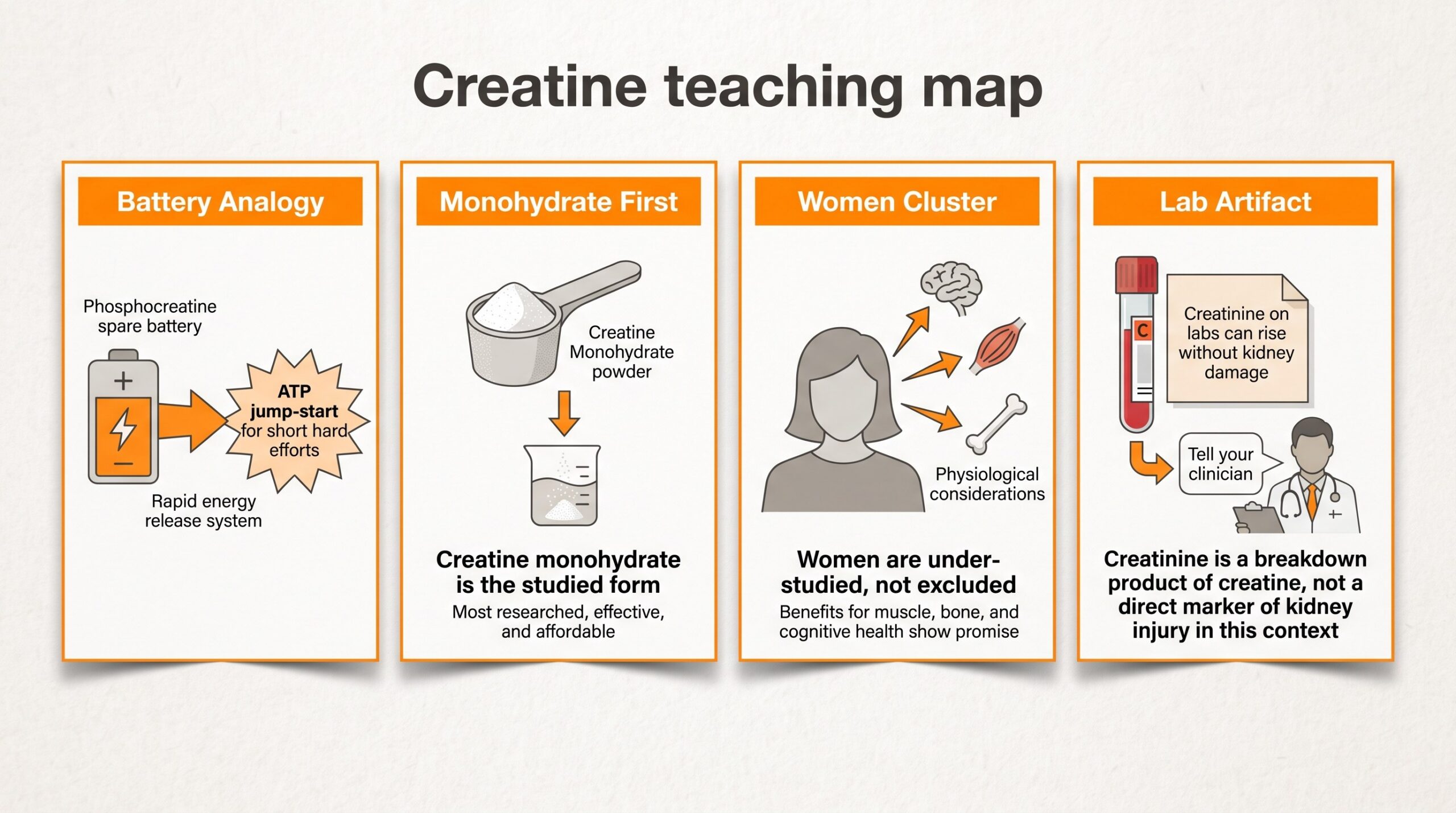
- Creatine benefits for training mostly come from filling muscle creatine stores so you can do more hard work over time. It is a grocery-aisle supplement story, not a miracle molecule.
- Creatine monohydrate is the form with the deepest human evidence. Fancy names rarely beat plain monohydrate on proof.
- A spare-battery system called phosphocreatine helps remake ATP for short, intense efforts. Think jump-start power, not all-day fuel.
- Women are under-studied, not excluded. Reviews and safety metas in females exist. “Creatine is only for men” is marketing folklore.
- Creatinine on bloodwork can rise when you supplement creatine. That lab number is a byproduct of creatine turnover. It is not automatic proof of kidney damage in healthy people — tell your clinician you take creatine.
- Foundation first. Soft peptide hubs on this site are adjacent research literacy — never “use peptide X instead of creatine.”
People type creatine benefits like they need a secret stack.
Most of the time they need the boring truth. Creatine monohydrate. Consistent training. Enough protein and sleep. And a clear picture of what the powder actually does inside a working muscle.
This page is the creatine education map. Beginner clear. Citation backed. Start with Start Here if you are new to the site. Stay here if you want the grocery-aisle foundation before any research-catalog curiosity.
This is education. It is not medical advice. It will not diagnose kidney disease, treat a medical condition, or replace a clinician. If you have known kidney disease, take medicines that affect the kidneys, or see a big unexplained lab change, talk with a qualified clinician before you DIY a supplement plan.
What creatine actually is
Beginner version: creatine is a small compound your body already makes and also gets from food, mostly meat and fish. Your muscles store a lot of it.
Inside muscle, creatine pairs with a phosphate group to make phosphocreatine. That store helps remake ATP fast when you hit a short, hard effort. ATP is the cell’s spendable energy coin. When you squat a heavy set or sprint a repeat, you burn through that coin quickly. Phosphocreatine is the spare battery that helps recharge it between efforts.
That is the wow analogy. Not a magic pump. A jump-start battery for hard, repeated work.
Stop-you stat: classic work showed a single 5 g oral dose of creatine monohydrate roughly matches the creatine content of about 1.1 kg of fresh, uncooked steak. That is why the powder exists. Food alone is a slow, expensive way to load the muscle pool.
Creatine benefits that actually show up in the literature
How sure are we? For high-intensity training outcomes in healthy people, the confidence is high. Decades of trials. Position stands. Regulatory-style claim reviews in Europe. This is not a one-lab rumor.
The International Society of Sports Nutrition’s 2017 position stand is blunt. Creatine monohydrate is the most effective researched nutritional ergogenic aid for increasing high-intensity exercise capacity and lean mass during training. That is a big claim. It is also grounded in a large body of human work, not a podcast anecdote.
What that usually means for you:
- More quality work in short, hard efforts
- Better training adaptations over weeks when you actually train
- Often a small bump in scale weight from water held with the muscle creatine store
- Not a substitute for progressive overload, protein, or sleep
EFSA-style reviews in the EU have also accepted that creatine can increase physical performance in short-term, high-intensity, repeated exercise bouts when the muscle creatine phosphate pool is raised. Endurance capacity claims are a different, weaker story. So what? If your sport is all long, easy miles, creatine is not the main lever. If your training includes heavy sets, sprints, or repeated hard efforts, the signal is clearer.
How loading works without the guru tax
Harris and colleagues showed oral creatine monohydrate raises total muscle creatine. Later, Hultman’s group mapped two practical paths to roughly the same destination.
Fast path: about 20 g per day split across the day for roughly 5–7 days, then a lower daily amount to keep stores up.
Slow path: about 3 g per day for around a month can raise muscle creatine about as much, just slower.
ISSN commonly discusses maintenance around 3–5 g/day of creatine monohydrate for many adults. Loading is optional speed, not moral superiority. GI upset is more common when people dump huge doses at once. Split doses. Mix with fluid. Food helps some people.
This page teaches the map. Full protocol tables and stacks stay in Pro / Classroom. Education here. Mastery there.
Creatine for women: under-studied is not “does not work”
Why this matters: a huge slice of search volume is women asking if creatine will make them “look bulky” or wreck labs. Separate signal from gym-bro folklore.
Smith-Ryan and colleagues reviewed creatine across the female lifespan. Females often start with lower endogenous creatine stores than males. Premenopausal data support strength and performance benefits. Postmenopausal data are thinner but point toward muscle and function upsides when training is real, especially at higher researched intakes in some trials. Mood and brain-energy angles are interesting and still earlier than the training file.
A 2020 systematic review and meta-analysis in females taking oral creatine monohydrate found no association with mortality or serious adverse events. Total adverse events, GI events, and weight-gain differences were not statistically elevated versus control in the pooled analyses they could run. Renal and hepatic markers did not show a concerning group signal in that review.
So what? “Creatine is only for men” fails the evidence test. “Every woman responds the same” also fails. Individual response, training quality, and diet still matter. Water-weight on the scale is not the same as permanent fat gain.
The creatinine lab artifact (read this before you panic)
Creatinine is a breakdown product related to creatine turnover. Supplement creatine and you expand the creatine pool. Serum creatinine can tick up. That number is what many basic metabolic panels use to estimate kidney filtration.
Here is the trap: a higher creatinine from creatine intake can look like reduced kidney function on a creatinine-based estimate even when filtration is fine. Classic athlete work by Poortmans and Francaux did not find impaired kidney function with long-term oral creatine use in healthy athletes when clearer clearance measures were used. Newer kidney-focused metas still flag the creatinine bump as metabolic turnover more than proven filtration damage in healthy people. GFR signals often stay steadier than the creatinine headline.
Practical rule: tell your clinician you take creatine before you interpret a lonely creatinine spike. People with known kidney disease need individualized medical advice — this page will not invent a kidney protocol or claim creatine cures kidney disease.
Monohydrate vs the rest of the tub shelf
Creatine monohydrate is the reference standard. Hydrochloride, buffered, ester, and “advanced” blends often cost more. They rarely prove they beat monohydrate on muscle uptake in head-to-head human work that matters.
How sure are we? High confidence that monohydrate works. Lower confidence that premium forms are worth the markup for most buyers. Micronized monohydrate is mostly about mixability. It is not a new molecule.
Buy plain creatine monohydrate from a brand that tests what is on the label. Skip the proprietary matrix tax unless you have a specific reason and receipts.
Timing, cycling, and the water-weight scare
Daily consistency beats chasing a magic peri-workout window. The muscle store fills over days to weeks. Missing one scoop is not a crisis. Missing weeks lets stores drift back down. Hultman’s group showed that without a small daily follow-on dose, muscle creatine fell toward baseline over about a month.
You do not need to cycle creatine like a steroid. Stores rise with intake. Stores fall when you stop. That is saturation math, not a hormone crash.
Scale weight often ticks up early. Much of that is water held with the extra creatine in muscle. It is not automatic fat gain. Judge progress by training logs and how clothes fit. Not a three-day scale freak-out.
Common myths that waste your time
- “It is a steroid.” No. Creatine is a food-derived compound your body already makes. It is sold as a supplement. It is not anabolic steroid chemistry.
- “Only men should use it.” False. Female data exist. The gap is under-study, not a male-only lock.
- “It wrecks kidneys in healthy people.” The creatinine lab artifact is real. Proven filtration damage in healthy trainees is not the same story. Kidney disease is a clinician conversation, not a blog cure.
- “You must load or it does nothing.” Loading is speed. A lower daily amount still fills the pool. It just takes longer.
- “A peptide vial replaces this.” No. Foundation first. Research maps later.
Who should pause and talk to a clinician
Creatine is low-to-moderate YMYL. Still not zero risk for every person.
- Known kidney disease or a clinician already watching your filtration
- Medicines that stress kidney handling
- Unexplained swelling, dark urine, or other red-flag symptoms — get care, do not crowdsource
- Pregnancy and postpartum: interesting research exists; this free page will not write a pregnancy protocol
Healthy adult trainees with normal labs are the population most of the sports-nutrition file discusses. That is not a license to ignore your own medical context.
Where peptide research maps sit (foundation first)
Peptides & Pump is a peptide education site. Creatine is still foundation.
If you later read muscle or recovery research maps, start with peptides for muscle growth, then Ipamorelin, CJC-1295 + Ipamorelin, and Sermorelin as research literacy — not as a swap for creatine monohydrate.
Hard line: this page will never say “use peptide X instead of creatine.” Grocery-aisle fundamentals first. Research catalogs second. Clinicians for disease.
New to the format? What are peptides and how to reconstitute peptides are the on-ramps. Sleep foundation lives on how to sleep better.
A simple creatine decision framework
Education. Not a prescription.
- Train first. If you are not doing progressive hard work, creatine has less to amplify.
- Choose monohydrate. 3–5 g/day is the common maintenance talk in sports nutrition. Loading is optional speed.
- Expect water weight. Judge progress by training logs and how clothes fit, not a three-day scale freak-out.
- Tell your clinician about labs. Creatinine can rise. That is the artifact conversation.
- Still curious about research peptides later? Read the muscle hubs as maps. Do not treat a vial catalog as your first lever.
Selected references (research framing)
Verified starting points. Not a protocol. Not a drug label. Not permission to self-treat kidney disease.
- ISSN creatine position stand, 2017 — PubMed 28615996
- Harris muscle creatine elevation, 1992 — PubMed 1327657
- Hultman loading vs daily saturation, 1996 — PubMed 8828669
- Creatine in women’s health lifespan review, 2021 — PubMed 33800439
- Female creatine adverse-outcomes meta-analysis, 2020 — PubMed 32549301
- Long-term oral creatine and kidney function in healthy athletes, 1999 — PubMed 10449011
- EFSA opinion on creatine and short-term high-intensity performance, 2011 — EFSA Journal 2011;9(7):2303
- EFSA creatine + resistance training muscle-strength claim evaluation, 2016 — EFSA Journal 2016;14(2):4400
Read primary sources. Do not treat a PubMed ID as a shopping list.
The bottom line
Creatine benefits, for most healthy people who train hard, are boring on purpose. Raise the muscle creatine pool. Get more quality work done. Let training adaptations compound. Use monohydrate. Watch the creatinine lab story with your clinician. Ignore the “men only” myth.
The sports-nutrition file is older and deeper than the influencer stack. Peptide research maps stay linked as adjacent curiosity after foundation — never as a creatine replacement pitch.
If you need the beginner peptide on-ramp after this, use Start Here, what are peptides, then the muscle map on peptides for muscle growth when curiosity is actually about those files.
Related research maps (after creatine foundation)
Creatine monohydrate first. Training, protein, and sleep beat any catalog. When the grocery-aisle foundation is already moving — and curiosity is actually about growth-hormone secretagogue research files — some readers want adjacent research literacy on Ipamorelin, the CJC / ipa stack, and Tesamorelin. That is curiosity after the powder, not a swap for it.
Hard line: these are research-catalog maps next to the creatine page. They are not “peptides instead of creatine,” not a training drug stack, and not a reason to skip a clinician when labs or kidney history are not simple.
Start with the maps: Ipamorelin, CJC-1295 + Ipamorelin, Tesamorelin, plus the class hub on peptides for muscle growth. Partner vials below are for readers who already earned the base and still want the research SKU conversation.
Research-catalog SKUs currently live on partner audits (not a treatment recommendation).
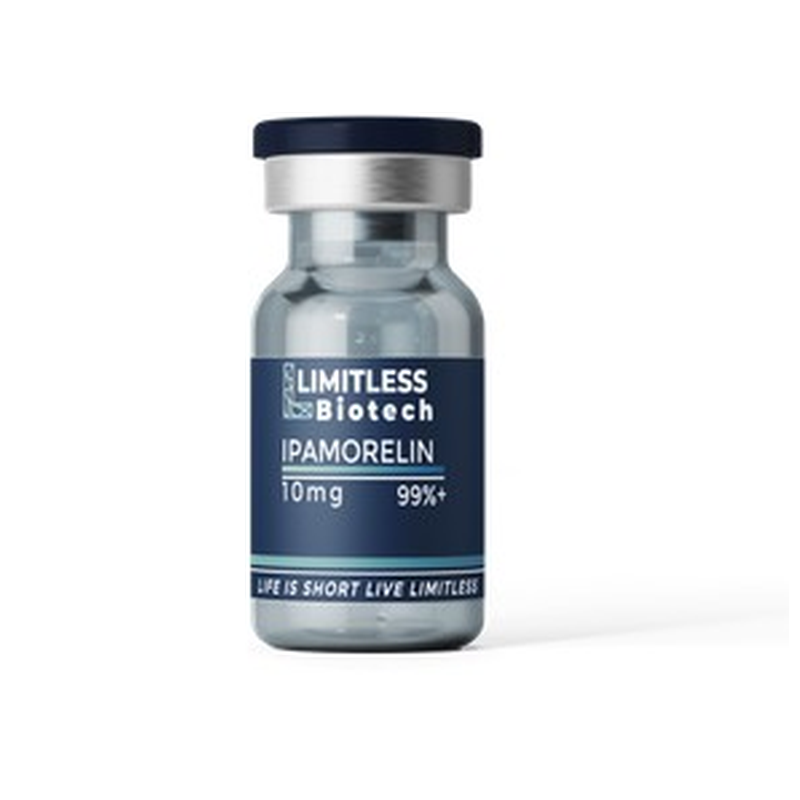 Limitless
Ipamorelin
LEE20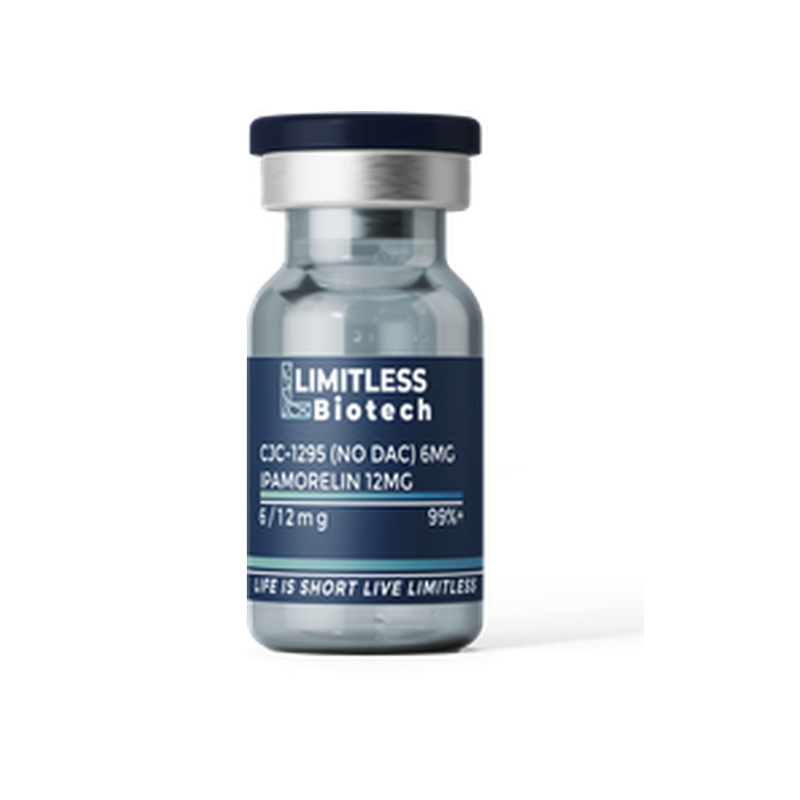 Limitless
Ipa + CJC no DAC
LEE20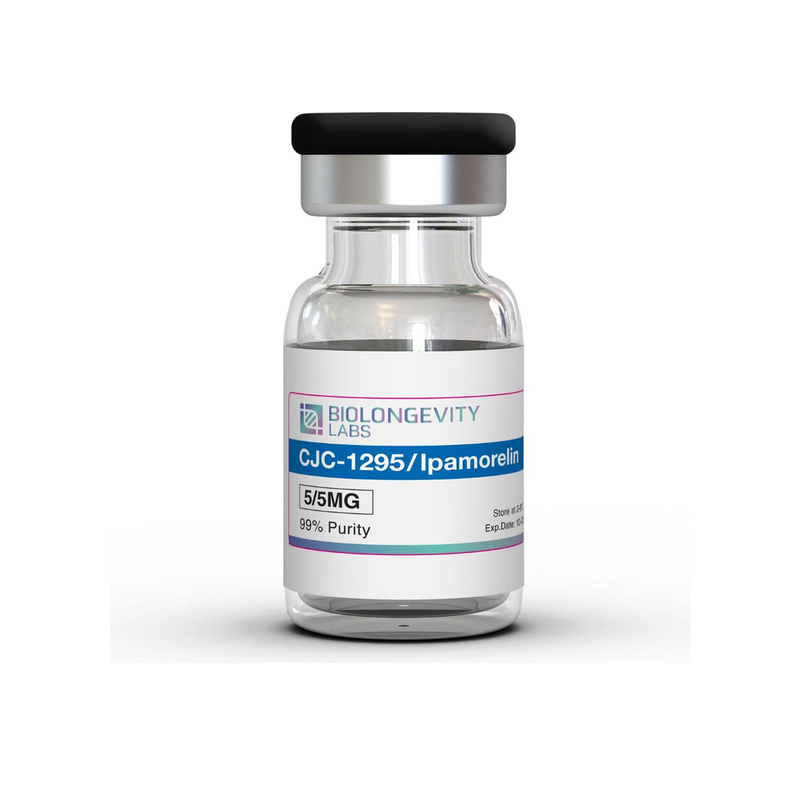 BioLongevity
CJC / Ipa blend 10 mg
LEE15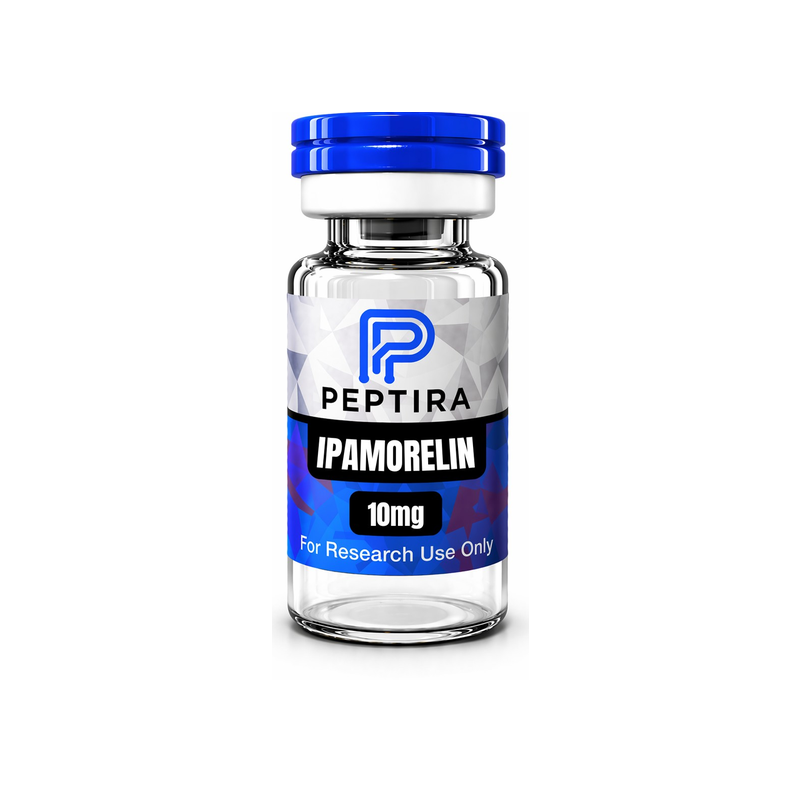 Peptira
Ipamorelin
LEE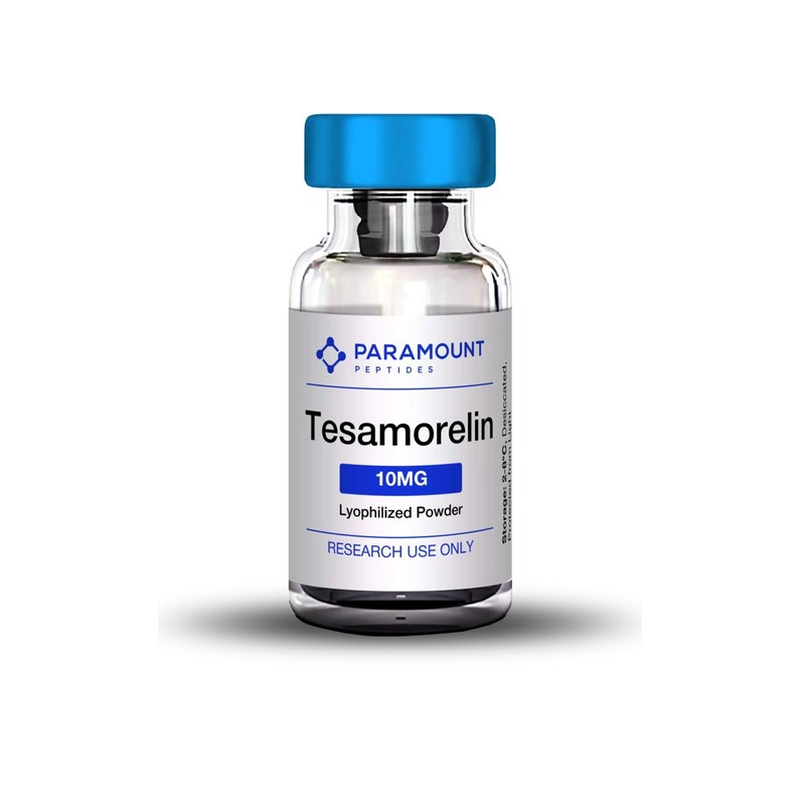 Paramount
Tesamorelin 10 mg
LEE10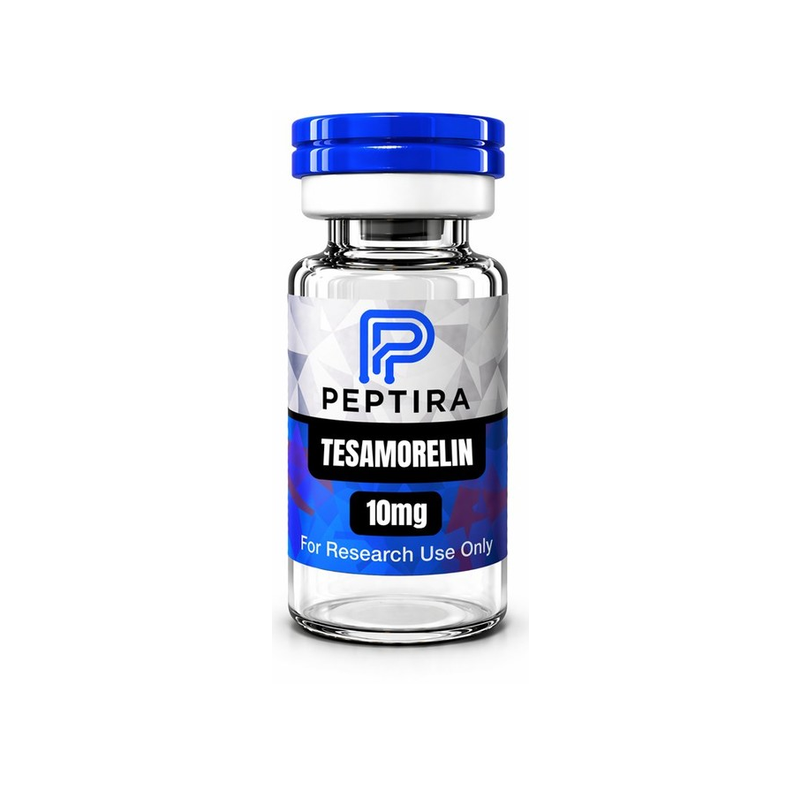 Peptira
Tesamorelin
LEEMatch the map to the curiosity. Do not collect bottles to skip creatine. Earn the monohydrate habit first.
Free guide
Get The Peptide PlaybookEnter your email and we’ll send the research PDF. Education only — not medical advice. No naked PDF chase.
I built Peptides & Pump so you can get foundation education without a guru tax. Creatine is one of those foundations. If you want the protocol library and member discussions after the basics are handled, that is Pro. If you are not ready to pay, use the free Knowledge Base first.
 Keep going on Peptides & Pump
Free is the community. Pro is where you master the research maps. Creatine first — then curiosity.
Free
Knowledge Base
The peptide community · 2,500+
- 2,500+ member peptide community
- Sourcing questions before you buy anything random
- The basics, from people actually using peptides
Pro
Peptides & Pump Pro
$10/mo · 7-day trial
- Science-backed protocol library
- 1-on-1 support from Lee and Matt
- Step-by-step video, plus a monthly $500 drawing
Muscle peptides map Ipamorelin CJC + Ipamorelin Sermorelin Sleep better Peptide Playbook
Disclaimer. This article is for education only. It is not medical advice. It is not meant to diagnose, treat, cure, or prevent kidney disease, sarcopenia, depression, or any other disease. Creatine education does not replace care from a qualified clinician. Do not use this page to self-treat abnormal labs or known kidney disease. Talk with a qualified healthcare provider about supplement decisions if you have a medical condition, take prescription medicine, are pregnant, or are postpartum. Peptides & Pump does not sell creatine and does not run a clinic.



2 Comments
Comments are closed.