Peptides for Healing: How Long Repair Actually Takes
Key Takeaways
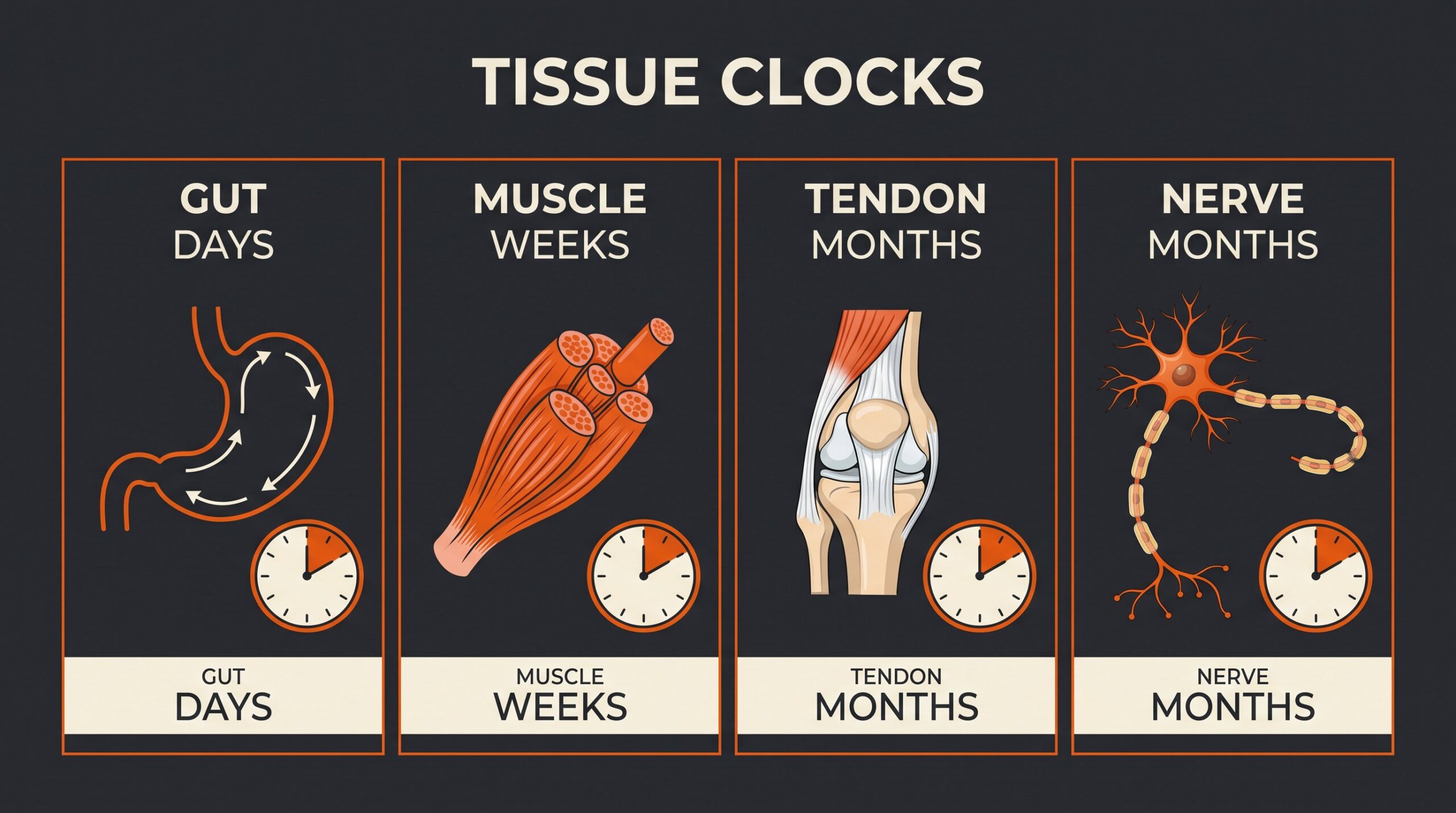
- Peptides for healing run on tissue clocks, not bottle clocks. Gut lining turns over in days. Muscle is weeks. Tendon and ligament run on months.
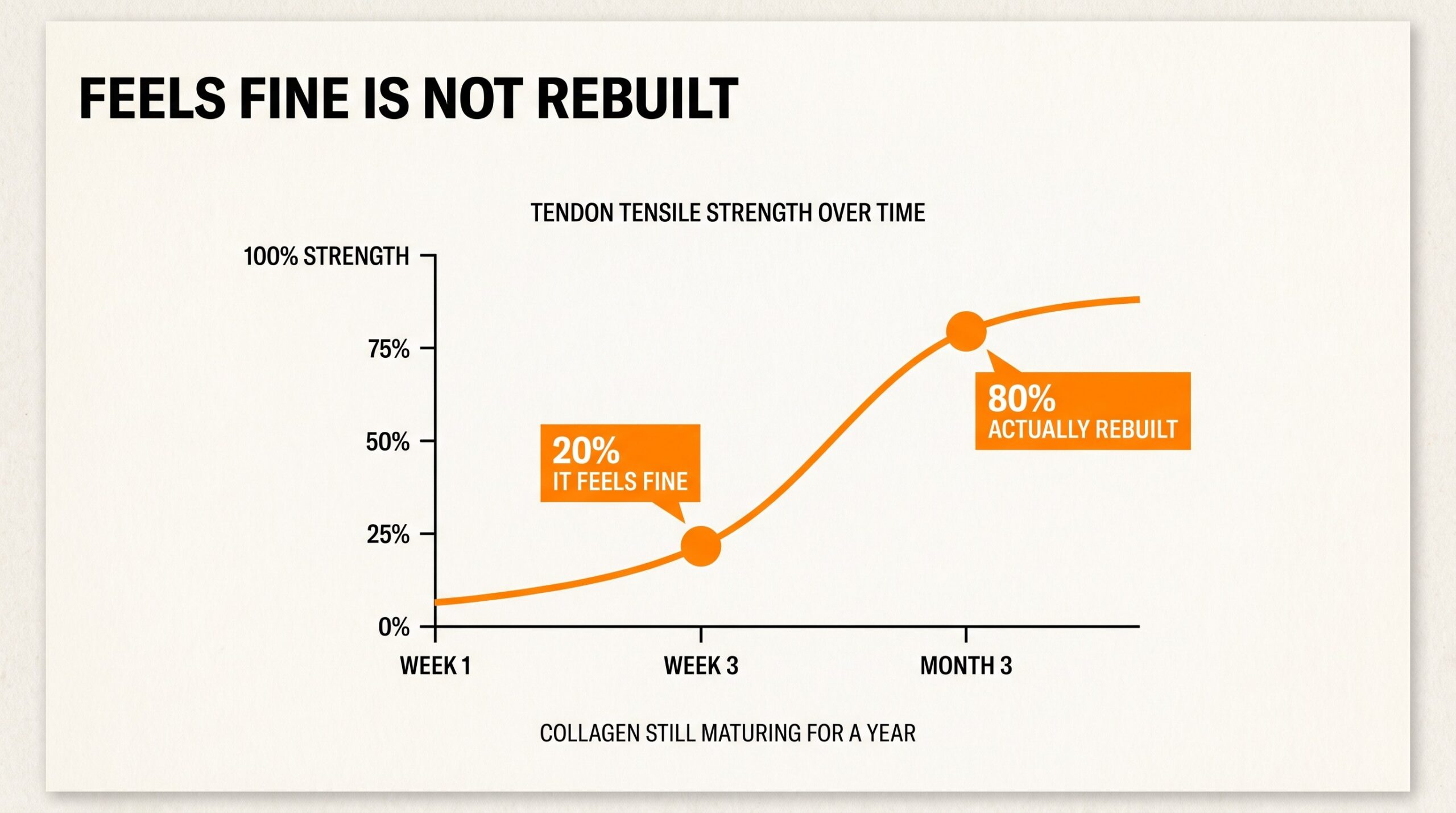
- “Working” is not the week pain leaves. Classic wound-healing curves put tensile strength around 20% at three weeks and closer to 80% at three months.
- Injectable BPC-157 is the local-repair conversation. Oral BPC-157 is the same gastric fragment aimed at the lining. TB-500 is a thymosin β4 / cell-migration story — a different molecule.
- Most of the published work is preclinical. This page is education and research, not a protocol, a treatment, or a cure.
Almost everyone stops a healing peptide the same week. Not on a planned date. The week it stops hurting.
Pain leaving feels like the finish line because it is the only signal most people have. It is also the earliest thing to resolve, and one of the worst indicators that the tissue underneath is rebuilt. That gap is where almost every wasted cycle lives.
The first useful skill is matching the compound to the tissue, then matching the calendar to that tissue. Wrong clock, right enthusiasm, is how people run four weeks on an Achilles problem and declare the peptide a scam. If you still need the map of what peptides even are, start there.
This page is the door for peptides for healing: how long tissue repair actually takes. People search peptides for recovery for the same clock. It is not a protocol dump. Classroom schedules stay in Pro.
What “working” actually means
Sharma and Maffulli, in the Journal of Musculoskeletal and Neuronal Interactions in 2006, put it bluntly: oxygen consumption in tendons and ligaments is about 7.5 times lower than in skeletal muscle. Read the review here. That low burn rate is why a tendon can hold tension for hours without starving. It is also why tendon is slow after injury. Four weeks on an Achilles issue that “did nothing” is often a calendar problem, not a vial problem.
Heinemeier and colleagues used carbon-14 from 1950s nuclear testing to date human tissue. In 2013 in The FASEB Journal, they showed the core of healthy adult Achilles tendon barely renews. It matched the first seventeen years of life, not last month’s training log (paper). In 2018, the same group dated tendinopathic tendon and found substantial renewal had occurred (paper).
Healthy tendon sits quiet. Injured tendon switches its rebuilding on. That window runs on months. A member asking about healing peptides when nothing is actually injured is asking a different question than a tendon that just tore. Quiet tissue is not the same workplace.
Strength and comfort are two dates. A 2021 review in Seminars in Plastic Surgery by Almadani and colleagues walks those overlapping phases. The numbers people still quote: about 20% of original tensile strength at week three, closer to 80% around month three, collagen still maturing for a year. “It feels fine now” often lands around 20%. That is the re-tear neighborhood. Skin-wound percentages are not your rotator cuff. They are why week-three comfort does not get to write the ending.
BPC-157 local vs oral timelines
BPC-157 is a 15-amino-acid fragment of Body Protection Compound, isolated from human gastric juice. It is not a thymosin. The head-term page for what BPC-157 actually is — not the timeline — is BPC-157.
Injectable BPC-157 is the local-repair conversation. Staresinic and colleagues, 2003, in the Journal of Orthopaedic Research, transected rat Achilles and followed days 1 through 14: better functional index, load to failure, and collagen organization versus saline (paper). Krivic et al., 2006, detached Achilles from bone and tested out to day 21 (paper). Chang, 2011, in the Journal of Applied Physiology, tied fibroblast outgrowth and migration to the FAK-paxillin pathway (paper). Gwyer, Wragg, and Wilson reviewed the animal pile in 2019 (paper).
Useful. Not a human RCT for your Achilles. Rat day 14 is not your month-three checkpoint. Animal repair is faster. If anything, human tendon should take longer than the rodent papers, not shorter.
Oral is a different clock because the job site is different. A 2025 Pharmaceuticals review by Jóźwiak and colleagues walks the odd sequence and the gastric-stability claim. The Sikiric group, 2020, in Gut and Liver, describes BPC-157 as essentially stable in human gastric juice (paper). Research has shown the fragment remaining intact in gastric juice for more than 24 hours. That is why a capsule is not a weaker injection when the tissue is the lining. I already made that argument in Is Oral BPC-157 Worth It?
Two timelines. One compound. Gut goals sit on the fast clock. Tendon and ligament work belongs in a long block. Swallowing a capsule for a cranky shoulder is still the wrong route.
TB-500 / Tβ4: the systemic, middle-of-the-timeline story
TB-500 vs BPC-157 is a job-site question. Full filter: TB-500 vs BPC-157. The duration version: TB-500, as careful vendors sell it, is synthetic thymosin β4. Forty-three amino acids. Day job is binding G-actin so a cell can move. Cell migration is middle-of-the-timeline biology. Not a Friday painkiller.
A 2005 review in Trends in Molecular Medicine by Goldstein, Hannappel, and Kleinman frames Tβ4 as the major actin-sequestering molecule, with a second life in wound models. Malinda et al., 1999, showed increased re-epithelialization versus saline in a rat dermal wound (paper). Human Tβ4 data is mostly ophthalmic. Sosne’s 2015 Cornea phase 2 trial used drops for dry eye (paper). Eye drops are not a gym vial. Do not launder one into the other.
Some catalogs stamp TB-500 on a short actin-binding fragment. Read the sequence on the COA. Then give the systemic story a middle-of-the-block calendar, not a three-day poll in a group chat.
Why forums lie about how long healing peptides take
They stop at pain relief. Week three on a tendon is often the 20% zone. The person feels better, drops the compound, loads the tissue like the injury never happened, then blames the peptide when it talks back. The day it stops hurting is the halfway mark.
They map rat days onto human months. Staresinic’s rats were scored at day 14. Your Achilles is not a 300-gram Wistar. Preclinical acceleration versus saline is not a promise that your calendar compresses to two weeks.
They change five variables and then take a vote. Then a poll: “Did BPC work for you?” That is a mood. Tre asked a cleaner version: what is healing peptide use even for when you are not actively healing? If Heinemeier is right, quiet adult tendon is not running the same rebuild program as injured tendon. Do not collapse those two into one slogan.
Athletes: BPC-157 and TB-500 sit on the WADA prohibited list. If you test, this is not a gray-area hobby.
How to judge a cycle without turning this into a protocol
I am not writing doses, pin maps, or a 12-week spreadsheet on a public page. That is classroom material. This is the filter.
| Tissue | Biology in one line | Judge around |
|---|---|---|
| Gut lining | Epithelium renews every few days. Van der Flier and Clevers, 2009, Annual Review of Physiology (paper). | Days to a couple of weeks. |
| Muscle | Continuous turnover. Well supplied with blood. | Weeks, not a long weekend. |
| Tendon / ligament | Consolidation around 6 to 10 weeks, then maturation for about a year. Sharma and Maffulli: low oxygen, slow rebuild. | Not week four. Think week ten, plus a long tail. |
| Nerve | Classic regeneration is on the order of a millimeter a day. | A long block. Mood is not the marker. |
Name the tissue first. That sets the entire timeline. Plan the block before you pop a cap. Treat the day pain leaves as the halfway mark. Reload gradually while you are still on, because repair tissue organizes in response to load. A second block on slow tissue is the tissue being slow, not automatic proof the compound failed.
Once pain is gone, pick better markers. Load tolerance. Next-day response. Morning stiffness for tendons. Stairs, range, a number you can write down. Gut: regularity, comfort after meals. Write a starting number on day one. Write the start date on the bottle. If you cannot name the tissue, go back to Start Here.
If the job is a lyophilized vial, you still have to reconstitute it. The skill is How to reconstitute peptides (without wasting 10% of the vial). If you cannot mix the vial without guessing, you do not get a duration conversation yet.
This is the kind of filter we talk through in the free Peptides & Pump Knowledge Base on Skool. No paywall on the basics. Bring the label and the COA.
Labs for healing peptides
Match the route to the tissue. Then buy enough runway for that tissue, not a three-week sample pack you will emotionally quit. Research-use catalogs. Not a treatment claim. Confirm TB-500 lots are the 43-amino-acid sequence.
BPC-157 research vials
 Limitless
BPC-157 vial 10 mg
LEE20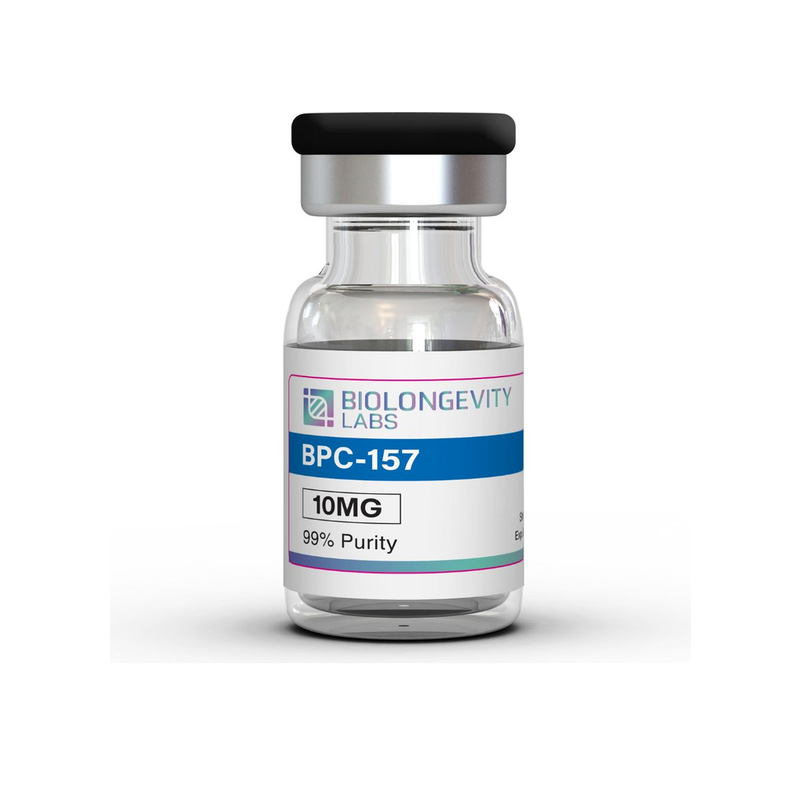 BioLongevity
BPC-157 vial 10 mg
LEE15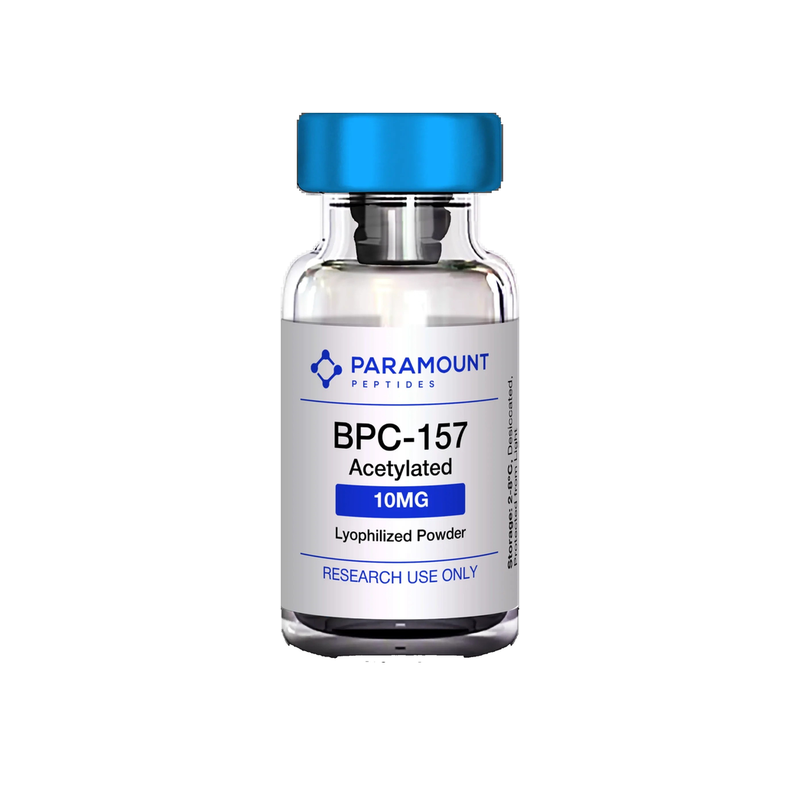 Paramount
BPC-157 10 mg
LEE10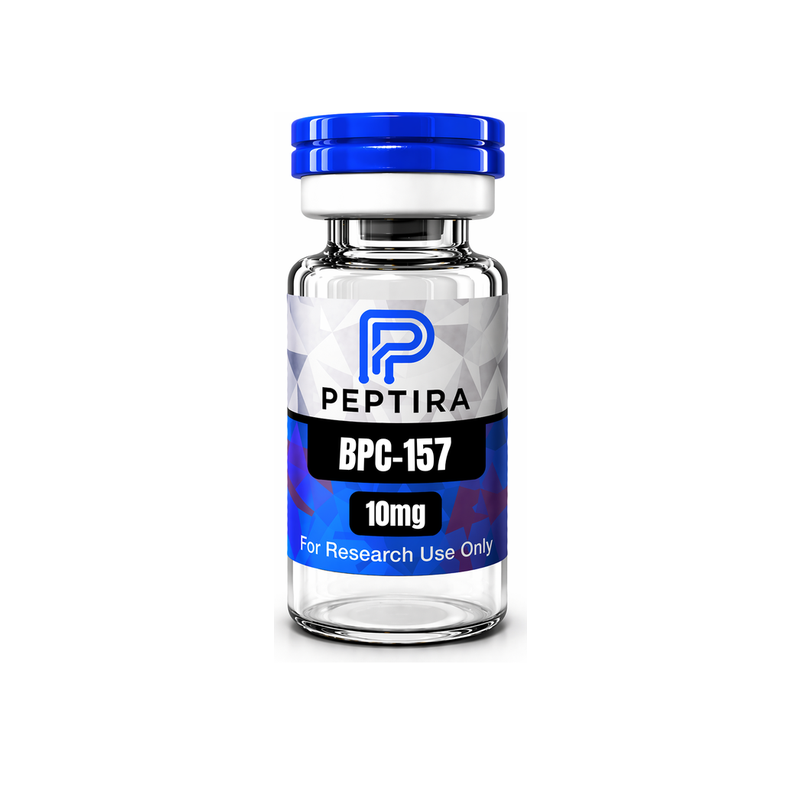 Peptira
BPC-157
LEELimitless BPC-157 vial · LEE20BioLongevity BPC-157 10 mg · LEE15Paramount BPC-157 · LEE10Peptira BPC-157 · LEE
TB-500 research vials
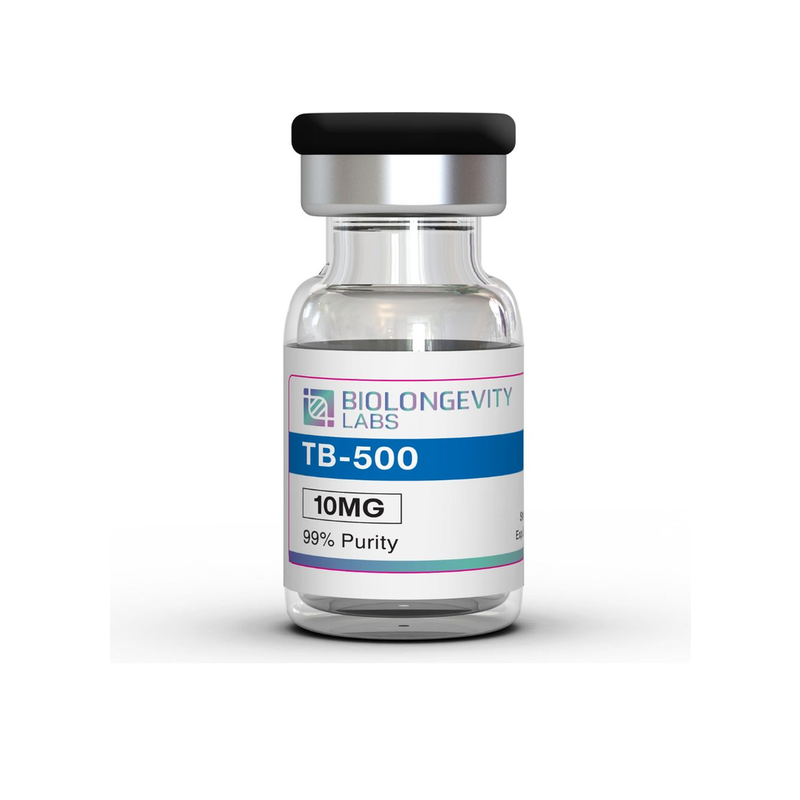
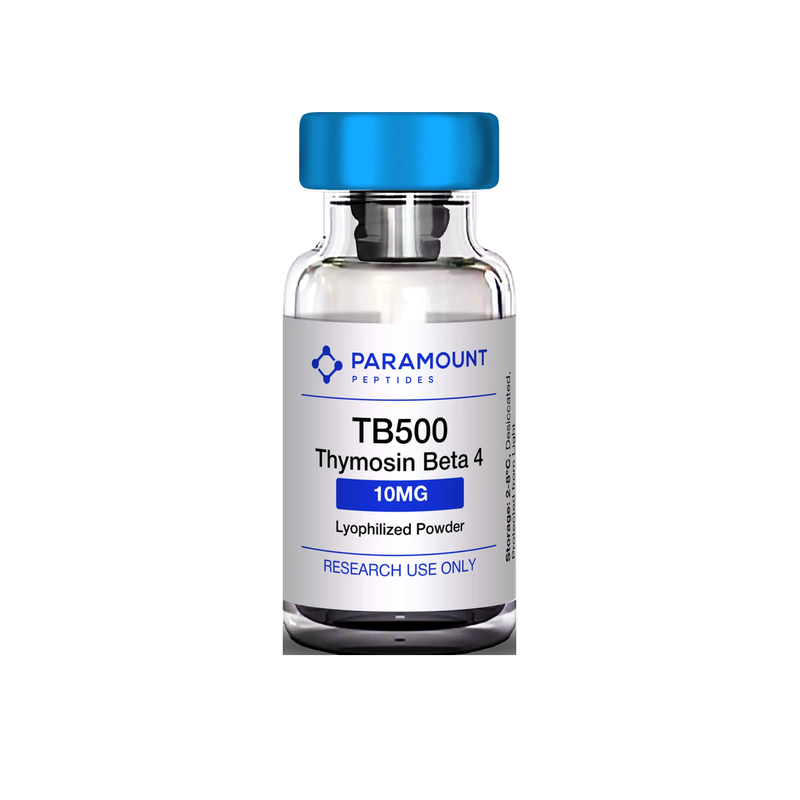
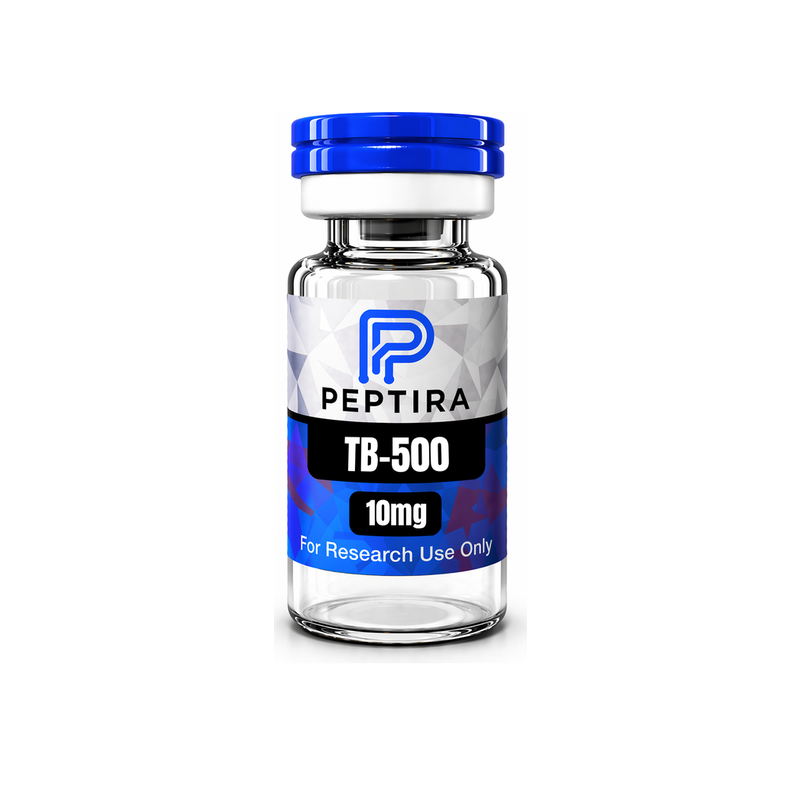
Limitless TB-500 · LEE20BioLongevity TB-500 10 mg · LEE15Paramount TB-500 · LEE10Peptira TB-500 · LEELimitless reconstitution solution · LEE20
Gut route (not a vial)
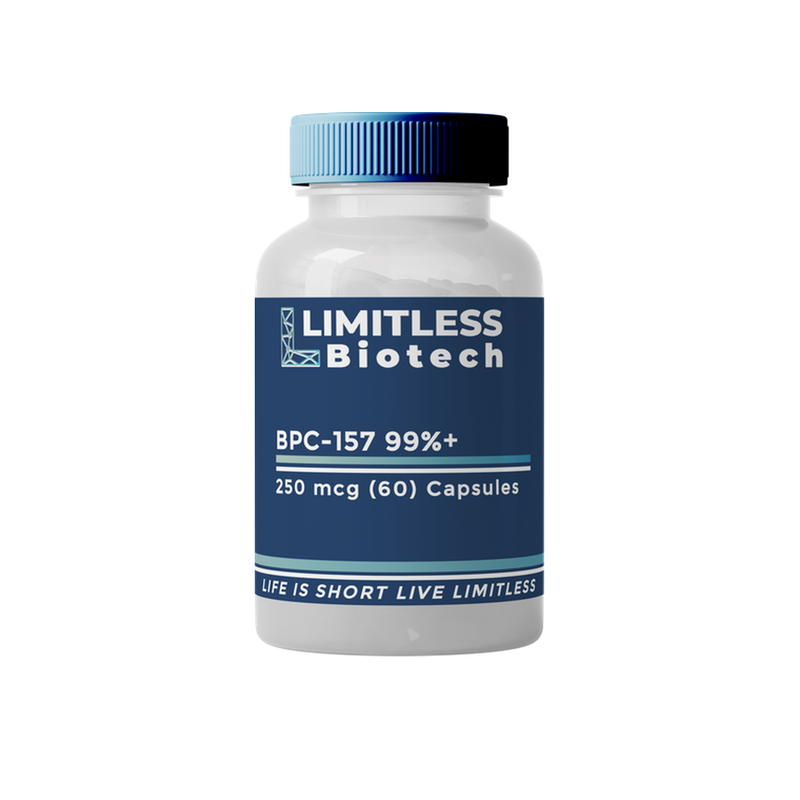
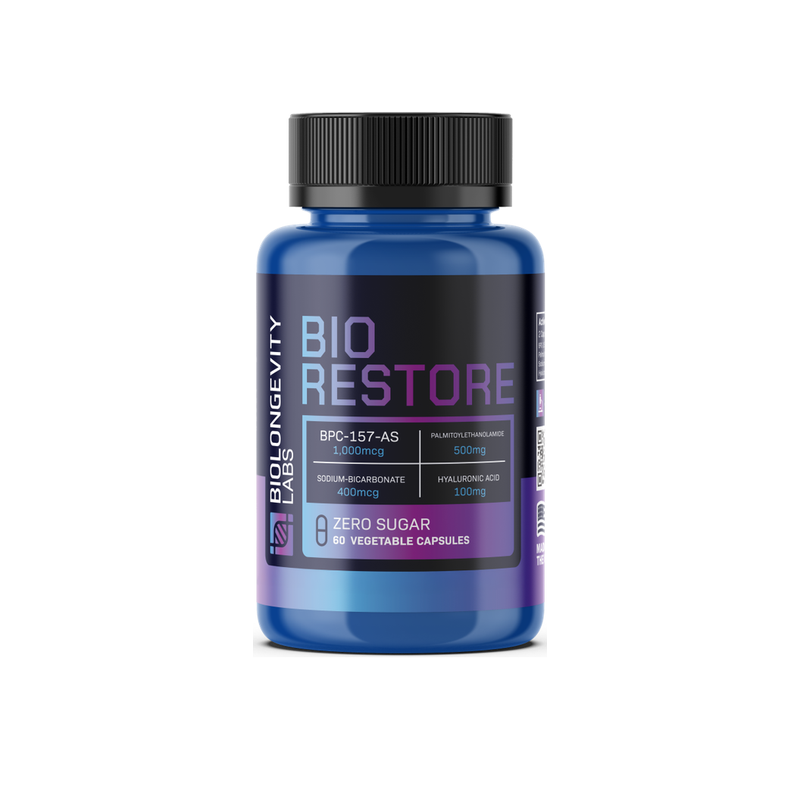
Limitless BPC capsules · LEE20BioRestore · LEE15BioGutPro · LEE15
Frequently asked questions: how long do healing peptides take
How long do healing peptides take?
As long as the tissue takes. Gut lining is days to a couple of weeks. Muscle is weeks. Tendon and ligament are a months conversation with a long tail. Pain leaving is not rebuilt. The peptide does not get to invent a faster organ.
How long does BPC-157 take to work?
Depends which tissue you pointed it at. Gut lining is days to weeks. A local tendon or ligament goal is a months conversation. Rodent papers show earlier gaps versus control, not a human “fixed in 14 days” trial. Pain leaving is not the same as rebuilt.
How long does TB-500 take compared with BPC-157?
Different molecule, different workplace. TB-500 is the Tβ4 / actin / migration tool, usually framed as systemic. BPC-157 is the gastric fragment. There is no high-quality human head-to-head for a named injury.
Can I judge oral BPC-157 in a long weekend?
No. Even on the fast gut clock, give it weeks and track simple markers. Capsules are not a stealth tendon protocol. Read the oral BPC-157 article if the lining is the actual problem.
Should I run healing peptides when I am not injured?
That is Tre’s question, and it is a good one. Heinemeier’s bomb-pulse work says healthy adult Achilles core sits quiet and injured tendon turns over. Quiet tissue is not automatically the same workplace as a repair window. If you cannot name the job, you do not need a vial for it.
Do people stack BPC-157 with TB-500?
Yes, in community use. Local plus systemic. There is no high-quality human trial that proves that combination for a named injury. Two mechanisms can sit in the same month. They still need two reasons, and they still need the long calendar if the tissue is tendon.
When do I stop?
Not the morning it feels better. Plan the block by tissue before you start. Full protocol design, including cycling, lives in Peptides & Pump Pro, not in a blog comment.
The bottom line
How long do healing peptides take? As long as the tissue takes. The peptide does not get to invent a faster organ.
BPC-157 is the gastric fragment: oral for the lining, injectable when the rodent tendon literature is the actual conversation. TB-500 is the thymosin β4 / actin / cell-migration tool, and only if the vial is that molecule. Pick the tissue. Plan the block. Stop letting week-three comfort grade a months-long rebuild.
Those two also get sold inside a catalog blend named GLOW. That is convenience chemistry, not a shorter healing clock. The map is the glow peptide page.
Read next: BPC-157, TB-500, and oral BPC-157 when the route is the actual question — plus how to reconstitute peptides if a vial is even on the table.
I built Peptides & Pump so you can get this without a guru tax. Protocol library, member discussions, and a place to think out loud before you spend: Peptides & Pump Pro. It is $10 a month. Seven-day free trial. Cancel anytime. Not ready to pay? Use the free Knowledge Base first.
Do the reading. Respect the research. Do not let a vial, or a capsule, think for you.
Free guide
Get The Peptide PlaybookEnter your email and we’ll send the research PDF. Education only — not medical advice.
 Keep going on Peptides & Pump
Free is the peptide community. Pro is where you master it.
Free
Knowledge Base
The peptide community · 2,500+
- 2,500+ member peptide community
- Sourcing questions before you buy anything random
- The basics, from people actually using peptides
Pro
Peptides & Pump Pro
$10/mo · 7-day trial
- Science-backed protocol library
- 1-on-1 support from Lee and Matt
- Step-by-step video, plus a monthly $500 drawing
LEE20 Limitless LEE15 BioLongevity LEE10 Paramount LEE Peptira LEE10 S1
Next reads
Supplier footnote: Other research suppliers I mention when people ask: Paramount, Peptira (code LEE), and S1 Research (code LEE10). Match the product to the job. Do not collect bottles.
Disclaimer. This article is for educational and research purposes only. It is not medical advice. It is not intended to diagnose, treat, cure, or prevent any disease. BPC-157, TB-500, thymosin β4, and related peptides are not FDA-approved for the uses discussed here. Most of the published evidence is preclinical. Individual results vary. Always consult a qualified healthcare provider before starting any peptide, supplement, or protocol, especially if you have a medical condition, take prescription medication, or compete in tested sport. Peptides & Pump does not sell peptides.
Affiliate disclosure. Some links on this page are affiliate links. If you buy through them, I may earn a commission at no extra cost to you. Codes LEE15, LEE20, LEE10, and LEE are the ones I actually use. That commission is how I keep publishing free education. I only link suppliers I am willing to put my name on.
7 Comments