TB-500 vs BPC-157: Which Healing Peptide Actually Fits the Job?
Key Takeaways
- TB-500 vs BPC-157 is a job-site question, not a popularity contest. One is a thymosin β4 / actin / cell-migration story. The other is a 15-amino-acid gastric fragment.
- TB-500, as careful vendors sell it, is synthetic thymosin β4: 43 amino acids. Some catalogs stamp the same name on a short actin-binding fragment. Read the sequence on the COA.
- Injectable BPC-157 is the local-repair conversation in rodent tendon and muscle papers. Oral BPC-157 is the same fragment aimed at the gut.
- Most of the published work is preclinical. This page is education and research, not a protocol, a treatment, or a cure.
People talk about TB-500 and BPC-157 like they are one peptide with two SKUs. Healing peptide. Pin both. Hope.
That is not how tissue works. And it is a lazy way to spend money.
I get why the internet collapsed them. Both show up in recovery conversations. Both sit in research catalogs next to words like migration and repair. Both are not FDA-approved for the gym uses people assign to them. That is where the similarity should stop.
The first useful skill is not stacking. It is matching the compound to the job. Wrong tool, right enthusiasm, is how people waste a cycle and then declare “peptides do not work.” If you still need the map of what peptides even are, start there.
What TB-500 actually is
Start with the parent molecule, not the brand name.
Thymosin β4 is a 43-amino-acid peptide found in almost every cell. Its day job is binding G-actin so a cell can remodel its skeleton and move. When people say TB-500 “helps healing,” the mechanism they are pointing at is cell migration. Not magic.
A 2005 review in Trends in Molecular Medicine by Goldstein, Hannappel, and Kleinman frames Tβ4 as the major actin-sequestering molecule in eukaryotic cells, with a second life in dermal and corneal wound models. The wound paper people still cite is Malinda et al., 1999, in the Journal of Investigative Dermatology. In a rat full-thickness dermal wound model, Tβ4 increased re-epithelialization versus saline. Read it here. Animal skin is not your rotator cuff. It is the mechanistic case, not a human tendon trial.
Human data exists for Tβ4. It is just not the data the forums imply. Sosne has spent years on the eye. A 2015 Cornea phase 2 trial reported improved signs and symptoms of severe dry eye with Tβ4 drops (paper). Eye drops in a dry-eye trial are not a subcutaneous vial for a hamstring. Do not launder one into the other.
TB-500, in the research-catalog sense, is a synthetic stand-in for that Tβ4 story. Some lots are the full 43-amino-acid sequence. Some vendors sell a short actin-binding fragment (LKKTETQ, residues 17–23) and still stamp TB-500 on the vial. A fragment is not “the same thing, cheaper.” It is a different length and a different claim. If the label says TB-500, you still do not know the molecule until you read the sequence, the molecular weight, and the COA.
A 2024 Journal of Chromatography B paper from Rahaman et al. looked at the seven-amino-acid TB-500 fragment and its metabolites. In their fibroblast scratch assay, the parent peptide did not drive the wound-closure signal. A shorter metabolite, Ac-LKKTE, did. Preclinical. In vitro. Still: if you are repeating “TB-500 is the healing peptide” like a slogan, you are behind the papers.
What BPC-157 actually is
BPC-157 is not a thymosin. It is a 15-amino-acid fragment of Body Protection Compound, isolated from human gastric juice in the early 1990s. Different neighborhood: cytoprotection, GI models, and a large preclinical pile on tendon, ligament, and muscle in rodents.
Chang and colleagues, 2011, in the Journal of Applied Physiology, looked at tendon fibroblasts. BPC-157 accelerated outgrowth from explants and increased migration, tied to the FAK-paxillin pathway. Paper is here. Gwyer, Wragg, and Wilson reviewed the musculoskeletal animal work in 2019 in Cell and Tissue Research (here). Useful. Not a human RCT for your Achilles.
The gut-route piece is why oral even exists. A 2025 Pharmaceuticals review by Jóźwiak and colleagues walks the odd sequence and the gastric-stability claim. I covered that in Is Oral BPC-157 Worth It? If the tissue is the lining, a capsule is not a weaker injection. It is the matching route. I am not stacking this into a diagnosis. Mouse GI work is not your protocol.
Same 15 amino acids. Two delivery jobs. That is BPC. It is still not TB-500. The dedicated BPC-157 hub — what the fragment actually is, injectable versus oral, research versus compounding — now lives at BPC-157: What the Healing Peptide Actually Is.
TB-500 vs BPC-157 vs oral BPC: pick the job site
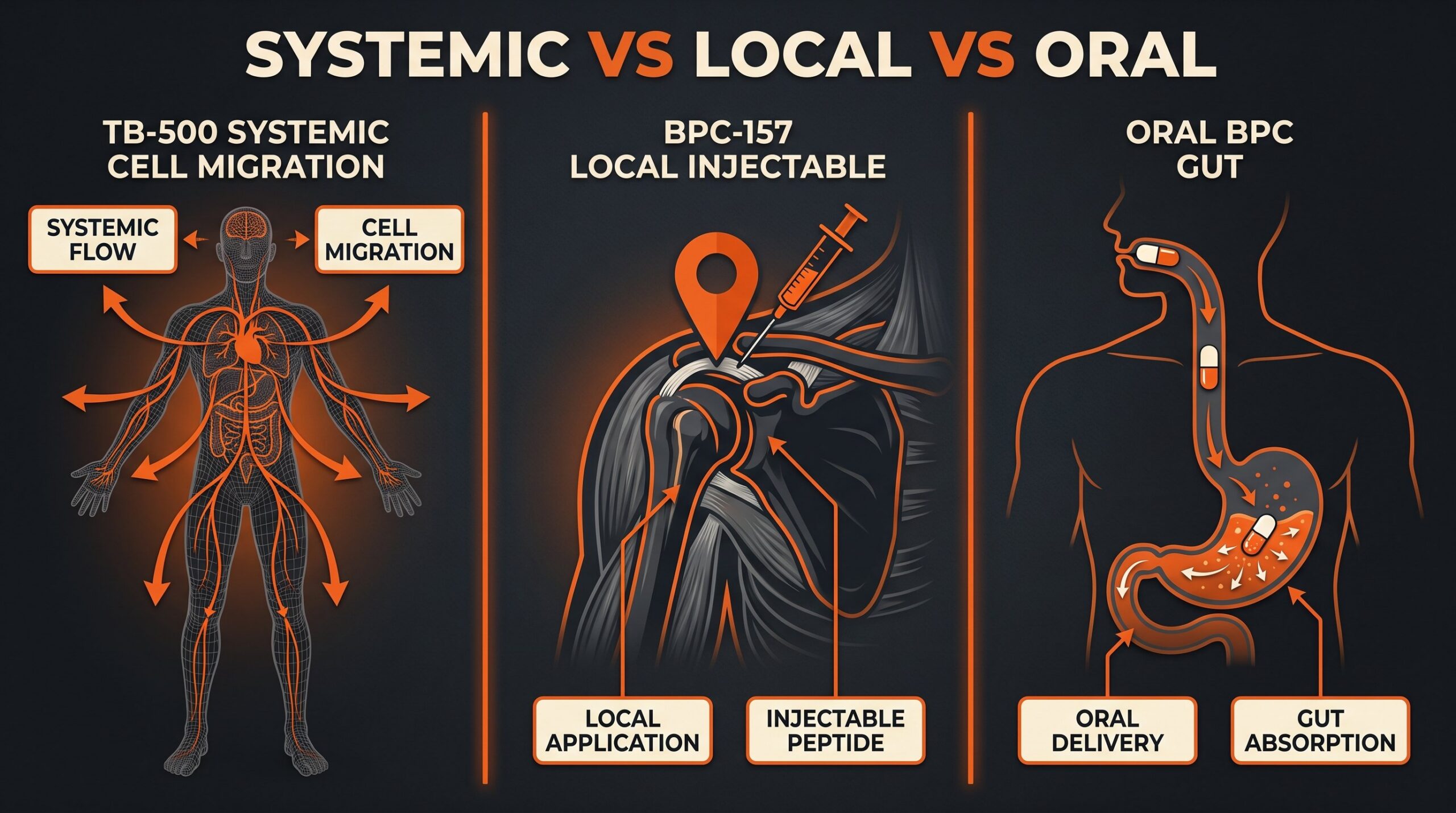
Use the table. Then stop arguing with people who have never reconstituted a vial.
| Factor | TB-500 (research vial) | Injectable BPC-157 | Oral BPC-157 (capsule) |
|---|---|---|---|
| Job site | Broader tissue work. Stiffness in more than one zip code. Systemic recovery talk. | A specific structure: tendon, muscle belly, a local repair goal. | Gut lining. Mucosal integrity. GI tract as the workplace. |
| Systemic vs local | Systemic. Actin / cell-migration framing. People generally do not hunt a tiny injection site. | More local. The pin is often near the job, or at least the intent is tissue-specific. | Local to the digestive tract, because that is where the capsule goes. |
| Recon vs capsule | Lyophilized vial. BAC water, U-100, fridge after mixing. | Lyophilized vial. Same recon workflow. | Capsule. Morning stack. No bacteriostatic water. No units math. |
| Research neighborhood | Actin sequestration, cell migration, dermal/corneal models. Some human Tβ4 eye data that is not a gym vial. | Rodent tendon, ligament, muscle. FAK-paxillin. Cytoprotection papers. | Gastric stability past 24 hours. GI cytoprotection models. |
| When it fits | You can explain actin/migration and you reconstituted the vial without guessing. | The target is a structure, not a digestive tract. | The target is the gut, and you will take the capsule for weeks. |
| When it does not | Gut-first goals. “I heard it heals everything.” Mystery fragment with no sequence. | Using a pin to reach a lining you could have reached with a capsule. | A cranky shoulder you are trying to fix without a needle because capsules feel easier. |
I am not anti-stack. I am anti-running two compounds because a podcast guest wrote both on a whiteboard. Two mechanisms can sit in the same month. They still need two reasons.
This is the kind of filter we talk through in the free Peptides & Pump Knowledge Base on Skool. No paywall on the basics. Bring the label. Bring the COA. Do not buy random vials off a banner ad and then ask the group to reverse-engineer your stack.
When TB-500 is the tool (and when it is not)
TB-500 earns the slot when the problem is not one joint with a name. People reach for it when recovery feels systemic: more than one tissue nagging, a research interest in migration and cytoskeletal remodeling instead of a gastric fragment.
That is a hypothesis, not a diagnosis. Actin binding is not folklore. What you do not have is a completed, high-quality human trial of injectable TB-500 for the musculoskeletal uses that dominate forums. Do not pretend dry-eye drops close that gap.
Injectable BPC-157 earns the slot when you can point at a structure. This tendon. This muscle. The rodent work is local in a way the Tβ4 literature is not. It is still preclinical. If the “injury” is actually a gut that has taken 20 years of NSAIDs, you are holding the wrong route.
Oral is the gut job. Full stop. A 250 mcg capsule is a lining strategy. It is not a stealth thymosin. I already wrote that argument. I will not re-litigate it here.
If you cannot name the tissue, you are not ready to name the peptide. Go back to Start Here and pick one goal. If the question is duration, not molecule, read how long peptides for healing take.
Athletes: both sit on the WADA prohibited list. If you test, this is not a gray-area hobby. Read the list before you read a forum.
If the job is a vial, you have to reconstitute it
Lyophilized powder is freeze-dried so it ships. You add bacteriostatic water. You swirl. You do not shake. You label the date. You refrigerate. Practical filter: if you cannot do that without guessing, you do not get a TB-500 conversation yet.
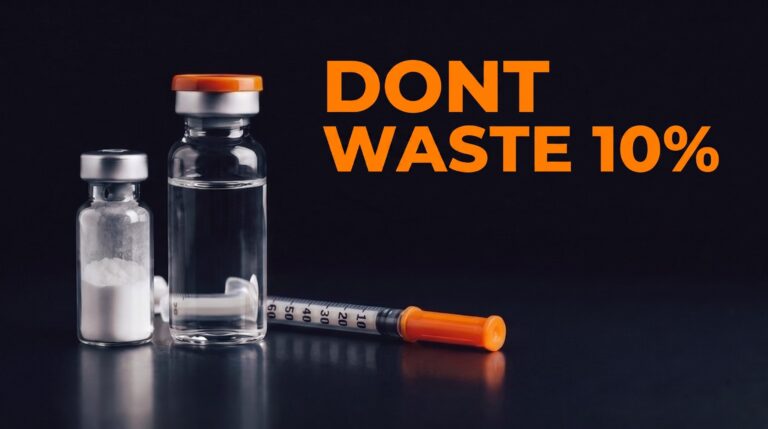
The longer written version is How to reconstitute peptides (without wasting 10% of the vial). BAC water. Units on a U-100. Venting. Dead space. Cloudy vial means you stop. That article is the skill. This article is the job-site filter. I am not dumping classroom schedules on a public page so a stranger can screenshot a dose and call it “Lee’s protocol.” Protocol depth lives in Peptides & Pump Pro.
Where to get TB-500
Labs for TB-500.
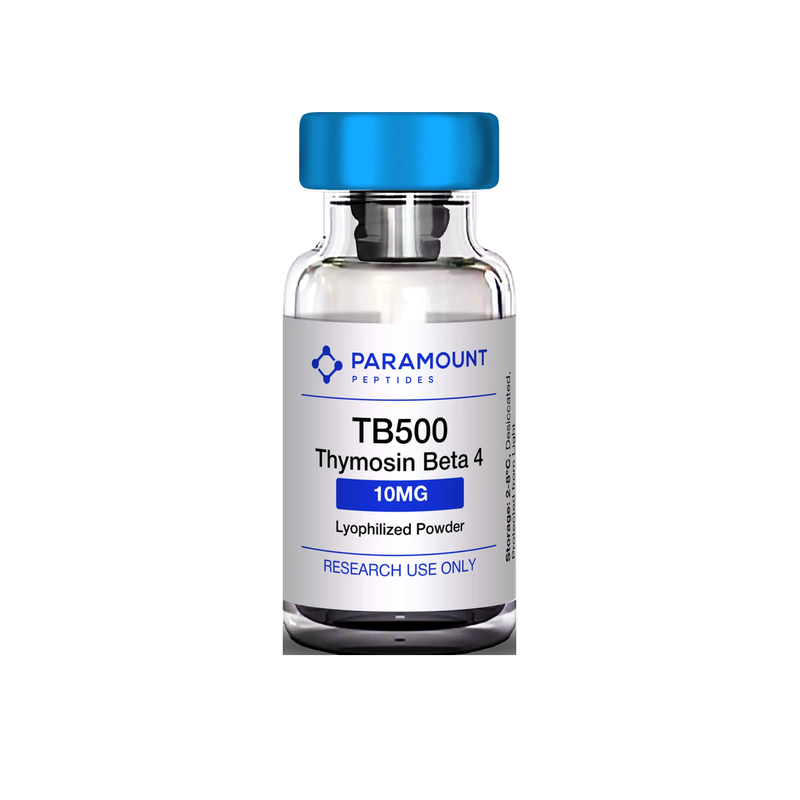
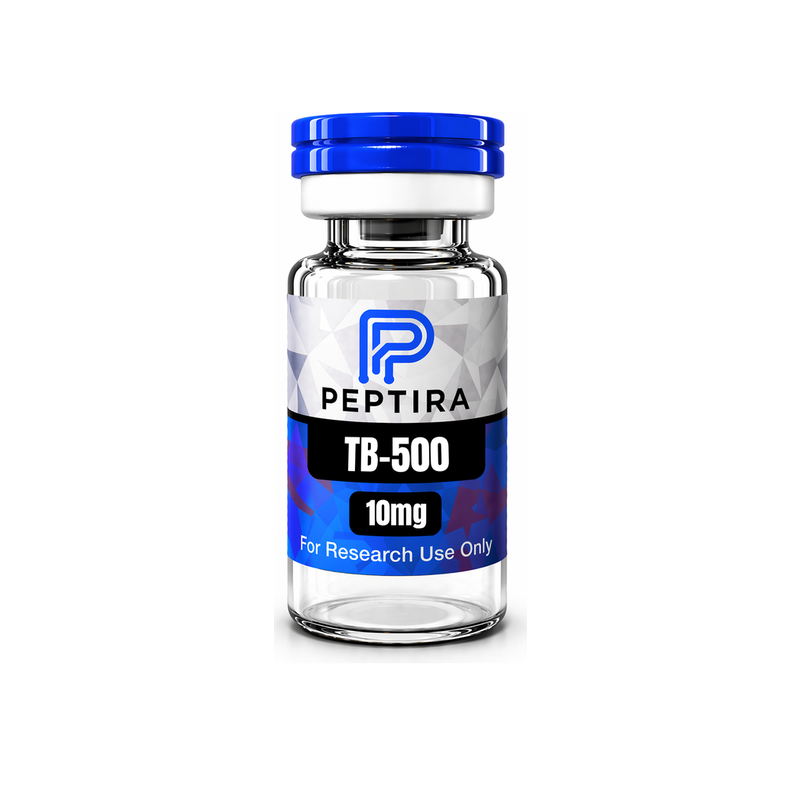
If the job is gut, do not buy TB-500 to avoid reading the oral BPC article. Simple start: Limitless BPC-157 capsules, 250 mcg, same LEE20. Gut-stack option if you already understand the extras: BioGutPro. Use code LEE15 at checkout on biolongevitysupplements.com.
Start with one compound you can explain. Add the second when you can explain that one too.
Frequently asked questions about TB-500
Are TB-500 and thymosin β4 the same thing?
Sometimes. Full-length synthetic Tβ4 is what careful vendors mean by TB-500. Some catalogs sell a short actin-binding fragment under the same name. Read the sequence, the molecular weight, and the COA. If those are missing, walk away.
Can oral BPC-157 replace TB-500?
No. Oral BPC-157 is a gastric fragment aimed at the gut. TB-500 is a thymosin β4 story aimed at actin and cell migration. Same marketing word. Different molecule, different workplace. Compare the tissue. Read the oral BPC-157 article if the lining is the actual problem.
Do people stack TB-500 with BPC-157?
Yes, in community use. The idea is systemic plus local. There is no high-quality human trial that proves that combination for a named injury. If you cannot explain each piece without a meme, do not stack them yet.
Is TB-500 a proven injury treatment?
No. Parent-molecule biology is real. Preclinical wound and migration work is real. Human Tβ4 data is mostly ophthalmic, not a Phase 3 tendon trial of a research vial. BPC-157’s published pile is also mostly animals. Neither one is FDA-approved for these uses. Neither one is a cure.
Do I inject TB-500 at the injury?
The usual research-community logic is systemic, not “hunt the exact millimeter of a tendon.” That is a different idea than local BPC. I am not writing an injection map on a public page. If you need that level of protocol, that is a clinician plus the Pro library, not a blog comment.
I have never mixed a vial. Where do I start?
Do not start by guessing. Read How to Reconstitute Peptides, then watch the Rumble walkthrough. BAC, U-100, venting, dead space, cloudy vial. If that still feels like a foreign language, start with the oral BPC conversation or stay in the free Knowledge Base until it does not.
The bottom line
TB-500 vs BPC-157 is not a popularity contest. It is a job-site question.
TB-500 is the thymosin β4 / actin / cell-migration tool, and only if the vial is the molecule you think it is. Injectable BPC-157 is the local-repair gastric fragment in the rodent tendon literature. Oral BPC-157 is that same fragment aimed at the lining. Three tools. Three workplaces. One adult decision.
Catalogs also bottle TB-500 inside a GLOW blend with GHK-Cu and BPC-157. That is a different job than a named TB-500 vial. Read glow peptide before you treat an acronym like a protocol.
Read next: BPC-157 for the gastric-fragment job, oral BPC-157 when the workplace is gut, and how long healing peptides take before you invent a calendar.
I built Peptides & Pump so you can get this without a guru tax. If you want the protocol library, member discussions, and a place to think out loud before you spend, join Peptides & Pump Pro. It is $10 a month. Seven-day free trial. Cancel anytime.
If you are not ready to pay, use the free Knowledge Base first. Then come back and argue with me when you have read more than a caption.
Do the reading. Respect the research. Do not let a vial, or a capsule, think for you.
Free guide
Get The Peptide PlaybookEnter your email and we’ll send the research PDF. Education only — not medical advice.
 Keep going on Peptides & Pump
Free is the peptide community. Pro is where you master it.
Free
Knowledge Base
The peptide community · 2,500+
- 2,500+ member peptide community
- Sourcing questions before you buy anything random
- The basics, from people actually using peptides
Pro
Peptides & Pump Pro
$10/mo · 7-day trial
- Science-backed protocol library
- 1-on-1 support from Lee and Matt
- Step-by-step video, plus a monthly $500 drawing
LEE20 Limitless LEE15 BioLongevity Paramount LEE Peptira LEE10 S1
Next reads
Supplier footnote: Other research suppliers I mention when people ask: Paramount, Peptira (code LEE), and S1 Research (code LEE10). Match the product to the job. Do not collect bottles.
Disclaimer. This article is for educational and research purposes only. It is not medical advice. It is not intended to diagnose, treat, cure, or prevent any disease. TB-500, thymosin β4, BPC-157, and related peptides are not FDA-approved for the uses discussed here. Most of the published evidence is preclinical. Individual results vary. Always consult a qualified healthcare provider before starting any peptide, supplement, or protocol, especially if you have a medical condition, take prescription medication, or compete in tested sport. Peptides & Pump does not sell peptides.
Affiliate disclosure. Some links on this page are affiliate links. If you buy through them, I may earn a commission at no extra cost to you. Codes LEE15, LEE20, LEE10, and LEE are the ones I actually use. That commission is how I keep publishing free education. I only link suppliers I am willing to put my name on.
6 Comments