GHK-Cu: Copper Peptide vs Research Vial Map
Key Takeaways
- GHK-Cu is a copper tripeptide: glycyl-L-histidyl-L-lysine bound to copper(II). That is one molecule with a Pickart / Maquart literature file — not a synonym for the GLOW stack.
- Topical copper-peptide cosmetics and a lyophilized research vial share letters. They are not the same object, manufacturing lane, or claim surface.
- GHK-Cu is not an FDA-approved drug for wrinkles, scars, or aging skin. Real papers and a missing drug label can both be true.
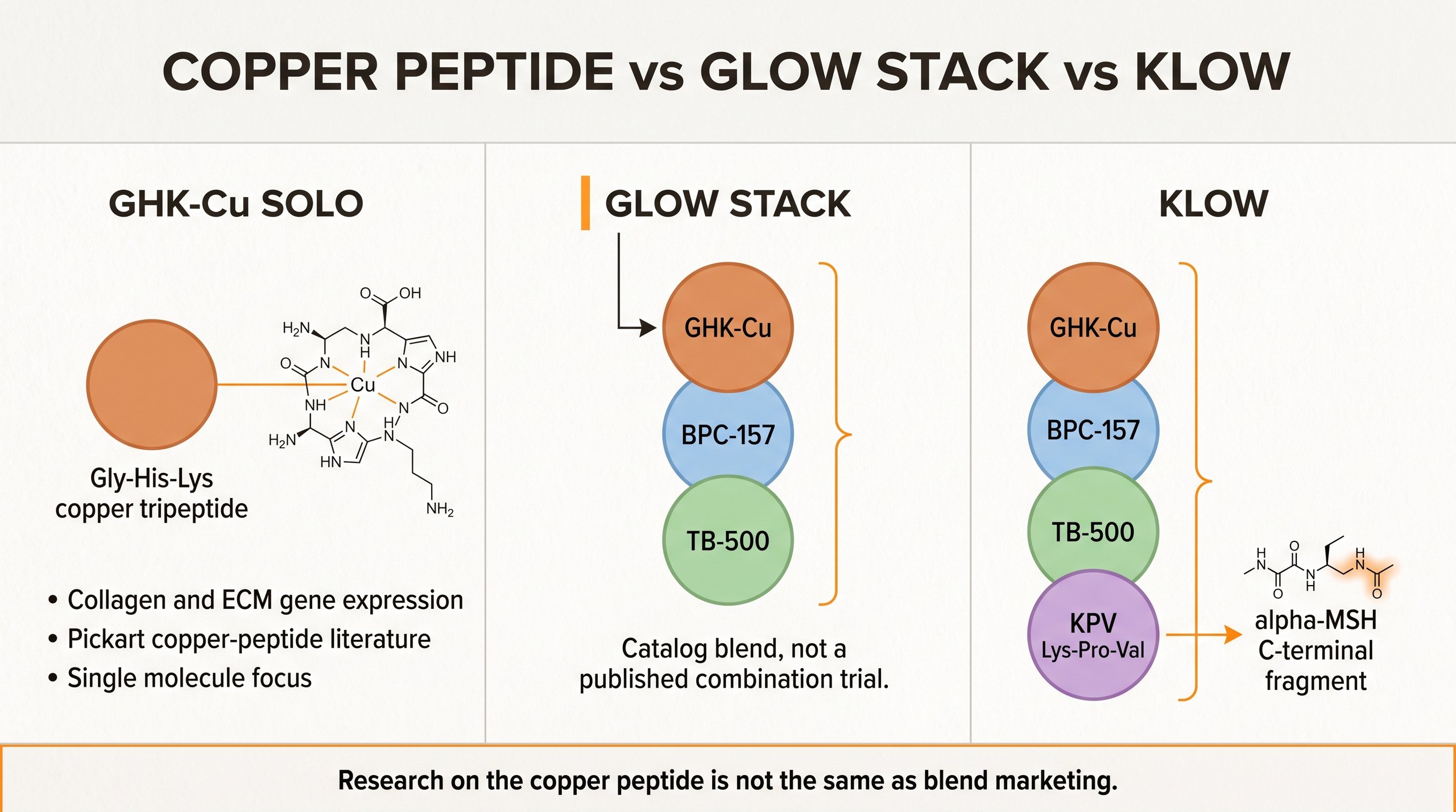
- GLOW adds BPC-157 + TB-500. Klow adds KPV on top of that. Those maps live on the Glow and Klow pages — do not buy a blend when you wanted the copper peptide alone.
- This page teaches the ghk-cu head term. Protocols stay in Peptides & Pump Pro ($10/mo, 7-day trial). Education first. Not medical advice. Not a treatment.
People type ghk-cu like it is a miracle cream with a research sticker on it.
It is not.
It is a short copper-binding peptide with a real literature file, a long cosmetic career, and a research-catalog twin that shares the letters and almost none of the regulatory lane.
If you landed here from a “glow peptide” search, the three-lane map — GHK-Cu solo versus the GLOW stack versus Klow — already lives on the Glow peptide page. This URL is the copper-peptide head term. Stay here if the label says GHK-Cu and you want to know what you are holding. Start on Start Here if you are brand new and a vial is not day one.
What is GHK-Cu?
GHK-Cu is a tripeptide. Glycine. Histidine. Lysine. Complexed with copper(II).
Loren Pickart isolated GHK from human plasma albumin fractions in the early 1970s while looking at factors that seemed to change with age. Plasma levels of the peptide decline as people get older. That observation launched decades of tissue-remodeling work. It did not launch an FDA drug label for aging skin.
A peptide is a short chain of amino acids. Insulin is a peptide. BPC-157 is a peptide. GHK-Cu is a peptide. Your collagen powder is a pile of peptides if the marketer is being cute. Shared category. Different job.
So when someone says “copper peptide,” they usually mean this sequence — or a cream that lists GHK-Cu / copper tripeptide on the INCI panel. When someone says “GLOW,” they usually mean three names in one stopper. Keep those words apart or you will buy a blend when you typed a molecule.
| Object | What it actually is | What the evidence is | What it is not |
|---|---|---|---|
| GHK-Cu (research vial) | Gly-His-Lys copper(II) lyophilized cake | Pickart tissue-remodeling and gene-expression work; Maquart fibroblast collagen-synthesis papers | Not a drugstore cream. Not FDA-approved for wrinkles. Not the GLOW stack. |
| Topical copper peptide | Finished cosmetic with GHK-Cu / copper tripeptide on the INCI list | Cosmetic-lane use; shared letters with the research sequence | Not automatically the same manufacturing, dose story, or claims as a research vial. |
| GLOW / Klow blends | Catalog stacks that include GHK-Cu plus other sequences | Each name has its own file. No published combo RCT of the blend as a unit. | Not “stronger GHK-Cu.” Map those on Glow / Klow, not here. |
What does the copper-peptide literature actually say?
The useful papers are specific. Sales pages are not.
Maquart, Pickart, and colleagues reported in FEBS Letters in 1988 that the tripeptide-copper complex stimulated collagen synthesis in fibroblast cultures. That is a cell-culture collagen story. It is not a 12-week Instagram jawline trial.
Pickart reviewed GHK and tissue remodeling in the Journal of Biomaterials Science in 2008. Wound-healing models. Matrix remodeling. The kind of review you actually cite when you are not selling a stack.
Pickart, Vasquez-Soltero, and Margolina in BioMed Research International in 2015 framed GHK as a modulator of multiple cellular pathways in skin regeneration, including gene-expression work on a long list of remodeling-related genes. Read that as “this small copper-binding peptide talks to a lot of skin-related transcription.” Do not read it as “inject this and skip a dermatologist.”
Two filters the sales page will not give you.
First: cosmetic GHK-Cu and a research-catalog GHK-Cu vial are not the same object. One is a topical finished product in a regulated cosmetic lane. The other is a named sequence in a lyophilized cake with a certificate of analysis if you are lucky. Different manufacturing. Different claims you are allowed to make. Different thing in your hand.
Second: GHK-Cu is not FDA-approved as a drug to treat wrinkles, scars, or aging skin. The literature is real. The drug label is not. Those can both be true at the same time. That is how grown-ups read papers.
Topical copper peptide vs research vial — do not mash the lanes
Search intent for ghk-cu often lands on two stories wearing the same letters.
Story one: a cream, serum, or “copper peptide” product with GHK-Cu on the ingredient list. Finished goods. Cosmetic claims. The Pickart name gets borrowed in marketing copy whether or not the bottle matches a research COA.
Story two: a research vial. Lyophilized cake. Sequence name on the label. Research-use framing. That is the catalog lane I link when people ask where I look — not because a vial is “the cream but stronger,” and not because this page is telling you to treat anything.
If your job is understanding peptides for skin as a category map, read the Glow peptide stack map. If the cap already says KLOW, the extra letter is KPV and that conversation is on Klow peptide. If you cannot explain what a peptide is in one sentence, you are not ready to shop either lane.
I am not writing “buy this vial to treat your skin.” I am writing the map so Google stops lying to you.
How should a beginner think about GHK-Cu?
Start with the question, not the stopper.
Are you trying to understand a copper tripeptide because a cream already lists it? That is a cosmetic-plus-literature conversation. A research vial is not automatically the next step, and it is not medical advice.
Are you trying to understand a named research fragment because a podcast stacked “copper peptide” next to BPC-157? Read whether you wanted GHK-Cu alone or a blend caption. Then decide if the blend even maps to your goal.
Here is the order I give beginners on this page.
1. Read first. Start Here exists so you do not run four compounds on day one.
2. Name the molecule. GHK-Cu is Gly-His-Lys copper(II). If the cap says GLOW or KLOW, you are holding more than that.
3. Name the lane. Topical finished product versus research vial versus blend SKU. Shared letters are not shared objects.
4. Match the job. If the job is learning the copper-peptide file, you do not need BPC-157 and TB-500 in the same stopper. If reconstitution math is on the table at all, learn it on how to reconstitute peptides before you invent a protocol.
5. Ask before you buy random. The free Peptides & Pump Knowledge Base is where sourcing questions belong. Pro is where the protocol library lives.
A clinician belongs in the loop for anything that sounds like a drug. This page is not a substitute for that visit.
Reconstitution (high level)
If a lyophilized cake is even on the table, learn the math before you invent a protocol. Bacteriostatic water, U-100 syringe ticks, and not wasting ten percent of the vial live on how to reconstitute peptides.
I am not dumping a units-and-days GHK-Cu protocol next to that math on a public ranking page. Dose, timing, and duration stay in Pro on purpose. Public page is the map and the reconstitution pointer.
Labs for GHK-Cu
Education first. You already got the map. This block is the labs that list GHK-Cu with tracked links I will put my name on. Research-use catalog pages. Not a treatment claim. Not “buy this to treat wrinkles.”
Cards below are GHK-Cu products only. GLOW and Klow blends stay on their own pages. BioLongevity is linked at shop home when a dedicated GHK-Cu product page is not listed here.
GHK-Cu — labs that list it.
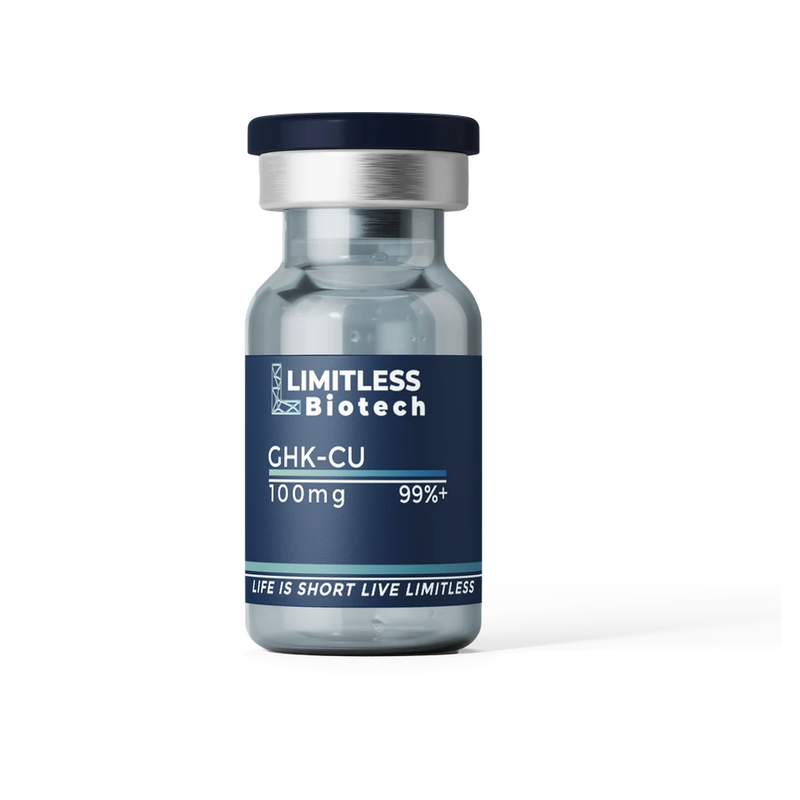
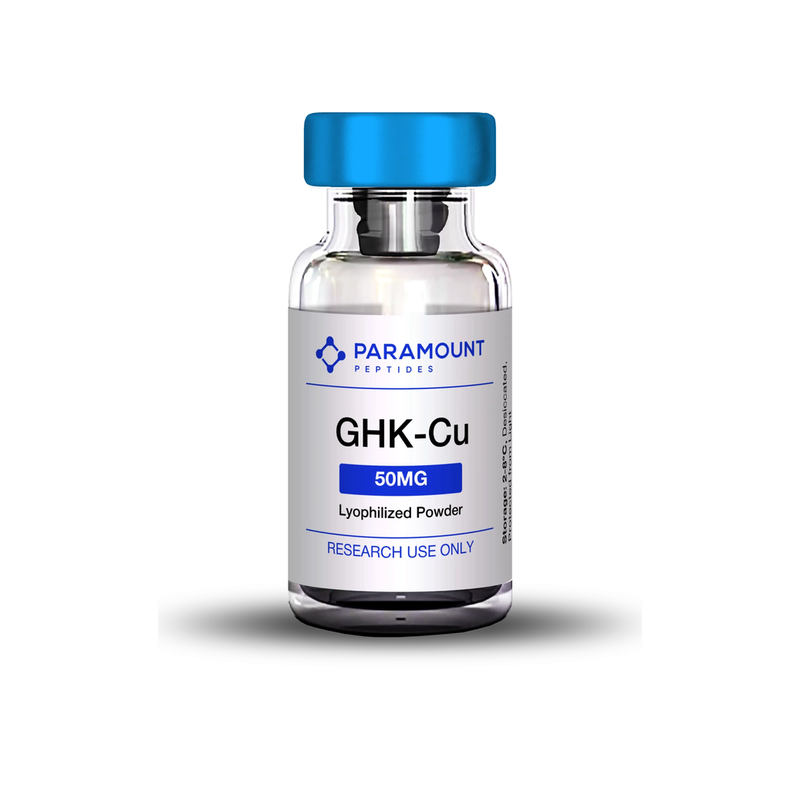
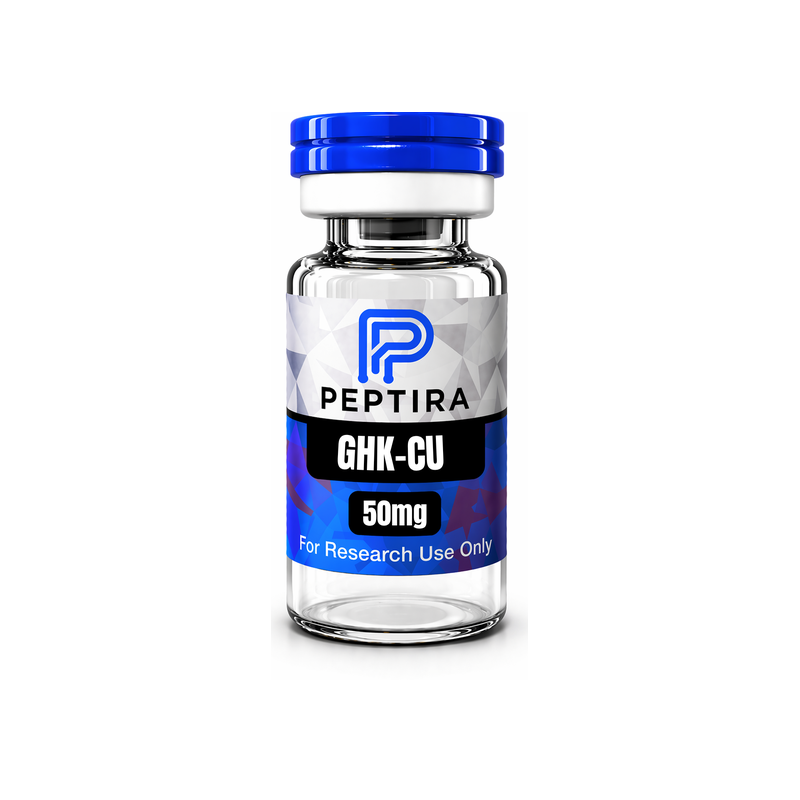
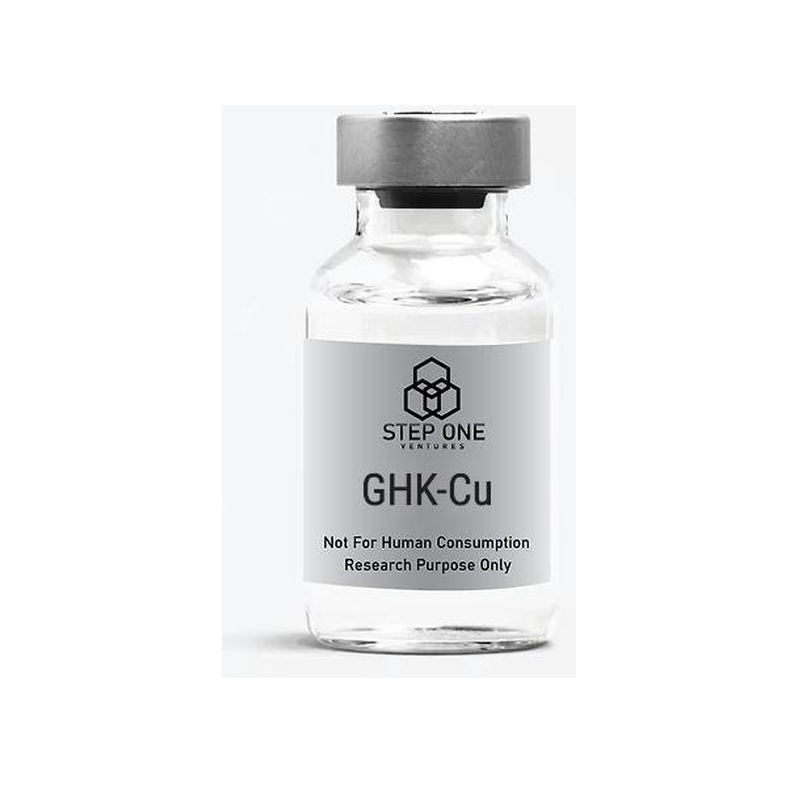
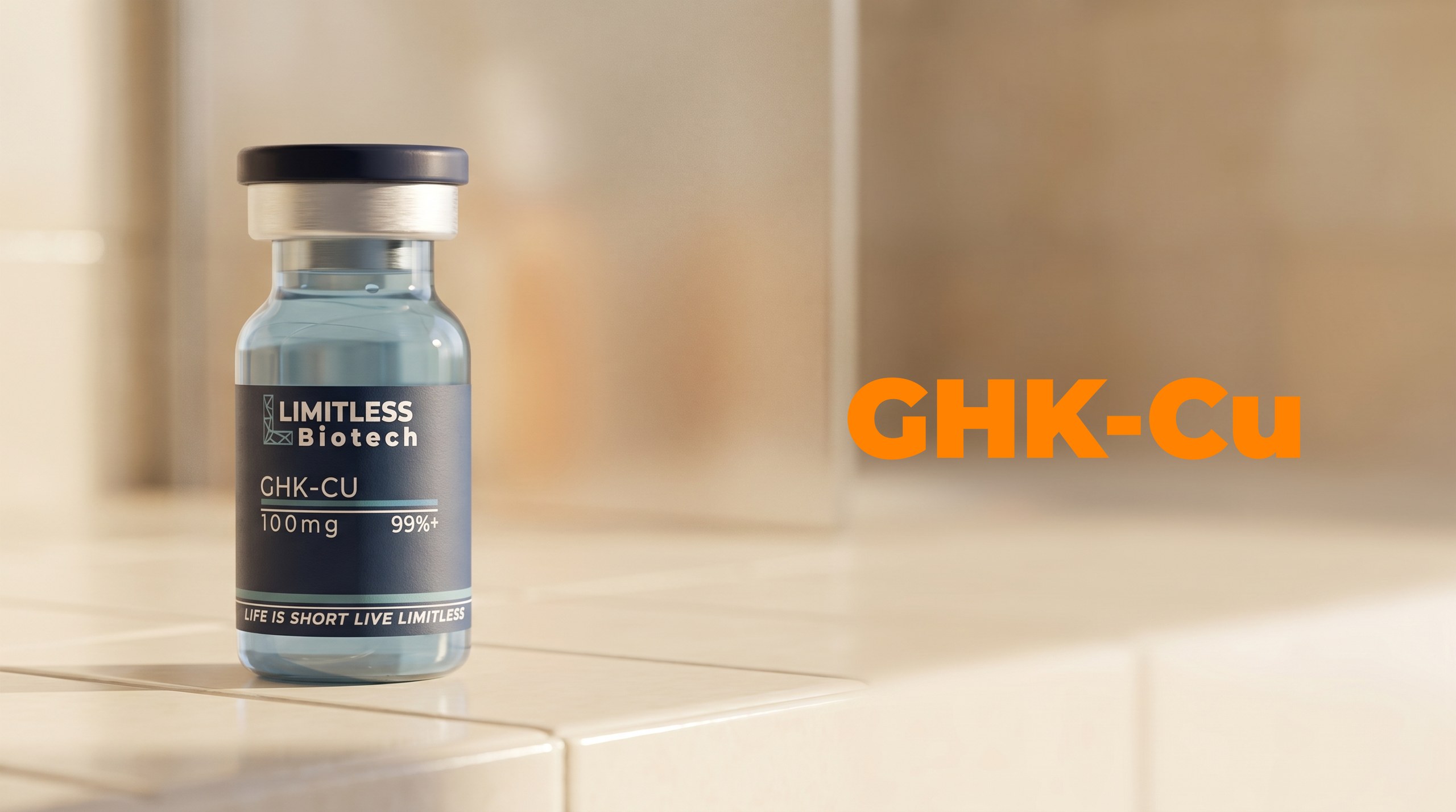
Limitless GHK-Cu Spray · LEE20Paramount GHK-Cu 100 mg · LEE10Peptira GHK-Cu 100 mg · LEEBioLongevity home · LEE15
Match the product to the job. Do not collect bottles. Do not buy GLOW because you typed GHK-Cu. Paramount’s printed code is LEE10.
Frequently asked questions about GHK-Cu
Is GHK-Cu the same thing as the glow peptide?
No. GHK-Cu is one copper tripeptide. “Glow peptide” is a search term that also pulls in the GLOW stack and Klow. If you want the copper-peptide conversation, read the GHK-Cu label. If the cap says GLOW, you are holding three names. Full map: Glow peptide.
Is GHK-Cu FDA-approved for skin?
No. GHK-Cu is not an FDA-approved drug for wrinkles, scars, or aging skin. Cosmetic copper-peptide products are a different regulatory lane from a research-catalog vial. A catalog label does not inherit an approval the sequence does not have.
Should I buy a cream or a research vial?
That depends on the job, and this page is not going to crown one for you. A finished cosmetic and a lyophilized research cake are different objects. Name the lane. Read the label. Do not pretend shared letters are a protocol.
Do I need GLOW or Klow if I wanted GHK-Cu?
Only if you can explain why BPC-157, TB-500, and (for Klow) KPV belong in the same stopper. If you wanted the copper peptide alone, buy the copper peptide alone — or keep reading before you buy anything.
The bottom line
GHK-Cu is a copper tripeptide with a Pickart / Maquart literature file.
Topical copper-peptide cosmetics and research vials share letters. They do not share a regulatory lane. GLOW and Klow are blend conversations, not upgrades stamped on the same molecule.
Keep the lanes. Read the papers. Do not buy a three-name cake because a caption said “copper peptide.”
Read next: Glow peptide for the three-name cake, Klow when a fourth letter appears, and how to reconstitute peptides before you crack a research vial.
I built Peptides & Pump so you can get this without a guru tax. If you want the protocol library, member discussions, and a place to think out loud before you spend money, that is Pro. If you are not ready to pay, use the free Knowledge Base first.
Free guide
Get The Peptide PlaybookEnter your email and we’ll send the research PDF. Education only — not medical advice.
 Keep going on Peptides & Pump
Free is the peptide community. Pro is where you master it.
Free
Knowledge Base
The peptide community · 2,500+
- 2,500+ member peptide community
- Sourcing questions before you buy anything random
- The basics, from people actually using peptides
Pro
Peptides & Pump Pro
$10/mo · 7-day trial
- Science-backed protocol library
- 1-on-1 support from Lee and Matt
- Step-by-step video, plus a monthly $500 drawing
LEE20 Limitless LEE15 BioLongevity LEE10 Paramount LEE Peptira LEE10 S1
Supplier footnote: Research suppliers I mention when people ask about GHK-Cu: Limitless (code LEE20; spray also lists), Paramount (code LEE10), Peptira (code LEE), and S1 Research (code LEE10). BioLongevity home: LEE15. Match the product to the job. Do not collect bottles.
Disclaimer. This article is for educational and research purposes only. It is not medical advice. It is not intended to diagnose, treat, cure, or prevent any disease. GHK-Cu / copper peptides, topical cosmetics that list them, GLOW blends, and Klow blends are not FDA-approved drugs for skin, wrinkles, scars, or aging. Cosmetic copper-peptide products are a different regulatory lane from a research-catalog vial. Most of the published evidence discussed here is preclinical, cell-culture, or animal work; gene-expression papers are not a substitute for a clinician. Individual results vary. Always consult a qualified healthcare provider before starting any peptide, supplement, or protocol, especially if you have a medical condition or take prescription medication. Peptides & Pump does not sell peptides.
Affiliate disclosure. Some links on this page are affiliate links. If you buy through them, I may earn a commission at no extra cost to you. Codes LEE15, LEE20, LEE, LEE10 (S1), and LEE10 (Paramount) are the ones I actually use where a coupon fires. That commission is how I keep publishing free education. I only link suppliers I am willing to put my name on.