Is Oral BPC-157 Worth It? Why Capsules Make Sense for Gut Repair
Key Takeaways
- Oral BPC-157 is not a watered-down injection. Research suggests this 15-amino-acid fragment stays stable in human gastric juice for more than 24 hours, which is the opposite of most peptides.
- If the target is your gut lining, a capsule puts the compound where the job actually is. If the target is a specific joint or a systemic repair goal, injectable still makes more sense.
- Same peptide. Two jobs. Pick the route based on the tissue, not gym-bro folklore.
- Most of the published work is preclinical. This page is education and research, not medical advice.
People treat oral BPC-157 like the cheap seat. Needles for the serious stuff. Capsules for people who are scared of pins.
That take is lazy. And it is wrong.
BPC-157 did not start in a bro-science spreadsheet. It is a 15-amino-acid fragment of Body Protection Compound, isolated from human gastric juice in the early 1990s. It lives in the stomach. So the idea that stomach acid instantly wrecks it is the first assumption you should throw out.
Oral BPC-157 is one of the few cases where the capsule is not a compromise. It is the route that matches the tissue. If you still need the map of what peptides even are, start there.
Oral BPC-157 is not a weaker injection
Most peptides die in the stomach. Fast.
Growth factors like EGF and TGF get chewed up in minutes in gastric acid. That is why the default advice for peptides is reconstitution, insulin syringes, and a fridge. Swallow those and the molecule never gets a chance.
BPC-157 is the exception that actually shows up in the papers. A 2025 review in Pharmaceuticals by Jóźwiak and colleagues walks through the structure. The sequence is odd. That composition is a big reason researchers keep calling it stable in water and in gastric juice.
Older cytoprotection work from the Sikiric group makes the same point more bluntly. In a 2020 Gut and Liver review, they describe BPC-157 as native and essentially stable in human gastric juice, with activity across the GI tract in preclinical models. You can read that paper here.
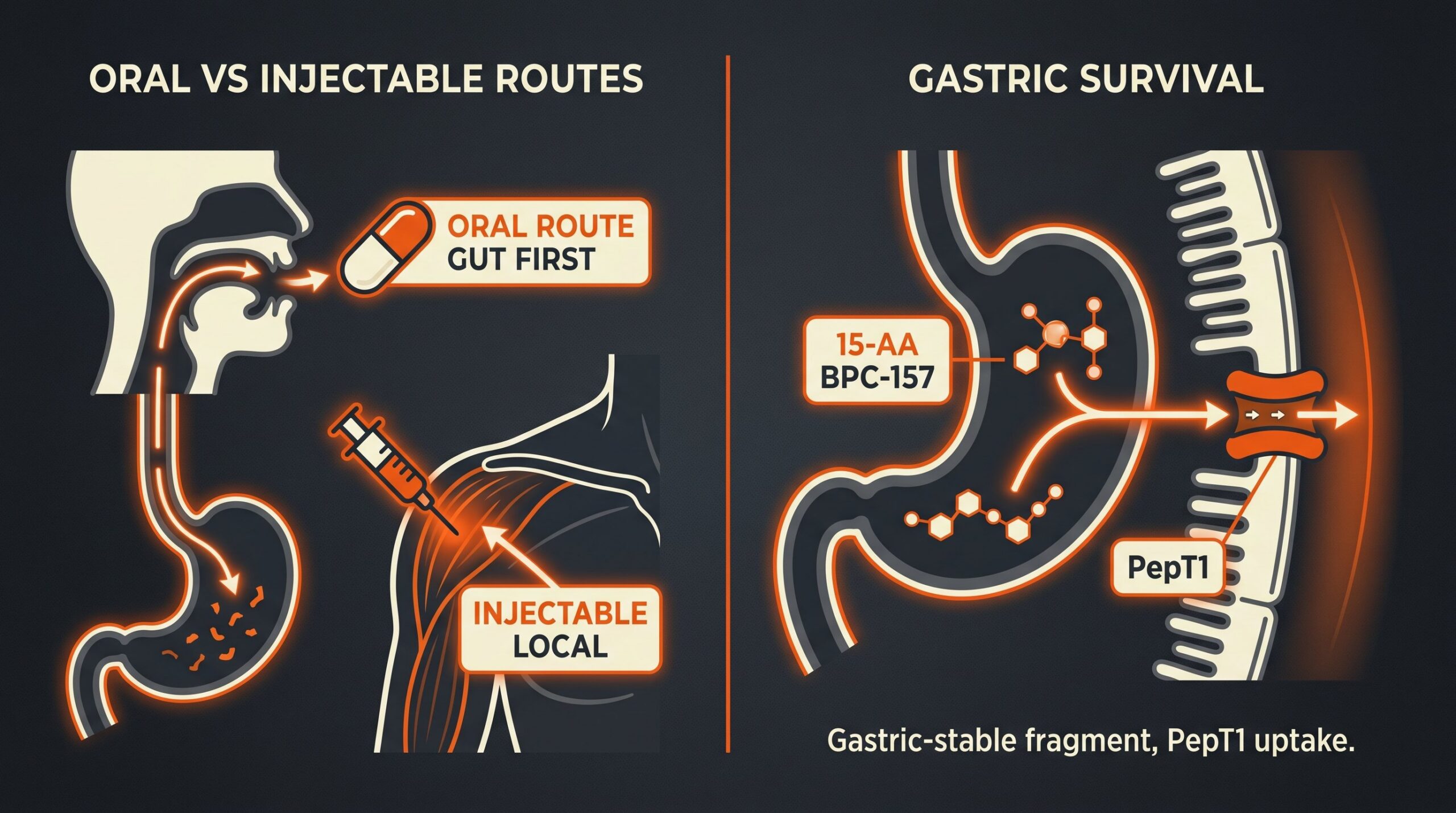
The number that matters for this article: research has shown BPC-157 remaining intact in human gastric juice for more than 24 hours. Not minutes. A full day.
That is the argument for a capsule. You are not hoping a fragile peptide survives lunch. You are using a gastric fragment in the environment it came from. Oral does not beat injectable for everything. For gut work, it is the logical delivery method.
Capsules make sense when the job is gut repair
Here is the filter. Steal it.
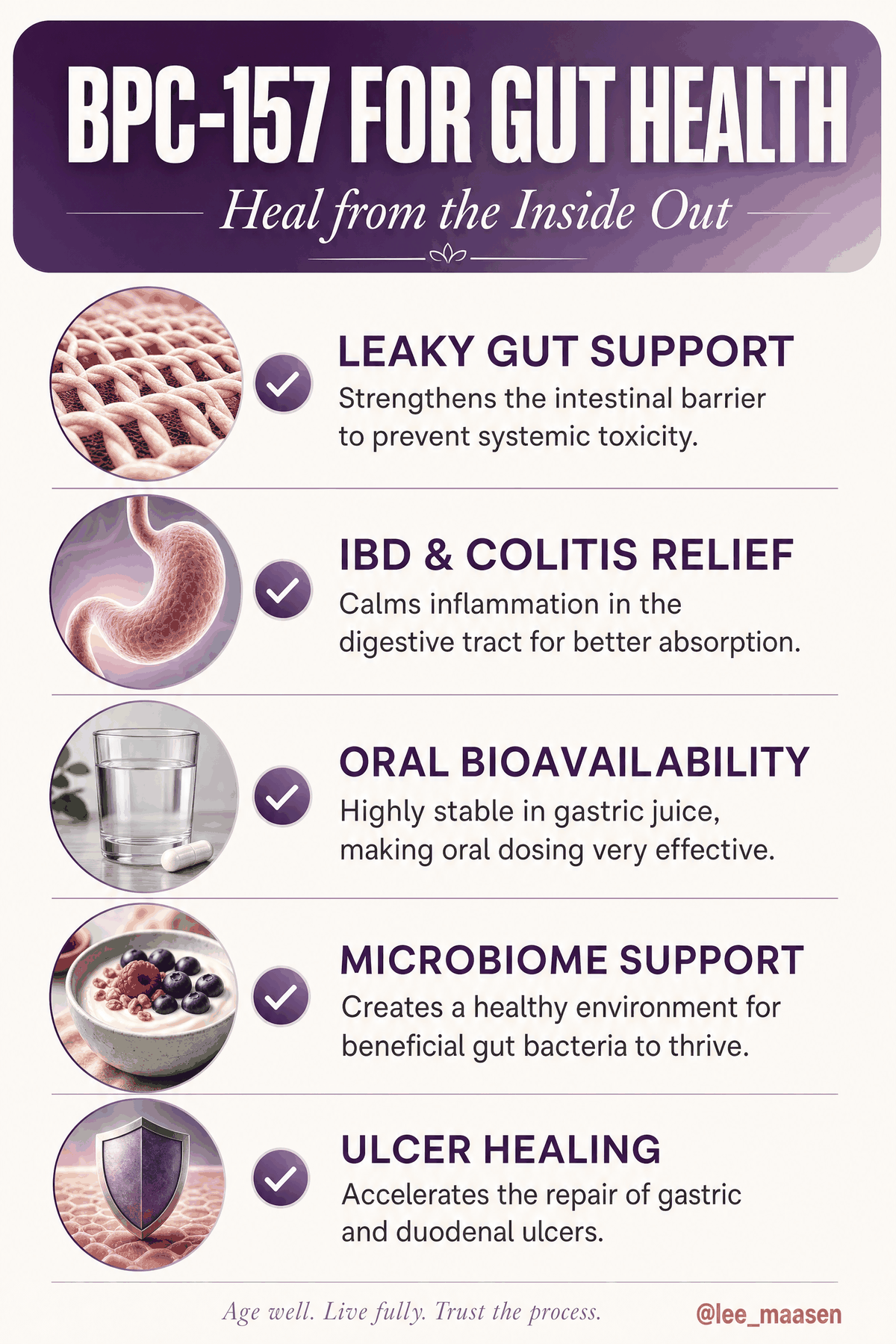
If the tissue you care about is the digestive tract (mucosal integrity, GI inflammatory response, a lining beat up by stress, travel, training, and a decade of extra ibuprofen), oral puts the peptide on the job site.
If the tissue you care about is a cranky shoulder, a bad knee, or a more systemic repair goal, injectable is still the better match. You want signal in a joint or in circulation, not a bath for the gut.
Same peptide. Two jobs.
I keep repeating that because the internet keeps collapsing it into “is oral BPC-157 legit or is it fake?” Wrong question. The right one is: what are you trying to influence?
Preclinical GI work has looked at cytoprotection, lesion models, and organ-level repair in animals. A 2022 Biomedicines review from Staresinic et al. frames BPC-157 as a stable gastric pentadecapeptide that stays intact in human gastric juice and can be given in drinking water in rodent models, not only by injection. That does not make it a human gut-cure. It does explain why a capsule is not a gimmick.
I also like the capsule for a boring reason. Real life. It goes in the morning stack. No bacteriostatic water. No reconstitution math at 6 a.m. You can travel with it. You can be consistent, and consistency is the part most people skip.
If you are new, start with the Start Here page. Do not run five compounds because a podcast guest stacked them on a whiteboard.
Oral vs injectable BPC-157: same peptide, two jobs
Use this table. Then stop arguing with people on the internet.
| Factor | Oral capsule | Injectable |
|---|---|---|
| Primary target | Gut lining, mucosal integrity, GI inflammatory response, digestive tract repair | A specific joint, tendon, or a more systemic repair goal |
| Why the route fits | Research suggests gastric stability past 24 hours, so the compound can actually reach the GI tract | Bypasses the gut on purpose when the job is not the gut |
| Convenience | Morning stack. No needles. No mixing. | Reconstitution, syringes, alcohol swabs, fridge discipline |
| Travel | Toss the bottle in a toiletry bag | Vials, pins, and a cooler story at TSA |
| When it makes sense | Gut-first goals, needle-averse beginners, people who will actually stay consistent | Localized injury, systemic protocols, or when you already run injectables well |
I am not anti-injection. I run pins when the target calls for pins. I am anti-using the wrong tool because a forum decided oral is for cowards. If the job is injectable BPC-157 as a local-repair fragment, that map is the BPC-157 hub.
This is the kind of filter we talk through in the free Peptides & Pump Knowledge Base on Skool. No paywall on the basics. Bring your questions. Read before you buy random vials off a banner ad.
Why KPV belongs in the same conversation
Once you accept that oral BPC-157 is a gut-route idea, KPV shows up immediately. It is a three-amino-acid melanocortin fragment. Lys-Pro-Val. Tiny. That size is the point.
Research from Dalmasso et al. in Gastroenterology (2008) suggests the PepT1 transporter carries KPV into intestinal epithelial cells and immune cells. PepT1 is a di/tripeptide transporter in the small intestine, and the same work describes it ramping up in inflamed colon tissue. You can read the paper here.
That is a clever delivery story. Inflamed tissue expresses more of the door. The tripeptide walks through the door.
A second 2008 paper from Kannengiesser et al. in Inflammatory Bowel Diseases looked at KPV in murine colitis models and reported anti-inflammatory effects, including in animals with a nonfunctional melanocortin-1 receptor. In plain English: those models were not just “hit the MC1 receptor and hope.”
I am not diagnosing Crohn’s or selling an IBD protocol. Those papers are mouse and cell work. They are why serious people stack oral BPC-157 with KPV when the goal is gut-facing, not because a brand needed a second ingredient. Different tools. Same neighborhood.
How people typically run oral BPC-157
What follows is what I see on labels and in community discussion. It is not a prescription. It is not “take this.” Your clinician owns that conversation.
Dose. The single-ingredient capsule I point beginners toward is 250 mcg of BPC-157 per cap, third-party tested. One compound. One number. People in this space commonly talk about 250 to 500 mcg per day for oral BPC-157. That is a research-and-community range, not a medical order. More is not smarter.
Timing. Most people take the capsule in the morning with the rest of the stack. Empty stomach vs with food burns more hours than it is worth. Pick a time you will not skip. Stay consistent for weeks, not three enthusiastic days.
Cycling, especially on a stack. When people run a combined gut formula (BPC-157 plus KPV plus the extras below), a common pattern is a couple of weeks on and a week off. That is how some people run it. It is not a law of biology. Cycling is a way to observe on vs off, instead of swallowing a stack until you forget why you started.
How long before you judge it. Gut work is not a pump in the mirror. People usually talk in terms of a few weeks and track boring stuff: stool quality, bloating, how travel weeks feel. If nothing changes, do not double the dose. Revisit sleep, fiber, alcohol, NSAIDs, and training load first. Peptides sit on top of habits. They do not replace them.
Where to get oral BPC-157
Labs for oral BPC-157.
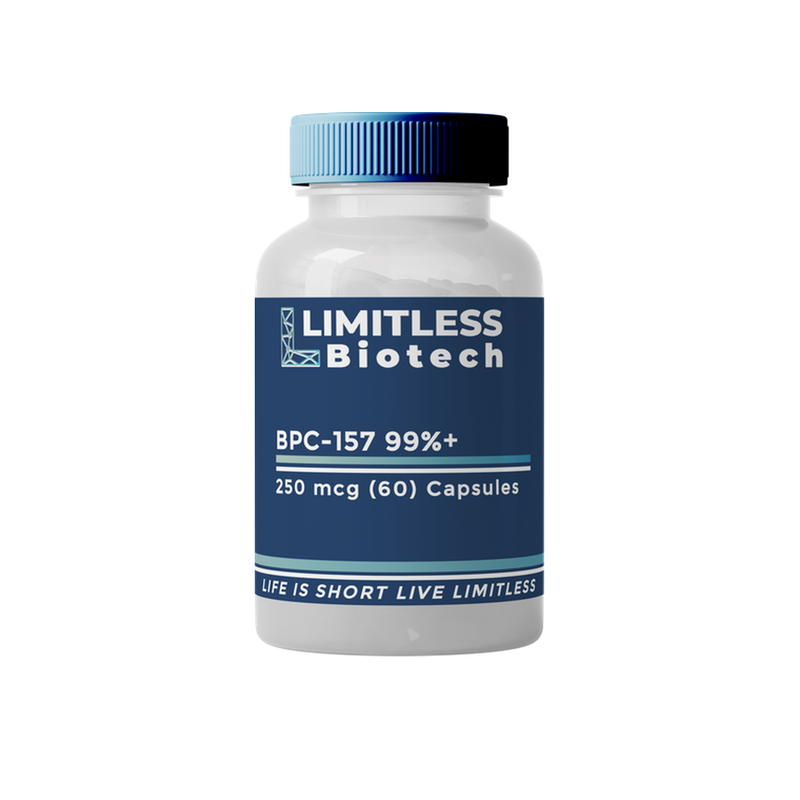 Limitless
BPC-157 capsules 250 mcg
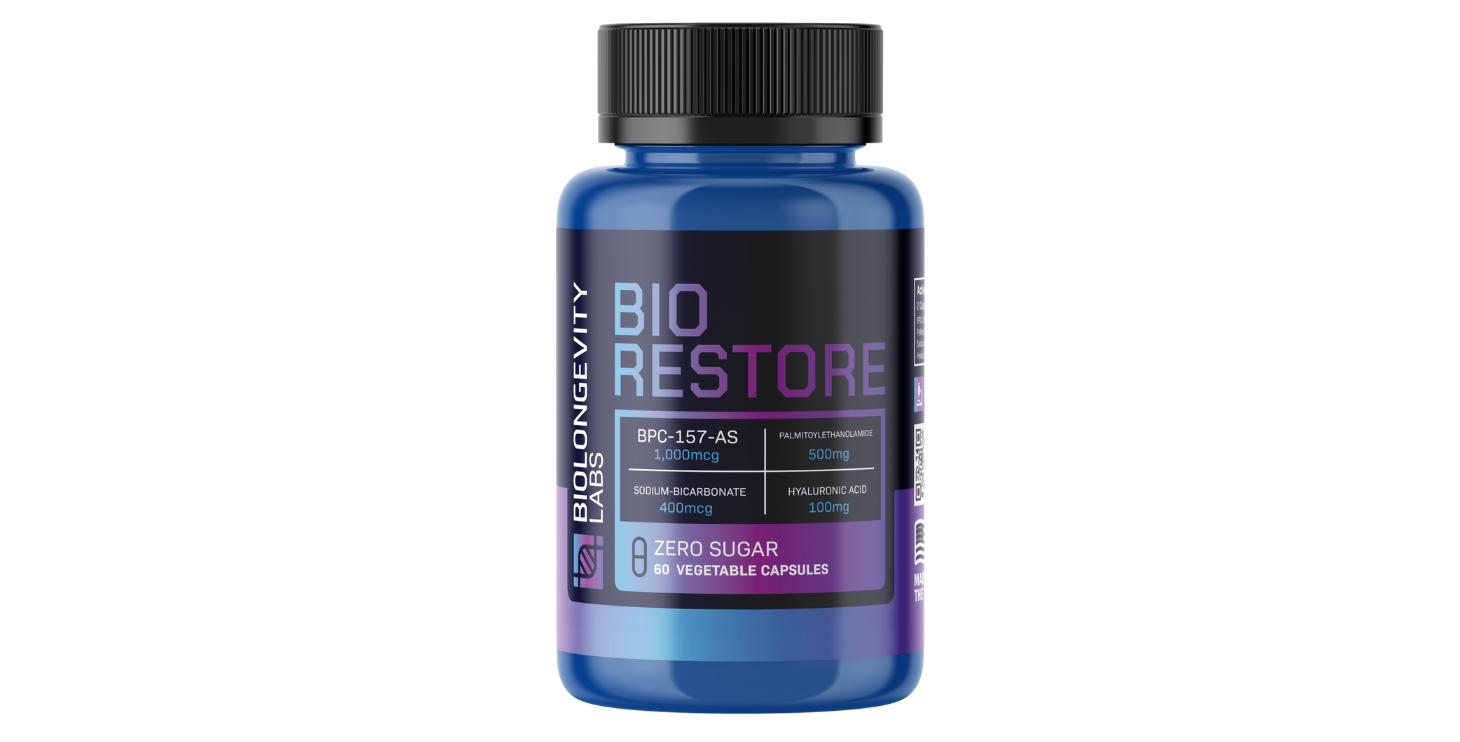
LEE20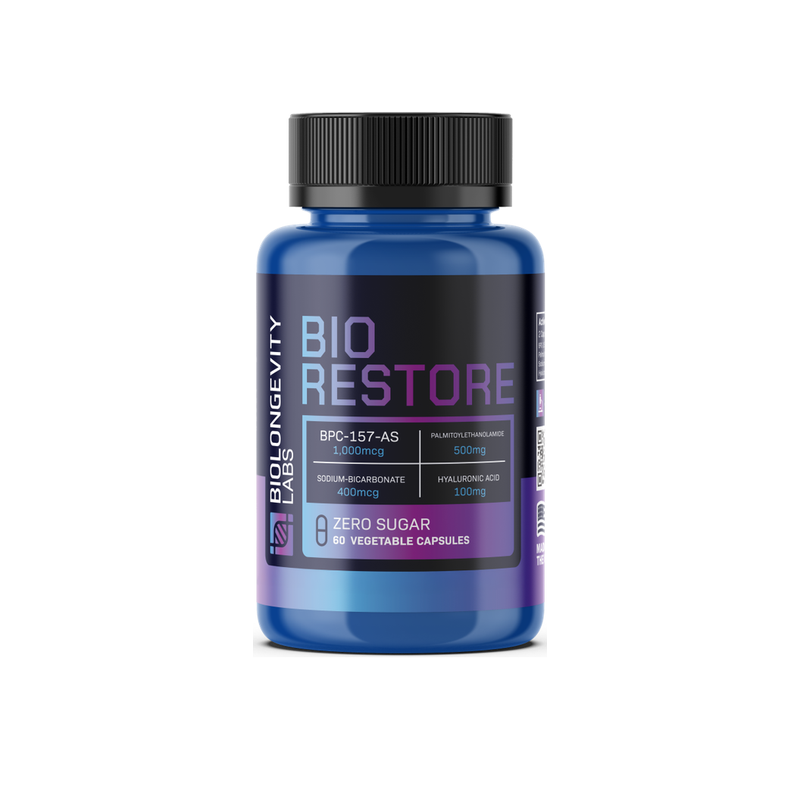 BioLongevity
BioRestore
LEE15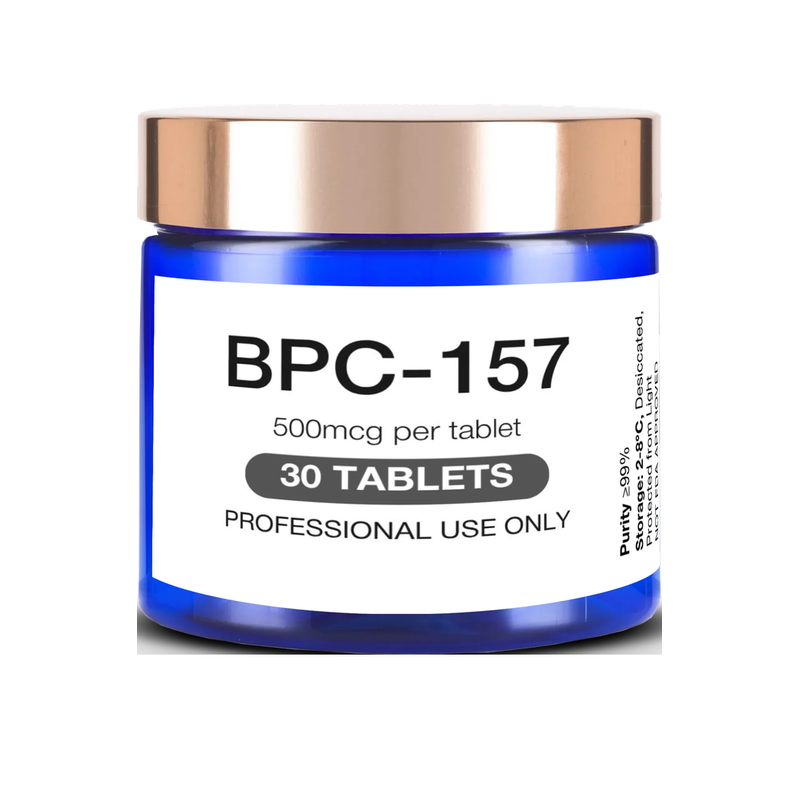 Paramount
BPC-157 500 mcg tablets
LEE10Gut-stack option: BioGutPro from BioLongevity Labs. Use code LEE15 at checkout. That one is BPC-157 plus KPV, then larazotide, GHK-Cu, a butyrate precursor, zinc carnosine, and a gastric buffer. It is a stack, not a beginner science experiment. Use it if you already understand why each piece is there. The main BioLongevity supplements store takes LEE15 at checkout too.
Start simple and add. Do not start with seven ingredients.
Frequently asked questions about oral BPC-157
Is oral BPC-157 as good as injectable BPC-157?
For gut-facing goals, research on gastric stability is why many of us treat oral as the matching route, not a weaker one. For a specific joint or a systemic goal, injectable still has the edge because you are not trying to use the GI tract as the workplace. Compare the target, not the ego.
What dose do people use for oral BPC-157 capsules?
A common capsule size is 250 mcg. Community discussion often sits in the 250 to 500 mcg per day range. That is not a medical dose. Know the milligrams on the label and talk with a qualified professional, especially if you take other meds or have a GI diagnosis.
Does oral BPC-157 actually help the gut?
Research suggests BPC-157 is stable in gastric juice for more than 24 hours and has been studied in preclinical GI injury and cytoprotection models. That is the scientific case for using a capsule when the tissue of interest is the digestive tract. It is not proof it will fix your symptoms, and it is not a treatment claim.
Why do people add KPV to oral BPC-157?
KPV is a three-amino-acid melanocortin fragment. Research suggests PepT1 transports it into gut cells, and that transporter is described as increasing in inflamed intestinal tissue. People stack it with oral BPC-157 because the mechanisms sit in the same neighborhood. Mouse data is not a human protocol.
How long should you run oral BPC-157 before judging it?
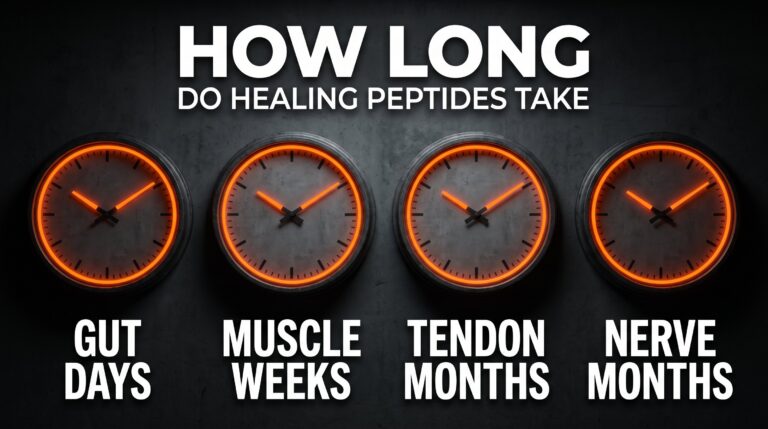
Give it weeks, not a long weekend. Track simple gut markers and your routine. Gut lining turns over faster than tendon; the tissue clocks are in how long peptides for healing take. On combined formulas like BioGutPro, some people cycle a couple of weeks on and a week off so they can actually see the difference. If you change five variables at once, you will learn nothing.
Is oral BPC-157 legit, or is it just marketing?
The gastric-stability and GI research is real and citable. Human clinical data is still thin next to the rodent pile. BPC-157 is not FDA-approved for these uses. Quality varies, so third-party testing is non-negotiable. Read the papers, check the lab reports, and talk to a clinician. If you want that conversation with people doing this in real life, use the community page.
The bottom line
Oral BPC-157 is worth it when the job is gut repair and you will actually take the capsule. It is not worth it as a way to avoid injections for a shoulder that needs a different route.
Stability in gastric juice is the scientific punchline. Convenience is the lifestyle punchline. KPV is the stack conversation, not the mandatory add-on. Start with one ingredient if you are new. Use a stack when you can explain every line on the label.
A GLOW blend is GHK-Cu plus BPC-157 plus TB-500 in one cake, usually a research vial, not the oral gut-route argument. If that is the search, start with glow peptide.
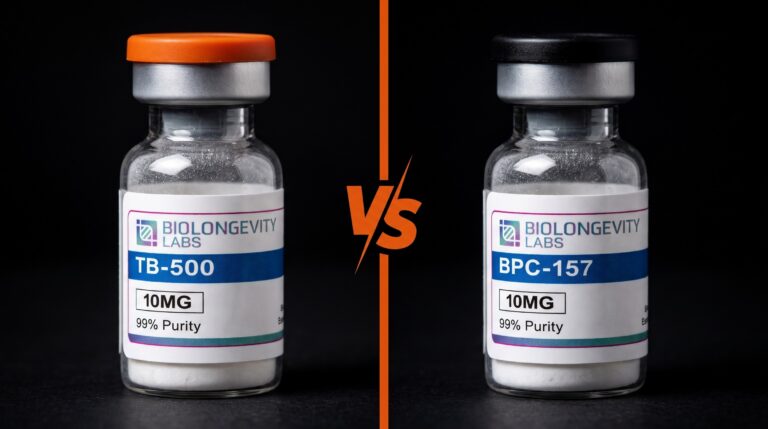
Read next: injectable BPC-157 when the job is local structure, TB-500 when the molecule is different on purpose, and how long healing peptides take for the tissue clocks.
I built Peptides & Pump so you can get this without a guru tax. If you want the full protocol library, member discussions, and a place to think out loud before you spend money, join Peptides & Pump Pro. It is $10 a month. Seven-day free trial. Cancel anytime.
If you are not ready to pay, use the free Knowledge Base first. Then come back and argue with me when you have read more than a caption.
Do the reading. Respect the research. Do not let a capsule, or a needle, think for you.
Free guide
Get The Peptide PlaybookEnter your email and we’ll send the research PDF. Education only — not medical advice.
 Keep going on Peptides & Pump
Free is the peptide community. Pro is where you master it.
Free
Knowledge Base
The peptide community · 2,500+
- 2,500+ member peptide community
- Sourcing questions before you buy anything random
- The basics, from people actually using peptides
Pro
Peptides & Pump Pro
$10/mo · 7-day trial
- Science-backed protocol library
- 1-on-1 support from Lee and Matt
- Step-by-step video, plus a monthly $500 drawing
LEE20 Limitless LEE15 BioLongevity Paramount LEE Peptira LEE10 S1
Next reads
Supplier footnote: Other research suppliers I mention when people ask: Paramount, Peptira (code LEE), and S1 Research (code LEE10). Match the product to the job. Do not collect bottles.
Disclaimer. This article is for educational and research purposes only. It is not medical advice. It is not intended to diagnose, treat, cure, or prevent any disease. BPC-157, KPV, and related peptides are not FDA-approved for the uses discussed here. Most of the published evidence is preclinical. Individual results vary. Always consult a qualified healthcare provider before starting any peptide, supplement, or protocol, especially if you have a medical condition or take prescription medication. Peptides & Pump does not sell peptides.
Affiliate disclosure. Some links on this page are affiliate links. If you buy through them, I may earn a commission at no extra cost to you. Codes LEE15, LEE20, LEE10, and LEE are the ones I actually use. That commission is how I keep publishing free education. I only link suppliers I am willing to put my name on.
10 Comments