MOTS-c: The Mitochondrial Peptide
Key takeaways
- MOTS-c is a mitochondrial-encoded 16-amino-acid peptide. Not a GLP-1. Not a GH secretagogue. Different genome. Different job.
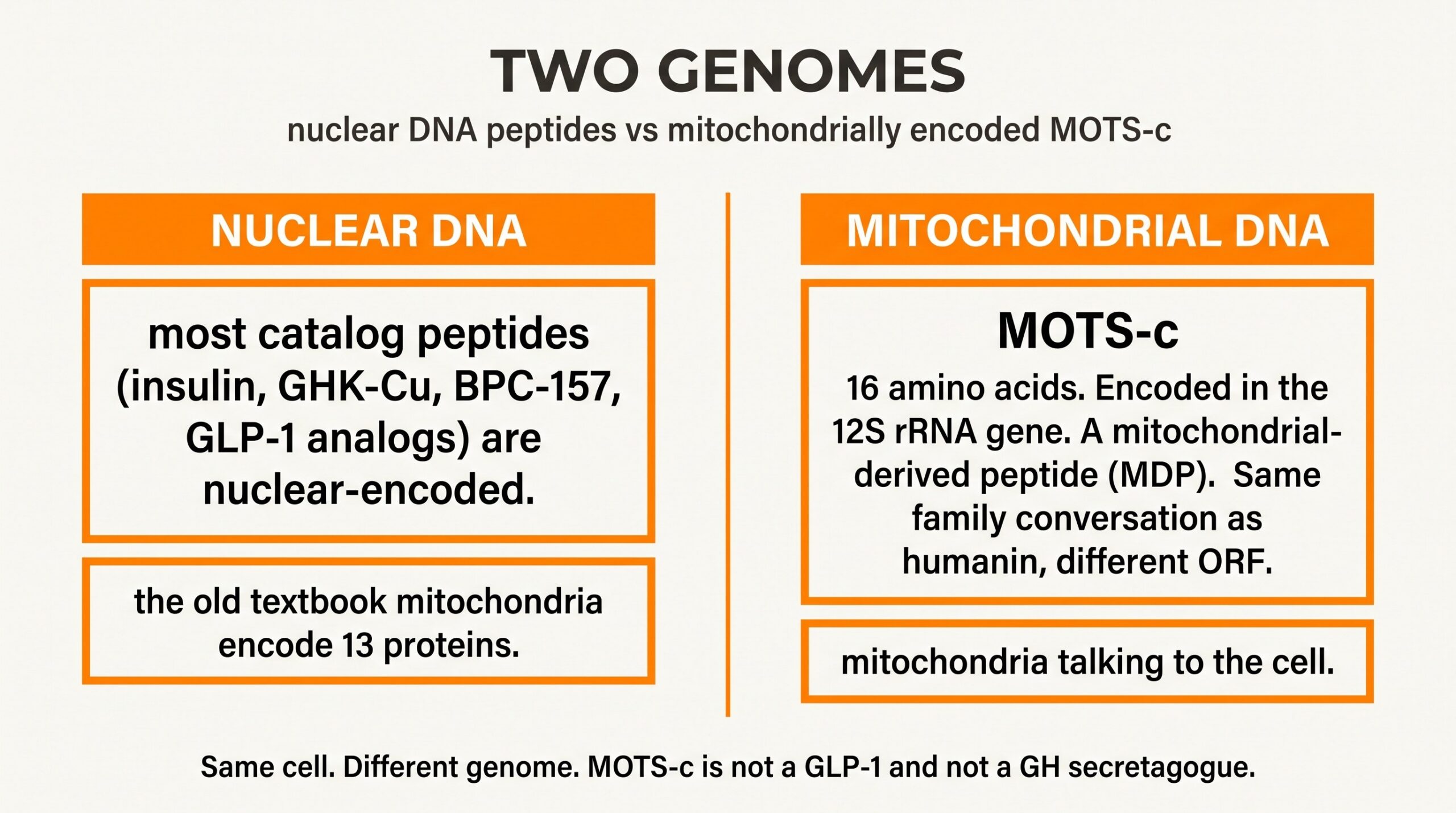
- Most catalog peptides are nuclear DNA. MOTS-c is encoded in the 12S rRNA gene of mitochondrial DNA. Same cell. Different instruction set.
- The research framing is AMPK and “exercise-mimetic” metabolic work in animals. Mouse papers are not a diabetes drug and not a reason to skip a clinician.
- Research catalogs, compounding pharmacies, and FDA-approved drugs are three lanes. MOTS-c is not an FDA-approved drug. A lyophilized cake does not inherit a label.
- Education, not a treatment. Full protocols stay in Peptides & Pump Pro ($10/mo, 7-day trial).
MOTS-c is written in mitochondrial DNA, not in a gut-hormone analog. The name is Mitochondrial Open Reading Frame of the 12S rRNA type-c: sixteen amino acids encoded inside the 12S rRNA gene. A genome address. A cell-energy signal.
That is not an incretin drug. Not a weekly pen. Not a GH secretagogue. The analog you are picturing has a label, a prescriber, and a GLP-1 or GIP receptor. This vial is a mitochondrial-derived peptide with a mouse metabolic file.
The research-versus-GLP-1 map already lives on peptides for weight loss. This page is the MOTS-c lane. Stay here if you typed the word and want to know what you are holding. Start on Start Here if mitochondrial genomes are not day one.
This is education. It is not medical advice. A research-catalog vial is not a treatment for diabetes, obesity, or aging.
What is MOTS-c?
A peptide is a short chain of amino acids. If you still need that map, read what are peptides first. Insulin is a peptide. Semaglutide is a peptide. MOTS-c is a peptide. Naming the format does not name the genome.
MOTS-c is 16 amino acids. Sequence MRWQEMGYIFYPRKLR. It is encoded inside the mitochondrial 12S ribosomal RNA gene as a short open reading frame. Changhan Lee, Pinchas Cohen, and colleagues at USC described it in Cell Metabolism in 2015: a mitochondrial-derived peptide that promoted metabolic homeostasis in their models and reduced diet-induced obesity and insulin resistance in mice. You can find that paper at PMID 25738459.
Notice what it is. A mitochondrial ORF. A circulating signal in the papers. A 16-residue peptide the cell can make from mtDNA. It is not a GLP-1 receptor agonist. It is not GHRH. It is not a fragment of hGH. Those are other conversations wearing the same hoodie on a forum.
The old textbook said mitochondria encode 13 proteins, all of them pieces of the electron-transport chain. That textbook was incomplete. Short ORFs in mtDNA make bioactive peptides. The family is mitochondrial-derived peptides, MDPs. Humanin is one. The small humanin-like peptides are others. MOTS-c is the 12S rRNA ORF people are actually searching.
So what is MOTS-c, in the way a beginner should hold it? A mitochondrially encoded 16-amino-acid peptide with an AMPK and metabolic literature in animals. The mitochondrial peptide people type. Not a pen. Not a GH secretagogue. Not an FDA-approved drug.
The hard point: nuclear DNA vs mitochondrial MOTS-c
You do not need a PhD. You need two genomes and one cell.
| Lane | What it actually is | What the evidence is | What it is not |
|---|---|---|---|
| MOTS-c | 16-aa peptide encoded in mtDNA (12S rRNA ORF). An MDP. | Lee et al., Cell Metabolism 2015: AMPK, metabolic homeostasis, diet-induced obesity and insulin resistance in mice. Later nuclear-translocation and exercise-associated papers. | Not a GLP-1. Not a GH secretagogue. Not an FDA-approved drug. Not “Ozempic from your mitochondria.” |
| GLP-1 / GIP agonists | Engineered gut-hormone receptor drugs (semaglutide, tirzepatide). | Large randomized obesity trials. A clinician and a pharmacy. | Not MOTS-c. Not a research-catalog substitute pen. That map is on the weight-loss hub. |
| GH secretagogues | GHRH analogs and GHS-R agonists that ask the pituitary for a GH pulse. | A different receptor, a different gland, a different page. | Not mitochondrial. Not MOTS-c. Sermorelin is GHRH 1-29. Do not mash the lanes. |
| AOD-9604 | 16-aa lipolytic fragment of hGH (176-191). Nuclear-gene hormone fragment. | Mouse lipid-metabolism data. Mixed human weight-loss data. No obesity-drug approval. | Not MOTS-c. Same residue count, different origin, different lock. |
| Humanin | A different MDP, encoded in mitochondrial 16S rRNA. Same family conversation. | Its own literature file. Not the MOTS-c ORF. | Not a free upgrade sticker on a MOTS-c vial. A MOTS-c / Humanin blend is two names, not one mechanism. |
You can be interested in all of them. You cannot mash them into one Reddit protocol and call the mitochondrial origin a clinical result.
Kim, Son, Benayoun, and Lee later showed in Cell Metabolism in 2018 that MOTS-c can translocate to the nucleus under metabolic stress and regulate nuclear gene expression. AMPK was in that story too. You can find it at PMID 29972823. That is mitochondria talking to the nucleus. It is not a protocol. It is a reason this peptide is interesting.
AMPK, AICAR, and the “exercise-mimetic” label
Search volume is not a protocol. Neither is a nickname.
MOTS-c got called an exercise-mimetic because the 2015 paper put it on AMPK, the cell’s energy sensor, and because later work tied it to exercise-associated signaling. Reynolds, Lee, and colleagues reported in Nature Communications that MOTS-c is exercise-induced and can regulate physical capacity in mice in an age-dependent way. DOI 10.1038/s41467-020-20790-0.
Here is the mechanism in beginner English.
AMPK turns on when the cell is short on energy. Exercise does that. Metformin talks to that neighborhood. AICAR is a known AMPK activator that researchers have used for years. The Lee 2015 work described MOTS-c inhibiting the folate cycle and de novo purine synthesis, which accumulated AICAR inside the cell, which activated AMPK, which in skeletal muscle is a glucose-uptake and fatty-acid-oxidation conversation (GLUT4 in the papers).
That is a real pathway in the literature. It is also how catalogs ended up stamping “exercise in a vial” on a lyophilized cake.
An exercise mimetic is not exercise. Exercise is a network: mechanical load, cardiovascular work, myokines, sleep, the thing you actually did. A peptide that overlaps one energy-sensing pathway is not a substitute for walking. The papers do not say it is. The captions do.
AMPK is real. The ORF is real. The mouse work is real. A nickname is not a protocol. If you came here because 49,500 people a month type MOTS-c, good. Read the map. Then decide whether this is even the conversation you wanted.
What the metabolic literature actually is (and is not)
The 2015 Cell Metabolism paper is the one everyone cites. MOTS-c treatment in mice prevented age-dependent and high-fat-diet-induced insulin resistance, and diet-induced obesity, in those experiments. Skeletal muscle AMPK. GLUT4. Metabolic homeostasis as the headline.
That is animal work. Controlled. Mechanistic. Important. It is not a 68-week human obesity trial. It is not STEP-1. It is not SURMOUNT-1. If you wanted that comparison, you are in the GLP-1 lane, which I already mapped on the weight-loss hub. I am not reprinting Wilding so this URL can steal a keyword it does not own.
Human MOTS-c data is thinner than the mouse file. Circulating levels, exercise bouts, observational associations with insulin resistance and aging — that is the neighborhood. A registered early clinical program is not the same object as a labeled drug. Do not launder a mouse high-fat-diet study into “this treats type 2 diabetes.”
None of this is a reason to skip a clinician. Insulin resistance, obesity, and diabetes are medical conditions. They belong to a person with a chart, not to a research catalog. The literature can be real. The drug label can still be missing. Those can both be true at the same time. That is how grown-ups read papers.
Research catalog vs compounding vs FDA drugs
Three lanes. Keep them.
FDA-approved drugs have an application, a label, an indication, manufacturing that the agency actually inspects for that product. Semaglutide as Ozempic or Wegovy is that lane. Tesamorelin as Egrifta is that lane. MOTS-c is not. There is no MOTS-c tablet in that drawer.
Compounding is a pharmacy lane. A 503A pharmacy compounds for a patient with a prescription. That is a regulated activity with its own fights, shortages, and FDA compounding lists. A compounded MOTS-c prescription, if it exists in a clinic, is still not an approved drug. It is a different object from a lyophilized research cake with a coupon code.
Research catalogs sell named sequences for research use. COA if you are lucky. “Not for human consumption” on the page. Forums treat that disclaimer as a wink. I do not. A research-use MOTS-c vial is a catalog SKU. It is not a compounding script. It is not a labeled drug. Pretending otherwise is how people get hurt and how this page would get stupid.
I am not going to tell you to buy a research chemical for human use. I am not going to tell you to skip a doctor. I am going to tell you to name the lane before you name the SKU.
How a beginner should think about MOTS-c
Start with the question, not the vial.
Are you trying to understand a mitochondrial-encoded peptide because a podcast said “AMPK”? Read this page. Then read the papers. Then decide if you even belong in a catalog.
Are you trying to understand peptides for fat loss as a class? That is peptides for weight loss. GLP-1 drugs, AOD-9604, tesamorelin. MOTS-c is a different genome. I will not restuff that hub so this URL can rank twice.
Are you brand new and a 12S rRNA lecture is not day one? That is Start Here.
Here is the order I give beginners.
1. Read first. Name the genome before you name the SKU. Nuclear or mitochondrial. GLP-1 receptor or AMPK literature. Drug, compound, or research catalog.
2. Name the peptide. MOTS-c is 16 amino acids from mtDNA. Humanin is a different MDP. A blend that says MOTS-c 5 mg / Humanin 5 mg is two files in one stopper. If you cannot say which ORF you are holding, close the tab.
3. Do not crown the nickname. “Exercise-mimetic” won the caption. It did not win a label.
4. If a lyophilized cake is even on the table, learn the reconstitution math. How to reconstitute peptides is the public page for BAC water, U-100 ticks, and not wasting 10% of the vial. I will not dump a MOTS-c protocol next to that math.
A clinician belongs in the loop for anything that sounds like a drug, because some of these molecules are drugs in another bottle, and none of this page is a substitute for that visit. I am not going to tell you to skip a doctor. I am going to tell you to read.
I am also not going to drop a units-and-days protocol on a public page. That is what Peptides & Pump Pro is for. Ten dollars a month. Seven-day trial. This page is here so you understand the search before you spend money.
Where to get MOTS-c
Education first. You already got the map. This block is the labs I will put my name on, with the codes that fire. Research-use catalog pages. Not a treatment claim. Not a “buy this to treat diabetes.”
Limitless is the primary partner here. Standalone MOTS-c leads the row. The MOTS-c / Humanin blend is a different product — not the same bottle.
Labs for MOTS-c.
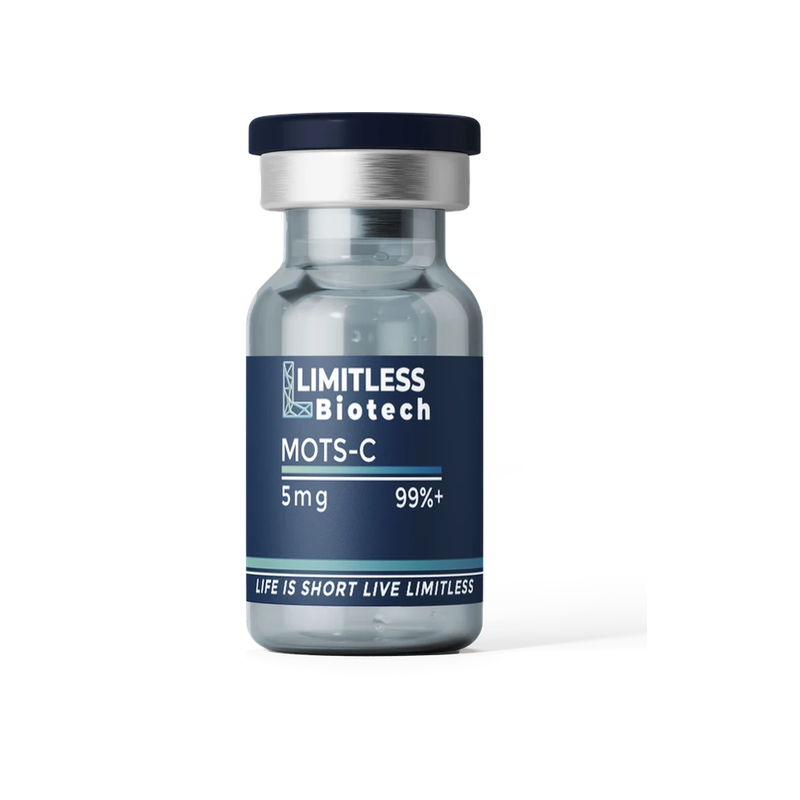
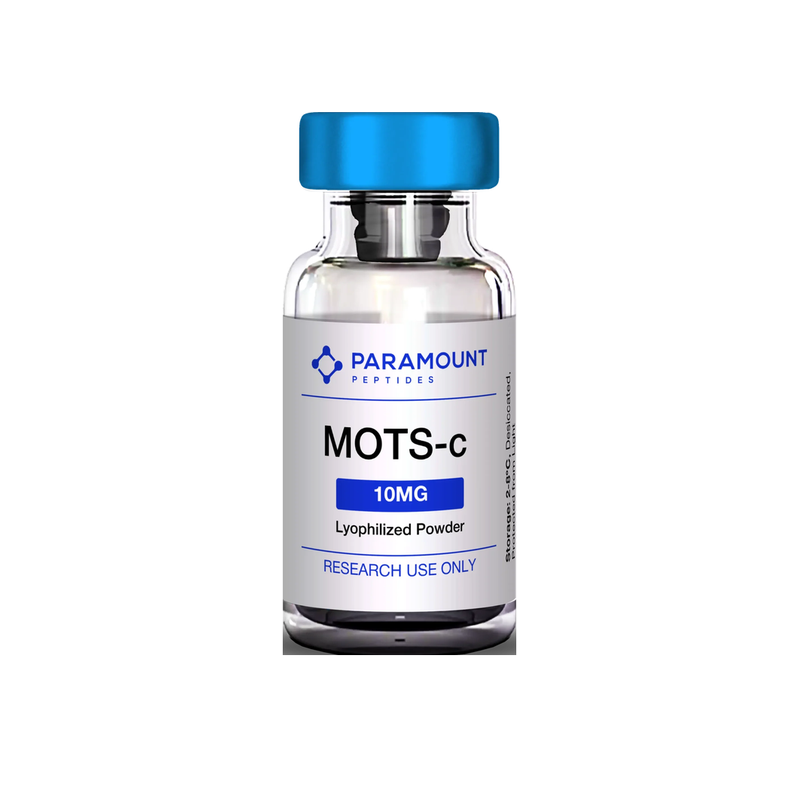
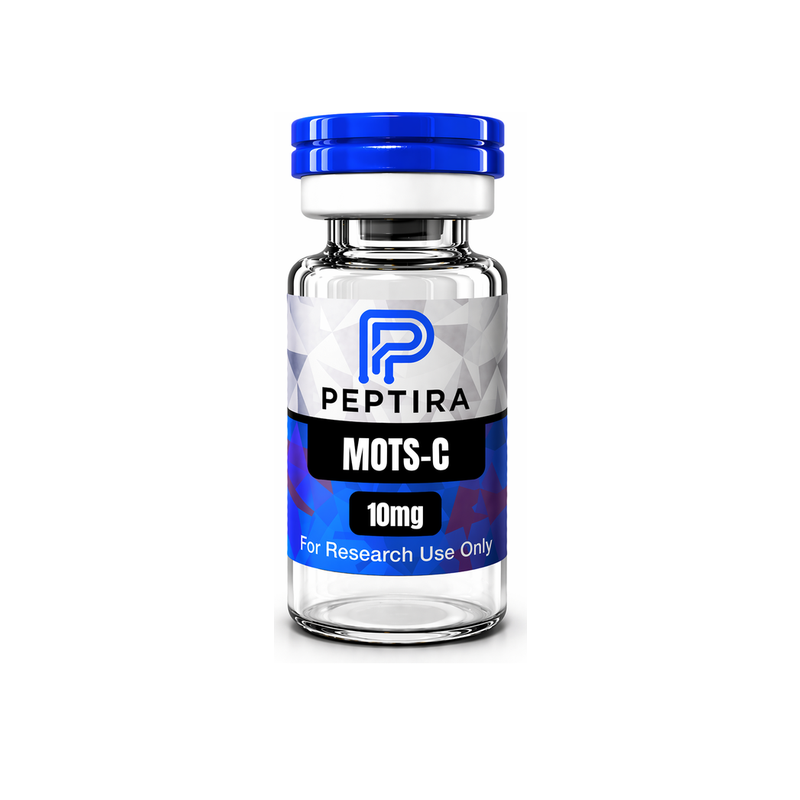
The blend — MOTS-c plus Humanin, not the standalone vial.
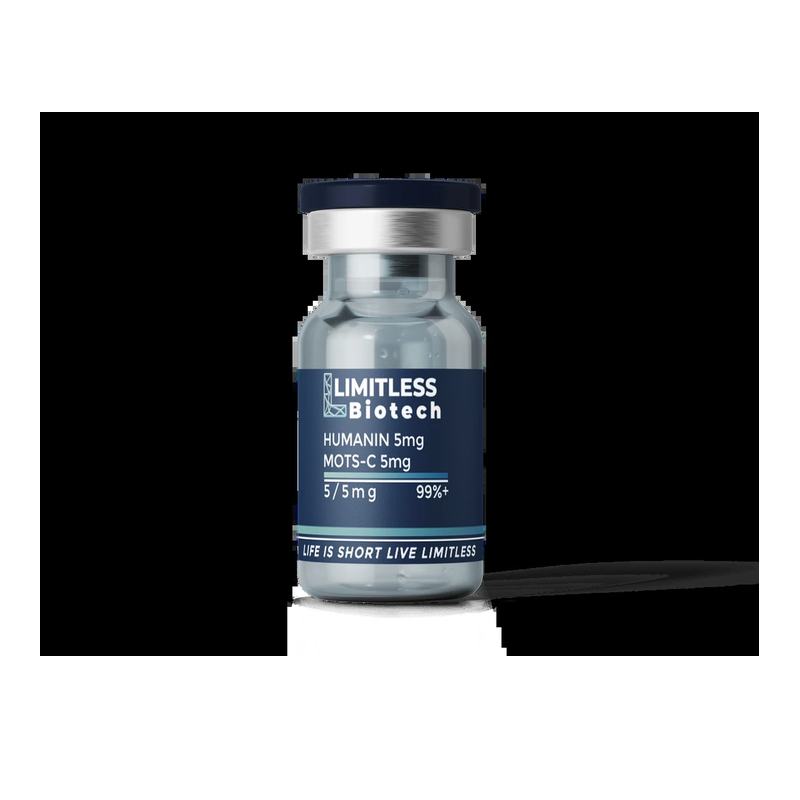 Limitless
MOTS-c / Humanin
LEE20Limitless MOTS-c 5 mg / Humanin 5 mg · LEE20
Two MDPs. Two literature files. A blend does not merge those files. If you wanted standalone MOTS-c, do not buy this cake by accident.
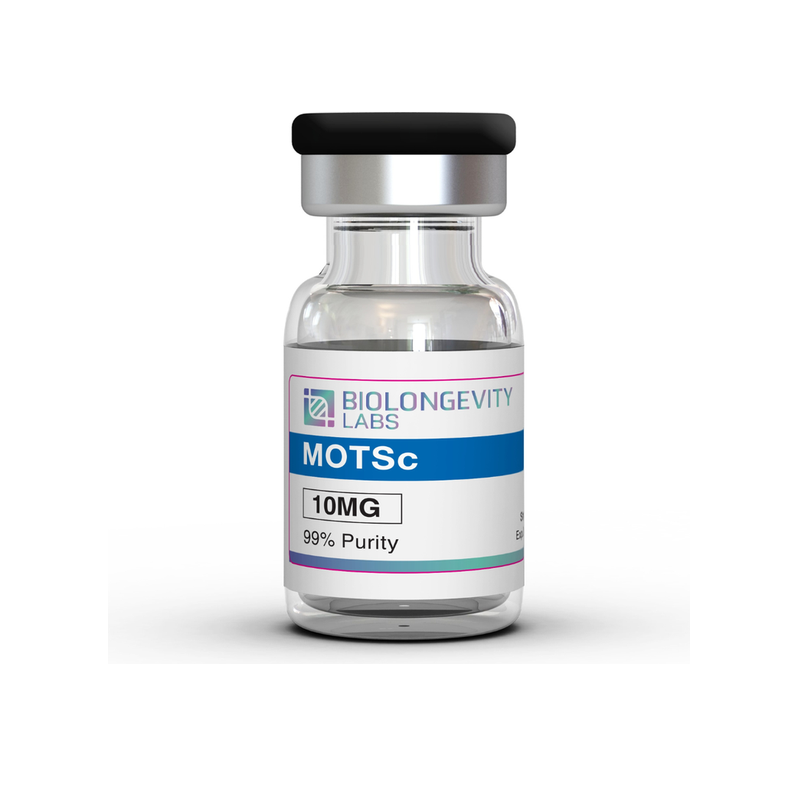
BioLongevity MOTS-c is in the row above (code LEE15). Shop home: LEE15.
Match the product to the job. Do not collect bottles. Do not use a research catalog as a back door to a metabolic disease.
Frequently asked questions about MOTS-c
Is MOTS-c a GLP-1?
No. MOTS-c is a 16-amino-acid peptide encoded in mitochondrial DNA. GLP-1 receptor agonists are engineered gut-hormone drugs. Different receptor. Different genome. Different evidence file. If you wanted the pen conversation, that is the weight-loss hub, not this URL.
Is MOTS-c FDA-approved?
No. MOTS-c is not an FDA-approved drug to treat diabetes, obesity, insulin resistance, aging, or anything else. Mouse metabolic papers are not a label. A research-catalog vial inherits neither an indication nor a manufacturing license for human use.
Is MOTS-c the same as humanin?
No. Both are mitochondrial-derived peptides. Humanin is encoded in 16S rRNA. MOTS-c is encoded in 12S rRNA. A catalog blend that puts 5 mg of each in one stopper is two names. Read both.
Is MOTS-c an exercise pill?
No. The literature frames MOTS-c around AMPK and exercise-associated signaling in animals. Overlap with one energy-sensing pathway is not a substitute for training. Captions that say otherwise are selling.
Can I just run a MOTS-c protocol from a forum?
You can do a lot of unwise things. I would not. Name the genome. Name the ORF. Name whether Humanin is in the bottle. Name whether you are holding a research catalog, a compounded script, or a fantasy. Protocol depth lives in Pro on purpose. This public page is the map, not the marching orders.
The bottom line
MOTS-c is a 16-amino-acid peptide encoded in mitochondrial DNA. The mitochondrial peptide people search. A real ORF, a real AMPK literature, real mouse metabolic work, and no FDA-approved drug in the rear-view.
It is not a GLP-1. It is not a GH secretagogue. It is not exercise in a vial. The class map for fat-loss peptides lives on the weight-loss hub. Labeled incretin talk lives on tirzepatide vs semaglutide. This URL exists because people type the word.
Keep the lanes. Read the papers. Do not buy a 16-residue cake because a caption told you your mitochondria were the missing stack.
Read next: peptides for weight loss for the class map, AOD-9604 for the hGH-fragment distraction, and tirzepatide vs semaglutide when the real question was a labeled incretin.
I built Peptides & Pump so you can get this without a guru tax. If you want the protocol library, member discussions, and a place to think out loud before you spend money, that is Pro. If you are not ready to pay, use the free Knowledge Base first. Then come back and argue with me when you have read more than a caption.
Free guide
Get The Peptide PlaybookEnter your email and we’ll send the research PDF. Education only — not medical advice.
 Keep going on Peptides & Pump
Free is the peptide community. Pro is where you master it. Codes are the links. Click them so the discount fires.
Free
Knowledge Base
The peptide community · 2,500+
- 2,500+ member peptide community
- Sourcing questions before you buy anything random
- The basics, from people actually using peptides
Pro
Peptides & Pump Pro
$10/mo · 7-day trial
- Science-backed protocol library
- 1-on-1 support from Lee and Matt
- Step-by-step video, plus a monthly $500 drawing
LEE20 Limitless LEE15 BioLongevity Paramount LEE Peptira LEE10 S1
Next reads
Supplier footnote: Research suppliers I mention when people ask about MOTS-c: Limitless MOTS-C (code LEE20), Paramount MOTS-c, Peptira MOTS-C 10 mg and 40 mg (code LEE), and S1 MOTS-C (code LEE10). Limitless also lists a MOTS-c 5 mg / Humanin 5 mg blend, which is not the standalone vial. BioLongevity home: LEE15. Match the product to the job. Do not collect bottles.
Disclaimer. This article is for educational and research purposes only. It is not medical advice. It is not intended to diagnose, treat, cure, or prevent any disease. MOTS-c is not an FDA-approved drug for diabetes, obesity, insulin resistance, aging, exercise performance, or any other indication. Mitochondrial-derived peptides including MOTS-c and humanin are research sequences; a research-catalog vial is not a compounded prescription and is not a labeled drug. Most of the published evidence discussed here is preclinical, cell-culture, or animal work; mouse metabolic papers are not a substitute for a clinician. Individual results vary. Always consult a qualified healthcare provider before starting any peptide, drug, supplement, or protocol, especially if you have a medical condition or take prescription medication. Peptides & Pump does not sell peptides.
Affiliate disclosure. Some links on this page are affiliate links. If you buy through them, I may earn a commission at no extra cost to you. Codes LEE15, LEE20, LEE10, and LEE are the ones I actually use. That commission is how I keep publishing free education. I only link suppliers I am willing to put my name on.
One Comment
Comments are closed.