Thymosin Alpha-1: Immune & Thymic Peptide Research Map
Key takeaways
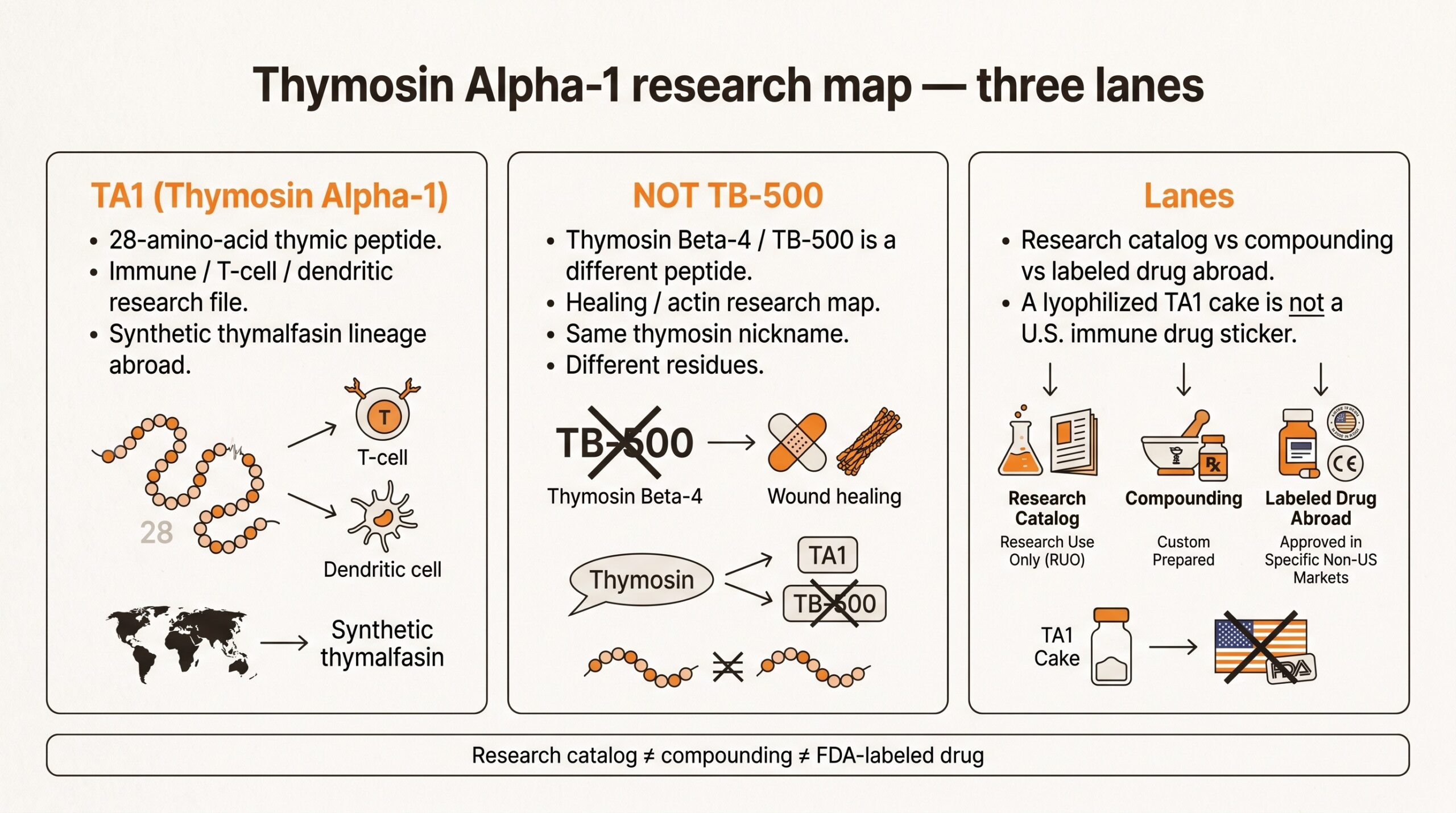
- Thymosin Alpha-1 (TA1) is a 28-amino-acid thymic peptide with an immune / T-cell / dendritic research map — not a GH secretagogue, not a GLP-1, and not a healing peptide.
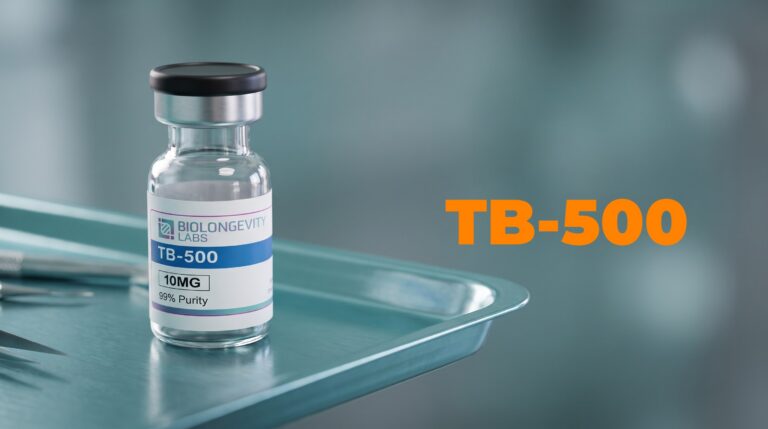
- TA1 is not TB-500. TB-500 is Thymosin Beta-4 territory (actin / healing research). Same “thymosin” nickname. Different residues. Different job.
- The published file includes immunomodulation, TLR / dendritic signaling, and clinical-program literature around thymalfasin abroad. Search volume is not a U.S. drug label for your catalog vial.
- Research catalogs, compounding, and labeled drugs are three lanes. A lyophilized TA1 cake does not inherit an immune indication.
- Education, not a treatment. Full protocols stay in Peptides & Pump Pro ($10/mo, 7-day trial).
People type Thymosin Alpha-1 like they found an immune pill with a thymus passport.
They found a twenty-eight-amino-acid sequence.
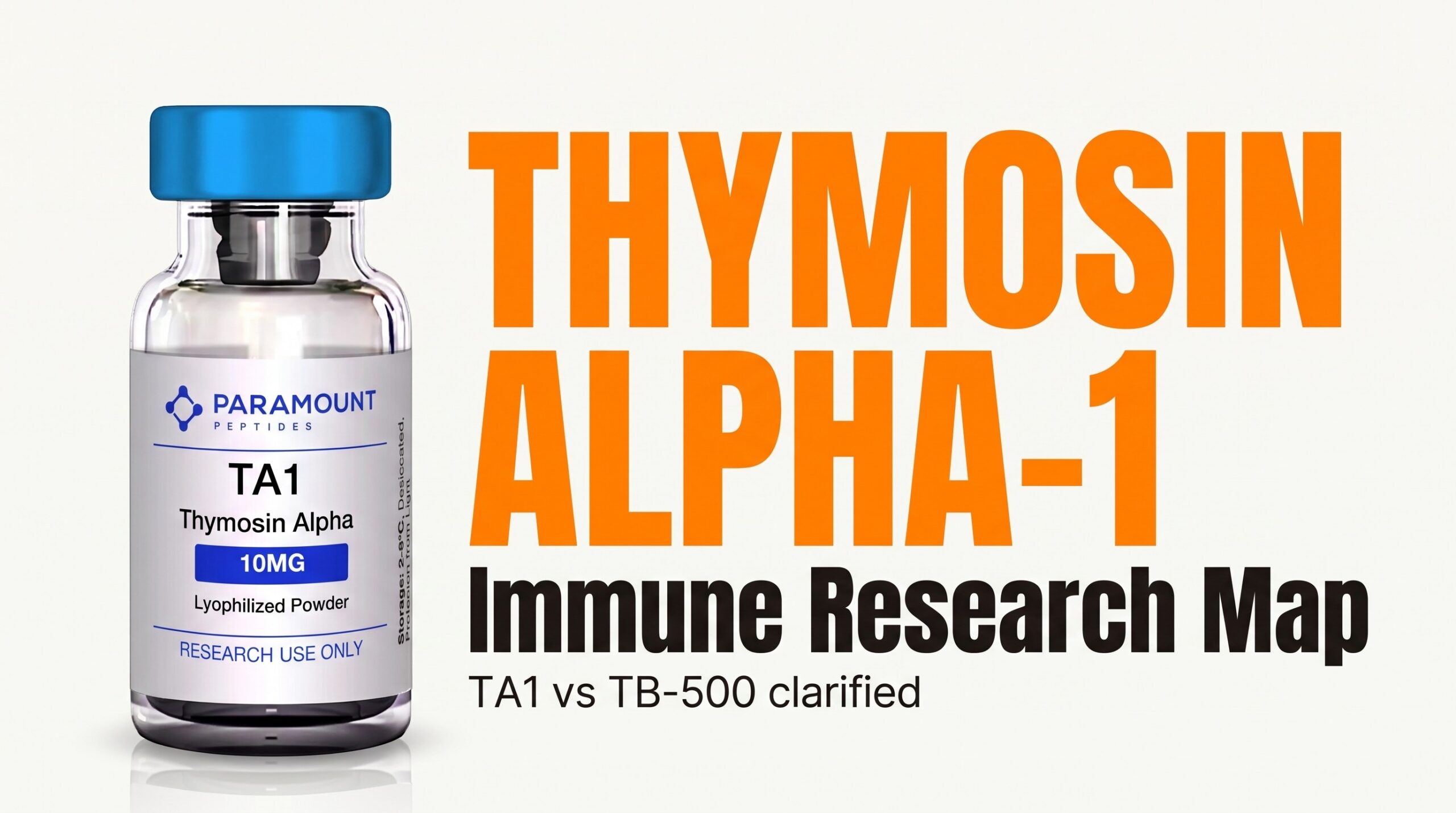
Thymosin Alpha-1 — TA1 in catalogs, thymalfasin in the pharmaceutical spelling abroad — is a synthetic peptide from the thymic research line. Different job from TB-500. Different job from a GH secretagogue. Different job from an FDA-approved “boost your immunity” tablet in the U.S. drawer.
The immune / longevity neighborhood on this site already has siblings — start with KPV if inflammation fragments are the curiosity, Epitalon if pineal / telomere talk pulled you in, or MOTS-c for the mitochondrial ORF. This page is the Thymosin Alpha-1 lane. Start with Start Here if peptides are not day one. Stay here if you typed TA1, thymosin alpha 1, or “thymalfasin” and want to know what you are holding.
This is education. It is not medical advice. A research-catalog vial is not a treatment for infection, autoimmunity, cancer, vaccine non-response, “weak immunity,” or chronic fatigue.
What is Thymosin Alpha-1?
A peptide is a short chain of amino acids. Insulin is a peptide. Semaglutide is a peptide. Thymosin Alpha-1 is a peptide. Naming the format does not name the mechanism.
TA1 is twenty-eight residues from the thymosin family — an acetylated N-terminal fragment associated with thymic peptide research. The thymus sits behind the sternum and helps train T cells. That anatomy story is why forums mash “thymosin” into one immune caption. Residues do not mash. Thymosin Alpha-1 and Thymosin Beta-4 are different molecules.
The pharmaceutical name you will see in overseas literature is thymalfasin (brand history includes Zadaxin in some countries). That labeled-drug conversation abroad is not the same object as a U.S. research-catalog lyophilized cake with a coupon code. Keep the lanes before you keep the nickname.
So what is Thymosin Alpha-1, in the way a beginner should hold it? A synthetic thymic-line 28-mer with an immune-modulation research file and a large U.S. search volume around TA1. Not TB-500. Not a GH pulse. Not an FDA-approved “immune booster” sticker for a research vial.
TA1 vs TB-500 (and vs thymulin complexes)
You do not need an immunology degree. You need three locks and three keys.
| Lane | What it actually is | What the evidence conversation is | What it is not |
|---|---|---|---|
| Thymosin Alpha-1 (TA1) | 28-amino-acid thymic peptide. Catalog spelling: Thymosin Alpha-1 / TA1. Pharma spelling abroad: thymalfasin. | Immune modulation, T-cell / dendritic / TLR pathway research, viral and oncology-adjacent clinical-program literature — much of it outside a U.S. FDA indication for your catalog SKU. | Not TB-500. Not an FDA-approved U.S. “immune booster” for a research cake. Not a healing peptide. |
| TB-500 / Thymosin Beta-4 | Different thymosin-family peptide (beta-4 / fragment conversation). See the TB-500 page. | Actin-binding / tissue-repair research map. Forums stack it with BPC-157. | Not TA1. Same “thymosin” word. Different sequence. Different job. |
| Thymulin / TA1+thymulin blends | Some catalogs sell TA1 complexed or blended with thymulin. Read every name on the label. | Its own thymic-peptide neighborhood. Not automatically “stronger TA1.” | Not proof a blend inherits a labeled indication. Chemistry mash ≠ crowning a caption. |
| KPV / other immune-adjacent fragments | Different peptide families discussed next to “inflammation” on podcasts. Map on KPV. | Their own literature files. | Not TA1. Same aisle in a biohacker grocery store. Different residues. |
| GH secretagogues | GHRH analogs and GHS-R agonists that ask the pituitary for a GH pulse. | Maps on ipamorelin, sermorelin, tesamorelin. | Not TA1. Do not stack captions because both say “recovery” on a forum. |
You can be interested in all of them. You cannot mash TA1, TB-500, thymulin, KPV, and a GH blend into one Reddit protocol and call a twenty-eight-residue cake a clinical immune result.
Mechanism map (high level)
Search volume is not a protocol. Neither is a caption that says “resets your thymus.”
TA1 sits in a research lineage that treated short thymic peptides as immunomodulators — signals that can tune how immune cells mature, present antigen, and talk through cytokines — rather than as simple “more white cells” stimulants. Reviews and primary papers are easy to find if you search Thymosin Alpha-1, thymalfasin, dendritic cells, TLR, and the clinical-program authors together.
Here is the beginner translation.
T-cell and dendritic talk: Papers often discuss TA1 next to T-cell maturation markers, dendritic-cell activity, and antigen-presentation language. That is a mechanism story in cell, animal, and clinical-program writing. A mechanism paragraph is not a guarantee that a research-catalog vial will “retrain your thymus” this week.
TLR / innate sensing: Some work links TA1 to Toll-like receptor pathways (pattern-recognition sensors immune cells use). That framing shows up in infection and vaccine-adjacent literature. Pathway talk is not a marching order to self-treat pneumonia from a coupon code.
Immunomodulation, not a cartoon stimulant: Serious writing often frames TA1 as helping balance responses — supporting competence in some models while discussing regulatory / anti-excess angles in others. “Immune booster” is a caption. Immunomodulation is a longer sentence.
Thymalfasin abroad: Synthetic TA1 as thymalfasin has a pharmaceutical history outside the U.S. in certain labeled settings. That overseas drug object is not your U.S. research-catalog cake. Do not import a foreign label onto a lyophilized vial because the residues match on paper.
If someone tells you TA1 is “legal interferon in a bottle,” they are selling. Cytokine drugs and thymic-peptide research are different conversations. I am not dunking the molecule. The sequence is real. The research intent is real. Some program literature is real. I am refusing to crown a caption.
WADA and sport: if you compete, check the current prohibited list yourself. Peptide research chemicals are not a free pass because a catalog said “research use only.”
Research catalog vs compounding vs labeled drugs
Three lanes. Keep them.
FDA-approved / labeled drugs have an application, a label, an indication, manufacturing the agency inspects for that product. Thymalfasin has pharmaceutical history abroad under brand names such as Zadaxin in some markets. That is not the same as a U.S. research catalog selling TA1 for “research use only.” Do not confuse a foreign label with a U.S. catalog disclaimer.
Compounding is a pharmacy lane. A 503A pharmacy compounds for a patient with a prescription. That lane has its own FDA bulk-substance fights and state-board rules. A compounded TA1 prescription, if a clinic offers one, is still not “the Zadaxin drawer opened in your kitchen.” It is a different object from a research catalog with a coupon code.
Research catalogs sell named sequences for research use. COA if you are lucky. “Not for human consumption” on the page. Forums treat that disclaimer as a wink. I do not. A research-use TA1 vial is a catalog SKU. It is not a compounding script. It is not a labeled drug. Pretending otherwise is how people get hurt and how this page would get stupid.
I am not going to tell you to buy a research chemical for human use. I am not going to tell you to skip a doctor. I am going to tell you to name the lane before you name the SKU.
Reconstitution notes (high level only)
If a lyophilized cake is even on the table, learn the math before you invent a protocol.
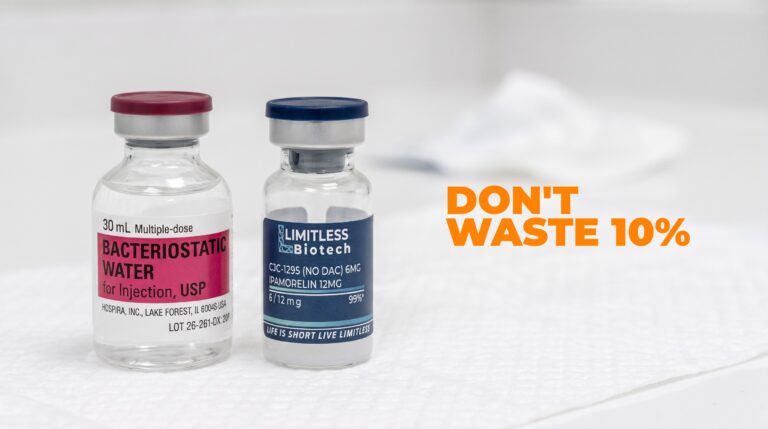
How to reconstitute peptides is the public page for bacteriostatic water, U-100 insulin-syringe ticks, and not wasting 10% of the vial on foam and dead volume. TA1 catalogs sell cakes — read the label for mg strength. Do not assume TB-500 math equals TA1 math. Different peptide. Different vial.
I will not dump a TA1 units-and-days schedule on a public page. That is Pro on purpose.
Who this page is for (and who it is not)
Start with the question, not the vial.
This page is for you if you typed Thymosin Alpha-1, TA1, or thymalfasin and want the research map before you spend money. Or if a podcast stacked TA1 next to TB-500 and you need the residue count separated.
This page is not for you if you want a diagnosis for infection, autoimmune disease, cancer, immunodeficiency, or “my labs look inflamed” from a blog. Those are clinician conversations. A research vial does not replace that visit.
Here is the order I give beginners.
- Read first. Name the lane before you name the SKU. TA1 vs TB-500 vs thymulin blend. Drug, compound, or research catalog.
- Name the peptide. Thymosin Alpha-1 is the 28-mer thymic sequence. If the bottle also says “TB-500,” “complex,” “thymulin,” or a second sequence, read every name on the label.
- Do not crown the nickname. “Immune peptide” won the caption. It did not win a U.S. label for your catalog cake.
- If a lyophilized cake is even on the table, learn the reconstitution math on the public page linked above — then stop. Protocol depth lives in Peptides & Pump Pro. Ten dollars a month. Seven-day trial.
Where I actually look when the job is a TA1 research compound
Education first. You already got the map. This block is the labs I will put my name on, with the codes that fire. Research-use catalog pages. Not a treatment claim. Not a “buy this to fix your immune system.”
Partner reality on today’s audit: Paramount lists Thymosin Alpha-1 10 mg in stock. BioLongevity lists Thymosin Alpha 1 10 mg in stock. Limitless carries TA1 in the catalog (and a TA1-RGDR SKU), but those product pages were out of stock on audit — home chip only until stock returns. Peptira’s TA1 page was out of stock and is not a named row in my Affiliate Link Generators sheet, so no Peptira product card. S1 has no TA1 product row in the sheet.
The converting row — TA1 SKUs currently live.
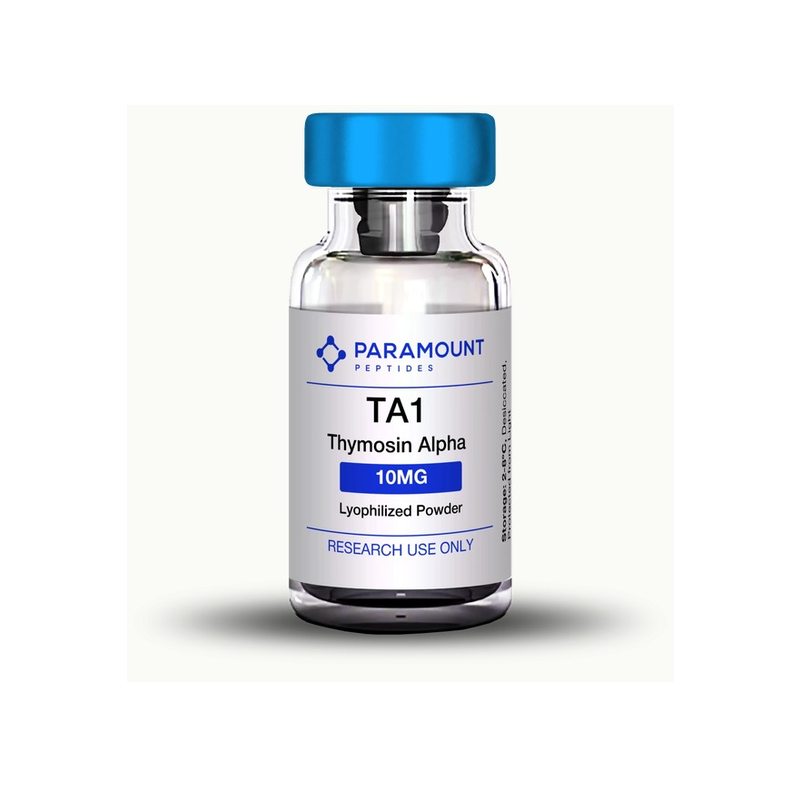
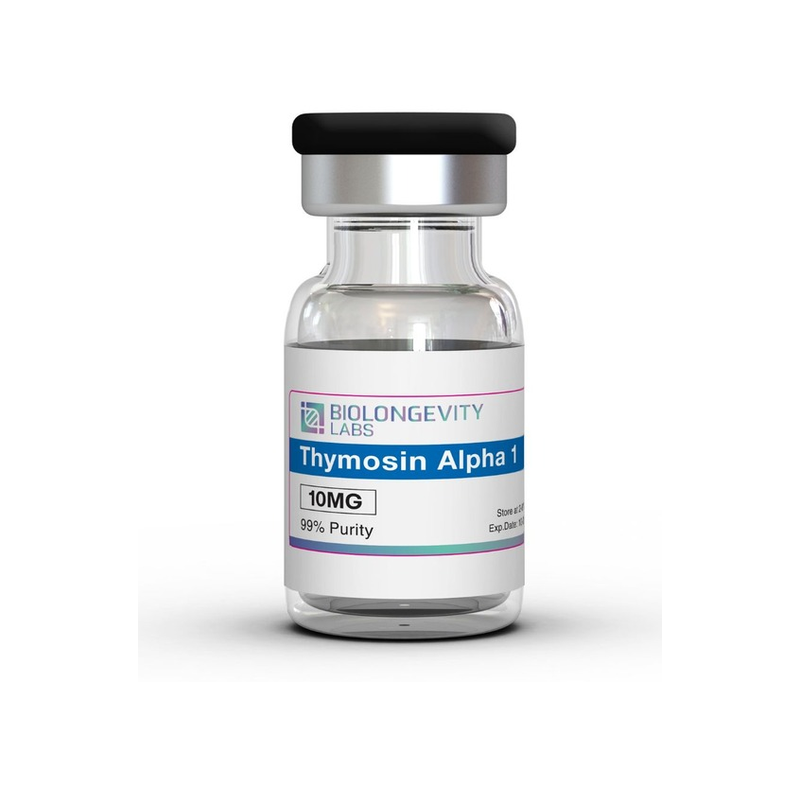
Paramount TA1 10 mg · LEE10BioLongevity TA1 10 mg · LEE15Limitless home · LEE20Peptira home · LEES1 shop · LEE10
Limitless is usually my primary research-catalog stop — their TA1 product URL exists in the Affiliate Link Generators sheet with code LEE20 — but that product page (and the TA1-RGDR SKU) was out of stock on the last audit, so they get a home chip only until stock returns. Match the product to the job. Do not collect bottles. Do not use a research catalog as a back door to an immune diagnosis.
Frequently asked questions about Thymosin Alpha-1
Is Thymosin Alpha-1 the same as TB-500?
No. TA1 is Thymosin Alpha-1. TB-500 is in the Thymosin Beta-4 family. Forums mash the thymosin nickname. Catalogs and residue counts do not. If the bottle says both names, read every line.
Is Thymosin Alpha-1 FDA-approved for immunity?
No U.S. FDA-approved indication turns a research-catalog TA1 vial into a labeled immune drug for infection, autoimmunity, cancer, or “low immunity.” Thymalfasin has pharmaceutical history abroad under other regulatory systems. A foreign label is not your coupon-code cake.
Does TA1 “boost” the immune system?
Literature frames TA1 as an immunomodulator — T-cell / dendritic / TLR-adjacent mechanisms show up in reviews and primary papers. That is not the same as a guaranteed over-the-counter “boost.” Mechanism papers are not marching orders, and more immune activity is not automatically better.
TA1 or KPV for “inflammation”?
Different peptides. Different maps. KPV is an alpha-MSH fragment conversation; TA1 is thymic. Podcasts stack them. Residues do not. Start with the question you actually have, then read the matching page.
What about TA1 + thymulin complexes?
Some catalogs sell blends. That is a different SKU from plain TA1. Read the label. A complex does not automatically inherit a stronger evidence file or a drug indication.
Can I just run a TA1 protocol from a forum?
You can do a lot of unwise things. I would not. Name the sequence. Name whether you are holding a research catalog, a compounded script, or a fantasy. Protocol depth lives in Pro on purpose. This public page is the map, not the marching orders.
The bottom line
Thymosin Alpha-1 is a 28-amino-acid thymic peptide with an immune-modulation research map. Real sequence. Real research intent. Not a U.S. FDA-labeled immune drug for your research-catalog vial.
It is not TB-500. It is not KPV. It is not a GH secretagogue. Keep the lanes. Read the papers. Do not buy a twenty-eight-residue cake because a caption told you it was a thymus transplant in a bottle.
If you need adjacent reading that is already live, use KPV, Epitalon, and MOTS-c. If you need the beginner on-ramp, use Start Here and what are peptides. Reconstitution math, when a lyophilized cake is even on the table, is on how to reconstitute peptides. Healing-peptide confusion that is not this page: TB-500.
Want the free field guide before you spend another dollar on a vial? Grab the Peptide Playbook — the short form on that page is how it ships. No naked PDF chase.
I built Peptides & Pump so you can get this without a guru tax. If you want the protocol library, member discussions, and a place to think out loud before you spend money, that is Pro. If you are not ready to pay, use the free Knowledge Base first. Then come back and argue with me when you have read more than a caption.
 Keep going on Peptides & Pump
Free is the peptide community. Pro is where you master it. Codes are the links. Click them so the discount fires.
Free
Knowledge Base
The peptide community · 2,500+
- 2,500+ member peptide community
- Sourcing questions before you buy anything random
- The basics, from people actually using peptides
Pro
Peptides & Pump Pro
$10/mo · 7-day trial
- Science-backed protocol library
- 1-on-1 support from Lee and Matt
- Step-by-step video, plus a monthly $500 drawing
LEE20 Limitless LEE15 BioLongevity LEE10 Paramount LEE Peptira LEE10 S1
Supplier footnote: Research suppliers I mention when people ask about Thymosin Alpha-1: Paramount Thymosin Alpha-1 10 mg (code LEE10) and BioLongevity Thymosin Alpha 1 10 mg (code LEE15). Limitless TA1 / TA1-RGDR product pages were out of stock on audit — use Limitless home (code LEE20) until those SKUs return. Peptira home: LEE. S1 shop: LEE10. Match the product to the job. Do not collect bottles.
Disclaimer. This article is for educational and research purposes only. It is not medical advice. It is not intended to diagnose, treat, cure, or prevent any disease. Thymosin Alpha-1 (TA1 / thymalfasin) is not presented here as an FDA-approved drug for infection, autoimmunity, cancer, immunodeficiency, vaccine non-response, chronic fatigue, or any other indication for a research-catalog vial. Research peptides discussed here are research sequences; a research-catalog vial is not a compounded prescription and is not a labeled drug. Most of the published evidence discussed here includes preclinical work and non-U.S. or clinical-program literature; neither is a substitute for a clinician. Individual results vary. Always consult a qualified healthcare provider before starting any peptide, drug, supplement, or protocol, especially if you have a medical condition or take prescription medication. Peptides & Pump does not sell peptides.
Affiliate disclosure. Some links on this page are affiliate links. If you buy through them, I may earn a commission at no extra cost to you. Codes LEE15, LEE20, LEE, and LEE10 are the ones I actually use where a coupon fires. That commission is how I keep publishing free education. I only link suppliers I am willing to put my name on.